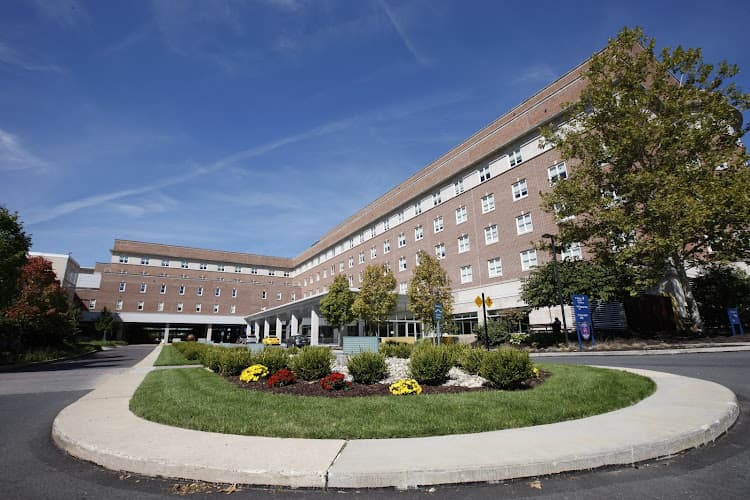
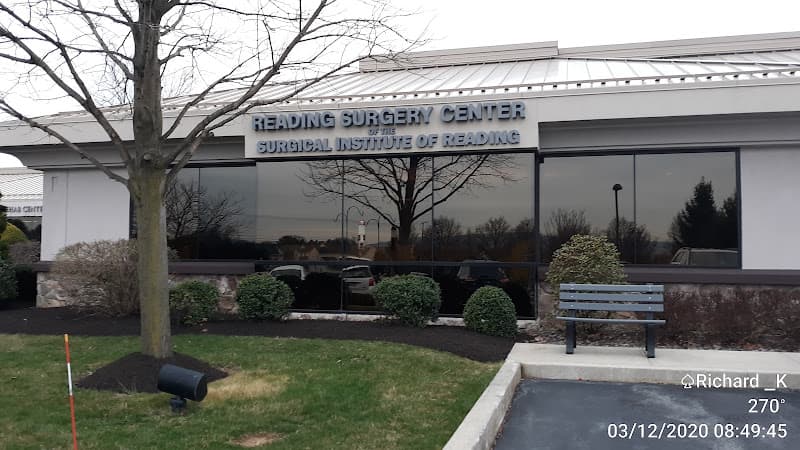
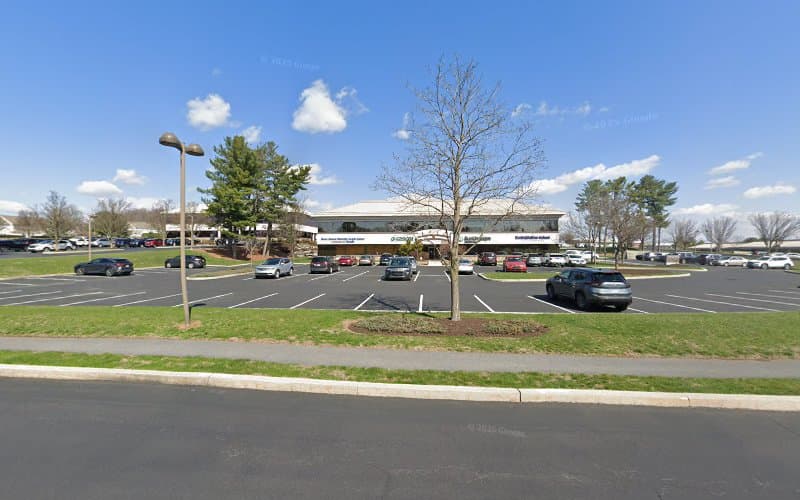
Reading Hospital is a general acute care hospital at 420 S 5th Ave in West Reading, Pennsylvania, just across the Schuylkill River from the city of Reading. It is the largest hospital in Berks County and the flagship facility of Tower Health, the regional health system it anchors. The campus occupies a substantial portion of the borough of West Reading and includes inpatient towers, outpatient buildings, physician offices, parking structures and a dedicated surgical and patient care facility, all connected by internal corridors and walkways.
The hospital traces its roots to the late nineteenth century, when it began as a modest community institution serving the industrial city of Reading and the farms and boroughs around it. Over the decades it grew through expansion, consolidation with other local medical organizations and the addition of specialty centers, eventually becoming a teaching hospital with residency and fellowship programs. Today it functions as a tertiary referral center, meaning that patients from smaller hospitals across Berks, Schuylkill, Lancaster, Lebanon, Montgomery and Chester counties are transferred here for services that are not available closer to home.
Emergency and Trauma Services
Reading Hospital operates one of the busiest emergency departments in Pennsylvania. It is a verified trauma center, equipped to receive patients with serious injuries from motor vehicle collisions, falls, industrial accidents and violence, with trauma surgeons, anesthesiologists, radiologists and operating rooms available at all hours. A helipad on the campus allows for air transport of critically ill and injured patients from across the region.
The emergency department includes a separate pediatric area staffed by clinicians with training in treating infants, children and adolescents, so that younger patients are not routed through the general adult waiting and treatment areas. Other components of the emergency service line include a dedicated area for behavioral health evaluation, rapid assessment and triage processes designed to move lower acuity patients through more quickly, and stroke and cardiac protocols that begin treatment while patients are still in the emergency department.
Clinical Specialties
As a full service hospital, Reading Hospital covers most medical and surgical specialties. Major programs on the campus include:
- Cardiology and cardiac surgery, including cardiac catheterization, electrophysiology, open heart surgery and cardiac rehabilitation
- Oncology and hematology, with medical oncology, radiation oncology, infusion services, surgical oncology and supportive care coordinated through the hospital's cancer institute
- Neurosciences, including stroke care, neurosurgery, epilepsy evaluation and neurological rehabilitation
- Orthopedics and spine surgery, covering joint replacement, sports injuries, fracture care and complex spinal procedures
- General, vascular, thoracic, bariatric and robotic assisted surgery
- Obstetrics and gynecology, including labor and delivery, high risk maternal and fetal medicine, and postpartum care
- Neonatal intensive care and pediatric inpatient services
- Pulmonology and critical care, nephrology and dialysis, gastroenterology, endocrinology, infectious disease and rheumatology
- Imaging and laboratory services, including CT, MRI, nuclear medicine, interventional radiology and pathology
- Wound care, hyperbaric medicine and inpatient rehabilitation
Many of these services are delivered in the hospital's surgical and patient care building, which houses operating suites, intensive care units, private inpatient rooms and the obstetrics unit under one roof.
Maternity and Family Services
Reading Hospital delivers a large share of the babies born in Berks County each year. The maternity program covers routine and high risk pregnancies, labor and delivery, cesarean births, and recovery in private postpartum rooms where parents and newborns stay together. Lactation consultants, childbirth education, newborn screening and neonatal intensive care are available on site, which allows families with premature or medically complex infants to remain at the same facility rather than transferring elsewhere. Nursing staff in the labor, delivery and postpartum units are frequently singled out by patients for the personal attention they give during and after birth.
Inclusive and Gender-Affirming Care
The hospital identifies itself as LGBTQ+ friendly and as a transgender safe space. Practically, that includes the use of preferred names and pronouns in the electronic medical record so that they appear consistently across departments, staff training on respectful communication, and clinicians with experience in transgender health who coordinate primary care, hormone therapy and referrals. Patients seeking gender-affirming care can ask registration or scheduling staff to confirm which providers and practices handle those services.
Education and Research
Reading Hospital is a teaching institution. It sponsors graduate medical education programs in fields such as internal medicine, family medicine, surgery, emergency medicine, obstetrics and gynecology, psychiatry and transitional year training, and it works with medical schools that place students on the campus for clinical rotations. The hospital also has a long association with health sciences education in Berks County, including nursing and allied health training, and participates in clinical research and trials that give local patients access to newer therapies without traveling to Philadelphia or Hershey.
Visiting the Campus
The hospital is at 420 S 5th Ave, West Reading, PA 19611, reachable from Route 422 and Penn Avenue, with public transit service to West Reading. The entrance and the parking areas are wheelchair accessible, and parking garages serve the emergency department, the main hospital entrance and the outpatient buildings. Because the campus is large and has multiple entrances, visitors are usually directed to the main lobby information desk, where staff can give directions to specific units, registration areas and physician offices.
The emergency department operates around the clock, every day of the year. Inpatient visiting hours, security screening and any current infection control requirements vary by unit, particularly in intensive care, behavioral health and the neonatal and maternity areas, so calling ahead is worthwhile. Scheduling, pre-registration, billing questions, medical records requests and referrals can be handled by phone at +1 484-628-8000, which also serves as the main switchboard for reaching individual departments and nursing stations.
Patients and families should bring photo identification, insurance information, a current list of medications and any relevant imaging or records from outside providers. Financial counseling and assistance programs, interpretation services, pastoral care and social work support are available to patients during their stay.