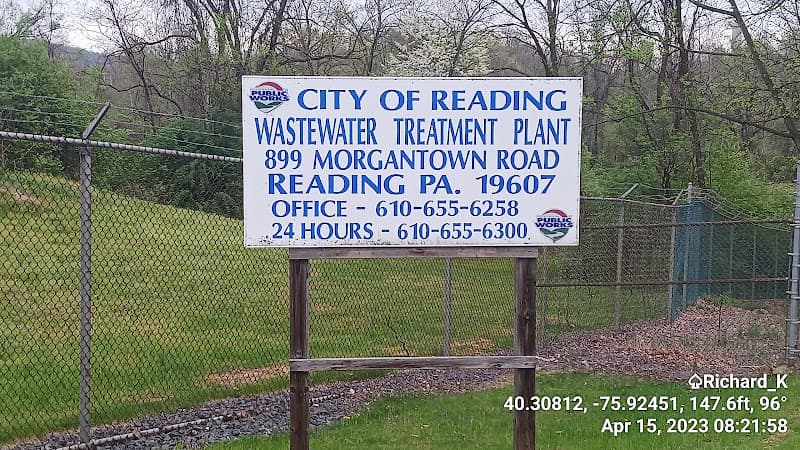
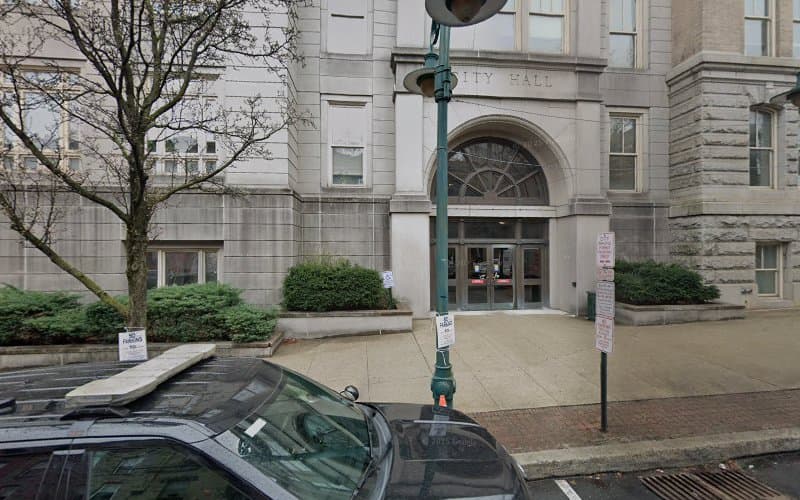
Reading Waste Water Treatment is a municipal water treatment facility located at 899 Morgantown Road in Reading, Pennsylvania. The plant serves as a critical piece of public infrastructure for the Reading metropolitan area, processing wastewater generated by residential, commercial, and industrial sources before returning treated water to the local watershed. As with all wastewater treatment operations, the facility plays an essential role in protecting public health and maintaining environmental quality in Berks County and the surrounding region.
Function and Purpose
Wastewater treatment plants like the Reading facility perform the vital task of removing contaminants from sewage and other liquid waste before discharge into natural water bodies. This process prevents the spread of waterborne diseases, protects aquatic ecosystems, and ensures compliance with federal and state environmental regulations established under the Clean Water Act and administered by the Pennsylvania Department of Environmental Protection.
The treatment process at facilities of this type typically involves multiple stages. Primary treatment removes large solids and debris through screening and sedimentation. Secondary treatment uses biological processes, often involving microorganisms, to break down organic matter. Many modern plants also employ tertiary treatment methods to further reduce nutrient levels and remove additional contaminants before the treated effluent is released.
The Reading facility handles the continuous flow of wastewater from the surrounding service area, operating around the clock to manage the community's sanitary needs. Treatment capacity at municipal plants is generally designed to accommodate both average daily flows and peak demand periods, which can occur during heavy rainfall events when stormwater infiltrates the sewer system.
Location and Service Area
The plant is situated on Morgantown Road in the southern portion of Reading, positioned along the infrastructure corridors that connect to the city's sewer collection system. Reading, with a population of approximately 95,000 residents in the city proper and a larger metropolitan population in Berks County, generates substantial volumes of wastewater requiring treatment daily.
The Schuylkill River, which flows through Reading, serves as the primary receiving water body for the region. Wastewater treatment facilities along this corridor play a significant role in maintaining water quality for downstream communities and ecosystems. The Schuylkill River watershed ultimately feeds into the Delaware River system, which provides drinking water for millions of people in southeastern Pennsylvania and neighboring states.
Pennsylvania's wastewater infrastructure includes hundreds of treatment facilities ranging from small package plants serving individual developments to large regional facilities processing tens of millions of gallons daily. The Reading plant serves as one of the larger municipal operations in Berks County, reflecting the city's position as the county seat and largest population center in the area.
Facility Characteristics
The Reading Waste Water Treatment plant maintains accessibility features including wheelchair accessible entrances and parking areas. These accommodations facilitate visits from members of the public, regulatory inspectors, contractors, and employees with mobility needs. Public access to treatment facilities is typically limited for safety and security reasons, though many plants offer educational tours and community outreach programs by appointment.
Wastewater treatment facilities require continuous maintenance and operational oversight to function properly. The Reading plant employs trained operators who monitor treatment processes, maintain mechanical equipment, conduct laboratory testing, and ensure compliance with discharge permit requirements. Licensed wastewater operators in Pennsylvania must complete certification requirements established by the state to demonstrate competency in plant operations.
The physical infrastructure at treatment plants includes a variety of specialized equipment and structures. Common components include influent pumping stations, grit chambers, primary clarifiers, aeration basins, secondary clarifiers, disinfection systems, and sludge handling facilities. The specific configuration varies based on plant design, treatment requirements, and the characteristics of the incoming wastewater.
Environmental Significance
Municipal wastewater treatment represents one of the most significant public health advances of the modern era. Before the widespread construction of treatment facilities in the twentieth century, untreated sewage discharged directly into rivers and streams caused devastating outbreaks of cholera, typhoid, and other waterborne diseases. The development of treatment technology and the construction of collection systems dramatically reduced these public health threats.
Today, wastewater treatment facilities face evolving challenges including aging infrastructure, emerging contaminants, and the effects of climate change on precipitation patterns and water availability. Many plants across Pennsylvania and the nation are undertaking upgrades to improve treatment efficiency, reduce energy consumption, and meet increasingly stringent discharge standards.
The Reading area, like many older industrial cities in Pennsylvania, has infrastructure dating back decades. Maintaining and upgrading these systems requires ongoing investment and careful planning to ensure continued protection of public health and the environment. Treatment plants must balance operational costs with the need to meet regulatory requirements and serve growing or changing populations.
Regulatory Framework
Wastewater treatment facilities in Pennsylvania operate under permits issued through the National Pollutant Discharge Elimination System, which establishes specific limits on the pollutants that can be present in treated effluent. These permits are administered by the Pennsylvania Department of Environmental Protection and require regular monitoring, reporting, and compliance with established standards.
Permit requirements typically address parameters such as biochemical oxygen demand, total suspended solids, pH, fecal coliform bacteria, and nutrient levels including nitrogen and phosphorus. Facilities must conduct regular sampling and submit monitoring reports to demonstrate ongoing compliance. Violations can result in enforcement actions, fines, and requirements for corrective measures.
The regulatory framework for wastewater treatment continues to evolve as scientific understanding of water quality impacts advances and new contaminants of concern emerge. Pharmaceutical compounds, microplastics, and per- and polyfluoroalkyl substances represent categories of pollutants that have received increased attention in recent years, potentially leading to new treatment requirements for facilities nationwide.
Community Role
While wastewater treatment plants operate largely out of public view, they represent essential community infrastructure comparable in importance to water supply systems, electrical grids, and transportation networks. The reliable operation of treatment facilities enables residential development, commercial activity, and industrial production within the service area.
Municipal utilities responsible for wastewater services typically fund operations through user fees assessed on water consumption or flat-rate charges to connected properties. These revenues support operational costs, maintenance activities, debt service on capital improvements, and reserves for future infrastructure needs. Rate structures vary among jurisdictions based on local policies and financial requirements.
The Reading Waste Water Treatment facility continues to serve its essential function within the community's infrastructure network, processing the continuous flow of wastewater generated by daily activities throughout the service area. The plant's operations contribute to public health protection and environmental quality in the Schuylkill River watershed and beyond.