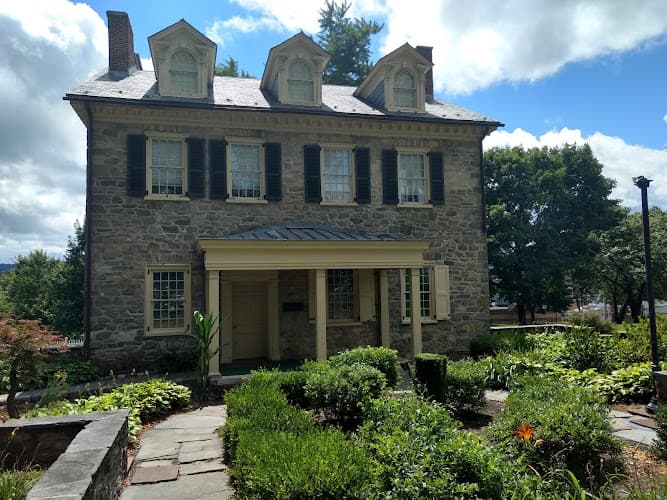
Trout Hall
Trout Hall in Allentown, Pennsylvania, is a standout tourist attraction renowned for its rich history and engaging exhibits.
About Trout Hall
Welcome to Trout Hall: Where American History Comes Alive
At Trout Hall, located at 414 Walnut St in the heart of Allentown, Pennsylvania, we are proud to be the stewards of one of America's most significant colonial landmarks. As the oldest home in Allentown and one of the finest examples of Georgian colonial architecture in the Lehigh Valley, Trout Hall stands as a testament to our nation's rich heritage and the pioneering spirit that shaped Pennsylvania's early settlements.
Our Historic Legacy
Built in 1770 by James Allen, son of Philadelphia's Chief Justice William Allen and founder of Allentown, Trout Hall represents more than just a beautiful colonial mansion. It embodies the vision and determination of early American settlers who sought to create lasting communities in the Pennsylvania wilderness. When James Allen constructed this magnificent home along the banks of the Little Lehigh Creek, he was not merely building a residence but establishing a cornerstone of what would become the thriving city of Allentown.
The name Trout Hall itself tells the story of our connection to the natural beauty of the Lehigh Valley. The Little Lehigh Creek that flows nearby was renowned for its abundant trout population, providing both sustenance and recreation for the Allen family and their guests. This connection to the natural environment remains an integral part of our identity today, as we continue to celebrate the harmonious relationship between human settlement and Pennsylvania's pristine landscapes.
Architectural Excellence and Preservation
As custodians of Trout Hall, we take immense pride in maintaining the architectural integrity of this Georgian colonial masterpiece. Every limestone block, every hand-hewn beam, and every period detail has been carefully preserved to ensure that visitors can experience authentic colonial craftsmanship as it existed over two and a half centuries ago. The building's limestone construction, quarried locally from the Lehigh Valley, showcases the resourcefulness of colonial builders who utilized the natural materials available in their immediate environment.
The mansion's distinctive features include its massive limestone walls, elegant proportions, and carefully crafted interior woodwork that demonstrates the sophisticated tastes of colonial Pennsylvania's elite families. Original wide-plank floors, hand-forged hardware, and period-appropriate furnishings transport visitors back to an era when Allentown was still a frontier settlement surrounded by endless forests and rolling farmland.
Our Mission and Educational Commitment
At Trout Hall, we believe that history is not merely something to be observed from a distance but rather experienced, understood, and appreciated in its full context. Our mission extends far beyond simple preservation. We are dedicated to making colonial American history accessible, engaging, and relevant to visitors of all ages and backgrounds. Through carefully curated exhibits, educational programs, and immersive experiences, we help guests understand the daily lives, challenges, and triumphs of Pennsylvania's colonial settlers.
We recognize that the story of Trout Hall is intrinsically connected to the broader narrative of American independence and the formation of our democratic ideals. The Allen family, like many colonial Pennsylvania families, navigated the complex political and social changes that culminated in the American Revolution. Their experiences, preserved within these walls, offer invaluable insights into the personal cost of political upheaval and the courage required to build a new nation.
Community Engagement and Cultural Preservation
As residents of Allentown ourselves, we understand the vital importance of preserving local history for future generations. Trout Hall serves not only as a museum but as a community gathering place where residents can connect with their heritage and gain a deeper appreciation for the foundations upon which our modern city was built. We actively collaborate with local schools, historical societies, and community organizations to ensure that the stories preserved at Trout Hall continue to educate and inspire.
Our educational outreach programs bring colonial history directly into classrooms throughout the Lehigh Valley, using artifacts, interactive demonstrations, and engaging storytelling to help students understand the relevance of historical events to their own lives. We believe that by understanding our past, we can better navigate our present and make informed decisions about our future.
Special Events and Programs
Throughout the year, Trout Hall hosts a variety of special events designed to bring history to life in authentic and memorable ways. Our colonial craft demonstrations showcase traditional skills such as blacksmithing, woodworking, and textile production, allowing visitors to witness firsthand the ingenuity and craftsmanship that characterized colonial American life. Seasonal celebrations, including colonial-era holiday traditions, provide opportunities for families to experience historical customs in their original setting.
Our guided tours, led by knowledgeable interpreters dressed in period-appropriate attire, offer visitors intimate glimpses into the daily routines, social customs, and political concerns of the Allen family and their contemporaries. These tours are carefully designed to accommodate visitors with varying levels of historical knowledge, from curious children experiencing colonial history for the first time to serious historians seeking detailed information about specific architectural features or historical events.
Research and Scholarly Resources
Trout Hall serves as an invaluable resource for researchers, genealogists, and historians studying colonial Pennsylvania and the broader Mid-Atlantic region. Our extensive archives contain documents, photographs, and artifacts that illuminate various aspects of colonial life, from economic relationships and trade patterns to family structures and social hierarchies. We actively support scholarly research by providing access to these materials and collaborating with academic institutions on projects that advance our understanding of colonial American history.
The building itself functions as a primary source document, offering researchers opportunities to study colonial construction techniques, material culture, and architectural evolution. Our commitment to authentic preservation ensures that future scholars will continue to have access to genuine colonial artifacts and architectural features for generations to come.
Looking Forward While Honoring the Past
As we continue our stewardship of Trout Hall, we remain committed to balancing historical preservation with modern accessibility and engagement. We regularly evaluate our exhibits, programs, and facilities to ensure that they meet the evolving needs of our diverse community while maintaining the historical integrity that makes Trout Hall such a unique and valuable resource.
We invite you to visit Trout Hall and experience firsthand the remarkable story of colonial Pennsylvania. Whether you are a lifelong resident of the Lehigh Valley seeking to deepen your connection to local history or a visitor from afar interested in American colonial heritage, we look forward to welcoming you into this extraordinary piece of living history. Contact us at 610-435-1074 to plan your visit and discover why Trout Hall continues to captivate and educate visitors after more than two and a half centuries.
At Trout Hall, we are more than museum curators or historical preservationists. We are storytellers, educators, and guardians of American heritage, dedicated to ensuring that the remarkable legacy of colonial Pennsylvania continues to inform, inspire, and enrich the lives of all who walk through our doors.
Unique Details About Trout Hall
Children
- Good for kids
Amenities
- Restroom
Contact Information for Trout Hall
Customer Reviews
4.8 out of 5 stars
Based on 4 reviews
Review data
5 star reviews
- 75%
4 star reviews
- 25%
3 star reviews
- 0%
2 star reviews
- 0%
1 star reviews
- 0%
Working Hours / Hours of Operation
- Monday:
- Closed
- Tuesday:
- Closed
- Wednesday:
- Closed
- Thursday:
- Closed
- Friday:
- Closed
- Saturday:
- 11AM-2:30PM
- Sunday:
- Closed
Location Map
Similar Museums Near Allentown, PA
BerksConnect: everything local in Berks County, PA.
8,700+ local businesses with AI-summarized reviews, plus local guides, jobs, and what's happening around the county.