Winter Tires in Berks County: Cost and Whether You Need Them
What winter tires cost for a Berks County car, whether Reading's winters call for them, how all-weather tires compare, when to swap, and the rest of the winter check, with Berks shops to call for the swap.
If you're wondering how much winter tires cost, a set of four runs about $344 to $835 before mounting, as of October 2026, going by online prices for one common sedan size and one common small-SUV size.
Whether you need them comes down to the tire makers' own threshold: regular cold below 45°F plus ice or meaningful snow calls for either a dedicated winter set or an all-weather tire, which is an all-season tire that carries the winter snowflake symbol. A plain all-season tire is the compromise. Reading's normal temperature sits below 45°F from November through March, so the question is which of the two.
If you drive every morning no matter what the roads look like, a separate winter set you swap on each fall is the safer buy; if you can stay home on the handful of days a year with an inch or more of snow, an all-weather tire on one set gets you most of the way there. tire shops in Berks County quote the tires, the swap and storage when you call.
Do you need winter tires in Berks County?
Winter tires are for cold, not only for snow. The rubber in all-season and summer tires stiffens as it gets cold, and below about 45°F it grips less on dry pavement and on ice. A winter tire uses a softer compound that stays flexible in the cold, with deeper tread and many small slits that bite into snow and ice.
So the question isn't how much snow we get, it's how many cold mornings you'll drive through. By the 1991 to 2020 normals at Reading Regional Airport, the mean temperature sits below 45°F from November through March and doesn't climb back above it until April.
| Month | Normal mean temperature | Normal low | Days with any snow | Days with an inch or more |
|---|---|---|---|---|
| November | 44.6°F | 35.4°F | – | – |
| December | 35.7°F | 28.0°F | – | – |
| January | 30.8°F | 23.0°F | 11 | 2 |
| February | 33.1°F | 24.4°F | 9 | 2 |
| March | 41.5°F | 31.9°F | 6 | 1 |
| April | 52.5°F | 41.7°F | 1 | 0 |
1991 to 2020 normals for Reading Regional Airport; the monthly summaries print no snow-day normal for November or December.
An average year has about 107 days with a low at or below freezing and about 20 days when the high never gets above freezing. Snow is the smaller part of the story: about 38 days a year see at least a trace and 7 see an inch or more, and by the weather service's season-to-date count, the last two winters went 24.3 inches in 2025-26 and 14.9 inches in 2024-25. The cold pavement is what you're buying the tires for.
You might be thinking an all-wheel-drive car has this covered. It helps with getting moving, like up a snowy driveway, and does nothing for braking or steering. Winter tires help with all three, on any drivetrain.
In snow-track testing, an all-wheel-drive compact SUV on its all-season tires needed almost 700 feet to stop from 60 mph. On another day, in different snow, that SUV and a front-drive sedan on winter tires both stopped in about 300 feet; the point of that pairing was that the front-drive car did as well as the all-wheel-drive one.
How to tell a winter tire from an all-season tire.
Look at the sidewall. A tire that passed the industry snow-traction test carries the three-peak mountain snowflake symbol. The older M+S marking stands for mud and snow and only describes the tread's shape; most all-season tires carry it.
There's a middle path. All-weather tires are all-season tires that also carry the snowflake symbol, and come close to dedicated winter tires in winter traction without a second set.
How much do winter tires cost?
Size matters most. Going by online per-tire prices from a national tire retailer, the ten winter tires shown in 205/55R16, a common compact-sedan size, ran about $86 to $184 a tire, or $344 to $736 for four; in 225/65R17, a common compact-SUV size, the nine shown ran about $109 to $209 a tire, or $435 to $835 for four.
| Tire size (the kind of car) | Winter tires offered | Per tire | Set of four, before mounting |
|---|---|---|---|
| 205/55R16 (compact sedan) | 16 winter models, 10 shown | $86 to $184 | $344 to $736 |
| 225/65R17 (compact SUV) | 11 winter models, 9 shown | $109 to $209 | $435 to $835 |
Online per-tire prices from one national tire retailer, read October 2026, before shipping, mounting and balancing. Berks shops quote installed prices when you call.
The lowest-priced tire in each size was a studdable one, built to take metal studs; studless tires grip with compound and tread alone. All-weather tires with the snowflake symbol in the sedan size ran $150 to $196 a tire, overlapping the studless winter tires' range, and what one set saves you is the twice-a-year swap. Mounting, balancing and shipping are on top of every figure here.
One rule: always four, never two. Winter tires on one axle only give the car handling that's hard to predict, and the tire makers and the industry's own bulletin say to fit all four.
What the swap, a second set of wheels and storage add.
If you can, mount winter tires on their own wheels. Then the shop swaps whole wheels twice a year instead of pulling tires off and on the same rims, a faster job. The wheels are a one-time cost, and so are the tire-pressure sensors inside them, the sensors that light the dashboard warning (TPMS). Shops price both separately from the tires, so ask for the quote with wheels and without.
Without a second set of wheels, the twice-a-year bill is the mount-and-balance line: for one published Berks price, Bachman's Auto Repair in Wernersville prints $48.25 a tire, tire disposal included.
With a second set of wheels, the twice-a-year bill is closer to a rotate-and-balance job, which nationally runs about $109 to $160 in labor; Bachman's prints $29.95 for a rotation and balance. The one-time installation of new tires is a separate line again; a warehouse club prints a $20-a-tire installation package for tires bought there. Berks shops quote the swap, mounting and seasonal storage when you call, so call two or three tire shops in Berks County.
Keppley's Tire Center in Womelsdorf sells winter tires and asks you to call for a quote.
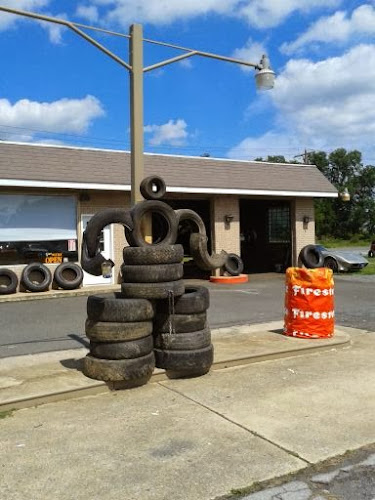
4061 Conrad Weiser Pkwy, Womelsdorf, PA
Our guide to finding a trustworthy mechanic in Berks County covers how to pick between shops.
Essig's Automotive in Reading lists winter tires among its services, along with installation, balancing, flat repair and tire-pressure sensor service.
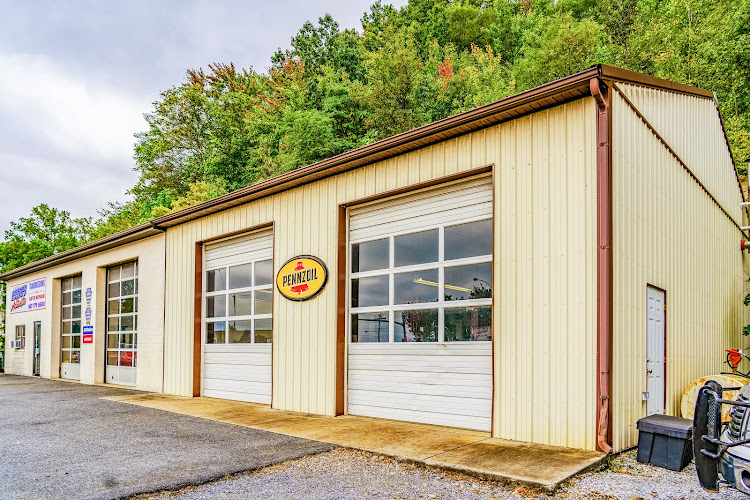
2900 Perkiomen Ave, Reading, PA
When to put winter tires on and take them off.
The tire makers' rule: put them on when daily temperatures consistently fall below 45°F, and take them off when they consistently stay above it. By Reading's normals that's November and April. Buy before the first freeze, which on average comes October 24, so the shop still has your size.
Why take them off at all? Winter tires wear faster and, once the roads are warm, grip less on dry and wet pavement than all-season tires. Swapped off each spring, a set can give three or four winters.
No Pennsylvania law requires winter tires; PennDOT's advice is that in an area prone to heavy snow you may want dedicated snow tires or chains, and at a minimum mud and snow rated tires, which is the M+S mark most all-season tires already carry. Studded tires are legal from November 1 through April 15, with studs no more than 2/32 inch beyond the tread, and chains only during a snow and ice emergency.
The rest of the winter check for your car.
Start with the tires you already have. Inspection rejects a tire worn below 2/32 of an inch of tread (the rule's words: "two adjacent treads with less than 2/32-inch tread remaining at any point"); the rest of inspection is its own post. For snow, keep at least 4/32 through winter: put a quarter head-first in a groove, and if the top of Washington's head is just visible you're at about 4/32 and it's time to shop.
Then the battery. At 5°F a fully charged battery delivers about half its rated capacity, and auto repair shops in Berks County will test it. Replace wiper blades at least once a year, consider winter blades, which wrap the blade frame in a rubber boot so ice doesn't build up, and use washer fluid rated not to freeze. Check that the coolant, the antifreeze in the overflow tank, is a 50/50 mix with water; a shop can test it, or a cheap tester from a parts store can. Tire pressure drops about 1 psi for every 10°F drop, so check it against the number on the driver's door placard, not the sidewall.
Put a kit in the trunk: ice scraper, shovel, blanket, jumper cables, flashlight, sand or cat litter, water, snacks and a phone charger. Pennsylvania law says a driver "shall make reasonable efforts to remove accumulated ice or snow from the motor vehicle ... including the hood, trunk and roof" within 24 hours after the snow stops; the fine is $50 for each offense, and $200 to $1,500 if what comes off strikes another vehicle or a pedestrian and causes death or serious bodily injury.
If the tires coming off are worn out, the county's recycling center in Leesport takes them Tuesday, Thursday and Saturday mornings at $12 a tire without the wheel. Pick the tire and call for the quote this month. For the house, from heating to snow removal to pipes, the winter services guide for Berks County picks up where this leaves off.
Frequently asked questions.
Are winter tires worth it if I only drive in town?
If your driving is flat and short and you can wait for the plows, an all-weather tire with the snowflake symbol covers most of it on one set; if you can't wait, that's the case for the winter set. Whatever you run, keep at least 4/32 of tread through winter.
Can I put winter tires on just the front wheels?
No. Winter tires on one axle only give the car handling that's hard to predict, so they go on as a set of four.
Are studded tires legal in Pennsylvania?
Yes, from November 1 through April 15, with studs no more than 2/32 inch beyond the tread. Chains are allowed only during a snow and ice emergency.
Sources
- NOAA National Centers for Environmental Information, U.S. Climate Normals 1991-2020, monthly, Reading Regional Airport and annual (read October 2026): monthly mean and low temperature normals, days at or below freezing (the station carries no snowfall normal).
- National Weather Service Mount Holly, Reading climate summary for 2025 (issued January 7, 2026) and the monthly Reading climate summaries (the November 2025 through April 2026 issues, under the product's version list): snow-day normals, freeze-date normals, and the 2025-26 and 2024-25 season snowfall totals.
- Michelin, "Winter Tire Timing & PSI Tips" and "Summer vs. Winter vs. All-Season Tires" (2026): the 45°F rule, M+S versus the snowflake symbol, all-weather tires, four tires of one type.
- Nokian Tyres, "When should you put on winter tires?" (2025) and Bridgestone, "Winter & Snow Tires vs. All-Season Tires": the softer compound, swapping back in spring, a full set of four.
- Consumer Reports, "Best Winter/Snow Tires" (updated October 1, 2026) and "Winter/Snow Tires vs. All-Season Tires" (November 10, 2017): all-weather tires, dry and wet grip, faster wear, three or four seasons, buying before the first frost.
- Consumer Reports, "Do You Really Need AWD in the Snow?" (September 2015): all-wheel drive versus winter tires, the stopping-distance tests.
- Consumer Reports, "Make Sure Your Tires Have Enough Tread for a Snowy Winter" (updated December 3, 2025): the 4/32-inch advice and the coin tests.
- U.S. Tire Manufacturers Association, TISB 37 No. 6, severe snow definition (PDF), TISB 10 No. 8, M+S definition (PDF), TISB 42 No. 3, application of winter tires (PDF) and "Seasonal Care Tips": the snowflake test, what M+S means, four wheel positions, four-wheel drive and stopping.
- Tire Rack, search results for 205/55R16 and 225/65R17, winter categories (read October 10, 2026), and "What Does the M+S Brand Mean?": per-tire prices and the 110 traction index.
- RepairPal, "Tire & Wheel Assembly Rotate & Balance Cost" (updated September 3, 2026): the $109 to $160 national labor range.
- Sam's Club, "Tire Installation Package" (PDF) and Costco Tire Center, "The Costco Advantage": the $20-per-tire package and tire-pressure sensors sold separately.
- Bachman's Auto Repair, Wernersville, service prices, Keppley's Tire Center, Essig's Automotive, services (read October 2026): a published mount-and-balance price, winter tires offered, quotes by phone.
- PennDOT, "Winter Preparation": snow tires and chains, the emergency kit.
- 75 Pa.C.S. § 4525, "Tire equipment and traction surfaces": studded tires November 1 through April 15, chains in a snow and ice emergency.
- 67 Pa. Code Chapter 175, Vehicle Equipment and Inspection (§ 175.80): the tread-depth and same-axle reject rules.
- 75 Pa.C.S. § 3721, "Snow and ice" (added by Act 90 of 2022): clearing the hood, trunk and roof, and the fines.
- AAA, "Winter Car Care Checklist" (PDF) and AAA Club Alliance, "5 Ways to Prepare Your Vehicle for Winter": battery, wipers, washer fluid, coolant, tire pressure, the kit.
- Berks County Solid Waste Authority, tire pricing (June 1, 2026, PDF): the $12 drop-off price per car tire.