Flood Insurance Cost in Pennsylvania: A Berks County Answer
What Berks County flood policies cost, how to check an address on FEMA's map, what a lender requires, the basement rule, NFIP vs private, the 30-day wait.

A federal flood policy on a single-family house in Berks County costs about $1,206 a year with the fees in, which is about $100 a month, and half of those single-family policies land between $800 and $1,807. Your homeowners policy pays nothing for a flood, so a flood policy is a separate purchase. There are two kinds, a federal policy and a private one. If you're near the Schuylkill or one of the creeks, or a lender just told you to buy coverage, the question is which kind and how soon, and an insurance agent in Berks County can quote both kinds.
That price is the federal program's: the National Flood Insurance Program, the one most people call the NFIP.
What flood insurance costs in Berks County.
The middle Berks single-family policy costs $1,206 a year, and where the house sits on the flood map moves the price. Inside the mapped high-risk zone the middle policy costs $1,410 a year; outside it, $953. Those figures were counted on FEMA's own policy records, fees included, for policies in force as of September 2026. The records hold 825 Berks policies on every kind of building, 600 of them on single-family houses, and the table uses those 600.
| Berks County single-family houses with a federal flood policy | Policies in force | What the middle policy costs a year | A quarter cost less than | A quarter cost more than |
|---|---|---|---|---|
| All of them | 600 | $1,206 | $800 | $1,807 |
| Inside the mapped high-risk zone (A and AE) | 426 | $1,410 | $936 | $1,999 |
| Outside it (X) | 174 | $953 | $639 | $1,276 |
Our count on FEMA's own policy records for Berks County, policies in force as of September 2026; the cost is the whole yearly charge on the policy, the federal fee and surcharge included.
What to make of it: your own price can land anywhere in its row, so the map tells you roughly where it falls, not the number.
A federal policy costs the same from every agent and every company that sells it. Three things set the number: where the property's built, how it's built, and what it would cost to replace. You can lower it by raising the water heater and the electrical panel off the floor. By law most rates can't rise more than 18 percent a year.
Towns that do extra floodplain work can earn their residents a 5 to 45 percent discount on federal premiums through FEMA's Community Rating System, and no Berks town has qualified, so there's no discount to look for here.
How to tell whether your house needs it.
Start with the map. FEMA's Flood Map Service Center searches by address, and if yours comes back in a zone lettered A or AE, you're in the high-risk zone, land with at least a 1 percent chance of flooding in any year. People call it the 100-year floodplain. The map calls it the special flood hazard area. Berks floods along the Schuylkill River, Maiden Creek, Tulpehocken Creek and Manatawny Creek, and its steeper northern ground and small streams flash-flood with little warning.
FEMA's own count this August found 684 Berks homes with a residential flood contract (a different count from the policy records above, which include every kind of building). Of those 684, 485 are inside the high-risk zone, where 1,445 homes stand. Two of three homes in the mapped zone carry no flood policy, and countywide fewer than one home in 200 does.
So does your house need one? If the map puts you in the high-risk zone and you have a mortgage, the lender settles it. Outside the zone the law leaves it to you, and two facts bear on the choice: the policy costs less there (the middle single-family policy is $953 a year), and a third of the county's flood claims have come from addresses outside the zone.
When your lender requires flood insurance.
If the building sits in the high-risk zone and there's a mortgage on it, the lender requires flood insurance; anywhere else, the law leaves it to you and your lender. A bank may not make, increase, extend or renew a mortgage on a building in the high-risk zone unless flood insurance covers it for the life of the loan, for at least the lower of the loan balance or the program's maximum, which is $250,000 on the building.
The bank has to accept a private policy if it meets the federal rule's standard for one, and not every private policy does, so ask the agent whether the private quote is one your lender must accept. If a bank finds a loan on its books without the coverage, it gives notice, and if you don't buy within 45 days it buys a policy for you and may charge you for it. That rule is for a loan already made; a buyer's deadline is the closing, because the bank may not make the loan without the coverage in place.
On most home loans made since 2016 the premium goes into escrow, so the bank collects it with your mortgage payment. If you're buying, the flood line is on the new-homeowner checklist.
What a federal flood policy covers, and what it doesn't.
A federal policy pays up to $250,000 for the building and up to $100,000 for your belongings, and you buy the two separately with separate deductibles.
The basement is where people get surprised, and seven of ten Berks single-family policies are on houses with one. Building coverage down there pays for a listed set of things: the mechanicals (furnace, water heater, heat pump, central air, breaker box, sump pump), the structure (foundation, stairs, insulation, unfinished drywall) and clean-up. Belongings in a basement are covered only if they're a washer, a dryer, a freezer and its food, or a window air conditioner. The finished rec room isn't on the list.
Nothing pays for a hotel or extra living costs, and nothing outside the building is covered: decks, fences, wells and septic systems are on their own. Sewer water that backed up during a flood is covered; a backup from a clogged pipe on a dry day isn't.
Why you buy it 30 days before you need it.
A federal policy takes effect 30 days after you buy it, and it never pays for a flood that was already under way when you applied. There's no wait when you buy it for a mortgage closing, as long as the application and the premium are in at or before closing. And once the water's already in the street, the emergency services guide has the part that matters: turn around, don't drown.
A Wyomissing agency, Spotts Insurance Group, says it the way I would: "most policies include a 30-day waiting period before coverage takes effect. That means you should secure your policy long before the Schuylkill River or heavy storms threaten Wyomissing and the surrounding Berks County area."

74 Commerce Dr, Wyomissing, PA
Private flood insurance in Pennsylvania, and how to get both quotes.
Ask for two quotes, a federal one and a private one. Pennsylvania's Insurance Department describes three kinds of seller. The first is the federal program: guaranteed to be available in a participating community (a town that takes part in the federal program, and every Berks municipality but Lyons Borough does), federally backed, with capped rate increases, but with standardized terms and limits that can't be raised. The second is a private insurer licensed in the state, which can offer higher limits and options the federal policy lacks, such as basement contents, replacement cost on belongings and temporary living expenses. The trade is that a lender may not accept every private policy, a private insurer can decline to renew, and going back to the federal program later can cost more.
The third is a surplus lines insurer, a specialty insurer that covers high-risk or unusual properties other insurers won't, without the state protections a licensed company carries. Both private kinds tend to start faster than the federal 30 days, often in 10 to 14.
Who's the private quote for? Outside the high-risk zone it can be the cheaper policy; inside the zone with a mortgage, the private quote has to be a policy your lender will accept, so ask the agent that before you rely on it. Ask for both quotes either way. A Robesonia agency, The Kathy Barry Agency, puts the outside-the-zone case in its own words: "if you're not in a high-risk flood zone, there are also private flood insurance options that sometimes can be less expensive than the FEMA program," and "even if you're not in a high risk flood zone, we do have enough weather events that you can get impacted by a flood."
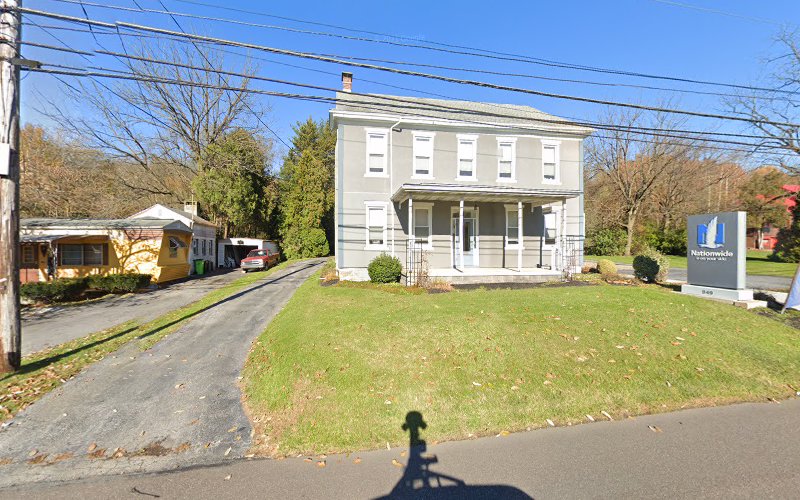
949 W Penn Ave, Robesonia, PA
Not every agent can put both quotes in front of you; the post on independent and captive agents explains which ones can shop a private policy alongside the federal one. Here's what I'd do this week: run your address through the flood map, decide on building coverage, belongings coverage or both, and call an insurance agent in Berks County for both quotes side by side. The 30-day clock starts when you sign. If you're buying for a closing there's no clock: coverage starts at closing as long as the application and the premium are in by then. Either way, make the call this week.
Questions people ask.
Is flood insurance required in Pennsylvania?
The federal rule reaches one case: a building in the mapped high-risk zone with a mortgage on it, where the lender may not make or renew the loan without flood coverage for its whole life.
How much is flood insurance in PA if you're outside the flood zone?
In Berks County, the middle single-family federal policy outside the high-risk zone costs $953 a year, with a quarter under $639 and a quarter over $1,276. That's a Berks figure, not a state average. Outside the zone a private policy can sometimes come in lower.
Does homeowners insurance cover flooding?
No. A standard homeowners policy pays nothing for a flood; that's what a separate flood policy is for. Sewer water that backed up during a flood is covered by the flood policy; a backup from a clogged pipe with no flood isn't.
Sources
- FEMA, OpenFEMA NFIP Policies (version 3), Berks County rows, data as of September 8, 2026: the policies in force, their yearly cost by zone and foundation type, the lender-required and loan-closing counts; the medians, quartiles and shares are our arithmetic on the deduplicated in-force rows.
- FEMA, "NFIP Residential Penetration Rates", Berks County record (as of August 3, 2026): 684 residential contracts in force, 485 inside the high-risk zone, 1,445 homes inside it and 141,142 countywide.
- FEMA, OpenFEMA NFIP Claims (version 3), Berks County rows, refreshed September 9, 2026: 1,313 claims since 1978, the dollars paid, the share rated outside the high-risk zone, the biggest claim days and the counts by community; our arithmetic on the records.
- FloodSmart (National Flood Insurance Program), "Buy a Flood Insurance Policy": the 30-day wait and its four exceptions, the $250,000 and $100,000 limits, the one-year term, the same-rate-from-every-agent rule, the three things that set the rate, and the covered and not-covered lists.
- 44 CFR Part 61, Appendix A(1), Standard Flood Insurance Policy Dwelling Form, and § 61.11 (current through September 1, 2026): the basement building and contents lists, the property not insured, the exclusions including living expenses and a flood already in progress, and the effective-date rules.
- FEMA, "NFIP's Pricing Approach" (updated April 9, 2026) and FEMA, "Risk Rating 2.0 First Year Change by State and County", Pennsylvania workbook, Berks County row: the 18 percent yearly cap, the rating variables and dates, and how the 998 Berks policies moved at the transition (our arithmetic on the row).
- FEMA, "CRS Eligible Communities" (April 1, 2026 effective date) and FEMA, "Community Rating System": the 40 Pennsylvania communities in the program, none in Berks County, and the 5 to 45 percent discount schedule.
- FEMA Flood Map Service Center and FEMA glossary, "Flood Zones": the address search and the zone letters and what each means.
- Berks County Department of Emergency Services, "Hazard Vulnerability Assessment and Mitigation Plan Update" (May 2, 2024): the flood corridors, flash flooding, the flood history, the map dates by municipality, Lyons Borough as the one non-participating municipality, and the count of flood-vulnerable structures by municipality.
- Berks County, "Emergency Management Maps": the county map gallery's link to FEMA's Flood Insurance Rate Maps.
- National Weather Service, gauge RDRP1, Schuylkill River at Reading: flood stage, the street-by-stage impact statements, and the historic crests with dates.
- Pennsylvania Insurance Department, "Flood Insurance" and "Privately Licensed Flood Insurance Company Listing": the three kinds of flood insurer and what the Department says about each, the lender sentence, the flood map sentence, the private waiting period, and the 26 licensed private flood insurers.
- Pennsylvania Insurance Department, "Flood Insurance Premium Assistance Task Force Final Report" (July 2024): the 3.1 million insured homes and about 50,000 with flood coverage, the national 40 percent, and the growth and makeup of the state's private flood market.
- 12 CFR § 339.3, § 339.5, § 339.7 and § 339.2 (current through September 1, 2026): what a lender must require on a loan in the high-risk zone, the amount, the private-policy acceptance rule, escrow, and the 45-day force-placement rule.
- Spotts Insurance Group, "Flood Insurance in Wyomissing, Pennsylvania: Why Every Homeowner Needs It" (September 2, 2025): the agency's words on the waiting period and on contents-only coverage for renters.
- The Kathy Barry Agency, "What Flood Insurance Options Are Available in PA? (Robesonia, PA)" (May 19, 2025): the agency's words on private flood options outside the high-risk zone.