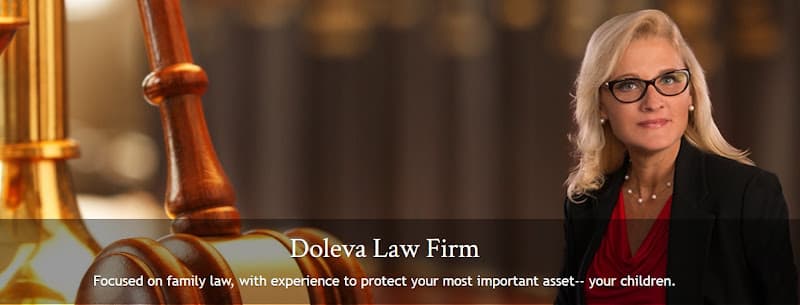
Doleva Law
Doleva Law is a Reading-based law firm known for handling complex custody cases. Long-term clients praise the attorney's fierce courtroom advocacy and life-changing results for families.
What people love about Doleva Law
Winning "Hopeless" Custody Cases
Multiple positive reviewers specifically emphasize that Kristen achieved outcomes in difficult cases that exceeded expectations, suggesting particular skill with challenging custody situations.
Consistent Courtroom Success for Long-Term Clients
The 9-year client relationship with an unbroken record of courtroom victories suggests strong performance for clients she fully commits to representing.
Life-Changing Family Advocacy
Satisfied clients use emotionally powerful language emphasizing that her work fundamentally improved their family situations, particularly regarding children's wellbeing.
Key Themes from Reviews of Doleva Law
Attorney Dedication & Advocacy
MixedClients have sharply divided experiences, with some praising Kristen's fierce advocacy and dedication while others feel she dismissed their concerns and failed to represent their interests.
Case Outcomes & Results
MixedSome clients report consistently successful outcomes and life-changing victories, while others feel the attorney worked against their interests or failed to achieve their goals.
Communication & Responsiveness
NegativeMultiple clients report significant frustration with unreturned calls, difficulty reaching the attorney, and being kept uninformed about case developments.
Court Attendance & Reliability
NegativeSeveral clients report the attorney failed to appear at scheduled court hearings, citing conflicts with other cases, leaving clients unrepresented.
Pricing & Billing Transparency
NegativeDissatisfied clients feel fees were excessive for services rendered and experienced difficulty obtaining refunds when representation fell short.
Long-Term Client Relationships
PositiveSome clients have maintained long-term relationships with the attorney, crediting her with sustained success in complex custody matters.
About Doleva Law
Overview
Doleva Law is a legal practice located in downtown Reading, Pennsylvania, operating from a second-floor suite at 606 Court Street. The firm's proximity to the Berks County Courthouse positions it within the central legal district of Reading, providing convenient access for clients involved in local court proceedings. The practice handles family law matters, with a particular concentration on custody disputes and related domestic relations cases.
Practice Areas and Legal Focus
Doleva Law concentrates its practice on family law, with custody litigation representing a significant portion of the firm's caseload. The practice handles cases involving child custody determinations, custody modifications, and complex family disputes that require court intervention. This specialization in custody matters means the firm regularly appears before Berks County family court judges and has developed familiarity with local court procedures and practices.
Family law encompasses a broad range of legal matters affecting domestic relationships and household arrangements. Within this field, custody cases often involve determinations about legal custody, which addresses decision-making authority for children, and physical custody, which concerns where children reside. Cases may involve initial custody determinations following separation or divorce, modifications to existing custody orders when circumstances change, or enforcement actions when one party fails to comply with court orders.
The firm handles cases involving both married and unmarried parents, as Pennsylvania law provides custody rights to biological parents regardless of marital status. This includes cases where fathers seek custody rights, situations involving grandparent custody or visitation, and matters where child welfare concerns factor into custody determinations.
Location and Service Area
The firm maintains its office at 606 Court Street, Suite 200, in Reading, Pennsylvania. This address places the practice in the heart of Reading's legal and governmental district. The Berks County Courthouse, where most local family law matters are heard, is located nearby on Court Street, making the office location practical for attorneys who need to attend frequent court appearances.
Reading serves as the county seat of Berks County, a region with a population of approximately 420,000 residents. The city itself has a population of roughly 95,000, making it the fifth-largest city in Pennsylvania. As the administrative center of Berks County, Reading's Court Street corridor houses numerous law offices, government buildings, and legal services providers.
The firm's location in Berks County means it primarily serves clients with matters in the Berks County Court of Common Pleas, which has jurisdiction over family law cases for residents of the county. Pennsylvania's county-based court system means that custody and family law matters are typically heard in the county where the parties reside or where the children are located.
Pennsylvania Family Law Context
Family law practitioners in Pennsylvania operate within a legal framework established by state statutes and case law. Pennsylvania custody law, codified primarily in Title 23 of the Pennsylvania Consolidated Statutes, establishes the factors courts must consider when making custody determinations. The paramount consideration in all custody cases is the best interest of the child, a standard that requires courts to evaluate numerous factors including the relationship between children and each parent, the ability of each party to provide for the child's needs, and the stability of each proposed living arrangement.
Pennsylvania recognizes several forms of custody, including shared legal custody, where both parents participate in major decisions affecting the child, and sole legal custody, where one parent has exclusive decision-making authority. Physical custody arrangements can range from primary physical custody with one parent to shared physical custody arrangements that divide the child's time between households.
Custody cases in Pennsylvania may proceed through different procedural tracks depending on the circumstances. Some cases resolve through negotiated agreements between the parties, which are then submitted to the court for approval. Others require custody conferences, where a conference officer attempts to help parties reach agreement, or custody trials, where a judge hears evidence and makes a determination.
The Role of Family Law Attorneys
Attorneys practicing family law serve multiple functions in custody proceedings. They advise clients about their legal rights and the likely outcomes of various courses of action. They prepare and file legal documents required by the court, including custody complaints, motions, and proposed orders. They represent clients at court appearances, including conferences, hearings, and trials.
In contested custody cases, attorneys gather and present evidence supporting their client's position. This may include testimony from the parties themselves, witnesses who can speak to parenting abilities and the children's needs, and in some cases expert witnesses such as psychologists who have conducted custody evaluations. Attorneys also cross-examine witnesses presented by the opposing party and make legal arguments about how the court should interpret the evidence and apply the law.
Family law practice requires familiarity with both substantive law and local court procedures. Each county in Pennsylvania may have its own local rules governing family law matters, including requirements for mandatory mediation or custody conferences, deadlines for filing documents, and procedures for scheduling hearings. Attorneys who regularly practice in a particular county develop familiarity with these local requirements and with the preferences and tendencies of local judges.
Accessibility and Contact Information
The office building at 606 Court Street provides wheelchair accessible parking facilities, making the location accessible to clients with mobility limitations. This accessibility feature is particularly relevant for a law practice, as clients may need to visit the office multiple times during the course of their case for consultations, document review, and case preparation meetings.
The firm can be reached by telephone at 610-375-3700. This number serves as the primary point of contact for prospective clients seeking to schedule consultations and for existing clients communicating with the office about their cases.
Berks County Legal Community
Doleva Law operates within the broader legal community of Berks County, which includes the Berks County Bar Association and various legal aid organizations serving the region. The Berks County Court of Common Pleas, where the firm's cases are heard, is organized into divisions including a family court division that handles custody, divorce, support, and protection from abuse matters.
Reading's legal district has historically served as the center of legal practice for Berks County, with law offices concentrated near the courthouse to facilitate the daily business of litigation. This geographic clustering allows attorneys to efficiently move between their offices and the courthouse for hearings, filings, and other court business.
The firm's focus on custody matters places it within a specific niche of family law practice. While some family law firms handle a broad range of domestic relations matters including divorce, property division, and support, others concentrate more specifically on custody disputes. This specialization can develop from an attorney's particular interests, experience with certain types of cases, or recognition of community needs for specific legal services.
HTML:
Overview
Doleva Law is a legal practice located in downtown Reading, Pennsylvania, operating from a second-floor suite at 606 Court Street. The firm's proximity to the Berks County Courthouse positions it within the central legal district of Reading, providing convenient access for clients involved in local court proceedings. The practice handles family law matters, with a particular concentration on custody disputes and related domestic relations cases.
Practice Areas and Legal Focus
Doleva Law concentrates its practice on family law, with custody litigation representing a significant portion of the firm's caseload. The practice handles cases involving child custody determinations, custody modifications, and complex family disputes that require court intervention. This specialization in custody matters means the firm regularly appears before Berks County family court judges and has developed familiarity with local court procedures and practices.
Family law encompasses a broad range of legal matters affecting domestic relationships and household arrangements. Within this field, custody cases often involve determinations about legal custody, which addresses decision-making authority for children, and physical custody, which concerns where children reside. Cases may involve initial custody determinations following separation or divorce, modifications to existing custody orders when circumstances change, or enforcement actions when one party fails to comply with court orders.
The firm handles cases involving both married and unmarried parents, as Pennsylvania law provides custody rights to biological parents regardless of marital status. This includes cases where fathers seek custody rights, situations involving grandparent custody or visitation, and matters where child welfare concerns factor into custody determinations.
Location and Service Area
The firm maintains its office at 606 Court Street, Suite 200, in Reading, Pennsylvania. This address places the practice in the heart of Reading's legal and governmental district. The Berks County Courthouse, where most local family law matters are heard, is located nearby on Court Street, making the office location practical for attorneys who need to attend frequent court appearances.
Reading serves as the county seat of Berks County, a region with a population of approximately 420,000 residents. The city itself has a population of roughly 95,000, making it the fifth-largest city in Pennsylvania. As the administrative center of Berks County, Reading's Court Street corridor houses numerous law offices, government buildings, and legal services providers.
The firm's location in Berks County means it primarily serves clients with matters in the Berks County Court of Common Pleas, which has jurisdiction over family law cases for residents of the county. Pennsylvania's county-based court system means that custody and family law matters are typically heard in the county where the parties reside or where the children are located.
Pennsylvania Family Law Context
Family law practitioners in Pennsylvania operate within a legal framework established by state statutes and case law. Pennsylvania custody law, codified primarily in Title 23 of the Pennsylvania Consolidated Statutes, establishes the factors courts must consider when making custody determinations. The paramount consideration in all custody cases is the best interest of the child, a standard that requires courts to evaluate numerous factors including the relationship between children and each parent, the ability of each party to provide for the child's needs, and the stability of each proposed living arrangement.
Pennsylvania recognizes several forms of custody, including shared legal custody, where both parents participate in major decisions affecting the child, and sole legal custody, where one parent has exclusive decision-making authority. Physical custody arrangements can range from primary physical custody with one parent to shared physical custody arrangements that divide the child's time between households.
Custody cases in Pennsylvania may proceed through different procedural tracks depending on the circumstances. Some cases resolve through negotiated agreements between the parties, which are then submitted to the court for approval. Others require custody conferences, where a conference officer attempts to help parties reach agreement, or custody trials, where a judge hears evidence and makes a determination.
The Role of Family Law Attorneys
Attorneys practicing family law serve multiple functions in custody proceedings. They advise clients about their legal rights and the likely outcomes of various courses of action. They prepare and file legal documents required by the court, including custody complaints, motions, and proposed orders. They represent clients at court appearances, including conferences, hearings, and trials.
In contested custody cases, attorneys gather and present evidence supporting their client's position. This may include testimony from the parties themselves, witnesses who can speak to parenting abilities and the children's needs, and in some cases expert witnesses such as psychologists who have conducted custody evaluations. Attorneys also cross-examine witnesses presented by the opposing party and make legal arguments about how the court should interpret the evidence and apply the law.
Family law practice requires familiarity with both substantive law and local court procedures. Each county in Pennsylvania may have its own local rules governing family law matters, including requirements for mandatory mediation or custody conferences, deadlines for filing documents, and procedures for scheduling hearings. Attorneys who regularly practice in a particular county develop familiarity with these local requirements and with the preferences and tendencies of local judges.
Accessibility and Contact Information
The office building at 606 Court Street provides wheelchair accessible parking facilities, making the location accessible to clients with mobility limitations. This accessibility feature is particularly relevant for a law practice, as clients may need to visit the office multiple times during the course of their case for consultations, document review, and case preparation meetings.
The firm can be reached by telephone at 610-375-3700. This number serves as the primary point of contact for prospective clients seeking to schedule consultations and for existing clients communicating with the office about their cases.
Berks County Legal Community
Doleva Law operates within the broader legal community of Berks County, which includes the Berks County Bar Association and various legal aid organizations serving the region. The Berks County Court of Common Pleas, where the firm's cases are heard, is organized into divisions including a family court division that handles custody, divorce, support, and protection from abuse matters.
Reading's legal district has historically served as the center of legal practice for Berks County, with law offices concentrated near the courthouse to facilitate the daily business of litigation. This geographic clustering allows attorneys to efficiently move between their offices and the courthouse for hearings, filings, and other court business.
The firm's focus on custody matters places it within a specific niche of family law practice. While some family law firms handle a broad range of domestic relations matters including divorce, property division, and support, others concentrate more specifically on custody disputes. This specialization can develop from an attorney's particular interests, experience with certain types of cases, or recognition of community needs for specific legal services.
Unique Details About Doleva Law
Accessibility
- Wheelchair accessible parking lot
Contact Information for Doleva Law
Reading, PA 19601
United States of America
County: Berks County
Phone: +1 610-375-3700
Customer Reviews
3.4 out of 5 stars
Based on 8 reviews
Review data
5 star reviews
- 50%
4 star reviews
- 13%
3 star reviews
- 0%
2 star reviews
- 0%
1 star reviews
- 38%
Working Hours / Hours of Operation
- Monday:
- 8:30AM-4:30PM
- Tuesday:
- 8:30AM-4:30PM
- Wednesday:
- 8:30AM-4:30PM
- Thursday:
- 8:30AM-4:30PM
- Friday:
- 8:30AM-4:30PM
- Saturday:
- Closed
- Sunday:
- Closed
Location Map
Similar Lawyers Near Reading, PA





BerksConnect: everything local in Berks County, PA.
8,700+ local businesses with AI-summarized reviews, plus local guides, jobs, and what's happening around the county.