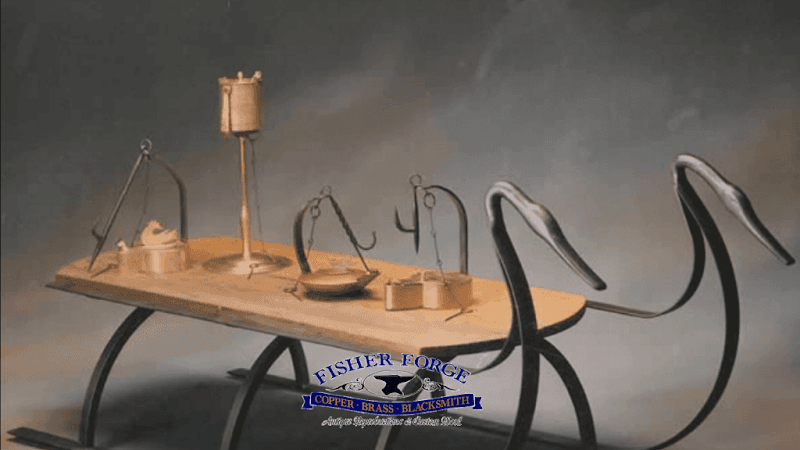
Fisher Forge
Fisher Forge is a blacksmith shop in Hamburg known for exceptional metalwork craftsmanship and knife sharpening services. Owner David Fisher is praised for his versatile skills and friendly, fair-priced approach.
What people love about Fisher Forge
David Fisher - The Owner/Craftsman
David is mentioned by name in multiple reviews, praised for both his exceptional craftsmanship and his friendly, personable demeanor—making him the clear standout of this business.
Knife Sharpening Services
This specific service is mentioned as a practical offering with good results and fair pricing, indicating it may be a reliable go-to service for customers.
Key Themes from Reviews of Fisher Forge
Craftsmanship & Quality of Work
PositiveCustomers are highly impressed with the exceptional quality and versatility of the metalwork and blacksmithing produced.
Staff Friendliness & Personality
PositiveCustomers find the owner/craftsman to be personable, approachable, and pleasant to work with.
Pricing/Value
PositiveAt least one customer specifically notes that the pricing is reasonable and fair for the services provided.
Professional Skill & Expertise
PositiveCustomers recognize and praise the high level of technical skill and expertise demonstrated in the work.
About Fisher Forge
Overview
Fisher Forge is a blacksmith shop located at 572 St Michaels Rd in Hamburg, Pennsylvania. Operating within Berks County in the heart of Pennsylvania Dutch Country, the forge represents a continuation of metalworking traditions that have deep roots in this region of southeastern Pennsylvania. The business is operated by David Fisher, who serves as the primary craftsman and handles the full range of blacksmithing work produced at the facility.
Hamburg itself sits along the Blue Mountain ridge, approximately 20 miles north of Reading. The town and surrounding area have historically been home to various trades and craftspeople, and Fisher Forge contributes to this ongoing tradition of skilled manual trades in the region. The shop maintains a wheelchair accessible parking lot, making the facility accessible to customers with mobility considerations.
Services and Capabilities
As a working blacksmith shop, Fisher Forge offers metalworking services that span the traditional scope of the blacksmithing trade. The forge produces custom metalwork, which can encompass a broad range of items depending on client needs and specifications. Blacksmithing as a trade involves heating metal—typically iron or steel—in a forge until it becomes malleable, then shaping it through hammering, bending, cutting, and other techniques performed at the anvil.
Among the specific services offered at Fisher Forge is knife sharpening. This practical service addresses a common need for both household and professional customers who require maintenance of cutting tools. Knife sharpening at a blacksmith shop typically involves the use of grinding wheels, whetstones, and honing equipment, with the smith's understanding of metal properties informing the appropriate angle and technique for different blade types.
The scope of work at a traditional blacksmith shop like Fisher Forge may include:
- Custom forged hardware such as hinges, latches, and handles
- Decorative ironwork including railings, gates, and architectural elements
- Tool making and repair
- Knife and blade work
- Agricultural and equestrian metalwork
- Restoration of antique iron pieces
- Custom commissions based on client specifications
The versatility inherent in blacksmithing means that shops like Fisher Forge can often accommodate unusual or one-of-a-kind requests that would be difficult or impossible to fulfill through mass production or standard retail channels. This flexibility is one of the defining characteristics of custom forge work.
The Blacksmithing Trade
Blacksmithing is among the oldest metalworking trades, with origins dating back thousands of years. The term "blacksmith" derives from the black fire scale that forms on iron during heating and the act of "smiting" or striking metal. While the trade declined significantly during the industrial revolution as factory production replaced much handcrafted metalwork, blacksmithing has experienced a resurgence in recent decades. Contemporary blacksmiths serve multiple markets, including architectural and construction clients, artists and designers seeking custom pieces, historical restoration projects, and individual customers wanting handmade items.
In Pennsylvania, blacksmithing has particular historical significance. The state's iron industry was among the most important in colonial America, and the region around Berks County was home to numerous forges, furnaces, and foundries during the 18th and 19th centuries. Many Pennsylvania German communities maintained strong blacksmithing traditions, with smiths producing everything from farm implements to decorative hardware featuring distinctive regional designs. Modern blacksmiths in the area operate within this historical context, even as they adapt to contemporary markets and techniques.
The work of a blacksmith requires substantial physical skill and accumulated knowledge. Understanding how different metals behave at various temperatures, knowing when iron has reached the proper heat for specific operations, and developing the hammer control necessary for precise shaping all require years of practice. A blacksmith must also understand metallurgy, heat treatment processes like quenching and tempering, and various joining techniques including forge welding.
Location and Regional Context
Hamburg, Pennsylvania, where Fisher Forge is situated, is a borough of approximately 4,000 residents in Berks County. The town lies along Interstate 78 and is accessible from the broader Lehigh Valley and Reading metropolitan areas. St Michaels Road, where the forge is located, runs through the Hamburg area and provides access from the main commercial corridors.
The surrounding region includes a mix of agricultural land, small towns, and suburban development. This setting provides a natural customer base for blacksmith services, as rural and semi-rural areas often have ongoing needs for metalwork related to farming, property maintenance, and construction. Additionally, the tourism associated with Pennsylvania Dutch Country and nearby attractions like Cabela's retail store and the Hamburg area's outlet shopping brings visitors through the region who may have interest in traditional crafts and custom metalwork.
Berks County and the surrounding area are home to various artisans and craftspeople working in traditional trades. This concentration of skilled trades creates a community of practice and helps maintain awareness of handcraft traditions among local residents. For customers seeking custom metalwork, having a working blacksmith within reasonable driving distance provides options that might not be available in more urbanized or commercially developed areas.
Working with a Blacksmith
Customers approaching a blacksmith shop for custom work should understand that the process differs from purchasing ready-made goods. Custom forged items require consultation to establish specifications, materials, and design details. The smith must then acquire appropriate stock, plan the sequence of operations, and execute the work—a process that takes time proportional to the complexity of the project.
For services like knife sharpening, the turnaround is typically much faster, as these represent maintenance tasks rather than fabrication projects. Customers bringing items for sharpening or repair can generally expect quicker completion times than those commissioning new pieces.
Communication with the blacksmith about project requirements, timeline expectations, and pricing is an important part of the process. Because each custom piece involves individual labor and materials, costs will vary based on the specific work requested. Discussing these details upfront helps ensure that both the customer and the smith have aligned expectations for the finished product.
Practical Information
Fisher Forge can be reached by telephone at +1 610-504-8060. As a working forge rather than a retail storefront, customers should contact the shop in advance rather than assuming walk-in availability. Calling ahead allows for scheduling consultations, dropping off items for service, or discussing potential projects.
The facility's wheelchair accessible parking lot accommodates customers who require accessible facilities. This accessibility consideration makes the shop available to a broader range of customers than might otherwise be able to visit a traditional workshop setting.
For those unfamiliar with working with independent craftspeople, it is worth noting that blacksmith shops typically operate differently from retail businesses. Hours may vary based on the smith's project schedule, and the shop environment is a working forge rather than a showroom. Customers should be prepared for an industrial workshop setting when visiting.
Unique Details About Fisher Forge
Accessibility
- Wheelchair accessible parking lot
Contact Information for Fisher Forge
Hamburg, PA 19526
United States of America
County: Berks County
Phone: +1 610-504-8060
Customer Reviews
5.0 out of 5 stars
Based on 6 reviews
Review data
5 star reviews
- 100%
4 star reviews
- 0%
3 star reviews
- 0%
2 star reviews
- 0%
1 star reviews
- 0%
Working Hours / Hours of Operation
- Monday:
- 8AM-5PM
- Tuesday:
- 8AM-5PM
- Wednesday:
- 8AM-5PM
- Thursday:
- 8AM-5PM
- Friday:
- 8AM-5PM
- Saturday:
- 8AM-5PM
- Sunday:
- Closed
Location Map
Similar Manufacturing Plants Near Hamburg, PA
BerksConnect: everything local in Berks County, PA.
8,700+ local businesses with AI-summarized reviews, plus local guides, jobs, and what's happening around the county.