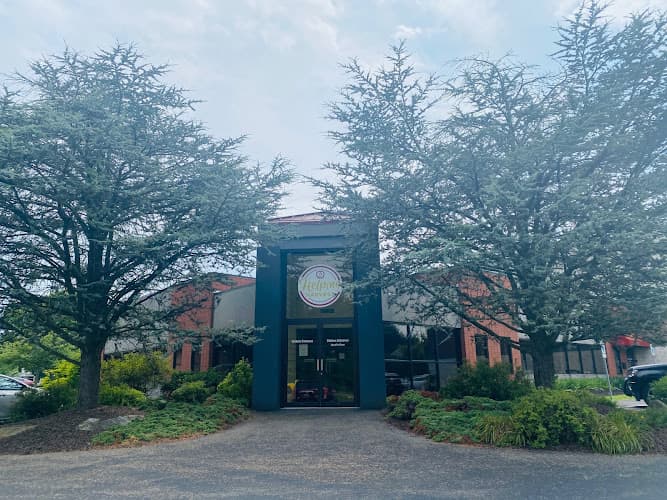
Growing Wildflowers is a nonprofit organization based at 228 Scenic Drive in Hamburg, Pennsylvania. The organization works on behalf of families throughout the Commonwealth of Pennsylvania who are raising children with complex medical needs, a population that often faces significant financial strain, limited access to adaptive recreation, and gaps in community understanding. Rather than operating as a service provider that delivers direct medical or therapeutic care, Growing Wildflowers functions as a support and advocacy organization, directing resources toward families and toward the communities those families live in.
The organization's work is organized around three stated goals: providing financial support through scholarships awarded to Pennsylvania families caring for children with complex medical needs, promoting inclusion through the distribution of educational materials, and advocating for adaptive and accessible spaces within local communities. These three areas are interrelated, addressing the practical cost of care, the social environment children encounter, and the physical environment they move through.
Background and Founding Story
Growing Wildflowers was inspired by Thea, whom the organization refers to as their little wildflower. Thea was born with Gould Syndrome, an extremely rare genetic disorder. The condition caused a stroke before her birth, and as a result of that stroke and the widespread brain damage that followed, she was later diagnosed with Cerebral Palsy, Epilepsy, and several other corresponding medical conditions. Families navigating a diagnosis of this kind typically encounter a long sequence of specialists, therapies, equipment needs, and insurance questions, much of it arriving at once and with little preparation.
The organization's name reflects the definition of a wildflower: a flower able to flourish in the most unfavorable conditions. That framing carries through the organization's public messaging, which emphasizes capability and participation rather than limitation. The founding story also explains the scope of the organization's work. Because the people behind Growing Wildflowers have direct experience with the financial, logistical, and social realities of complex pediatric medical care, the programs are built around the specific pressure points that families in similar circumstances tend to encounter.
Family Scholarships
The scholarship program is the organization's primary form of direct assistance. Financial support is awarded through scholarships to Pennsylvania families raising children with complex medical needs, with the purpose of helping offset the costs associated with ongoing care. Those costs are frequently broader than what people outside of this community expect. Beyond medical bills and insurance copays, families often absorb expenses related to specialized equipment, home modifications, travel to appointments at distant pediatric hospitals, supplies that insurance will not cover, and lost income when a parent reduces work hours or leaves employment entirely to serve as a full time caregiver.
By structuring the assistance as a scholarship, the organization creates a defined application and award process rather than an informal, case by case arrangement. Families who believe they may qualify can find information about eligibility and the application process by contacting Growing Wildflowers directly by phone.
Inclusion Education Materials
The second program area involves the creation and distribution of educational resources intended to promote understanding and inclusion of children with complex medical needs. These materials are directed at communities rather than at families, reflecting the view that inclusion depends heavily on the knowledge and attitudes of the people around a child: classmates, teachers, coaches, neighbors, recreation staff, and other parents.
Education of this kind addresses a practical problem. Children who use wheelchairs, walkers, communication devices, feeding tubes, or other assistive technology are frequently excluded from activities not because of deliberate unkindness but because the adults and children around them are unsure how to include them, how to speak about disability, or what a given child is actually able to do. Materials that explain conditions in accessible language, answer common questions, and model inclusive behavior can reduce that uncertainty. For the families involved, the result is fewer situations in which a child is left out by default.
Accessibility Advocacy
The third area of focus is community level advocacy for adaptive and accessible areas. In practice, this means working toward inclusive spaces where children with disabilities can participate alongside their peers. Playgrounds are among the most visible examples. A conventional playground, even one that meets minimum code requirements, may still be unusable for a child who cannot climb stairs, transfer out of a wheelchair, or tolerate certain surfaces. Adaptive design addresses these barriers through features such as ramped access, poured rubber or other firm surfacing, ground level play panels, supportive swing seating, and layouts that allow a caregiver to remain close by.
Advocacy at the municipal and community level often involves attending meetings, presenting information to decision makers, building public support, and helping officials understand what accessible design actually requires. Progress in this area tends to be incremental and long term, which is part of why organizations with a sustained local presence can be effective. Growing Wildflowers concentrates this work in its own region of Pennsylvania while maintaining a statewide scope for its family support.
Donations and How to Give
Growing Wildflowers accepts donations. Contributions fund the three program areas: the scholarships awarded to families, the inclusion education materials distributed in communities, and the local accessibility advocacy work. For a nonprofit of this scale, individual and community giving is central to program capacity, since the number of scholarships that can be awarded and the volume of educational materials that can be produced are directly tied to funds raised.
People interested in supporting the organization in other ways, including through fundraising events, community partnerships, or in kind contributions, can reach out using the contact information listed. Local businesses, service clubs, schools, and civic groups are typical partners for nonprofits working in pediatric disability support and accessible recreation.
Location and Service Area
The organization is located in Hamburg, a borough in Berks County in southeastern Pennsylvania, situated along the Schuylkill River near the Blue Mountain ridge. Hamburg sits within reach of Reading, Allentown, and the broader Lehigh Valley, and the surrounding area includes a mix of small boroughs, townships, and rural communities.
While the organization's accessibility advocacy is concentrated in its local community, the family scholarship program is open to families across the Commonwealth of Pennsylvania. That statewide scope means households in both urban and rural parts of the state may be eligible, including those in regions where pediatric specialty care requires substantial travel.
Contact Information
- Address: 228 Scenic Drive, Hamburg, PA 19526
- Phone: (484) 333-1710
- Organization type: Nonprofit organization
- Service area: Statewide for family scholarships, with accessibility advocacy focused locally
Families seeking information about scholarship eligibility, community groups interested in inclusion education materials, and individuals who wish to donate or volunteer can all use the phone number above to make contact.