Holistic Financial Services is a financial advisory practice located at 1290 Broadcasting Road, Suite 122, in Wyomissing, Pennsylvania. Led by advisor Jeffrey Bingham, the firm works with individuals, families, and small business owners across Berks County and the greater Reading area on retirement preparation, investment planning, insurance analysis, and the coordination of the various moving parts that make up a household's financial life.
The practice takes its name from its operating premise: that investment performance is only one variable in a person's financial outcome, and often not the decisive one. Tax treatment, insurance coverage, debt structure, spending patterns, and the timing of major decisions all interact, and the firm's planning process is built to examine those elements together rather than in isolation. This approach distinguishes the practice from advisory models organized primarily around portfolio management and asset allocation.
Services
Holistic Financial Services addresses a range of planning needs that typically surface as clients move through their working years and into retirement. Core areas of focus include:
- Retirement income planning, including the sequencing of withdrawals from taxable, tax-deferred, and tax-free accounts
- Investment planning and portfolio review aligned with stated goals and time horizons
- Analysis of insurance coverage, including life, disability, and long-term care considerations
- Review of tax exposure and how planning decisions affect current and future liabilities
- Cash flow and expense analysis, including how spending patterns change after employment income ends
- Social Security and pension election considerations
- Estate and legacy planning coordination
- Planning for business owners, including succession and exit considerations
Rather than treating these as separate product lines, the practice tends to approach them as interdependent. A decision about when to claim Social Security, for example, has implications for tax brackets, Medicare premiums, and the drawdown rate on invested assets. The firm's process is structured to surface those connections before decisions are finalized.
The Planning Process
New client relationships generally begin with an extended discovery conversation. This stage is used to document assets, liabilities, income sources, insurance policies, and tax filings, but also to understand less quantifiable factors: how a household makes decisions, what assumptions are being carried forward without examination, and what the client actually wants retirement to look like. Questions in this phase often extend beyond account balances into areas such as anticipated family obligations, health considerations, work identity, and the non-financial aspects of leaving a career.
Following discovery, the practice develops a written picture of the client's current position and identifies gaps, redundancies, and opportunities. Where issues fall outside the scope of financial advisory work—for instance, estate document drafting or complex tax return preparation—the firm maintains working relationships with attorneys, accountants, and other specialists in the Wyomissing and Reading area who can be brought in to address them.
Ongoing relationships typically include scheduled annual reviews, during which progress is measured against the original plan and adjustments are made for changes in circumstances, tax law, or market conditions. Between formal reviews, the practice operates on an open-access basis for questions that arise from life events: a job change, an inheritance, a real estate transaction, a health diagnosis, or a request from an adult child for financial guidance.
Behavioral Focus
One characteristic that sets the practice apart from more conventional advisory relationships is its attention to financial behavior. Jeffrey Bingham's work incorporates discussion of the patterns, assumptions, and inherited attitudes that shape how people handle money—what some in the field describe as financial scripts. The premise is that recurring financial problems often have behavioral origins rather than technical ones, and that addressing the underlying pattern produces more durable results than repeatedly correcting the symptom.
In practice, this means conversations about spending decisions, risk tolerance, family dynamics around money, and the emotional dimensions of retirement can form part of the planning work alongside spreadsheets and projections. Clients from analytical professional backgrounds, including accountants and engineers, have noted that this dimension of the work is uncommon among advisors they have previously engaged.
Educational Programming
The firm conducts seminars and client events on retirement-related topics. These sessions tend to address conceptual frameworks rather than specific products—for example, the observation that retirement expenses shift in composition rather than simply declining, that time itself becomes a finite resource requiring deliberate allocation, and that the financial strategies appropriate during accumulation years do not automatically translate to the distribution phase. The events are used both as education for existing clients and as an introduction for prospective ones who want to evaluate the firm's thinking before committing to a planning engagement.
Location and Access
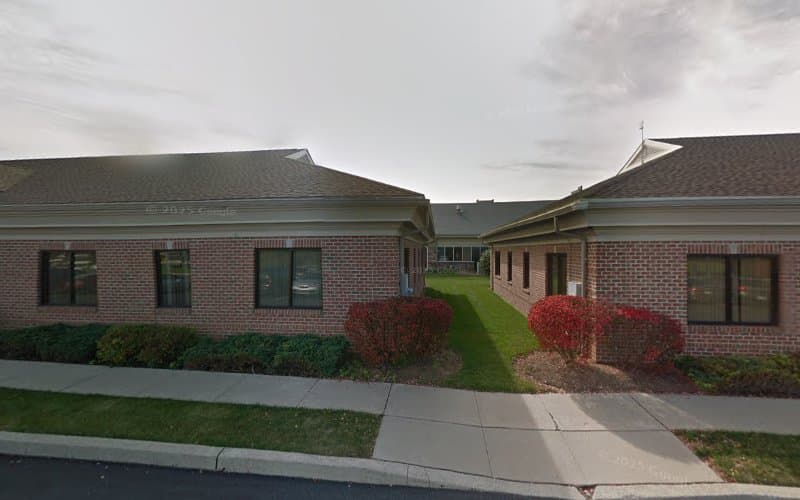
The office is situated on Broadcasting Road in Wyomissing, a borough immediately west of Reading in Berks County. The Broadcasting Road corridor houses a concentration of professional offices and medical practices and is accessible from Route 422 and the Route 222 corridor, making the location reachable for clients across Berks County and from adjacent areas of Lancaster, Chester, Montgomery, and Lebanon counties.
The property includes a parking lot with wheelchair-accessible parking. Meetings are held by appointment. The office can be reached by telephone at +1 610-655-5140.
Client Profile
The practice serves a client base that includes pre-retirees within several years of leaving the workforce, retirees managing distribution strategies, professionals in mid-career building assets, and business owners weighing succession questions. A portion of the client relationships extend two decades or more, spanning career changes, the raising and launching of children, the death of spouses or parents, and the transition into retirement—circumstances in which continuity of advice and institutional memory about a family's financial history carry practical value.
Prospective clients typically begin with an initial conversation to determine whether the firm's comprehensive planning approach matches what they are seeking. Individuals looking strictly for transactional investment execution may find the process more extensive than necessary, while those wanting an advisor to examine the full scope of their financial situation—including areas outside managed accounts—are generally the better fit for how the practice is structured.