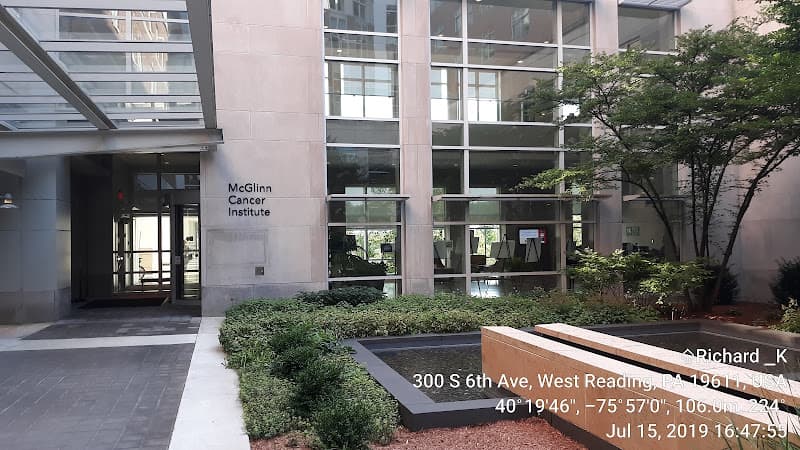
McGlinn Cancer Institute is the cancer care program of Reading Hospital, located at 420 S 5th Ave in West Reading, Pennsylvania. Part of the Tower Health system, the institute brings together medical oncology, radiation oncology, hematology, surgical services, diagnostic imaging and a range of supportive care programs on the Reading Hospital campus, which sits just across the Schuylkill River from the city of Reading and serves patients from throughout Berks County and the surrounding region.
The institute functions as a regional referral point for cancer diagnosis and treatment, meaning that many patients who begin their care with a primary care physician, a screening mammogram or an unexpected test result elsewhere in the area are directed here for specialist evaluation. Because the program operates within a full acute care hospital, patients have access to surgery, inpatient services, emergency care, laboratory work and imaging without traveling to a separate facility.
Medical Oncology and Hematology
Medical oncologists at McGlinn Cancer Institute diagnose and treat solid tumors and blood cancers using chemotherapy, immunotherapy, targeted drug therapies and hormonal treatments. Care is generally organized around disease sites, so patients with breast cancer, lung cancer, gastrointestinal cancers, genitourinary cancers, gynecologic cancers, head and neck cancers, skin cancers and sarcomas are matched with physicians who concentrate on those areas.
The hematology side of the practice treats both malignant and non-malignant blood disorders. That includes leukemia, lymphoma and myeloma, along with conditions such as anemia, iron deficiency, clotting and bleeding disorders, sickle cell disease and low platelet counts. Patients who need iron infusions, transfusions, injections or ongoing monitoring of blood counts are often seen here on a recurring basis, and infusion appointments are coordinated with laboratory draws so that results are available when the physician reviews them.
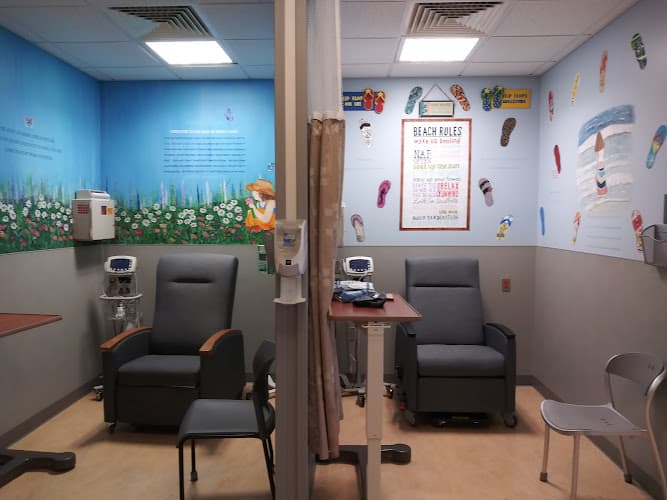
Infusion services are delivered in a dedicated treatment area staffed by oncology nurses. Treatment sessions vary widely in length depending on the regimen, from short injections to infusions lasting several hours, and the scheduling team typically confirms the expected duration when an appointment is made.
Radiation Oncology
The McGlinn Family radiation oncology program provides external beam radiation therapy and related techniques for patients requiring local treatment of a tumor. Radiation oncologists work with medical physicists, dosimetrists and radiation therapists to plan treatment using imaging studies, mapping the target area before the first session in a process commonly called simulation. Courses of radiation are frequently delivered daily over a period of weeks, which means patients often get to know the radiation therapy staff well during the course of treatment.
Radiation is used on its own for some cancers and in combination with surgery or drug therapy for others, either to shrink a tumor before an operation, to reduce the chance of recurrence afterward, or to relieve symptoms such as pain or bleeding in advanced disease.
Surgery, Diagnosis and Multidisciplinary Review
Surgical oncology, breast surgery, thoracic surgery, colorectal surgery, urologic surgery and neurosurgery are available through Reading Hospital and coordinated with the cancer institute. Diagnostic services include biopsy procedures, endoscopy, CT, MRI, PET imaging, nuclear medicine and pathology, all of which feed into treatment planning.
Complex cases are commonly presented at multidisciplinary tumor conferences, where medical oncologists, radiation oncologists, surgeons, radiologists and pathologists review a patient's imaging, pathology and history together and agree on a recommended plan. For patients, the practical result is a treatment approach that reflects input from several specialties rather than a single opinion.
Supportive and Survivorship Services
Cancer treatment involves more than medical appointments, and the institute maintains a set of programs intended to address the practical and emotional aspects of a diagnosis. These commonly include:
- Oncology nurse navigation, which gives patients a consistent point of contact to help sequence appointments and answer questions between visits
- Genetic counseling and testing for patients with a personal or family history suggesting inherited cancer risk
- Oncology nutrition counseling for appetite loss, weight changes and side effects that affect eating
- Social work support, including help with transportation, financial assistance programs and insurance questions
- Palliative care focused on symptom management and quality of life alongside active treatment
- Support groups, survivorship planning and rehabilitation services such as physical therapy and lymphedema care
- Clinical trial access, giving some patients the option of investigational therapies without leaving the region
Spanish language assistance is available, and interpretation services are part of the broader Reading Hospital system, which reflects the linguistic makeup of the communities the hospital serves.
Location, Parking and Access
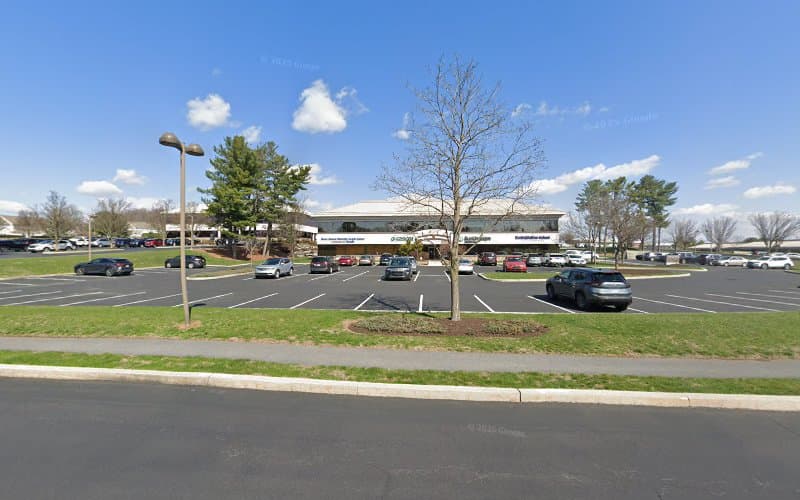
The institute is on the Reading Hospital campus in West Reading, a borough bordered by Wyomissing and the city of Reading. The campus is sizable and includes multiple connected buildings, parking structures and entrances, so first time visitors are encouraged to allow extra time to find the correct entrance and to ask hospital staff or greeters for directions to the cancer institute specifically. Calling ahead at +1 484-628-0900 to confirm which entrance and floor applies to a given appointment can save time on a first visit.
The facility has a wheelchair accessible entrance, wheelchair accessible restrooms and wheelchair accessible parking. Restrooms are available on site for patients and the family members or caregivers who accompany them, which matters for longer infusion and treatment visits.
Appointments and Practical Information
Appointments are recommended for all services. New patients are usually referred by a primary care physician, a specialist or another hospital department, and the office generally requests that imaging studies, pathology reports and relevant records be sent in advance so the physician can review them before the first consultation. Patients are typically asked to bring photo identification, insurance cards, a current list of medications and supplements, and the name and contact details of their referring physician.
Follow up visits, laboratory work, scans and infusion sessions are frequently scheduled together at the front desk before a patient leaves, which reduces the number of separate calls required to arrange a treatment cycle. The main phone line, +1 484-628-0900, handles scheduling, rescheduling and general questions about services. For patients in active treatment, the care team provides guidance on who to contact after hours and when symptoms warrant an urgent call or a trip to the emergency department.