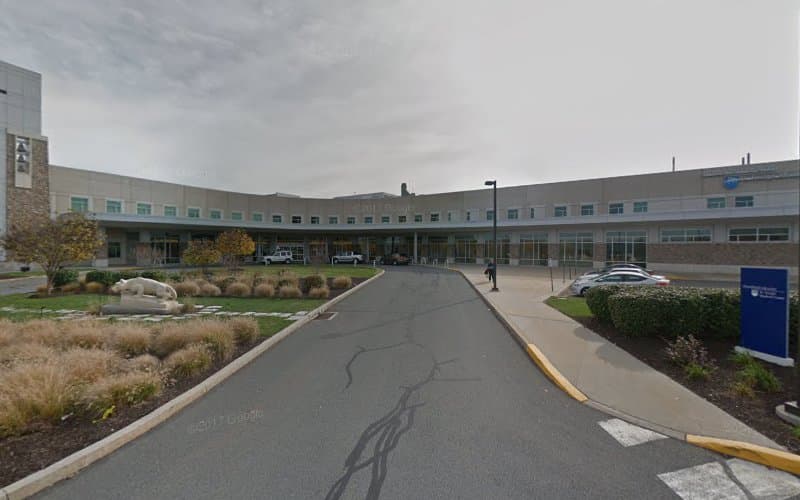
Penn State Health St Joe's Hospital radiology
Penn State Health St Joe's Hospital Radiology in Reading, PA, provides comprehensive imaging services in a trusted healthcare setting.
About Penn State Health St Joe's Hospital radiology
Overview
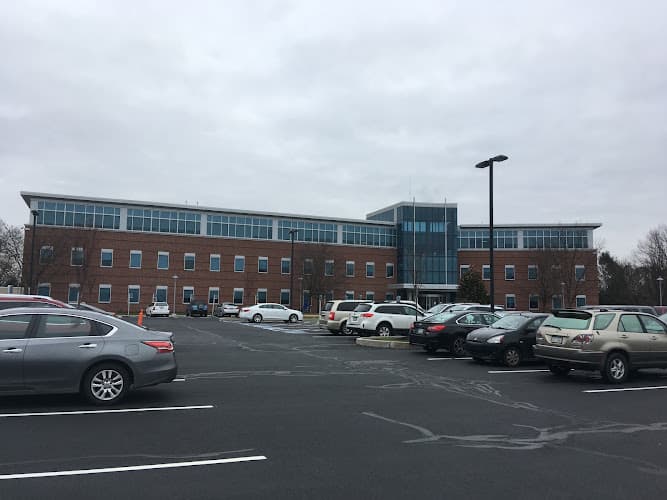
Penn State Health St. Joseph Medical Center Radiology Department operates as a diagnostic imaging facility within the larger St. Joseph Medical Center campus, located at 2500 Bernville Road in Reading, Pennsylvania. This department functions as part of the Penn State Health network, which integrated St. Joseph Medical Center into its healthcare system in 2017. The radiology department serves residents of Berks County and the surrounding region, providing medical imaging services that support diagnosis and treatment planning across numerous medical specialties.
Institutional Background
St. Joseph Medical Center has a long history in the Reading community, originally founded as a Catholic hospital serving the healthcare needs of Berks County residents. The hospital operated independently for many decades before becoming part of the Penn State Health system, which is affiliated with Penn State College of Medicine and Milton S. Hershey Medical Center in Hershey, Pennsylvania. This integration brought St. Joseph Medical Center under the umbrella of an academic health system, connecting the Reading facility to the broader resources, research capabilities, and clinical expertise associated with a major university medical center.
The transition to Penn State Health represented a significant development for healthcare delivery in the Reading area, as it linked local services to a larger network of specialists, training programs, and medical resources. The radiology department operates within this framework, benefiting from institutional protocols, quality standards, and continuing education opportunities that accompany membership in an academic health system.
Location and Facility Access
The radiology department is situated within St. Joseph Medical Center at 2500 Bernville Road, positioned in the northern section of Reading. This location provides relatively convenient access for residents throughout Berks County, with the hospital campus accessible from major roadways serving the region. The Bernville Road corridor connects to Route 183 and other thoroughfares that link Reading to surrounding communities.
The facility maintains accessibility features for patients with mobility limitations. A wheelchair accessible entrance allows patients using wheelchairs, walkers, or other mobility devices to enter the building without encountering barriers. Additionally, the parking lot includes designated wheelchair accessible parking spaces, positioned to minimize the distance patients must travel from their vehicles to the building entrance. These accommodations reflect compliance with accessibility requirements and recognition of the diverse physical needs of patients seeking imaging services.
Radiology Services in Hospital Settings
Hospital-based radiology departments typically provide a comprehensive range of diagnostic imaging services that support both inpatient care and outpatient diagnostic needs. While specific service offerings at Penn State Health St. Joseph's radiology department would be confirmed through direct inquiry, hospital radiology departments generally house multiple imaging modalities under one roof.
Common imaging technologies found in hospital radiology departments include X-ray equipment for basic skeletal and chest imaging, computed tomography scanners that produce detailed cross-sectional images of internal structures, magnetic resonance imaging systems that use magnetic fields to generate soft tissue images, and ultrasound equipment that employs sound waves for real-time imaging without radiation exposure. Many hospital radiology departments also offer fluoroscopy services for dynamic imaging studies, mammography for breast cancer screening and diagnosis, and nuclear medicine capabilities that use radioactive tracers to evaluate organ function.
Hospital-based imaging departments serve multiple functions within the healthcare delivery system. Emergency department physicians rely on rapid imaging results to diagnose trauma, stroke, cardiac events, and other acute conditions. Surgeons use imaging studies for preoperative planning and postoperative assessment. Primary care physicians order imaging to investigate symptoms, monitor chronic conditions, and screen for diseases. Specialists across disciplines from oncology to orthopedics depend on imaging data to guide treatment decisions.
Role Within Penn State Health Network
As a component of the Penn State Health system, the radiology department at St. Joseph Medical Center operates within an integrated healthcare network. This integration typically facilitates electronic sharing of imaging studies and reports across Penn State Health facilities, allowing physicians at different locations to access patient imaging records when clinically appropriate. Such connectivity can benefit patients who receive care at multiple Penn State Health locations, as their imaging history remains accessible to treating physicians throughout the network.
Academic health systems like Penn State Health often emphasize standardized imaging protocols, quality assurance programs, and peer review processes that promote consistency and accuracy in image interpretation. Radiologists working within such systems may have opportunities for subspecialty consultation, allowing complex cases to be reviewed by physicians with focused expertise in particular body systems or disease processes.
The Radiology Process
Patients visiting a hospital radiology department typically follow a structured process that begins with scheduling, either through physician referral or, for certain screening examinations, through self-referral where permitted. Upon arrival, patients check in at a registration area where staff verify identification, insurance information, and the specific examination ordered.
Depending on the type of imaging study, patients may receive preparation instructions in advance. Some examinations require fasting, while others may involve drinking contrast agents or receiving intravenous contrast materials that enhance visibility of certain structures. Technologists explain the procedure, position patients appropriately, and operate the imaging equipment. Radiologists, who are physicians specializing in medical imaging, subsequently interpret the images and generate reports that are sent to the ordering physician.
Turnaround time for imaging results varies based on the urgency of the clinical situation. Emergency and urgent studies receive priority interpretation, while routine outpatient studies may take longer to process. Results are typically communicated to patients through their referring physicians, who can explain findings in the context of the patient's overall clinical picture.
Serving the Berks County Community
Penn State Health St. Joseph Medical Center serves as one of the primary healthcare facilities in Berks County, a region with a population of approximately 420,000 residents. The radiology department supports diagnostic needs across this population, from pediatric patients requiring imaging for developmental concerns or injuries to elderly patients undergoing evaluation for age-related conditions.
Hospital-based radiology departments play a particularly important role in serving patients with complex medical conditions who may require multiple imaging studies or coordination between imaging findings and other aspects of hospital-based care. The presence of radiology services within a full-service medical center allows for efficient integration of imaging into comprehensive treatment plans.
For residents of Reading and surrounding communities, the availability of diagnostic imaging services at St. Joseph Medical Center provides local access to essential diagnostic capabilities, reducing the need to travel to distant facilities for many imaging needs. This local availability can be particularly valuable for patients with transportation limitations or those requiring frequent imaging follow-up.
Unique Details About Penn State Health St Joe's Hospital radiology
Accessibility
- Wheelchair accessible entrance
- Wheelchair accessible parking lot
Contact Information for Penn State Health St Joe's Hospital radiology
Customer Reviews
No reviews yet.
Working Hours / Hours of Operation
Location Map
Similar Hospitals Near Reading, PA
BerksConnect: everything local in Berks County, PA.
8,700+ local businesses with AI-summarized reviews, plus local guides, jobs, and what's happening around the county.