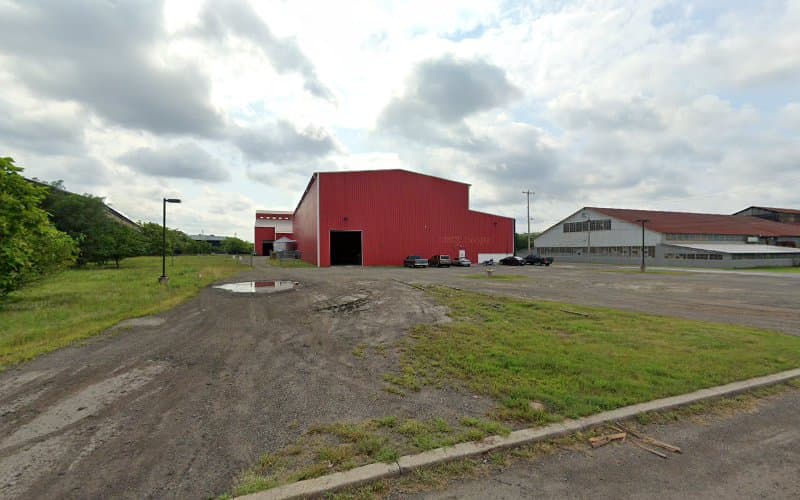
Pottstown Engineered Products, Inc., widely known in the heating and process industries by the shorthand PEP, is a boiler manufacturer based at 390 Old Reading Pike in Stowe, Pennsylvania, just outside the borough of Pottstown in western Montgomery County. The company designs and builds packaged steam and hot water boilers and related pressure equipment for commercial, institutional and industrial users, shipping its products well beyond the Schuylkill Valley to customers across the United States and internationally. The business can be reached at +1 610-323-3477, and additional product information is published at pepboiler.com.
Pottstown has a long industrial history rooted in iron, steel and metal fabrication, and boiler manufacturing fits naturally into that lineage. PEP operates as a domestic manufacturer, producing its equipment in Pennsylvania rather than importing finished units, a point that matters to specifying engineers and facility managers who need documented sourcing, code compliance and direct access to the people who actually built the vessel in their mechanical room.
Products and Equipment
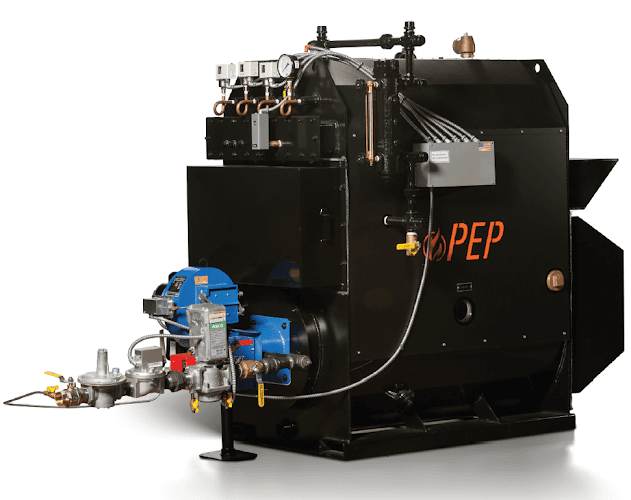
The company's core business is packaged boilers, meaning units that arrive at a job site largely assembled, wired and piped, with the pressure vessel, burner, controls and trim integrated on a common base. This approach shortens field installation time and reduces the coordination burden on mechanical contractors, who otherwise have to marry components from several different vendors.
Typical product categories associated with a manufacturer of this type include the following:
- Packaged steam boilers for process and building heating loads, available in low pressure and high pressure configurations
- Hot water boilers for hydronic heating, domestic hot water production and process water applications
- Vertical and horizontal designs suited to buildings where mechanical room footprint or ceiling height is constrained
- Gas fired, oil fired and dual fuel burner arrangements, with combination firing allowing facilities to switch fuels based on cost or supply interruption
- Boiler room accessories and auxiliary equipment such as feedwater systems, condensate return units, blowdown separators and control panels
- Replacement parts, retrofit components and control upgrades for existing installations
Pressure vessels of this kind are built to recognized construction standards, and boilers intended for the North American market are generally fabricated in accordance with the ASME Boiler and Pressure Vessel Code and registered with the National Board. Buyers should confirm specific code stamps, pressure ratings, capacities and emissions certifications directly with the company for any given model, since requirements vary considerably by jurisdiction and by application.
Engineering and Manufacturing Approach
Boiler manufacturing sits at the intersection of welding, metallurgy, combustion engineering and controls work. A manufacturer building complete packaged units handles pressure vessel fabrication and welding, burner selection and combustion setup, electrical and control integration, refractory and insulation work, hydrostatic testing and final inspection before shipment. PEP carries out this work under one roof, which allows engineering, fabrication and quality control staff to communicate directly during a build.
That vertical structure also supports customization. Many industrial boiler purchases are not catalog transactions: the unit has to fit through a specific door, sit under a specific beam, meet a local air quality rule, match an existing control platform, or tie into steam mains that were installed decades earlier. Manufacturers who control their own drawings and shop floor can accommodate these requests without the delays that come from routing changes through distant factories or overseas suppliers.
Industries and Applications Served
Steam and hot water are among the most widely used utilities in the built environment, and the range of facilities that depend on them is broad. Equipment from a manufacturer in this category commonly ends up in settings such as:
- Breweries, distilleries and beverage production, where steam drives mashing, sanitation and bottling operations
- Food processing plants, commercial kitchens and seafood steaming operations
- Hospitals, laboratories and pharmaceutical facilities with sterilization and humidification requirements
- Schools, universities, municipal buildings and multifamily housing with central heating plants
- Manufacturing plants, including metal finishing, wire production, plastics and textile operations
- Laundries, dry cleaners, car washes and automotive service facilities
- Greenhouses, agricultural processing and temporary or mobile steam requirements
Because the underlying loads differ so much across these uses, sizing and burner selection matter more than raw capacity. A brewery with sharp intermittent demand needs a different configuration than a hospital carrying a steady base load, and consultation early in a project generally produces a better result than ordering from a spec sheet alone.
Service, Parts and Technical Assistance
A boiler is a long lived capital asset, frequently remaining in service for decades, so the relationship with the manufacturer continues well past delivery. PEP maintains technical staff who assist with startup guidance, operational questions, parts identification and diagnostic support, including for customers located far from Pennsylvania. Facility operators and service contractors typically contact the factory for wiring diagrams, control sequence questions, burner adjustment advice, replacement trim components and documentation needed for jurisdictional inspections.
Owners preparing to call should have the unit's serial number, model designation and nameplate data available, along with pressure settings and a description of the fault condition. Having that information at hand shortens the conversation considerably and helps the factory identify the correct components on the first attempt.
Location and Visiting Information
The facility is located on Old Reading Pike in Stowe, a community immediately west of Pottstown along the Schuylkill River corridor. The area is served by U.S. Route 422, placing the plant within convenient driving distance of Reading, King of Prussia, Allentown and the greater Philadelphia region, and within a few hours of most of the Mid Atlantic and Northeast. That positioning is useful for freight logistics, since large boilers move by flatbed and often require route planning.
Practical details for visitors and vendors:
- On site parking is available in a free parking lot
- The parking lot includes wheelchair accessible parking
- Credit cards are accepted as a payment method
- Calling ahead is recommended, as manufacturing facilities schedule visits, inspections and shop walkthroughs rather than operating as a walk in retail location
Working With the Company
Prospective buyers generally begin with a load calculation and a discussion of fuel type, operating pressure, available space, code requirements and control preferences. From there, the manufacturer can propose a configuration, provide submittal drawings for engineering review and establish a production schedule. Mechanical contractors, consulting engineers, plant managers and equipment representatives all interact with the company at different stages, and the direct factory relationship means questions about a specific unit can usually be answered by someone familiar with how it was built.