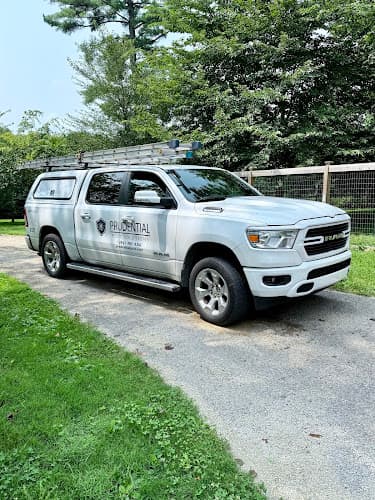
Prudential Pest Solutions is a pest control company based at 122 W Lancaster Avenue, Suite 02, in Shillington, Pennsylvania, a borough just southwest of Reading in Berks County. The company is veteran-owned and operates as a small, locally run firm rather than a branch of a national franchise. It handles residential and commercial pest problems across the greater Reading area and surrounding communities in Berks County and neighboring parts of southeastern Pennsylvania, including both one-time treatments for active infestations and scheduled maintenance programs for ongoing prevention.
The business can be reached at +1 484-401-4361. Work is performed by appointment, and the company provides estimates remotely, which allows homeowners to describe a problem, receive pricing, and schedule a visit without an initial in-person sales call.
Services Offered
Prudential Pest Solutions addresses the full range of pests commonly encountered in eastern Pennsylvania homes and businesses. The region's mix of older housing stock, wooded suburban lots, and humid summers produces predictable seasonal pest pressure, and the company's service list reflects that pattern:
- Stinging insects, including yellow jackets, bald-faced hornets, paper wasps, carpenter bees, and cicada killers. This includes nests located inside wall voids, soffits, attics, and ground burrows.
- Ants, including odorous house ants, pavement ants, and carpenter ants, which are a structural concern in older wood-framed homes.
- Rodents such as house mice, Norway rats, and roof rats, including trapping, baiting, and sealing of entry points.
- Nuisance wildlife issues involving squirrels, bats, and similar animals that gain access to attics, chimneys, and crawl spaces.
- Cockroaches, including German cockroach infestations in kitchens and multi-unit housing.
- Bed bugs, spiders, silverfish, centipedes, fleas, and ticks.
- Stink bugs, boxelder bugs, cluster flies, and other overwintering pests that enter structures in autumn.
- Termite inspection and treatment, along with wood-destroying insect evaluations often required in real estate transactions.
- Mosquito and tick reduction programs for yards and outdoor gathering areas.
- Exclusion work, meaning the physical sealing of gaps, vents, utility penetrations, and other access points that allow pests into a structure.
Treatments are typically structured either as a targeted response to a specific active problem or as a recurring program, most commonly on a quarterly schedule. Recurring plans generally include exterior perimeter applications, inspection of previously treated areas, and re-treatment between scheduled visits when a problem reappears.
Emergency and Stinging-Insect Work
A significant portion of the company's summer and early-fall workload involves stinging insects. Yellow jacket and hornet colonies in Pennsylvania reach peak size between August and October, and nests concealed in wall cavities, attic insulation, or underground burrows are difficult to eliminate without proper protective equipment and access to the colony itself. Prudential Pest Solutions handles these situations, including nests in hard-to-reach locations that require entering attics or opening exterior building components. The company also accommodates urgent calls, which is relevant for households where a member has a known allergy to stings and a nest near an entry point or play area presents a genuine medical risk.
Ownership and Operating Approach
The business identifies as veteran-owned, and the owner, Ryan, performs field service personally alongside the company's technicians. That structure is common among independent pest control operations and has practical consequences: the person who assesses a property is often the same person who performs the treatment and follows up afterward, and decisions about pricing or approach can be made on site without escalation.
The office side of the operation handles intake, scheduling, confirmations, and invoicing. Customers are given pricing information during the initial phone conversation, and the company sends appointment confirmations by email and text. Invoicing and payment are handled electronically, which removes the need for a separate billing visit.
The company's service model is built around solving the stated problem rather than converting every call into a long-term contract. Customers who want only a single treatment can arrange one; those who prefer ongoing coverage can enroll in a recurring plan. Both options are presented, and the choice is left to the property owner.
Service Area
Shillington sits at the intersection of Lancaster Avenue and Museum Road, roughly three miles southwest of downtown Reading, which places the company within convenient reach of much of Berks County. Typical service territory includes Reading, Wyomissing, West Reading, Sinking Spring, Mohnton, Birdsboro, Exeter Township, Wernersville, Kutztown, Boyertown, and Fleetwood, with coverage extending toward adjacent portions of Lancaster, Chester, Montgomery, and Lehigh counties. Prospective customers outside the immediate area can confirm coverage by phone.
Practical Information
- Appointments are required; the company does not operate as a walk-in retail location.
- Estimates can be provided over the phone, which is useful for straightforward problems such as a visible nest or a known rodent issue.
- Pricing is communicated before work begins, including any anticipated costs for follow-up visits.
- Technicians explain what they find during an inspection and what products or methods will be used.
- Commercial accounts, including restaurants, offices, rental properties, and warehouses, are served in addition to single-family homes.
Preparing for a Visit
Customers can help a technician work efficiently by noting where pests have been seen, at what times of day, and how long the activity has been occurring. For rodent and ant problems, clearing access to basements, utility rooms, under-sink cabinets, and crawl space entries is useful. For stinging insects, identifying the flight path in and out of the nest usually helps locate the colony faster than the nest opening alone. For interior treatments, some products require occupants and pets to stay out of treated rooms for a defined period, and the technician will specify that time frame before leaving.
Regulatory Context
Pest control operators in Pennsylvania are regulated by the Department of Agriculture, which requires commercial applicators to be certified in the categories relevant to their work and requires businesses applying pesticides to be registered with the state. Companies performing termite and wood-destroying insect inspections for real estate transactions must also meet state standards for those reports. This framework governs product selection, application rates, recordkeeping, and the notification information provided to customers after a treatment.