Hiring an HVAC Contractor in Berks County PA: Costs, Red Flags & What to Know (2026)
Hiring an HVAC contractor in Berks County, PA: fair repair costs, replacement ranges ($6,000-$16,000+), red flags, HIC registration, 2026 refrigerant rules.
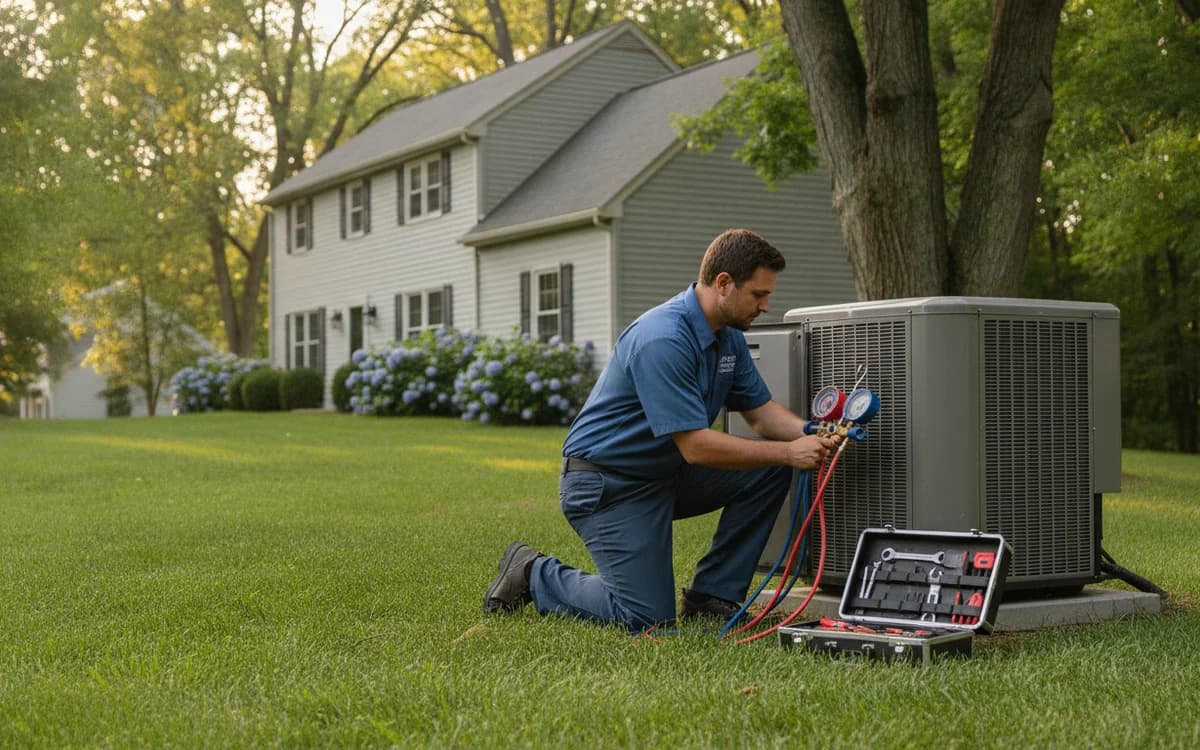
Replacing a full heating and cooling system in Berks County now typically runs $8,000 to $16,000 -- and the industry's switch to new refrigerants pushed equipment prices up roughly 8-10% in a single year. Your HVAC system is the most expensive machine in your house. The contractor you choose matters more than the brand name on the box.
Here's the thing: in this trade, install quality determines the outcome. The best equipment installed poorly will cost more, break sooner, and heat and cool worse than average equipment installed well. And in Pennsylvania -- where there is no statewide HVAC license -- the vetting burden falls almost entirely on you.
This guide covers fair prices for common AC and furnace repairs, when to repair versus replace, how our humid summers and old housing stock change what you need, the rules contractors must follow, and the red flags that should end a conversation on the spot. You can browse all HVAC companies in Berks County at any point.
What Types of HVAC Companies Serve Berks County?
Heating and cooling companies are not all built the same way, and the differences show up directly in your bill. Here is how the local market breaks down.
| Company Type | Typical Pricing | Best For | Watch Out For |
|---|---|---|---|
| Full-service local HVAC companies | Mid-range | Installs, repairs, and maintenance under one roof | Book out fast in July and January |
| Owner-operator shops (1-3 trucks) | Often the lowest overhead and prices | Repairs and straightforward replacements | Limited after-hours coverage |
| Multi-trade shops (plumbing + HVAC) | Mid-range | Boilers, water heaters, combined projects | Confirm the tech dispatched is HVAC-focused |
| Fuel oil companies with service departments | Often plan-based | Oil heat, which is still common in older Berks homes | May steer you toward staying on oil |
| National brands and franchises | Highest, flat-rate menus | Financing, long warranties, fast scheduling | Commission-driven replacement pitches |
But here's what most people don't know: private-equity groups have quietly bought up HVAC companies across Pennsylvania in recent years. The truck may still carry a familiar local name while the pricing model and sales quotas are set somewhere else. It is worth asking directly: "Are you still locally owned?"
Multi-trade shops matter here because so many older Berks homes run hydronic heat -- a boiler pushing hot water through radiators -- where plumbing and HVAC skills overlap. Reading-based JB Plumbing HVAC & Construction Division (5.0 rating, 72 reviews) and Universal Services Plumbing Heating Cooling (5.0, 37 reviews) both carry the two trades in the company name.
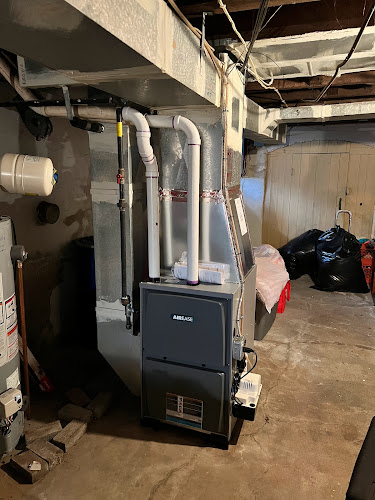
For a benchmark, the most-reviewed HVAC company listed on Berks Connect is H & F Heating and Cooling, based in Warwick Township, with a 5.0 average across 312 reviews:
How Much Do Air Conditioning and Furnace Repairs Cost in Berks County?
Almost every HVAC company charges a service call fee (also called a diagnostic or trip fee) just to come out -- typically $75-150 during regular hours in this area, and $150-300+ for nights, weekends, and holidays. Always ask: "Is the service call fee applied toward the repair if I go ahead with the work?" Many companies say yes. The ones that say no should have a good reason.
Here is what the most common heating and air conditioning repairs typically cost, parts and labor combined. Treat these as ballpark ranges for standard residential equipment, not quotes.
| Repair | Typical Total Range |
|---|---|
| Capacitor replacement (AC won't start, humming) | $150-400 |
| Contactor replacement | $150-350 |
| Thermostat replacement | $150-500 |
| Furnace flame sensor cleaning or replacement | $80-250 |
| Hot surface ignitor replacement | $150-400 |
| Condensate pump or drain line repair | $100-350 |
| Draft inducer motor | $300-800 |
| Blower motor replacement | $400-1,500 |
| Control board replacement | $400-1,200 |
| Refrigerant leak search | $200-600 |
| Refrigerant recharge (R-410A) | $300-800+ and rising |
| Evaporator coil replacement | $1,200-3,000 |
| Compressor replacement | $1,800-3,500 |
Two lines deserve a closer look. First, the capacitor: it is the most common summer AC failure, the part often costs under $50 wholesale, and the fix takes minutes. A $250 bill is normal once overhead is figured in. A $700 bill is not -- and it happens, especially during heat waves.
Second, refrigerant. Manufacturing of new R-410A systems ended at the start of 2025, and the cost of servicing older systems has been climbing since, with more increases expected. If your AC needs a recharge every summer, you do not have a refrigerant problem -- you have a leak. Ask for a leak search and a real number on fixing it.
In Reading itself, Advanced Comfort Specialists is the most-reviewed city-based HVAC company on Berks Connect, with a 5.0 rating across 294 reviews:
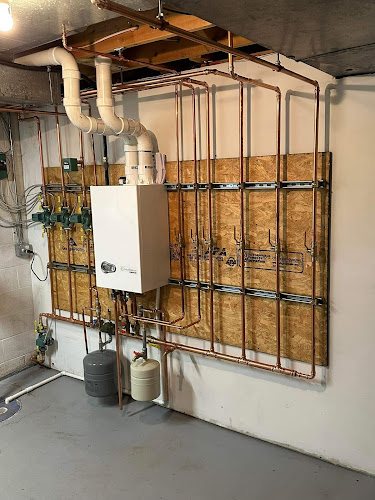
Two other heavily reviewed picks for ac repair and heating repair on the directory are Constant Comfort Solutions (5.0 across 201 reviews) and Trinity Comfort (5.0 across 151 reviews).
Should You Repair or Replace Your Furnace or AC?
This is the most expensive question in home comfort, and it is where a commission-driven salesperson can cost you thousands in either direction. Some honest math:
Typical equipment lifespans: gas furnaces last 15-20 years, central air conditioners 12-15 years, heat pumps 10-15 years, and boilers frequently 20+ years with maintenance. Oil furnaces in older Berks homes often soldier on past 20 years, though efficiency suffers.
The $5,000 rule of thumb: multiply the age of the equipment by the cost of the proposed repair. Under $5,000, repair is usually reasonable. Over $5,000, put the money toward replacement. A $600 blower motor on a 6-year-old furnace ($3,600) is a repair. The same motor on a 14-year-old furnace ($8,400) is a down payment on a new system.
The refrigerant wrinkle (the big 2026 factor): new air conditioners and heat pumps use new-generation refrigerants (mostly R-454B and R-32) that are not compatible with older R-410A equipment. Nothing forces you to replace a working R-410A system -- you can legally run and repair it for its full useful life -- but major sealed-system repairs are getting pricier as refrigerant costs rise. A $2,500 compressor on a 13-year-old unit is very hard to justify.
Here is what full replacement typically costs installed in 2026:
| System | Typical Installed Range (2026) |
|---|---|
| Gas furnace, standard efficiency (80% AFUE) | $4,000-6,500 |
| Gas furnace, high efficiency (95%+ AFUE) | $5,500-9,000 |
| Central air conditioning (ducted) | $6,000-11,000 |
| Heat pump (ducted) | $8,000-16,000 |
| Furnace + AC combo replacement | $10,000-18,000 |
| Ductless mini-split, single zone | $4,000-7,000 |
| Ductless mini-split, multi-zone | $9,000-18,000 |
| Boiler replacement | $6,000-13,000 |
The spread within each row is real, not padding. Equipment tier, ductwork condition, flue and venting changes, electrical upgrades, and access (a rowhome basement with a narrow stairwell is not a suburban utility room) all move the number. That is why you want three quotes on any furnace installation or full system replacement -- differences of $3,000+ for comparable equipment are common.
In the Wyomissing area, Service 360 Group carries a 5.0 rating across 236 reviews on Berks Connect:
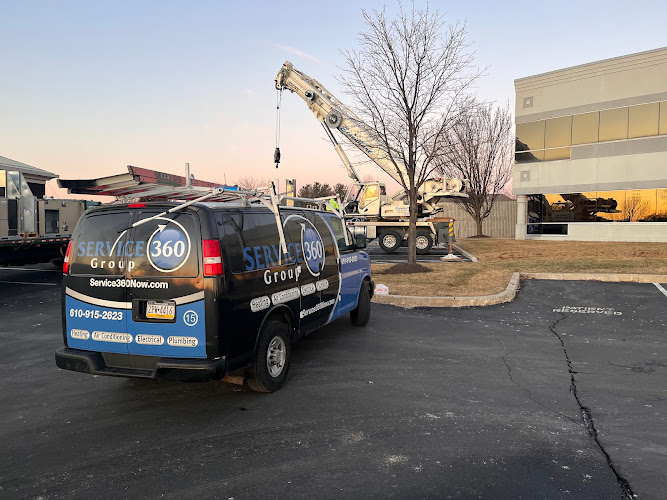
Across the county's southeastern edge, Pottstown-based New Life Heating & AC Repair (5.0 across 239 reviews) and Cornerstone HVAC LLC (5.0 across 130 reviews) are among the most-reviewed companies on the directory.
How Does Berks County's Climate Change What Heating and Cooling System You Need?
Berks County is genuinely a four-season HVAC market: summers are hot and -- more importantly -- humid, while winters regularly drop into the teens with cold snaps well below that. Your system has to do both jobs well, and the county's housing stock makes sizing anything but standard.
The humidity problem. In our summers, an air conditioner's real job is removing moisture, not just lowering the thermostat number. An oversized AC cools the air quickly and shuts off before it dehumidifies, leaving the house cold and clammy -- and short-cycling burns out compressors early. It is the most common sizing mistake in the area, because "bigger is safer" feels intuitive and is wrong.
The rowhome problem. Reading and West Reading are full of brick rowhomes built in the early 1900s with boilers, radiators, and no ductwork at all. A mid-block rowhome shares two party walls and can need far less heating and cooling per square foot than its footprint suggests. Cooling here usually means ductless mini-splits or high-velocity small-duct systems -- and high-efficiency furnace or boiler swaps can require new sidewall venting that adds real install cost. An installer who has actually worked in city rowhomes will bring all of this up unprompted.
The suburban problem is different. Newer builds in Wyomissing, Sinking Spring, Exeter, and Spring Township generally have full ductwork -- but duct systems in 1990s-2000s developments were often built to the minimum, and a great new system attached to leaky, undersized ducts will underperform forever. A good contractor inspects the ductwork before quoting, not after installing.
The bottom line: the only correct way to size a system is a Manual J load calculation -- a room-by-room measurement of your home's actual heat gain and loss, accounting for insulation, windows, orientation, and air leakage. It takes an hour or two. Any bid produced without one is a guess with a price tag on it.
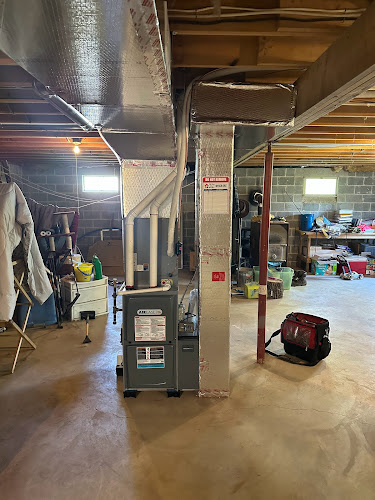
The directory's coverage reaches well beyond the city. In northern Berks, Shoemakersville-based DeLong & Sons HVAC holds a 5.0 rating across 222 reviews:
In the Fleetwood area, Real Airflow Heating & Cooling carries a 5.0 rating across 51 reviews, and Leesport's INH Heating & Air Conditioning, Inc holds a 5.0 across 27.
When Is the Best Time to Replace an HVAC System in Berks County?
Timing a planned replacement is one of the few genuine levers you control on price. HVAC demand in Berks County spikes twice a year -- July heat waves and January cold snaps -- and both are the worst possible time to buy.
Shoulder seasons win. Aim for roughly March-May for heating equipment and September-November for cooling equipment. Installers have open calendars, quotes come back faster, there is room to negotiate, and you are choosing a contractor calmly instead of taking whoever can come tomorrow.
Emergency replacements carry a premium. When your furnace dies during a cold snap, you lose every point of leverage at once: no competing quotes, no flexibility on equipment, and crews working overtime. Planning ahead can save four figures on the same system.
The tell that it's time: if your AC is 12+ years old or your furnace is 15+, get replacement quotes now, while everything still works. You do not have to act on them. When the system finally quits, you will already know who you trust and what a fair price looks like -- an emergency turned into a scheduled job.
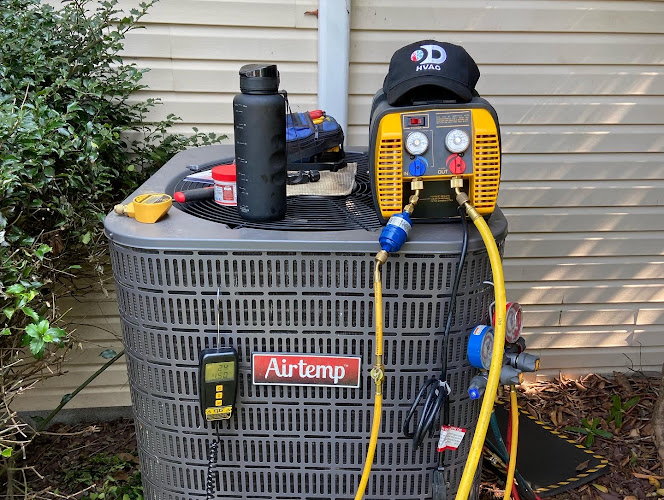
Western Berks readers have a strong nearby option: Robesonia-based On Demand HVAC holds a 5.0 rating across 92 reviews on Berks Connect:
For season-by-season home prep beyond HVAC, see our winter services guide and summer services guide.
Are HVAC Maintenance Plans Worth It?
Nearly every heating and cooling company in Berks County sells an annual maintenance plan -- typically $150-350 per year for two visits: an air conditioning service in spring and a heating tune-up in fall. Most plans add priority scheduling, discounted or waived service call fees, and 10-15% off repairs.
Are they worth it? It depends on your equipment:
- Oil heat: yes, non-negotiable. Oil furnaces and boilers need annual cleaning and a new nozzle and filter, or efficiency drops fast and soot builds up. If you burn oil, annual service is a requirement, not an upsell -- many oil dealers bundle it with delivery contracts.
- Gas systems and heat pumps 5+ years old: usually yes. Priority scheduling alone earns its keep the first time your AC dies in a July heat wave and plan members jump the queue. Manufacturer warranties also generally expect documented regular maintenance -- skipping it can give a manufacturer grounds to fight a claim.
- Brand-new systems: read the fine print first. Many installers include the first year or two of maintenance with a new install. Do not pay for a plan that duplicates what your install already covers.
One honest caveat: for some companies the tune-up visit doubles as a sales visit. If every appointment ends with a scary quote, that is a signal about the company, not your equipment.
On the directory, Hinkle's Heating and Air Conditioning Inc. carries a 5.0 rating across 62 reviews, and JUST KOOL Heating Cooling & Water Heaters, LLC holds a 5.0 across 64 reviews.
What Do SEER2 Ratings Actually Mean -- and What Is the Payback?
Every AC and heat pump quote you receive will lead with a SEER2 number, so here is the plain-English version.
SEER2 (Seasonal Energy Efficiency Ratio 2) measures cooling efficiency -- higher is better. It replaced the old SEER scale in 2023 with a tougher, more realistic test. Pennsylvania sits in the federal North region, where new split-system air conditioners must be at least 13.4 SEER2 and new heat pumps at least 14.3 SEER2 with a heating efficiency of at least 7.5 HSPF2. Furnaces use AFUE instead: 80% is standard efficiency, 95%+ is high-efficiency condensing.
Now the part the sales brochure skips: Berks County is a heating-dominated climate. Our cooling season is a few months; our heating season runs from October into April. That changes where efficiency money pays back:
- Cooling (SEER2): stepping up from the 13.4 minimum to a mid-tier 15-16 SEER2 unit is usually worth the modest premium. Chasing 18+ SEER2 rarely pays for itself here on electric savings alone -- our summers, while muggy, are not long enough.
- Heating (AFUE and HSPF2): this is where the hours are. Going from an old 80% furnace to a 95%+ model saves roughly 15% on gas heating costs every winter for the life of the unit -- typically a better return in this climate, as long as venting changes don't blow up the install price. On heat pumps, weight HSPF2 at least as heavily as SEER2.
And the tax credit warning for 2026: the federal 25C Energy Efficient Home Improvement Credit -- the one worth up to $2,000 on qualifying heat pumps -- expired on December 31, 2025 under the tax law passed in 2025. If you had a qualifying system installed by that date, you can still claim it on your 2025 return (IRS Form 5695). But a new install in 2026 gets no federal 25C credit -- so a salesperson closing you today with "30% back from the federal government" is either out of date or dishonest. Utility rebates are a separate matter: check current offerings from Met-Ed and UGI before you buy, since programs change year to year.
Is an HVAC Contractor Required to Be Licensed in Pennsylvania?
Here is the fact that surprises most homeowners: Pennsylvania has no statewide HVAC contractor license. Anyone with a truck and a set of gauges can call themselves a heating and cooling company. Licensing, where it exists, happens at the municipal level -- some cities and townships impose their own contractor registration or mechanical licensing, typically handled through the local codes office when permits are pulled.
That does not mean contractors are unregulated. Three requirements have real teeth:
- HIC registration (state law). Under Pennsylvania's Home Improvement Consumer Protection Act, any contractor performing $5,000 or more of home improvement work per year must register with the PA Attorney General's office and display their HIC number (PA followed by digits) on contracts, estimates, and ads. Registration requires proof of liability insurance of at least $50,000. Verify any contractor through the Attorney General's HIC lookup or by calling 1-888-520-6680. No HIC number on the paperwork is a stop sign.
- EPA Section 608 certification (federal law). Any technician who opens a refrigerant circuit -- servicing, repairing, or disposing of air conditioners and heat pumps -- must hold EPA Section 608 certification. It is federal law, it covers modern refrigerants, and a legitimate tech can show the card. "Universal" certification covers all equipment types.
- Permits (local law). Most Berks County municipalities require a permit for replacing a furnace, boiler, or air conditioning system under the state's Uniform Construction Code -- and gas line, flue, and electrical work get inspected as part of it. The contractor should pull the permit, and the cost belongs in the quote.
HICPA also hands you contract protections most people never use: home improvement contracts over $500 must be in writing with the contractor's HIC number, start and completion dates, and total price; you have a three business day right to cancel after signing; and for contracts over $1,000, a contractor cannot legally collect a deposit larger than one-third of the contract price (plus the actual cost of special-order equipment). These rules exist because home improvement work is perennially among Pennsylvania's most common consumer complaints. Use them.
For vetting steps that apply to every trade -- insurance certificates, references, written scopes -- see our full guide to hiring home service contractors in Berks County.
What Are the Red Flags When Hiring an HVAC Company?
Most Berks County HVAC contractors are honest tradespeople. The ones that are not tend to use the same playbook. Watch for these:
A replacement bid with no load calculation. If a company quotes a new system based on your old unit's nameplate, your square footage, or an eyeball from the driveway, they are guessing -- and probably oversizing, which means a clammy house and an early compressor death. Insist on a Manual J. A contractor who scoffs at this has told you everything you need to know.
A huge deposit demand. Remember the law above: on contracts over $1,000, more than one-third down (plus special-order materials) is not just aggressive -- it is illegal under HICPA. "50% to get you on the schedule" is a red flag with a statute attached.
"You don't need a permit." You usually do, the contractor knows it, and skipping it means no inspection of gas, flue, and electrical work -- plus headaches when you sell the house and the unpermitted install surfaces. Contractors dodge permits to hide sloppy work or because they cannot pull one locally.
No HIC number anywhere. Not on the truck, the estimate, or the contract. Thirty seconds on the Attorney General's lookup settles it.
The 2026 tax credit pitch. The federal 25C credit expired at the end of 2025. A closer still using it as urgency in 2026 is working from an old script or a dishonest one.
Refrigerant top-offs with no leak talk. Charging you for refrigerant every season without ever proposing a leak search is a subscription, not a repair.
The on-the-spot condemnation. "Your heat exchanger is cracked -- I have to shut off your furnace right now, and here's a replacement quote." Cracked heat exchangers are real and genuinely dangerous (carbon monoxide), but they are also the industry's most abused scare tactic. Ask to see the crack on camera, ask for the combustion analyzer reading, and get a second opinion before signing anything north of $5,000. An honest tech welcomes the scrutiny; a fraud pressures you to sign before the "danger" gets a second look.
Today-only pricing. "This price is good until I leave your driveway" is not how legitimate contractors sell $10,000 projects. Real quotes stay valid for weeks.
What Should You Expect From Emergency HVAC Service in Berks County?
No heat in a Berks County January is a genuine emergency -- below-freezing indoor temperatures burst pipes and multiply the damage. No AC in a July heat wave is an emergency for infants, the elderly, and anyone with respiratory illness. For everyone else it is miserable but survivable, and knowing the difference saves you the after-hours premium.
What emergency service costs: expect an after-hours service call fee of $150-300+ just for the visit, with overtime labor rates on top. Ask three questions when you call: What is the after-hours fee? Does it apply toward the repair? And is the tech coming tonight or "first thing tomorrow"? Companies with true 24/7 dispatch answer all three crisply.
Run this checklist before you pay anyone, because a meaningful share of emergency calls end with an embarrassed homeowner and a $200 invoice:
- Thermostat: fresh batteries, right mode, setpoint 5 degrees past room temperature.
- Power: check the breaker panel and the light-switch-style shutoff near the furnace -- it gets flipped by accident constantly.
- Filter: a clogged filter can shut a furnace down on its limit switch and freeze an AC solid.
- Condensate float switch: a full pan trips a kill switch on many systems; clear the drain.
- Fuel: oil heat, check the tank gauge; gas heat, confirm other gas appliances work.
- Outdoor unit: encased in ice, call a pro; buried in snow or leaves, clear it.
While you wait for a no-heat call: space heaters in occupied rooms only, plugged straight into the wall -- never an extension cord or power strip. If the house is dropping toward freezing, open cabinet doors under sinks and let faucets drip to protect the pipes. Never use a gas oven or grill for heat; that is how carbon monoxide deaths happen. More cold-weather protection is in our winter services guide.
On the directory, Bethel-based Brubaker Services LLC carries a 5.0 rating across 69 reviews, and Reading's In-Check Mechanical holds a 5.0 across 31 reviews.
Frequently Asked Questions
How much does an HVAC service call cost in Berks County?
Typically $75-150 during business hours, and $150-300+ for nights, weekends, and holidays. Many companies apply the fee toward the repair if you approve the work -- always ask before booking.
Do heat pumps actually work in Berks County winters?
Yes. Modern cold-climate heat pumps heat effectively well below zero, and most installs pair the heat pump with electric or gas backup for the coldest stretches. Just make sure your installer sizes for our winter, not a milder one, and weights HSPF2 heavily.
How often should heating and cooling systems be serviced?
Once a year per system: air conditioning service in spring, heating service in fall. Oil-fired equipment must be cleaned annually -- it is not optional. Swap 1-inch filters every 1-3 months yourself.
Can I still get a federal tax credit for a new HVAC system in 2026?
No. The federal 25C credit (up to $2,000 for qualifying heat pumps) expired December 31, 2025. If your qualifying system was installed by that date, claim it on your 2025 return with IRS Form 5695. For 2026 installs, check current Met-Ed and UGI rebate programs instead.
Do I need a permit to replace a furnace or AC in Berks County?
In most municipalities, yes -- replacing heating and cooling equipment requires a permit and inspection under the Uniform Construction Code as adopted locally. Your contractor should pull it and include the cost in the quote.
Is my R-410A air conditioner banned? Do I have to replace it?
No and no. New equipment moved to new refrigerants, but you can legally run and repair an existing R-410A system for its entire useful life. Budget for rising refrigerant prices on major repairs as the unit ages, which shifts the repair-versus-replace math.
Find HVAC Companies on Berks Connect
Ready to get quotes? Browse verified local listings across the county:
- All HVAC companies in Berks County
- Hiring home service contractors in Berks County
- Winter home services guide
- Summer home services guide
- Explore the full Berks County directory
Own a heating and cooling company in Berks County? List your business on Berks Connect to reach homeowners searching for an HVAC contractor in your area.