Winter Services Guide for Berks County: Complete Seasonal Preparation
Prepare your home and vehicle for Berks County winters. Snow removal, heating repair, winterization services, ice dam prevention, frozen pipe prevention, winter tires, and emergency preparedness from October through March.
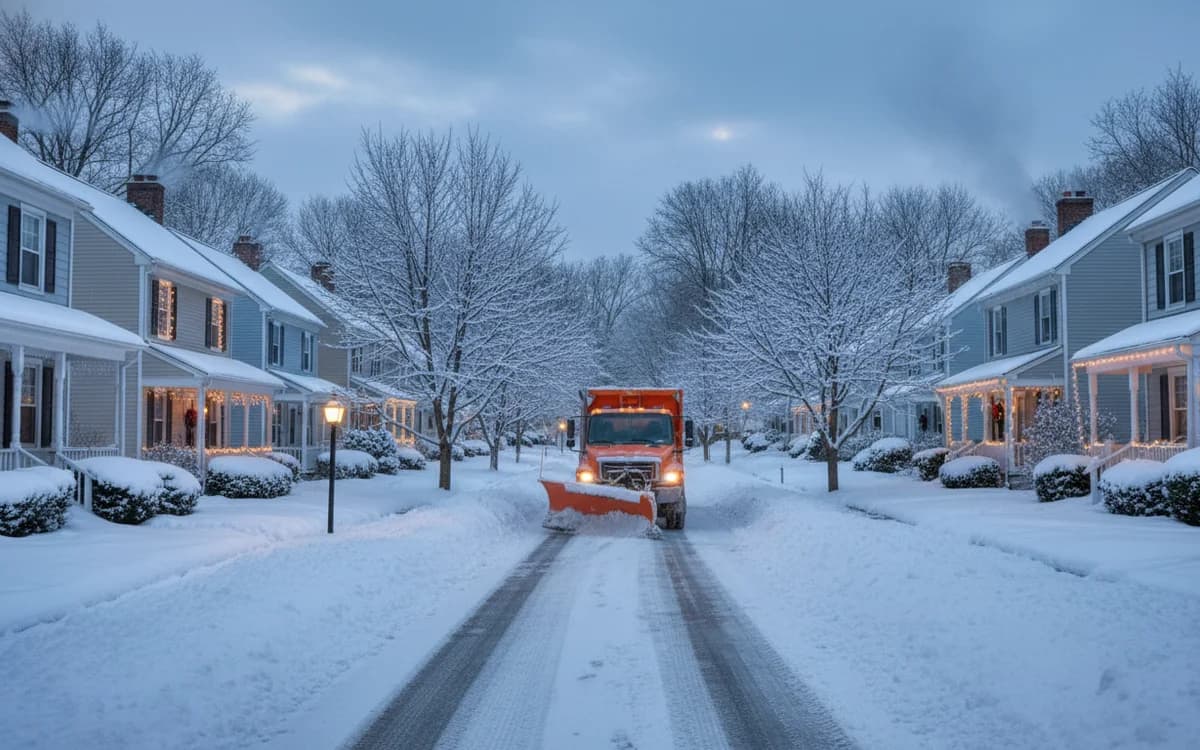
It's 6 AM on a January morning. You wake up to a 17°F reading on your phone and realize the house is cold. Too cold. You check the thermostat—62°F and dropping. Your furnace has died. You have work in two hours. Your pipes are at risk. Every HVAC company in Berks County is about to get the same panicked phone call.
This is the scenario nobody wants, and it happens every winter in homes across Berks County. The families who avoid it aren't lucky—they're prepared.
This guide is about preparation. Not the kind that overwhelms you with checklists you'll never complete, but the practical, "this is what actually matters" kind that comes from living through Berks County winters. We'll cover heating, snow removal, frozen pipes, vehicle prep, and emergency planning—plus specific local providers who can help.
The Reality of Berks County Winters
Before we talk preparation, let's be honest about what we're dealing with.
What Winter Actually Looks Like Here
Berks County winters are real winters. Not brutal like upstate New York, but real enough to cause serious problems for the unprepared.
The numbers:
- Average highs December–February: 35-42°F
- Average lows December–February: 20-26°F
- Cold snaps: Several times each winter, we dip into single digits or below zero
- Annual snowfall: 25-35 inches
- Significant storms (6+ inches): 3-5 per winter, typically
- First frost: Mid-October
- Last frost: Late April
The variations you should know:
If you live in northern Berks—Hamburg, Kutztown, Topton—you're in a different climate than people in Birdsboro or Exeter. Northern Berks is colder, snowier, and more prone to extended power outages because the grid is more rural. The elevation matters too. A storm that drops 4 inches in Wyomissing might drop 6-8 inches in Fleetwood.
This isn't just weather trivia—it affects which contractors can get to you, how long snow stays on your driveway, and whether your pipes are at risk.
What Poor Preparation Actually Costs
Let me put real numbers to why this matters:
- Burst pipes: $5,000-25,000+ in water damage (and that's before the headache of dealing with restoration and insurance)
- Emergency heating repair: 1.5-2x normal rates, plus potential pipe damage while you wait
- Ice dam damage: $3,000-10,000+ to repair the roof and interior water damage
- Vehicle accidents on snow/ice: Deductibles, increased insurance, missed work
Beyond money, there's safety. Carbon monoxide poisoning from heating failures or improper equipment use. Falls on ice—the leading cause of winter injuries. Hypothermia during extended power outages. House fires from space heaters.
This isn't fear-mongering. These things happen every winter in Berks County. They happen disproportionately to people who didn't prepare.
Heating: Your First Line of Defense
Everything else in this guide is secondary to heat. Without it, your pipes freeze, your family is miserable or unsafe, and nothing else matters.
The Case for Fall Maintenance
I know—you've heard this before. Get your furnace serviced every year. It sounds like something HVAC companies say to generate business.
Here's the thing: it's also true.
A comprehensive fall tune-up ($100-200) catches problems when HVAC companies have availability, when you have time to make decisions, and when a failing part is a minor inconvenience rather than a crisis. The same repair that costs $300 in October costs $500+ on a Sunday night in January when it's an emergency.
What a proper tune-up includes:
| Component | What's Checked | Why It Matters |
|---|---|---|
| Heat exchanger | Inspected for cracks | Cracked heat exchangers leak carbon monoxide |
| Burners | Cleaned and inspected | Dirty burners waste fuel and cause problems |
| Flue/venting | Checked for blockages | Blocked flues cause CO buildup |
| Thermostat | Calibration tested | Miscalibrated thermostats waste money |
| Air filter | Replaced | Clogged filters cause shutdowns |
| Electrical connections | Tightened | Loose connections cause fires |
| Safety controls | Tested | These prevent dangerous failures |
| Efficiency | Measured | Catches problems before they get worse |
When to schedule: September or early October. By November, HVAC companies are already getting busy with repairs from people who didn't schedule maintenance.
Finding a Reliable HVAC Contractor
The best time to find an HVAC contractor is when your furnace is working fine. Many companies prioritize customers with maintenance contracts when emergency calls stack up during cold snaps.
INH Heating & Air Conditioning, Inc
244 N Centre Ave, Leesport — (610) 705-7348
⭐ 5.0 (27 reviews)
Expert HVAC and plumbing services with prompt response times and transparent pricing. Known for tackling challenging installations that other companies won't touch.
Advanced Comfort Specialists
217 Montrose Blvd, Reading — (610) 224-9756
⭐ 5.0 (294 reviews)
Prompt service with expert technicians. Customers consistently mention significant cost savings compared to competitors.
DeLong & Sons HVAC
403 Franklin St, Shoemakersville — (484) 638-2837
⭐ 5.0 (222 reviews)
Family-owned with same-day service. Courteous technicians and fair pricing. Northern Berks residents—this is a solid option for your area.
Service 360 Group
1665 State Hill Rd Unit 700, Wyomissing — (610) 364-5157
⭐ 5.0 (236 reviews)
Plumbing and HVAC combined, which is convenient for winterization. Prompt emergency response.
Ultimate Comfort Heating & Cooling
280 Holland St, Wernersville — (610) 750-8314
⭐ 4.9 (134 reviews)
Rapid response with expert solutions. Outstanding communication—you'll know what's happening and why.
Find all HVAC services in Berks County on BerksConnect.
When Your Furnace Won't Start
Before you panic and call for emergency service, try these things (in order):
-
Check the thermostat. Is it set to "heat"? Is the temperature set above current room temp? Are the batteries dead? (This sounds obvious, but it's often the problem.)
-
Check the circuit breaker. Find your electrical panel and look for the HVAC breaker. If it's tripped, reset it.
-
Find the furnace power switch. It looks like a regular light switch, usually on the wall near your furnace. Someone might have flipped it accidentally.
-
Check the gas valve (gas furnaces). Make sure it's open.
-
Check the air filter. A severely clogged filter can cause the furnace to shut down as a safety measure.
If none of these solve it, you need professional help.
When the Furnace Fails Mid-Winter
This is the nightmare scenario. It's 11 PM, it's 15°F outside, and your furnace is dead. Here's what to expect and how to cope.
Reality check:
- Emergency rates are 1.5-2x normal
- During severe cold snaps, wait times can be 4-8+ hours because everyone's furnace is struggling
- If you have a maintenance contract, you'll likely be prioritized
- Common parts are usually stocked; unusual parts may mean waiting until tomorrow
While you wait:
Space heaters can keep one room livable, but use them safely:
- Keep 3+ feet from anything flammable
- Never leave unattended
- Never sleep with them running
- Plug directly into wall outlets (not extension cords or power strips)
Close off rooms you don't need. Gather everyone in one room—body heat helps. Layer clothing and use blankets. Open cabinet doors under sinks on exterior walls to let warm air reach pipes.
What will kill you:
- Using your gas oven or stove to heat your home (carbon monoxide)
- Running a generator indoors or in an attached garage (carbon monoxide)
- Using outdoor grills or camp stoves inside (carbon monoxide and fire)
- Leaving candles unattended for heat (fire)
If you smell gas from your furnace: This is an immediate evacuation situation. Get everyone out. Don't flip any switches or use phones inside. Call UGI Gas Emergency (1-800-276-2722) from outside.
Heat Pumps in Berks County
Heat pumps are increasingly common here, and they work well—even in our climate. Modern cold-climate heat pumps maintain efficiency down to very low temperatures.
What heat pump owners need to know:
- Your system needs maintenance twice a year (fall for heating, spring for cooling)
- Most systems have backup heat (electric or gas) for extreme cold—know how yours works
- Defrost cycles are normal—you may see steam from the outdoor unit
- Keep the outdoor unit clear of snow and ice accumulation
- A heat pump covered in ice is a heat pump in trouble
Snow Removal: The Never-Ending Battle
Berks County averages 25-35 inches of snow per winter, spread across multiple events. How you handle it depends on your situation, your health, and your tolerance for 5:30 AM shoveling.
The Honest Assessment: DIY vs. Professional
You should probably handle snow yourself if:
- You're healthy and capable of strenuous activity
- Your driveway is short and relatively flat
- You have flexibility in when you need to leave for work
- You don't mind the exercise
- You want to save money
You should probably hire someone if:
- Health concerns make shoveling risky (heart disease, back problems, etc.)
- Your driveway is long, steep, or has obstacles
- You must be at work by a specific time regardless of weather
- You travel frequently during winter
- You own a business with liability concerns
The hybrid approach: Some people buy a snow blower ($300-1,500) and handle most storms themselves, but have a contractor's number for the big ones. This works well for many Berks County households.
If You Shovel Yourself
Snow shoveling causes heart attacks every winter. I'm not saying that to scare you—I'm saying it because it's preventable.
Safe shoveling:
- Warm up first. Cold muscles tear. Walk around, stretch a bit.
- Push, don't lift. Whenever possible, push snow to the side rather than lifting and throwing.
- When you must lift: Lift with your legs, not your back. Keep loads small. Don't twist.
- Take breaks. This is more cardiovascular work than most people realize.
- Dress in layers. You'll warm up quickly.
- Stay hydrated. You're sweating even though it's cold.
- Know your limits. There's no shame in calling for help.
Smart timing:
- Shovel during the storm, not after. Moving 3 inches twice is far easier than moving 6 inches once.
- Clear snow before it gets packed down by foot traffic.
- Apply salt/ice melt before freezing rain when possible.
Salt and ice melt reality:
- More is not better. Excess salt damages concrete and kills plants.
- Temperature matters—standard rock salt doesn't work well below 15°F.
- Pet-safe options are available if you have animals who walk on treated surfaces.
Hiring Snow Removal
When to sign up: October or early November. The reliable contractors book their routes early.
Pricing models:
| Model | How It Works | Typical Cost |
|---|---|---|
| Per push | Pay each time they come | $35-100+ per visit |
| Per inch | Tiered pricing by snowfall | $35-50 for 2-4", $50-75 for 4-8", etc. |
| Seasonal contract | Fixed price for winter | $300-800+ |
Questions to ask before signing:
- What's your trigger depth? (How many inches before you come?)
- What time will my driveway be cleared? (Before 7 AM for commuters?)
- What's included? (Driveway only? Walkways? Steps? Salt?)
- Is salting/ice melt included or extra?
- What happens during ice storms without significant snow?
- What if you can't get to me due to volume?
Snow Removal Providers in Berks County:
New Castle Lawn & Landscape
3 E Pointe Dr, Birdsboro — (610) 796-7818
⭐ 4.8 (293 reviews)
Full-service landscaping with snow removal. Exceptional craftsmanship and timely service. Southern Berks area.
A Plus Landscaping LLC
85 Creamery Rd, Reinholds — (717) 335-1690
⭐ 4.9 (203 reviews)
Clear communication and prompt service. Good option for western/northern Berks.
Lumberjays Landscaping Tree Services
216 Newport Ave, Reading — (484) 516-1391
⭐ 5.0 (89 reviews)
Efficient service with meticulous cleanup. Reading area.
Solid Rock Landscaping LLC
1005 Old Airport Rd, Douglassville — (484) 390-4782
⭐ 4.9 (71 reviews)
Reliable, courteous service. Douglassville/eastern Berks area.
Find all landscaping services on BerksConnect.
Commercial Snow Removal
If you own a business, snow removal is about liability, not convenience. A customer or employee slip-and-fall lawsuit will cost far more than any seasonal contract.
Non-negotiables for commercial contracts:
- Proof of insurance (liability AND workers' comp)
- Defined trigger depths and response times
- Clear scope: parking lot, sidewalks, entrances, emergency exits, ADA routes
- Salt/de-icing specifications
- Documentation for insurance purposes
- Ice storm provisions (often different from snow provisions)
Frozen Pipes: The Silent Catastrophe
A burst pipe can release hundreds of gallons of water into your home before you even know there's a problem. I've seen families displaced for months while their homes were gutted and rebuilt. The damage happens fast; the recovery is slow.
Why Pipes Freeze
When water freezes, it expands. This creates enormous pressure inside the pipe. The pipe doesn't always burst at the frozen section—the pressure can cause failure anywhere in the system.
Pipes at highest risk:
- Pipes in exterior walls (kitchen sinks on outside walls are notorious)
- Pipes in unheated spaces: garage, crawl space, attic, basement corners
- Outdoor faucets and hose bibs
- Pipes near windows or doors with air leaks
The Winterization Checklist
Do these things before the first hard freeze:
1. Disconnect and drain outdoor hoses.
This is the single most common cause of frozen outdoor faucets. Even if you shut off the interior valve, leaving the hose connected traps water that will freeze and damage the faucet.
2. Shut off and drain outdoor faucets.
Find the interior shutoff valves (usually in the basement). Close them. Then open the outdoor faucet to drain any remaining water. Leave it slightly open for the winter.
3. Insulate exposed pipes.
Pipe insulation sleeves cost a few dollars at any hardware store. Install them on pipes in unheated areas—basement, garage, crawl space. It takes an hour and could save you thousands.
4. Seal air leaks near pipes.
Many pipe freezes happen because cold air infiltrates around where pipes enter the home. Check these spots and seal gaps with caulk or foam.
5. Know your main shutoff location.
If a pipe bursts, you need to shut off the water instantly. Your main shutoff is usually in the basement, on the wall facing the street. Make sure everyone in the household knows where it is.
Plumbers for Winterization
Essig Plumbing & Heating
448 Snyder Rd, Reading — (610) 215-9512
⭐ 4.9 (3,070 reviews)
Same-day service and expert diagnostics. They're available during holidays when problems always seem to happen.
Service 360 Group
1665 State Hill Rd Unit 700, Wyomissing — (610) 364-5157
⭐ 5.0 (236 reviews)
Plumbing and HVAC under one roof—convenient for comprehensive winterization.
JB Plumbing HVAC & Construction
1201 Roosevelt Ave, Reading — (610) 621-3452
⭐ 5.0 (72 reviews)
Prompt service with meticulous cleanup. Swift emergency response.
Poseidon Plumbing LLC
272 Pine Forge Rd, Douglassville — (610) 385-8061
⭐ 5.0 (37 reviews)
Rapid service even on holidays. Fair pricing with expert problem-solving.
A-Team Plumbing LLC
38 Boonetown Rd, Birdsboro — (484) 577-6831
⭐ 5.0 (30 reviews)
Exceptional emergency response. Thorough cleanup.
Find all plumbers in Berks County on BerksConnect.
During Extreme Cold
When temperatures drop below 20°F (and especially in single digits), take extra precautions:
- Open cabinet doors under sinks on exterior walls so warm air reaches the pipes
- Let vulnerable faucets drip slightly—moving water resists freezing
- Keep the thermostat consistent day and night. Dropping it significantly overnight to save money can let pipes freeze.
- If you leave town, keep heat at 60°F minimum. (Some people say 55°F, but 60°F gives you margin for error.)
If Pipes Freeze
Signs:
- Little or no water from a faucet
- Frost visible on exposed pipes
- Strange smells from drains (ice blocking vent pipes)
What to do:
- Keep the faucet open—as ice melts, water needs somewhere to go
- Apply gentle heat to the frozen section (if you can find it):
- Hair dryer
- Heat lamp
- Space heater (kept away from anything flammable)
- Hot towels
- Be ready to shut off the main water instantly—thawing may reveal a burst
What NOT to do:
- Open flame or torch (fire hazard, can damage pipes)
- Propane heater (fire and carbon monoxide)
- Ignore it and hope (the problem will get worse)
If you can't locate the frozen section or can't thaw it, call a plumber. DIY pipe thawing in walls can cause additional damage.
Ice Dams: The Roof Killer
Ice dams are a significant problem in Berks County, and most people don't understand them until water is dripping through their ceiling.
How Ice Dams Form
Here's what happens:
- Heat escapes from your living space into the attic
- This heat warms the roof surface
- Snow on the warm roof area melts
- Melted water flows down toward the cold roof edge (the overhang)
- Water refreezes at the cold edge, forming a dam
- More meltwater pools behind the dam
- Water backs up under shingles and into your home
The root cause is almost always:
- Inadequate attic insulation
- Air leaks from living space into attic
- Poor attic ventilation
Notice: ice dams aren't really a roofing problem. They're an insulation and ventilation problem.
Prevention (The Real Solution)
Improve attic insulation. R-38 to R-60 is recommended for our climate. The goal is keeping heat in your living space and out of the attic.
Seal air leaks into the attic:
- Around light fixtures
- At the attic access door/hatch
- Around plumbing and electrical penetrations
- At top plates of interior walls
- Around chimney chase
Ensure proper attic ventilation. You need balanced intake (soffit vents) and exhaust (ridge vent or roof vents). Ventilation keeps the attic cold, which prevents the melt/refreeze cycle.
Temporary measures: Roof rakes (to remove snow from edges) and heat cables are band-aids, not solutions. They help manage the symptom without fixing the cause.
If Ice Dams Form
Don't:
- Chip at ice with a hammer or axe (damages shingles)
- Put salt or ice melt on your roof (damages shingles and kills plants below)
- Climb on an icy roof (people die doing this)
Do:
- Call a professional for steam removal (the safest method)
- Address water intrusion inside (buckets, removing saturated ceiling material to prevent collapse)
- Plan to fix the underlying insulation/ventilation problem
Signs of ice dam damage:
- Water stains on ceilings or walls near roof edges
- Peeling paint near roofline
- Icicles forming from soffit areas
- Wet insulation in attic
Find roofers and general contractors on BerksConnect.
Winter Driving: Respect the Roads
Berks County roads in winter are no joke. Route 422 becomes a skating rink. The hills in northern Berks are treacherous. Bridges freeze first. Even the plowed roads have patches of black ice.
Winter Tires vs. All-Seasons
All-season tires are a compromise. They're decent in most conditions but not great in any. Winter tires are specifically designed for cold temperatures (the rubber stays flexible) and for snow/ice (the tread pattern clears slush and grips ice better).
The difference is dramatic. In a proper comparison test, the stopping distance on snow between winter tires and all-seasons can be 30-40% shorter. That's the difference between stopping safely and hitting the car in front of you.
When to install: When temperatures consistently drop below 45°F (usually November) When to remove: When temperatures consistently stay above 45°F (usually April) Cost: $400-1,000+ for a set of four, plus mounting and balancing Storage: Many tire shops offer seasonal storage for a fee
Tire Shops in Berks County
Mavis Discount Tire
4846 Penn Ave, Sinking Spring — (717) 229-7895
⭐ 4.9 (489 reviews)
Professional service with speedy turnaround. Honest pricing without pressure.
Mavis Tires & Brakes
15100 Kutztown Rd, Kutztown — (484) 857-7547
⭐ 4.9 (286 reviews)
Northern Berks option. Fast service with complimentary safety checks.
Tire Palace LLC
2280 Lancaster Pike, Shillington — (610) 406-5098
⭐ 4.9 (174 reviews)
Vast selection including used tires. Unbeatable pricing for budget-conscious shoppers.
LS Tire LLC
2049 Old Lancaster Pike, Sinking Spring — (610) 777-0197
⭐ 4.9 (135 reviews)
Expert service with competitive pricing and personalized advice.
Find all tire shops on BerksConnect.
Pre-Winter Vehicle Maintenance
Complete before cold weather:
| Service | Why It Matters |
|---|---|
| Battery test | Cold reduces capacity—a marginal battery will fail |
| Coolant check | Proper antifreeze mixture prevents freezing |
| Wiper blades | Consider winter blades that resist ice buildup |
| Washer fluid | Use winter formula that won't freeze on your windshield |
| Tire tread | Minimum 4/32" for winter (more is better) |
| Tire pressure | Cold reduces pressure—check and adjust |
| Heat and defrost | Verify they work before you need them |
| All lights | Visibility is critical |
Auto Repair Shops in Berks County
Restored Auto LLC
1075 Richmond Rd, Fleetwood — (610) 781-5545
⭐ 5.0 (188 reviews)
Honest, transparent service with digital inspection reports. Free loaner cars—a huge perk when repairs take time.
Lee Myles Auto Care & Transmissions
1051 Old Fritztown Rd, Sinking Spring — (610) 678-4496
⭐ 4.9 (104 reviews)
Photo-driven diagnostic reports so you see what they see. Complimentary shuttle service.
Witmoyer's Automotive
230 Highland Ave, West Reading — (610) 603-6220
⭐ 5.0 (62 reviews)
Small-town feel with honest, efficient service and fair pricing.
Mercer Automotive
90 Penn St, Lenhartsville — (484) 660-3499
⭐ 4.9 (60 reviews)
Northern Berks option. Friendly service with a cozy waiting area.
Auto Works LLC
5782 Boyertown Pike, Birdsboro — (610) 689-4236
⭐ 4.9 (57 reviews)
Impeccable auto repair and bodywork. Meticulous craftsmanship.
Find all auto repair shops on BerksConnect.
Winter Driving Tips for Berks County
Know your routes:
- Main highways (422, 222, 78) are cleared first
- Secondary roads take much longer
- Hilly areas (especially northern Berks) can be impassable
- Bridges and overpasses freeze before regular road surfaces
On snow and ice:
- Slow down significantly. What feels safe probably isn't.
- Increase following distance to 4-8 seconds (instead of normal 2-3)
- Brake early and gently
- No sudden movements—smooth steering, smooth acceleration, smooth braking
- If you start to skid, look where you want to go and steer there (not at what you're about to hit)
If you get stuck:
- Rock gently between forward and reverse
- Use cat litter or sand under tires for traction
- Don't spin wheels excessively—you'll just dig deeper
- If really stuck, call for help. It's not worth injury or further damage.
Your Car Emergency Kit
Keep these in your vehicle from November through March:
Essentials:
- Blanket (wool or emergency mylar)
- Flashlight with extra batteries
- Ice scraper and snow brush
- Small shovel
- Jumper cables or portable jump starter
- Phone charger
- First aid kit
Additional:
- Cat litter or sand (traction)
- Flares or reflective triangles
- Non-perishable snacks
- Bottled water
- Extra gloves and hat
- Hand warmers
Power Outages: When the Lights Go Out
Ice storms and heavy snow take down power lines. Berks County typically sees multiple significant outages each winter, sometimes lasting days in rural areas.
Generators
Portable generators ($500-2,000):
- Manual start when power fails
- Requires gasoline (you refuel)
- Powers selected items via extension cords
- MUST be kept outdoors—at least 20 feet from windows/doors
Standby/whole-house generators ($3,000-15,000+ installed):
- Automatic start when power fails
- Runs on natural gas or propane (no refueling)
- Powers entire house or selected circuits
- Professional installation required
Generator safety (this is life-or-death):
- NEVER run a generator indoors—not in the house, basement, garage, or anywhere enclosed
- Keep 20+ feet from windows, doors, vents
- Install battery-operated CO detectors in your home
- Never refuel while running—let it cool first
- Never backfeed into house wiring without a proper transfer switch
Find electricians on BerksConnect for generator installation.
Surviving Extended Outages
Food safety:
- Keep fridge and freezer closed as much as possible
- Refrigerator: Safe about 4 hours if kept closed
- Full freezer: Safe about 48 hours if kept closed
- When in doubt, throw it out
Staying warm without power:
- Gather in one room
- Close off unused areas
- Layer blankets; wear a hat to bed
- Never use gas stove/oven, outdoor grills, or camp stoves for heat indoors
Communication:
- Conserve phone battery
- Text instead of call (uses less battery, more likely to go through on overloaded networks)
- Check Met-Ed outage map for restoration estimates
Reporting outages:
- Met-Ed: 1-888-544-4877
- Text OUT to 544487
The Winter Preparation Timeline
Don't try to do everything at once. Here's how to spread it out:
October
- Schedule heating system maintenance
- Sign up for snow removal service (before contractors fill their routes)
- Inspect weatherstripping and caulk around windows/doors
- Schedule chimney inspection if you use fireplace
- Service snow blower
- Check emergency supplies
November
- Complete outdoor plumbing winterization (hoses, faucets)
- Install winter tires
- Get vehicle winter maintenance done
- Stock ice melt and shovels
- Test generator if you have one
- Put together car emergency kit
- Insulate exposed pipes
December–February
- Monitor for ice dams after significant snow
- Keep sidewalks/driveways clear (many municipalities require it)
- Change heating system filter monthly
- Keep cabinet doors open during extreme cold
- Maintain emergency supplies
March
- Assess winter damage (roof, gutters, landscaping)
- Schedule spring HVAC maintenance
- Plan repairs for issues discovered during winter
- Remove winter tires when temperatures consistently stay above 45°F
Emergency Contacts for Winter
| Service | Contact |
|---|---|
| Police/Fire/Medical Emergency | 911 |
| Met-Ed Power Outage | 1-888-544-4877 |
| UGI Gas Emergency | 1-800-276-2722 |
| Reading Hospital ER | (484) 628-8000 |
| St. Joseph Medical Center ER | 610-378-2000 |
| Poison Control | 1-800-222-1222 |
| PA 211 (Community Resources) | 211 |
Find Winter Services on BerksConnect
Heating:
Snow and Ice:
- Landscaping (many offer snow removal)
Home Preparation:
Vehicle:
Related Guides
- Emergency Services Guide — 24/7 emergency resources
- Summer Services Guide — Seasonal preparation for warm months
- Hiring Home Services — How to vet and hire contractors
- New Homeowner Checklist — Essential setup for new homeowners
- 24-Hour Services — Services available around the clock
The Bottom Line
Berks County winters are manageable. They're not Minnesota winters. But they demand respect and preparation.
The families who sail through winter aren't lucky—they scheduled their furnace maintenance in September, signed up for snow removal in October, winterized their pipes in November, and kept emergency supplies stocked. They know where their water shutoff is. They have an HVAC contractor's number saved in their phone.
The families who struggle are the ones who assumed it would be fine, who put off the maintenance, who didn't think about their pipes until the temperature hit 5°F.
You have time to prepare. Use it.
Stay warm and stay safe this winter, Berks County.