Whole-House Generator Installation Cost in Berks County
What a standby generator costs installed in Berks County, what the portable path costs, sizing, natural gas versus propane, the permit by town, and the safety rules.
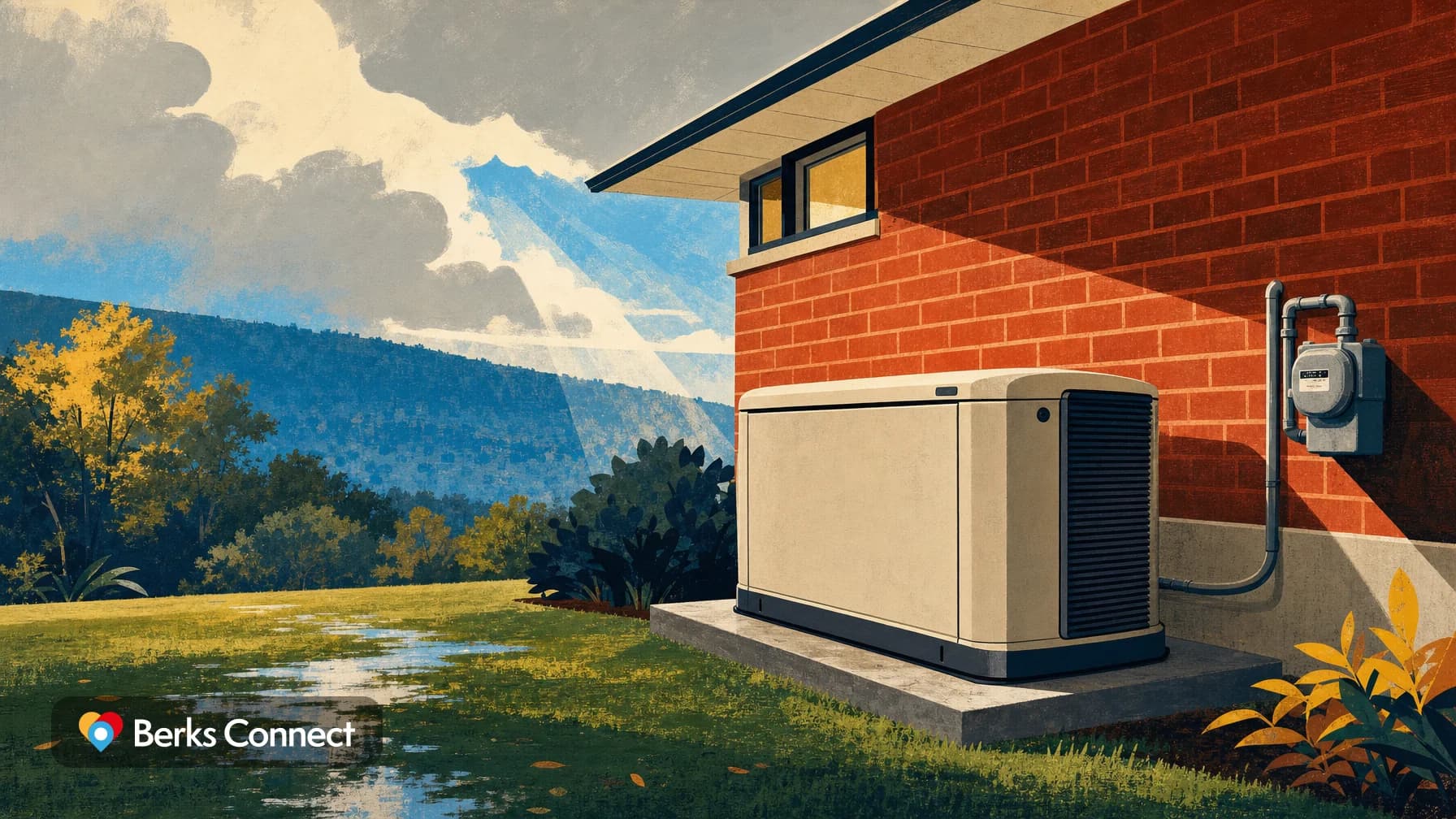
If you're pricing a standby generator, the kind that's wired to your house and starts itself when the power drops, a full installation runs $8,000 to $16,000 as of 2026, and that figure includes the unit. That's one major manufacturer's national figure, and a Berks quote can land anywhere inside it. What moves you inside that range is how far the unit sits from your gas line and your electric meter, how much digging the crew has to do, and whether the house needs any gas or electrical upgrades first.
The portable path is a smaller job in two parts: the generator itself at $500 to $1,800, plus an electrician's connection, which is a manual transfer switch at $500 to $2,000 or an interlock kit the electrician prices, with the permit on top.
Which path is yours comes down to one question: do you want the house to come back on by itself while you're at work, or can you live with going outside to start a generator and running a handful of circuits for the essentials? The first is standby; the second is the portable path and the money-saver. If someone in your house can't be without power for the time it takes you to get outside and start a machine, that settles it: standby. Either way, the person who puts a number on your house is an electrician, and our Berks County electricians page is where to find one.
The July 28 storm left more than 2,000 Met-Ed customers in Berks County without power at one point, with damage across Ruscombmanor and Alsace townships, and a dark fridge and a silent sump pump move a generator up your to-do list.
What a standby generator costs installed in Berks County.
A standby generator is wired into the house, sits outside on a pad, and starts on its own when the utility power drops. It then signals its automatic transfer switch, which moves your house's load off the utility line and onto the generator, and back again when the power returns; that switch is part of the installed total.
So where does $8,000 to $16,000 go? The installation side alone, without the generator, runs $5,000 to $10,000, and what sets it is the unit's capacity, where it sits on the property and what digging that needs, the materials, any gas and electrical upgrades, and the local permit. The generator itself is the other part of the total, a few thousand dollars. Its size is measured in kW, short for kilowatt, which is the number printed on every unit. If your breaker panel has to grow before it can take the generator feed, that's its own job with its own price, and our post on electrical panel upgrade cost in Berks County lays it out.
Keeler Electric in Bernville is a certified Generac installer and distributor, and its customers describe a unit that started within seconds of the outage and ran for twelve hours.
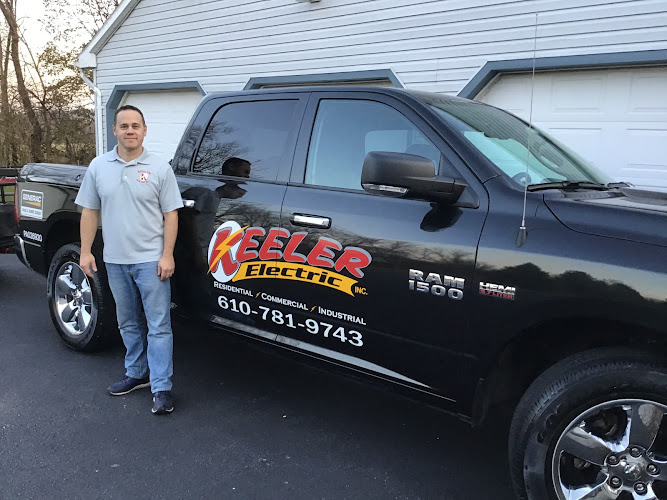
146 Davis Bridge Rd, Bernville, PA
What size generator you need, and whether it runs on natural gas or propane.
You might be thinking the biggest unit is the safest buy. It isn't. The size that counts is your peak load, the most your house draws at any one time, and square footage is only a starting point: a 10-to-14 kW unit covers a smaller house's essentials, while a home around 2,000 square feet that wants everything on usually lands at 18 to 22 kW, and 22 kW is the common size for whole-home coverage at that size of house.
Motors are the reason the dealer's site survey matters more than a guess. A well pump or an air conditioner needs two to three times its running wattage for the second it starts, so those two decide the size more than every light in the house does. Oversize it and you overpay at purchase and again every time it runs; the survey of the loads at your panel is what sets the size.
UGI supplies natural gas in Reading, Wyomissing, Shillington, Birdsboro, Hamburg, Kutztown and about sixty more places in Berks. A natural gas unit runs off your existing gas service and never needs refueling. UGI installs only the gas service line to the house; everything past it is a contractor's job, so the piping to the generator belongs in the quote. That pipe has to be sized for the generator's full load, so the installer checks your gas line's capacity and pressure before the unit is chosen.
No gas line at your house? Propane works, and one major manufacturer requires a tank of at least 250 gallons for its standby units, for fuel pressure and for run time if a delivery is delayed. A full 500-gallon tank holds 400 gallons, because tanks fill to 80 percent, and that can carry the generator on its own for five to six days. If your furnace already runs on propane, ask the installer and your propane supplier whether the generator can share that tank or needs its own, and make sure the quote says which.
What a portable generator hookup costs.
A portable generator you start by hand and plug into the house through a proper connection is the cheaper path, and it has two parts. The generator itself, in the 1-to-6 kW sizes, runs $500 to $1,800.
The connection is the electrician's part, and there are two choices. A manual transfer switch is a small box next to your breaker panel that you flip yourself to move a set of circuits from the utility to the generator, and it runs $500 to $2,000. An interlock kit is a plate on the breaker panel that keeps the utility main breaker and the generator breaker from being on at the same time; interlock kits aren't accepted in every municipality, so your electrician confirms whether your town allows one and prices the job.
A manual transfer switch is the portable path only. It doesn't have the control wiring a standby unit needs, so you can't buy the manual switch now and add a standby generator later. Mr. Electric of Reading in Wyomissing does this exact job, and its customers describe a transfer switch and a generator outlet installed and explained.
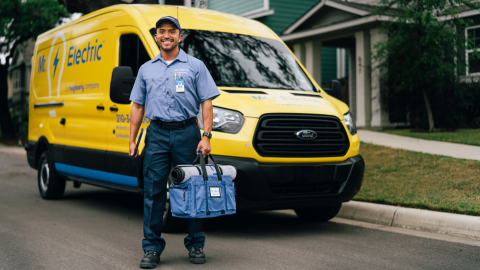
840 N Park Rd #111, Wyomissing, PA
How to run a portable generator safely.
A portable generator runs outdoors only, at least 20 feet from the house, with the exhaust pointed away, and never in a home, garage, basement, crawlspace, shed or any other enclosed space, even with the doors open. More than 100 people a year in the United States die of carbon monoxide from portable generators, and one portable generator makes as much carbon monoxide as hundreds of cars. Put battery-backed carbon monoxide alarms on every level of the house and outside the sleeping areas.
And never plug the generator into a wall outlet to push power into the house wiring, which is called backfeeding. It sends current back out onto the utility lines, where it can electrocute the crew restoring your power and the neighbors on the same circuit. The only way a generator connects to house wiring is through the transfer switch or the interlock, the device that disconnects your house from the utility lines first.
What the generator permit costs in Berks County.
A generator needs a permit. Pennsylvania's construction code requires a permit from your municipality before anyone installs an electrical or gas system the code covers, and the code says adding or relocating gas piping or electric wiring is never a small enough repair to skip the permit. So the transfer switch and the generator feed need a permit, and so does the gas run. Whether your town bills the gas run as a second permit is a one-minute call.
The fee depends on the town. These five Berks municipalities list a generator permit line by name, and Reading prices a permit on the value of the work.
| Municipality | Generator permit line |
|---|---|
| Amity Township | $120 |
| Boyertown | $200 |
| District Township | $200 |
| Spring Township | $120 |
| Wyomissing | $150 |
The generator line itself runs $120 to $200, and every one of these schedules adds the $4.50 the state collects on each construction permit. Several also list a zoning fee that can ride on the permit; Wyomissing's is $95 when the unit sits outdoors, plus a $50 certificate of occupancy, which brings its total to $299.50. Ask the permit office for the whole bill, wherever you are.
How to get a written quote from a Berks County electrician.
Now the call. Pull up our Berks County electricians page, pick a shop that names generators in its work, and ask for a site assessment before a number; a phone price can't see where your meter is or where the gas comes in.
For a standby unit the written quote names every piece: the size in kW and the survey behind it; where the unit sits relative to the gas line and the meter; what digging and what upgrades the price assumes; the gas line check and who runs the piping on your property; and the permit, with who pulls it. For the portable path it names the generator outlet and whether your municipality allows an interlock kit or needs a manual transfer switch.
Before you sign, check the license the way our post on what a licensed electrician means in Pennsylvania walks through; if you'd rather start from names, the best electricians in Berks County post has them, and the post on what electricians charge per hour in Berks County covers the hourly side. Make the call and get the quote on paper before the next storm.
Questions Berks County homeowners ask about generator installation.
Can a manual transfer switch run a standby generator?
No. It lacks the control wiring a standby unit needs to start itself and move the load, so it's for the portable path only; a standby unit pairs with an automatic transfer switch.
Do I need a permit to install a generator in Berks County?
Yes, for the wiring and for the gas run, because adding either is never a small enough repair to skip the permit under Pennsylvania's construction code.
Does UGI run the gas line to the generator?
UGI installs the gas service line to the house only. The piping from there to the generator is a contractor's job; it has to be sized for the unit's full load, and the installer checks your line first.
Sources
- Generac, "Backup Generator Installation" and Generac support, "What factors influence the cost of installing a home standby generator?" (March 3, 2025): the $8,000 to $16,000 installed total including the unit, the $5,000 to $10,000 installation side, the factors that move it, and the line that a site closer to the gas line and meter costs less. As of 2026.
- HomeAdvisor, "How Much Does a Whole-House Generator Cost?" (updated June 19, 2026): portable units of 1 to 6 kW at $500 to $1,800, manual transfer switches at $500 to $2,000, and propane tank setup at $300 to $1,500. National figures.
- Generac, "What Size Generator Do I Need? Sizing Guide" (August 9, 2026): sizing to peak load rather than square footage, the 10 to 14 kW and 18 to 22 kW examples, 22 kW as the whole-home size for a house in that range, starting wattage, the cost of oversizing, and the dealer's site survey.
- Generac support, "How does an automatic transfer switch work?" (November 20, 2025), "Can I use a manual transfer switch with my home standby generator?" (September 13, 2023) and "What is an interlock kit?" (February 19, 2026): how the automatic switch moves the load and moves it back, why a manual switch is the portable path only, what an interlock kit does, and that interlock kits are not accepted in every jurisdiction.
- U.S. Department of Energy, Building America Solution Center (Pacific Northwest National Laboratory), "Generators to Back Up Power During Outages": the manual transfer switch installed next to the panel, the interlock option, and the 20-foot rule.
- UGI, "Natural Gas Reading and Berks County PA", UGI, "Natural Gas Generators" and UGI FAQ, "Does UGI install the natural gas equipment or only the gas service?": the Berks municipalities UGI serves, a gas generator running from existing service without refueling, and UGI installing only the service line.
- Generac, 22 to 28 kW air-cooled standby generator specification sheet (Rev. D, August 13, 2026): the fuel pipe must be sized for full load and the required fuel pressure at the generator.
- Generac support, "What is the minimum size of propane tank that can be used with a home standby generator?" (December 29, 2025): the 250-gallon minimum and the two reasons for it.
- Ferrellgas, "Propane Generators": 2 to 3 gallons an hour, a 500-gallon tank holding 400 gallons, and five to six days of run time.
- 34 Pa. Code § 403.62, permit requirements and exemptions: the permit requirement for electrical and gas systems and the list of work that is not an ordinary repair, including additions to gas piping and electric wiring.
- Municipal generator permit lines, from each municipality's current fee schedule, read September 2026: Amity Township, Resolution 26-08; Boyertown Borough, Resolution 12-01-25A; District Township, Resolution 2026-02; Spring Township, Resolution 2026-05; Borough of Wyomissing, 2026 Fee Schedule, § 3.8.
- City of Reading, Code § 212-106, construction code permit fees: Reading sets electrical permit fees on the value of the work.
- U.S. Consumer Product Safety Commission, Carbon Monoxide Information Center and CPSC news release, May 27, 2026: outdoors only, 20 feet from the house, never in a garage or enclosed space, more than 100 deaths a year linked to portable generators, hundreds of cars' worth of carbon monoxide, and battery-backed alarms.
- FirstEnergy (Met-Ed), "Using Backup Generators": never backfeed through a wall outlet, the risk to utility workers and neighbors, and the isolation device that disconnects the house from the utility lines.
- WFMZ, "Quick-moving storm leaves severe damage across Berks County" (July 28, 2026): more than 2,000 Met-Ed customers in Berks without power and the damage in Ruscombmanor and Alsace townships.