Repair or Replace Your Roof? How Long Roofs Last in Berks
A 20-year-old roof isn't necessarily done. How long shingle, metal and slate roofs last as the makers and trade groups state it, the signs that mean repair or replace, what a roofer's inspection covers and costs, and when a new roof can go over the old one in Berks County.
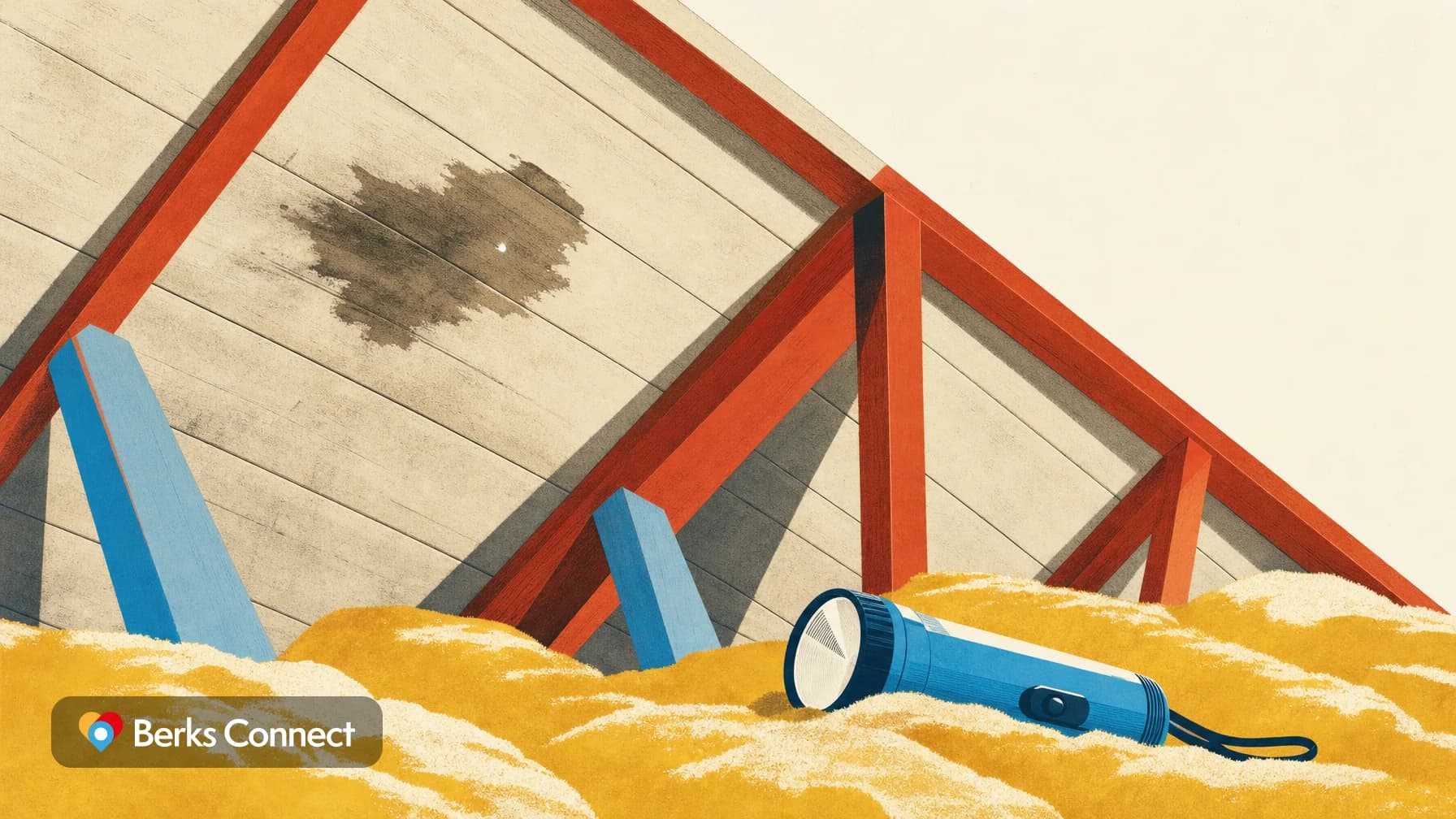
If a roofer just told you your 20-year-old roof needs replacing soon, that may be true, but neither of you can tell from the driveway. Twenty is the age the asphalt roofing makers' association and two Berks roofers name as the time to have a roof looked at, not the age a roof fails. Get an inspection (most Berks roofers advertise a free inspection or estimate), then decide by three things: how much of the roof is worn, what the repair costs against a new roof, and what the roof is made of.
There are plenty of roofers in Berks County who'll come out and give a second opinion.
How long does a roof last in Berks County?
The roofing contractors' association puts it generally: most new roofs are designed for about 20 years of useful service, and slate, tile and some metals last longer. Material by material, the makers, the trade groups and the home inspectors publish these ranges:
| Material | What its makers or trade group say | Home inspectors' chart |
|---|---|---|
| Three-tab asphalt shingles | 20 to 30 years | 20 years |
| Architectural asphalt shingles | 30 to 50 years | 30 years |
| Metal | 30 to 50 years and more | 40 to 80 years |
| Slate | 100 years and more | 60 to 150 years |
Ranges as the shingle maker, the metal roofing trade group, the slate roofing contractors' association and the home inspectors' association state them, as of 2026.
Three-tab shingles (the flat, older kind) run 20 to 30 years by the maker and 20 flat by the inspectors; architectural shingles (the thicker, layered shingles most roofs get now) begin at 30 in both columns. So a 20-year-old roof can be a worn three-tab roof near its end or an architectural roof with years left on it, and only a look at the shingles tells you which. A Berks roofer in Wernersville says it well: the "30 year" label is a product grade, a grade name on the bundle like a model name, not a measured service life.
Berks houses are old. About six in ten homes in the county were built before 1980 and more than a quarter before 1940, and in Reading nine in ten predate 1980. A 1920 house can carry a 2015 roof. An old house is likelier to have a second layer of shingles, a slate roof, or a flat roof, and each changes the answer: two layers means the next roof comes off down to the deck, because the code allows no third; slate is repaired before it's replaced; a flat roof is its own trade.
Why 20 years is the age roofers tell you to get it looked at.
The asphalt roofing makers' association says a residential roof more than 20 years old "is a prime candidate for reroofing," and the same page says to find out by walking around the house with binoculars, so "candidate" means a roof to go and look at. Another shingle maker puts a roof that's at least 20 years old or looks old and worn on its list of signs you need a new roof. Several Berks roofers' own pages put 20 or 20 to 25 on their lists of signs it may be time for a new roof, and two of them say that's the age to schedule an inspection.
Set that against the largest shingle maker's architectural range, which runs to 50, and 20 is the age to go look, not a verdict. For the flat three-tab kind, 20 sits at the low end of the maker's range, and others draw that line lower: the metal roofing trade group puts the average asphalt roof at 12 to 20 years, and a Fleetwood roofer's page says three-tab shingles typically last 15 to 20. So for three-tab, the look matters more, not less.
What are the signs you need a new roof, and which ones only need a repair?
Look from the ground with binoculars, never from the roof; the asphalt makers' association prints "do not climb on the roof." You're looking for cracked, curled or missing shingles, bald patches where the granules (the sandy coating on a shingle) have worn off, grit from them in the gutters, dark streaks, moss, and a sag. Inside: cracked paint, stained drywall or peeling wallpaper under the roof, and in the attic after a heavy rain, water stains or soft spots on the decking (the wood under the shingles), or daylight.
Those shingle signs are what an inspector means by "worn" or "near the end," leak or no leak. Which of them mean repair and which mean replace? The contractors' association says a leak doesn't by itself mean a new roof; it can come from loose flashing (the metal where the roof meets a wall, chimney or pipe) or one damaged section, and those are fixable. What can't be fixed, in the association's words, is "a complete roof system failure," the whole roof giving out at once. The largest shingle maker sorts it the same way: missing or curled shingles are easy to replace and stains after a storm can mean a small leak that's cheaper to repair, while a sag points to a structural problem and extensive mold means replacement.
When is a repair worth it, and when should you replace?
Many in the trade have a rule of thumb, and I'd treat them as rough guides, not laws. The largest shingle maker, the same one whose architectural range runs to 50, gives two: if repairs would cost more than a quarter of a new roof, replace, and if 30 percent or more of the roof is damaged, replace. Under 30 percent, it says, a repair is reasonable as long as the roof is 15 years old or younger and hasn't had extensive repairs or major problems like mold or structural damage. A 20-year-old roof fails that test on age alone, which is why the inspection, not the rule, decides.
Mast Roofing & Construction in Oley publishes its own version: repairs make sense when damage is isolated and the roof is otherwise in good condition, and replacement may become the more practical investment, especially when repairs exceed one third of the cost of a new roof. The cost rules disagree at the margins, so when a repair quote lands anywhere near a quarter to a third of what a new roof costs, ask for the replacement price too and put the two side by side.
All of those rules need to know how much of the roof is worn, which is why the inspection comes first; for the price, what a roof replacement costs in Berks County has it by material, with sections on slate (repair first, replace rarely) and on Reading's flat rowhouse roofs.
What does a roof inspection cover, and what does it cost?
Economy Roofing and Siding in Wyomissing checks shingles, flashing, vents, gutters, valleys and roof edges, looks in the attic, and finishes in under an hour. Amatucci Roofing in Wernersville describes a documented, photographed check of the roof covering and attic deck, ending in a written report with repairs ranked by urgency. A home inspector's roof check is different. The home inspectors' association publishes the chart in the table's right column. On your own roof, though, a home inspector's standards stop at describing what's there from the ground or the eaves, with no duty to walk the roof, predict its remaining life or certify it. So an inspector's "near the end of its useful life" is a look, not a measurement.
A paid, stand-alone inspection runs $125 to $383 nationally (as of 2026). A paid one from someone who isn't bidding on the job is what that price pays for. More on whether the free one is enough is in what roof leak repairs cost in Berks County.
Can you put a new roof over an old one?
Sometimes. Under the code Pennsylvania uses, a roof replacement "shall include the removal of existing layers of roof coverings down to the roof deck." A roof-over, new shingles over the old ones, is a different job, which the code calls a "roof recover" and allows where the shingle maker's installation instructions allow it. The code bars a recover where the existing roof "is water soaked or has deteriorated to the point that the existing roof or roof covering is not adequate as a base for additional roofing," where the existing covering "is slate, clay, cement or asbestos-cement tile," or where the roof "has two or more applications of any type of roof covering." That last clause is the two-layer rule.
The warranty can decide it too: Owens Corning's longer, contractor-registered warranties require a clean deck with the old roof removed, and CertainTeed's extra wind coverage requires that the shingles weren't laid over old ones, while the makers' basic warranties don't require a tear-off. The Berks roofers whose sites describe the job describe a full tear-off, and Economy Roofing and Siding's FAQ recommends one in most cases so it can inspect the deck for hidden damage.
Frequently asked questions.
Does a 30-year shingle last 30 years?
Not as a promise, and the makers say so themselves. Older bundles were sold as "30-year" and most now carry "Lifetime," and the makers define "Lifetime" as the time the original owner owns the house, not a count of years. The warranty's full coverage, labor included, is front-loaded, usually around ten years; after that only the shingles are covered, at a decreasing rate, and the labor to remove, install and haul away isn't.
Is a 20-year-old roof too old to repair?
Not by age alone. The largest shingle maker's repair rule wants a roof 15 or younger, while its own architectural range runs to 50, so the inspection settles it, not the birthday.
Will homeowners insurance pay for a worn-out roof?
A storm that tears shingles off and lets rain in is a covered loss. A roof that leaks because it's old and worn is wear and tear, and the roof is your bill. The post on whether homeowners insurance covers water damage walks through both.
So here's what I'd do tonight. Pick two roofers from the county roofers page, book two free inspections, and ask each the same four questions: how much of this roof is worn, what will a repair cost and how long will it buy me, what are these shingles, and how many layers are up there. When the two answers agree, you have your decision. When they don't, that's what the paid inspection from someone who isn't bidding is for.
Sources
- National Roofing Contractors Association, Resources FAQ (read October 30, 2026): most new roofs are designed for about 20 years of service; a leak doesn't necessarily mean replacement; codes often allow one re-cover.
- GAF, "Understanding Residential Roof Repairs: How Do I Know if my Roof Needs to be Replaced?" (April 20, 2026): lifespans by material, the signs, the 25 percent and 30 percent rules.
- Metal Roofing Alliance, FAQs (© 2025, read October 30, 2026): a metal roof lasting 30 to 50-plus years, and an average asphalt roof lasting 12 to 20 years.
- Slate Roofing Contractors Association of North America, "Why Choose Natural Slate Roofing?" (read October 30, 2026): a correctly installed slate roof lasting 100 years and more.
- InterNACHI, Standard Estimated Life Expectancy Chart for Homes (read October 30, 2026), and its Standards of Practice (revised October 2022): the table's inspectors' column; a home inspector's roof look is from the ground or eaves and doesn't predict remaining life.
- Asphalt Roofing Manufacturers Association, Frequently Asked Questions (read October 30, 2026): a roof more than 20 years old as a prime candidate for reroofing; inspect from the ground with binoculars and do not climb on the roof.
- Owens Corning, "When to Replace Roofs: 7 Signs" (read October 30, 2026): the seven signs, including a roof at least 20 years old or looking old and worn.
- This Old House, "31 of Your Toughest Roofing Questions Answered" (updated May 27, 2026), and its roof repair cost guide (March 5, 2026): binoculars from the ground, the attic check, and the 30 percent line.
- GAF Shingle & Accessory Limited Warranty (effective for installations after January 1, 2025); CertainTeed, "My Roof is Going to Last Forever, Right?" (January 9, 2019); IKO, "5 Myths About Asphalt Roofing" (November 24, 2025): "Lifetime" as ownership tenure, the front-loaded coverage period, and a 30-year warranty not meaning a 30-year roof.
- Mast Roofing & Construction, "Roof Repair Cost: What Delaying Costs PA Homeowners" (July 27, 2026, read October 30, 2026): repairs make sense when damage is isolated; replacement may become the more practical investment when repairs exceed one third of the cost to replace.
- Economy Roofing and Siding, Roof Inspections and Roof Replacement pages and its home page FAQ; Amatucci Roofing, Roof Inspection and its shingle installation page (all read October 30, 2026): what each roofer's inspection covers, tear-off as the usual method, and the 30-year label as a product grade.
- Berks roofers' own pages putting 20 or 20 to 25 years among the signs it may be time for a new roof, two of them saying to schedule an inspection (read October 30, 2026): Eckroth's Roofing Solutions (and its asphalt shingle page, three-tab shingles typically lasting 15 to 20 years), Ludwig Roofing and Repair, White & Sons Roofing, Muthard Roofing, and Economy Roofing and Siding above; thirteen Berks roofer sites in all were read for the free-inspection line.
- HomeAdvisor, "How Much Does a Roof Inspection Cost?" (updated June 19, 2026; archived copy of August 20, 2026): the national paid-inspection range. A national figure, not a Berks price.
- UpCodes, Pennsylvania Residential Code 2021, Chapter 9, sections R908.3, R908.3.1 and R908.3.1.1 (read October 30, 2026): roof replacement means removal of the existing layers to the deck; when a roof recover is permitted and when it isn't.
- Owens Corning, System Protection Limited Lifetime Warranty (shingles purchased after August 1, 2026), with its Preferred and Platinum Protection warranties, and CertainTeed Asphalt Shingle Limited Warranty (2022): the clean-deck requirement of the enhanced warranties and the no-roof-over condition of the wind upgrade.
- U.S. Census Bureau, American Community Survey 2020–2024 5-year estimates, table B25034 "Year Structure Built," Berks County and the City of Reading (via Census Reporter, read October 30, 2026): the shares of housing units built before 1940 and before 1980.