Replacement Window Cost in Berks County
Most standard replacement windows run $450 to $1,200 installed on the national guides, a bay or bow far more; two Berks installers publish their own starting prices, the federal credit ended for 2026 installs, and the quote has to say insert or full-frame.
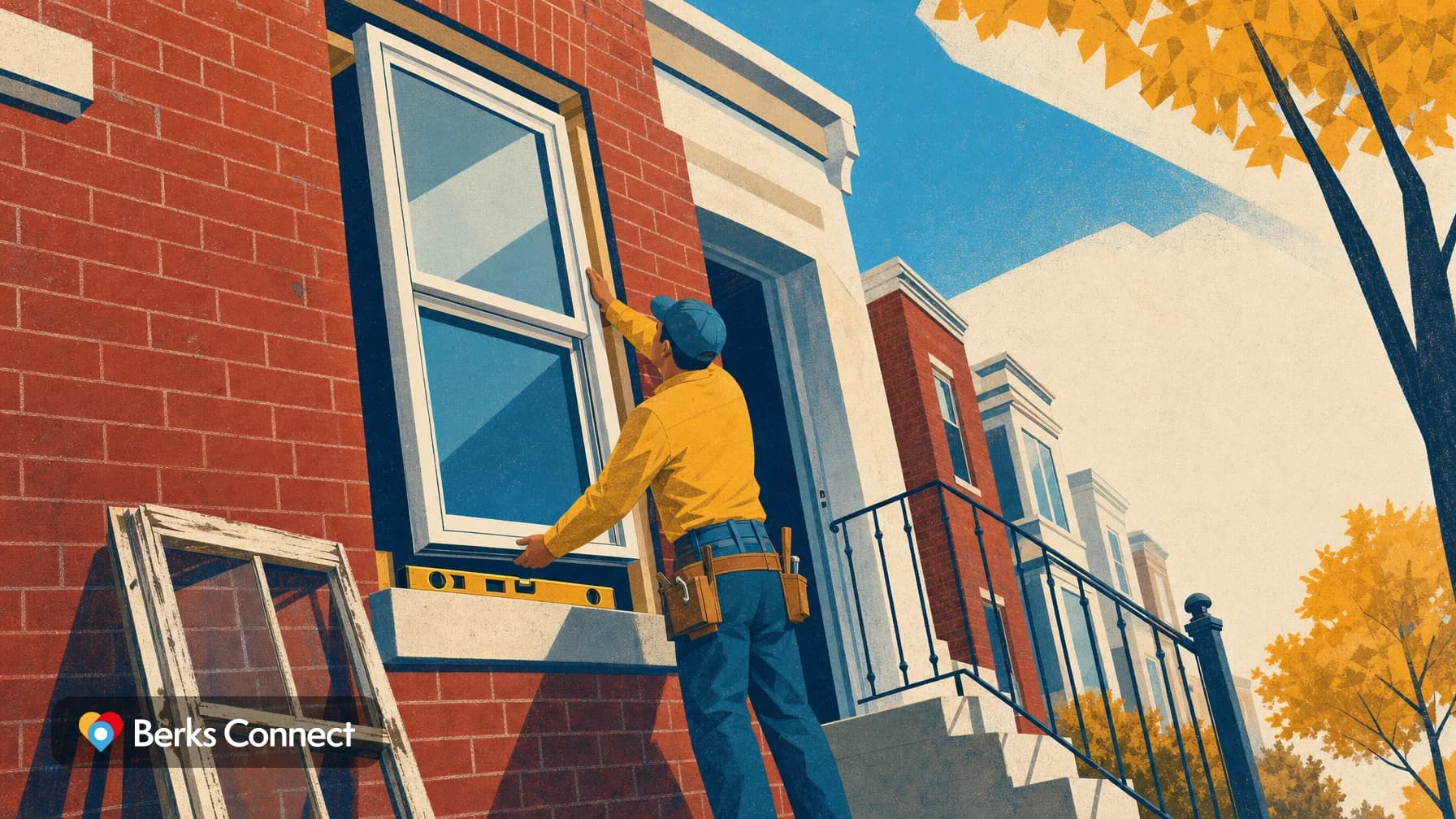
A replacement window runs about $800 installed, going by the national cost guides, and most standard windows land between $450 and $1,200 each; a storm, awning or double-hung window can start under that band, and a bay or bow window runs $900 to $8,000. For the whole house, a single-story home with 10 to 15 windows lands at $8,000 to $12,000, and a two-story home with 15 to 30 windows at $12,000 to $24,000. Labor is about 30 percent of whatever you're quoted.
If you already have quotes, they probably sit far apart, and mostly that's because they aren't pricing the same job. The companies that do this work are on the county windows and doors page; doors are a separate job with their own pricing, so I'll leave them out here.
How the window type and frame material set the price.
The first thing that moves a quote is what kind of window goes in the hole. A bay or bow window, several windows built out from the wall, sits in its own price class.
These are one national cost guide's installed ranges per replacement window, by window type, as of 2026. The guide's typical window is $450 to $1,200, and the rows show how far a single window can fall outside that band.
| Window type | Installed cost per window |
|---|---|
| Double-hung | $300 to $1,000 |
| Casement | $400 to $1,200 |
| Picture | $300 to $1,600 |
| Sliding | $700 to $1,500 |
| Awning | $300 to $800 |
| Storm window | $200 to $700 |
| Bay | $900 to $4,500 |
| Bow | $1,500 to $8,000 |
The type is the first thing to match across your quotes, because a bay window and a picture window aren't comparable. If two quotes name different window types for the same opening, that's the first thing to ask about.
The frame comes next, and these are the installed ranges per window by frame material.
- Aluminum runs $200 to $800 per window installed.
- Vinyl runs $350 to $800.
- Composite runs $300 to $2,500.
- Fiberglass runs $400 to $1,500.
- Wood runs $600 to $2,000.
The type list and the frame list describe the same window from two sides, so don't add a type price to a frame price; a vinyl double-hung is one window, priced once.
Insert or full-frame replacement, and why your quote has to say which.
The second thing that separates quotes is how much of the old window comes out. An insert replacement is a new window set inside the frame you already have; the trim stays put. A full-frame replacement takes everything out to the rough opening, the bare hole in the wall framing, and puts in a new frame and trim.
Which one you need is decided at the house, by the installer looking at your frames. An insert typically costs less because the existing frame is reused, while full-frame work may mean removing and replacing trim, framing or the surrounding materials. On another guide's figures, labor for an insert is $100 to $300 per window and for a full-frame $150 to $800. Make every quote say which it is, for every opening. If one quote sits far above the whole-house band for a house like yours, the first thing to ask that company is whether it priced a full-frame job for every opening, and what frame and glass it used.
What Berks County window companies publish for prices.
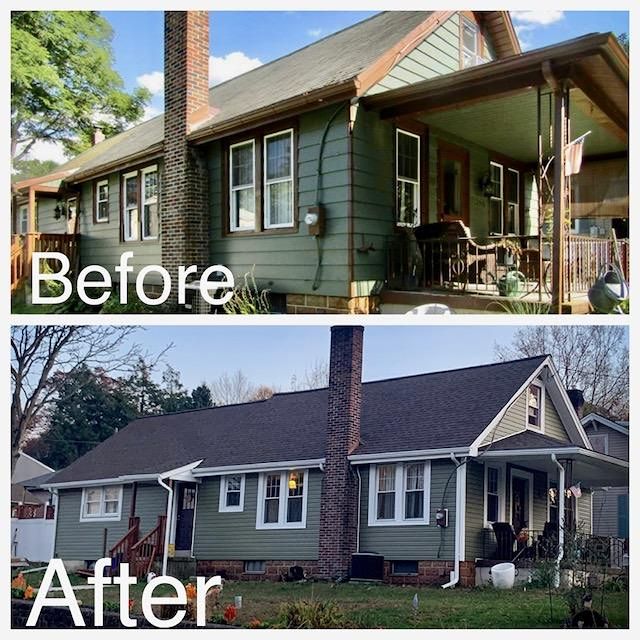
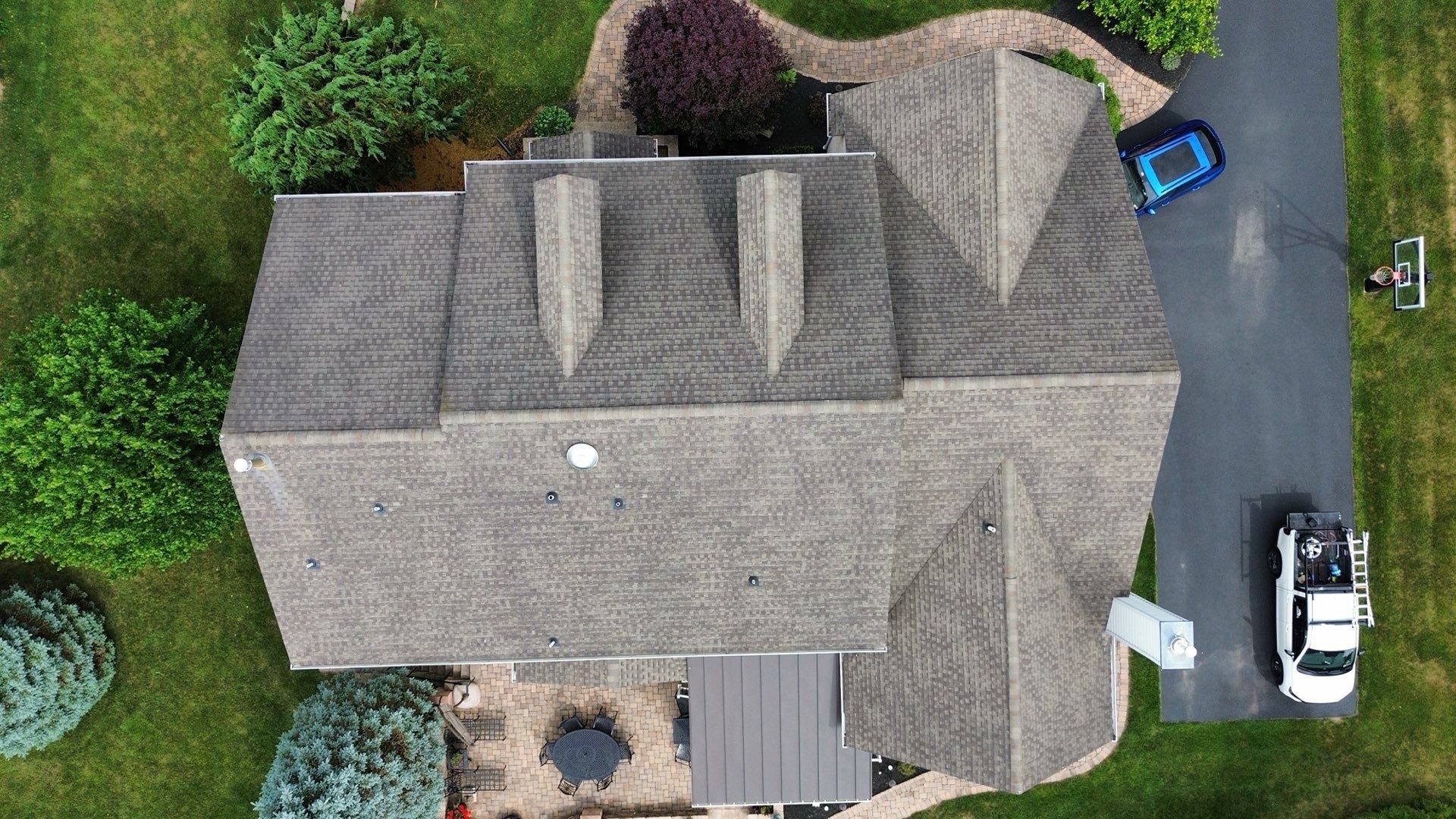
Two local companies publish a number. The Helping Company in Reading, in business since 2019, lists windows from $700 installed, with free estimates and financing at 0% APR available through a financing partner.



306 Kenhorst Blvd, Reading, PA
A starting figure is a floor, not a quote; the type, frame and glass you pick decide the rest.
Install America in Mohnton has made its own windows since 1955 and installs them, and its FAQ says window replacement typically ranges from $650 to $1,200 per window depending on size, material, and energy efficiency features, and $6,000 to $15,000 for a full house of 8 to 12 windows, with free estimates and financing at 0 percent interest for 12 months.
1353 Alleghenyville Rd, Mohnton, PA
Then there's the window by itself. Heeby's Surplus, a home improvement store in Blandon, sells stock-size vinyl replacement windows, the common sizes it keeps on the shelf, at $149.99 to $199.99 each. Its low-E stock windows, the ones with a thin coating on the glass that reflects heat back toward the warm side, run $189.99 to $229.99. Neither price includes installation: that's the window alone, and whoever installs it prices the labor and trim on top.
What the label on the glass means here, and whether it earns a credit or rebate.
Any window sold as ENERGY STAR carries a sticker on the glass, the NFRC label, that lists its ratings. The number that matters in a Berks winter is the U-factor, how fast heat passes through the whole window; lower is tighter.
What number should you look for? Berks County is in the ENERGY STAR North-Central climate zone. Under the current rules, in effect since October 23, 2023, a window sold for the North-Central zone has to be certified at a U-factor of 0.25 or lower to carry the ENERGY STAR label. The rule that applies is the one in effect on the day the window was made, and the U-factor on the sticker is the number to read.
The federal credit has ended for new installs: the Energy Efficient Home Improvement Credit won't be allowed for any property placed in service, meaning installed, after December 31, 2025. While it ran, it paid 30 percent of the window's product cost up to $600 a year, labor excluded, and only for windows carrying the ENERGY STAR Most Efficient designation, a stricter tier than the regular mark.
What about the utilities? PPL, UGI and Met-Ed don't rebate a replacement window for a regular customer today. PPL's list covers insulation and air sealing; UGI's covers furnaces, boilers, water heaters and thermostats; Met-Ed's list has storm windows and doors, but only in its weatherization program for income-qualified households. Check your utility's rebate page when you buy; the insulation and air-sealing rebates are the ones that exist today.
Do you need a permit, and what has to be in the contract before you sign?
A window going back into its own opening needs no state building permit. The state building code doesn't apply to "alterations to residential buildings which do not make structural changes or changes to means of egress", the ways out of the house, and it says in the same sentence that "a structural change does not include a minor framing change needed to replace existing windows or doors". Your city, township or borough can still ask for its own permit, and making an opening bigger or cutting a new one is a different job. Our post on whether you need a permit in your town explains building versus zoning permits and answers the window question in its FAQ.
If the house is in one of Reading's historic districts, there's one more stop. The Historical Architectural Review Board reviews "all proposed exterior alterations ... visible from a public right-of-way" in the Callowhill, Centre Park, Penn's Common and Prince historic districts and the Heights Conservation District, and the Historic Preservation Office has to approve a Certificate of Appropriateness for the change before the work starts. The board reviews each application at its monthly meeting, so call the office at City Hall, (610) 655-6414, before you sign.
The contract falls under Pennsylvania's home improvement law, which names "doors and windows" in its definition and covers any job over $500. The contractor must be registered with the Attorney General; the registration number starts with PA, and the contract must carry it along with the terms the law requires (what the contract has to include lists them). The check itself takes about a minute; see how to verify a contractor's registration. On a job over $5,000 the deposit can't exceed one-third of the price plus any special-order materials listed separately, and you have three business days to cancel after signing, wherever you signed; Pennsylvania's deposit and three-day rules covers both.
How to get window quotes on the same terms.
Write one description of the job and hand the same sheet to three installers. Our post on how to compare contractor quotes says to get at least three written quotes priced from the same written description and line them up item by item; these are the items:
- Number of windows and which openings. Room by room.
- Type and frame material. For each opening.
- The glass package and the U-factor from the NFRC label. The number itself.
- Insert or full-frame. For every opening.
- Exterior trim or the metal wrap over it (installers call it capping), interior trim, and disposal of the old windows. This is where quotes drift apart.
- The warranty, split in two. The manufacturer's part and the installer's labor part.
- The contractor's PA registration number. On the contract itself.
- The deposit. On a job over $5,000, no more than a third plus the listed special-order materials.
Once three quotes list all eight, the gap between them shrinks to a few lines you can ask about. Start on the county windows and doors page, pick three companies, and send them the same sheet this week; the drafty ones aren't going to seal themselves.
Frequently asked questions about replacement window cost in Berks County.
Do you need a permit to replace windows in Pennsylvania?
Not from the state for a window going back into its own opening, because the building code counts the minor framing change that takes as no structural change. Your city, township or borough can still require its own permit, so ask before the job starts.
Is the federal tax credit for windows still available?
Not for a new install; the credit won't be allowed for any property placed in service, meaning installed, after December 31, 2025. If you had qualifying windows installed in 2025 and never claimed it, you can still file an amended 2025 return, generally within three years of filing the original.
Does Reading's historic district review replacement windows?
Yes, when the change is visible from a public right-of-way in one of the city's historic districts; a Certificate of Appropriateness has to be approved before the work starts.
Sources
- Fixr, "How Much Does It Cost to Replace Windows?" (updated January 21, 2026): the $800 average and $450 to $1,200 typical range per installed window, the table's ranges by type, the frame material ranges, the labor figures and share, the whole-house ranges.
- HomeAdvisor, "How Much Does a Window Replacement Cost?" (updated June 17, 2026): the insert versus full-frame definitions and the insert ($100 to $300) and full-frame ($150 to $800) labor figures per window.
- The Helping Company, Replacement Windows page: "Windows from $700 installed", free estimates and financing.
- Install America, About and FAQ: "$650 to $1,200 per window", "$6,000 to $15,000 for a full house window replacement", free estimates, 0 percent financing for 12 months, in business since 1955.
- Heeby's Surplus, stock replacement window price sheets: the $149.99 to $199.99 and $189.99 to $229.99 unit prices.
- EPA ENERGY STAR, Residential Windows, Doors and Skylights Eligibility Criteria, Version 7.0 (effective October 23, 2023): the U-factor thresholds by climate zone and the NFRC certification requirement.
- EPA ENERGY STAR, Climate Zone Spreadsheet by ZIP code and county: Berks County and every Berks ZIP code in the North-Central zone; Lehigh and Schuylkill in the Northern zone.
- IRS, FS-2025-05, FAQs for modification of sections 25C and others under Public Law 119-21 (August 21, 2025): "The credit will not be allowed for any property placed in service after December 31, 2025."
- IRS, "Energy Efficient Home Improvement Credit" (last reviewed April 28, 2026): the 30 percent rate, the $600 window cap, the Most Efficient test and the exclusion of labor.
- IRS, Energy Efficient Home Improvement Credit FAQ, Timing of credits: the amended-return window, generally three years from filing.
- PPL Electric Utilities rebate catalog: insulation and air sealing rebates; no window rebate.
- UGI, Rebates for Home: furnace, boiler, water heater and thermostat rebates; no window rebate.
- FirstEnergy Pennsylvania (Met-Ed), Save Energy for Your Home (modified June 2, 2026): programs being finalized; storm windows and doors appear only in the income-qualified WARM program in the Phase V plan revised April 15, 2026.
- 34 Pa. Code § 403.1(b)(8), Uniform Construction Code scope: alterations without structural change are outside the code, and "a structural change does not include a minor framing change needed to replace existing windows or doors."
- Pennsylvania Office of Attorney General, Home Improvement Consumer Protection Act FAQ: "doors and windows" in the law's definition, the $500 threshold, registration, the one-third deposit cap on jobs over $5,000 and the three-day right to cancel.
- City of Reading, Historical Preservation (live page): the Historic Preservation office, the HARB process, Certificates of Appropriateness and the office phone.
- City of Reading, Historical Architectural Review Board page (archived November 2019): the board's review of exterior alterations visible from a public right-of-way in the Callowhill, Centre Park, Penn's Common and Prince districts and the Heights Conservation District.
- City of Reading, Certificate of Appropriateness application (revised 2024, archived 2025): the Historic Preservation Office address, phone, third-Tuesday meetings and ten-working-day deadline.