Water Heater Leaking? What to Do First in Berks County
Where the water is coming from, what to shut off on a gas or electric heater, what can wait until morning, what repairs cost, and what to tell the plumber.
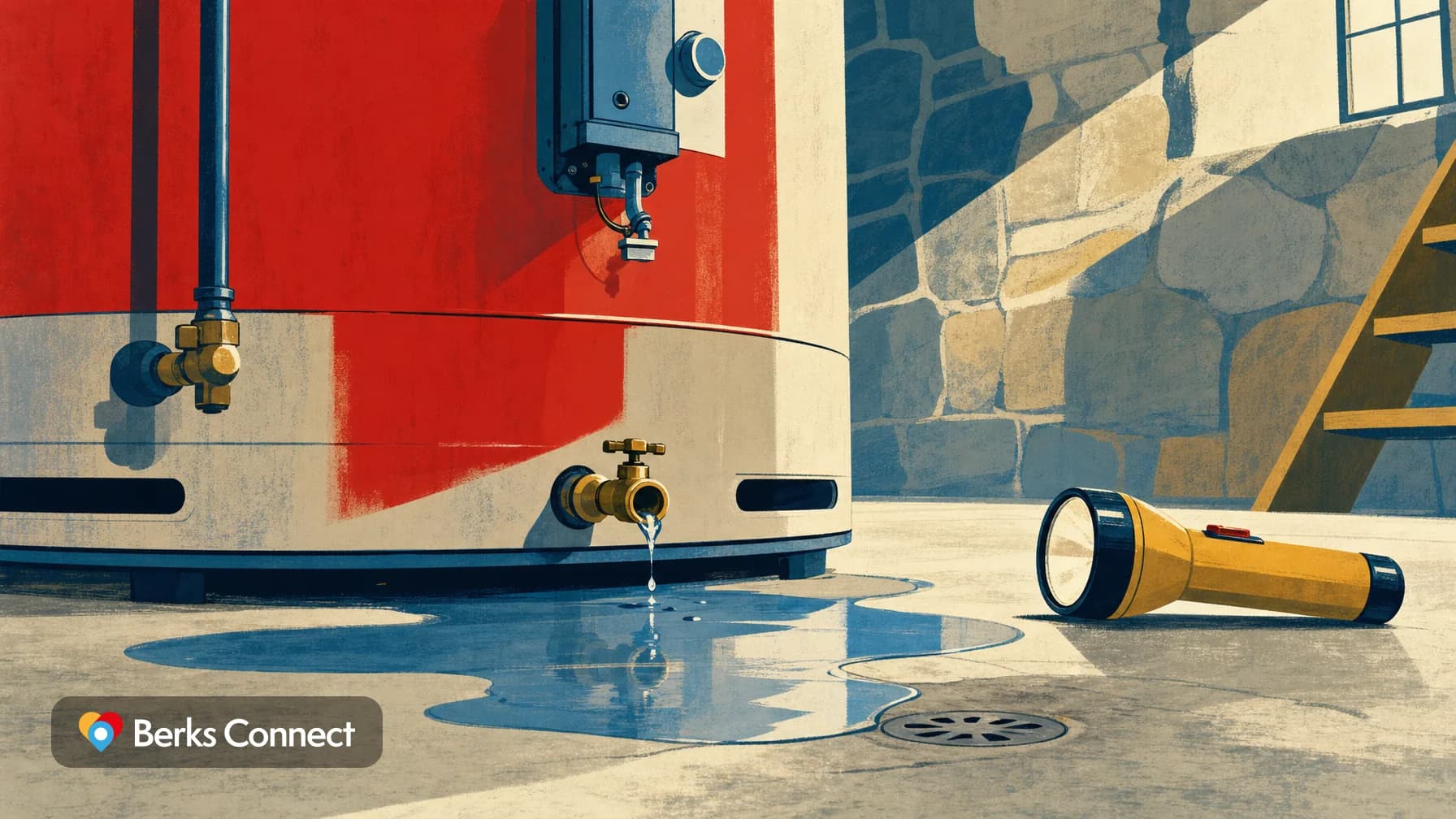
Much of the water you'll find on the floor around a water heater isn't from the tank, and the first thing to do is shut the heater off, not find the leak. If it's a gas heater, turn the gas off at the valve on the pipe feeding it, then close the cold water valve above the tank; if it's electric, flip its breaker first, then close the water. Once the heater is off, you've got time to find the leak and decide whether you're calling someone from the county plumbers page tonight or in the morning.
Shut the water heater off first, before you go looking for the leak.
For a gas heater, work through these in order.
- Turn the gas off. The gas pipe is the one that runs into the control box near the bottom of the tank (the water pipes go in at the top), and it carries a shutoff valve; close it, then turn the heater's own control to OFF. On a heater with a pilot, the knob has to be pressed in slightly to get past PILOT and never needs force; a newer heater without a pilot has a switch, which you set to OFF. If you can't find the valve on the pipe, the control at OFF shuts the gas to the heater by itself.
- Open a hot tap in the house and leave it open, so the tank isn't under pressure and can drain.
- Close the cold water inlet valve above the heater so the tank stops refilling. Of the two water pipes at the top of the tank, the cold one is the one with a valve on it.
- Decide whether to drain it. With the inlet closed, no more water comes in, but the tank still holds everything that was in it. A leak at a fitting on top stops on its own; water coming from the tank body, or a drain valve that won't close, keeps trickling until the tank is empty, and that's the night you put a garden hose on the drain valve near the bottom of the tank, run it to a floor drain or outside, and open the valve.
For an electric heater, the breaker comes first.
- Turn off the breaker labeled for the water heater before you touch anything on the unit. If nothing in the panel is labeled, the main breaker, usually the big one at the top, shuts everything off, and that's fine for tonight.
- Close the cold water inlet valve above the heater, the water pipe with the valve on it.
- Open a hot tap and leave it open, so the tank isn't under pressure and can drain.
- Decide whether to drain it, by the rule in step 4 of the gas list above.
Water from the hose or the relief valve pipe can burn you; at a 140-degree setting a scald takes about five seconds. Keep kids and pets away from it.
If at any point you smell gas, stop. Get everyone out, walk at least the length of a football field from the house, don't start a car or light anything, and call UGI's 24-hour gas emergency line at 800-276-2722, or 911. There's no charge for UGI to come out, and nobody goes back inside until their technician clears the house.
Where is the water coming from, and what does each spot mean?
Many heaters that look like they're leaking aren't, and the water often has another source, so check every other spot before you decide it's the tank.
Condensation is the likely cause when the tank has just refilled with cold water or the basement is humid: water beads on the cold tank and drips. You'll know by morning: once the heater is back on and the tank is warm, condensation is gone and a leak isn't.
Next are the fittings on top: the hot and cold pipe connections, and the anode fitting. The anode is a metal rod inside the tank that's slowly used up to protect the tank, and its fitting is one of the plugs on top. Any of these can weep where it enters the tank. Press a cotton swab into the gap where the fitting passes through the outer shell of the heater (the jacket); if it comes out wet, that fitting is your leak, and resealing it takes a plumber.
Then the relief valve, the small valve with a lever near the top of the tank and a pipe running down to within a few inches of the floor; it lets water out if the tank gets too hot or the pressure climbs too high. A few drops from that pipe now and then may be expansion, or high water pressure on the supply. Expansion works like this: water grows a little when it's heated, and in a house with a one-way valve at the meter it has nowhere to go, so the pressure climbs until the valve opens. The water supplier or a plumber can tell you whether your house has one.
Near the bottom is the drain valve, either slightly open or leaking at its fitting; try snugging it closed.
If you've checked everything above and the water is coming from under the jacket, a seam, or the bottom of the tank itself, the inner tank has rusted through.
What can wait until morning, and what can't.
Condensation needs nothing, a drain valve that wasn't closed needs closing, and a weeping fitting can wait for a daytime appointment.
A relief valve that drips now and then isn't an emergency, but it's a call to a plumber, because the cause is often pressure. Never plug it, cap it or take it out, and never let anyone put anything between it and the tank. A relief valve that keeps running instead of dripping means the tank gets drained and the valve replaced right away. A rusted-through tank is a replacement, and a gas smell is the one thing on this page you don't wait on at all.
What to have ready when you call the plumber.
When you call someone from the county plumbers page, the dispatcher will ask a handful of questions, so have these ready.
- Whether the heater is gas or electric.
- Where the water is coming from: a fitting on top, the relief valve pipe, the drain valve, or under the tank.
- Whether you've already shut off the water and the gas or the power.
- The model and serial number from the data plate on the front (the plumber or the maker's warranty lookup turns the serial into a build date).
- Whether the floor is wet or the tank is spraying.
What it costs to fix a leaking water heater.
As of 2026, repairing a water heater runs about $228 to $1,017 for the whole job, parts and labor, with a typical repair around $615. National figures from two cost guides; each row comes from one of them.
| What needs fixing | National range, parts and labor |
|---|---|
| A water heater repair, whole job | $228 to $1,017 (typical $615) |
| Relief valve | $20 to $200 |
| Anode rod | $50 to $150 |
| Drain valve | $100 to $200 |
| Shutoff valve | $100 to $200 |
| Gas control valve | $150 to $300 |
| Heating element (electric) | $200 to $300 |
| Fixing a leak, from a fitting to the tank | $50 to $600 |
Urgent or after-hours calls add roughly $100 to $200 on top.
Berks companies set their own after-hours terms: one charges a $200 emergency callout paid on arrival, another quotes the call before it comes out and charges more after 6 PM or on weekends, and the Reading Roto-Rooter branch charges no trip fee and no extra for a night or a weekend.
11 N 5th St # 300, Reading, PA
our post on what plumbers charge in Berks walks through how a service call gets priced here.
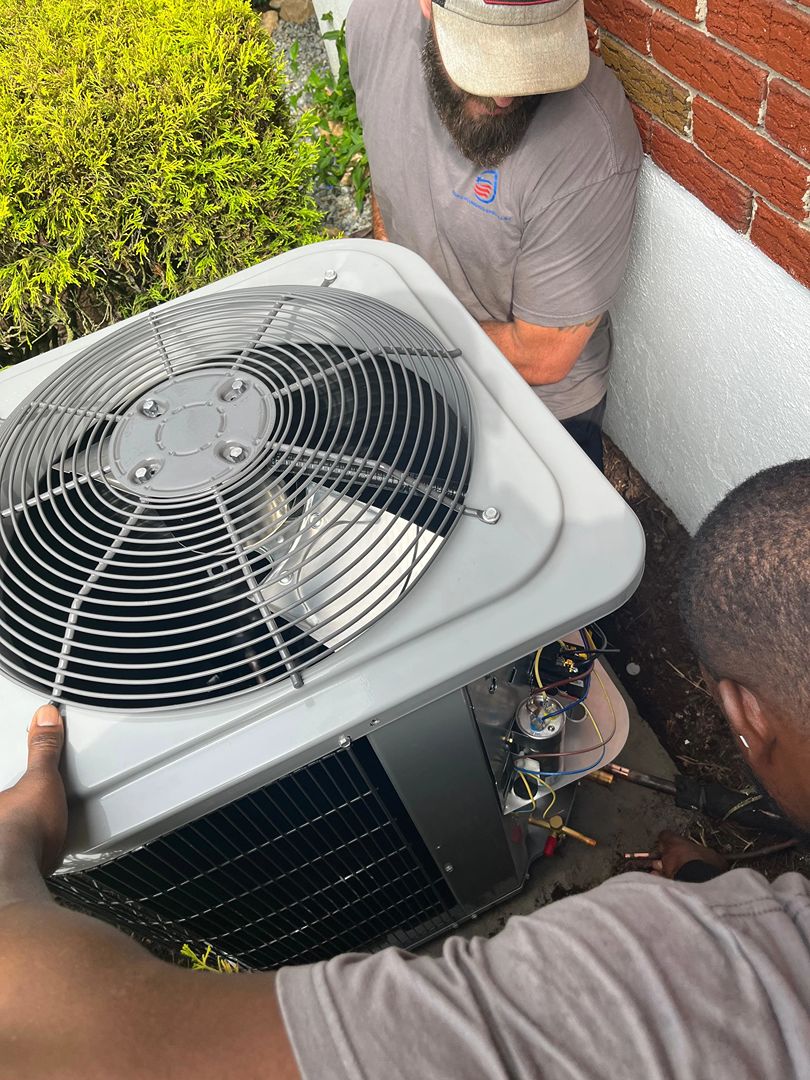
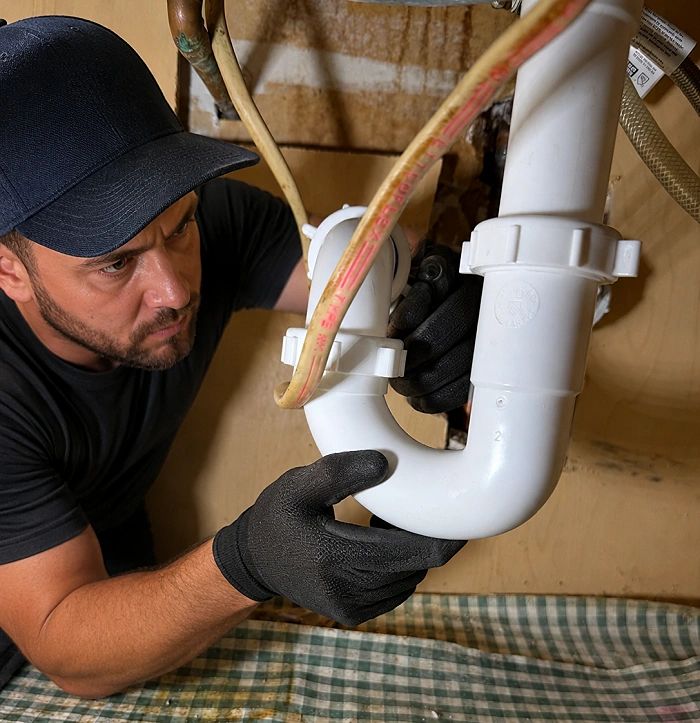
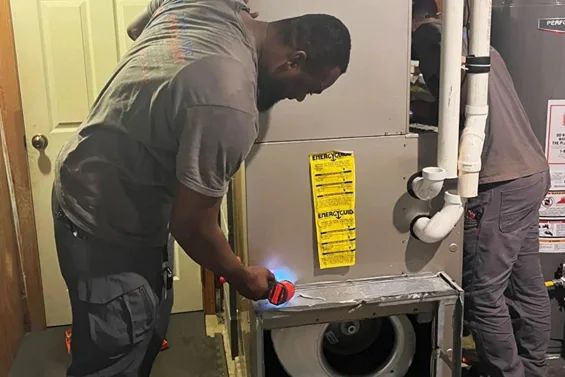
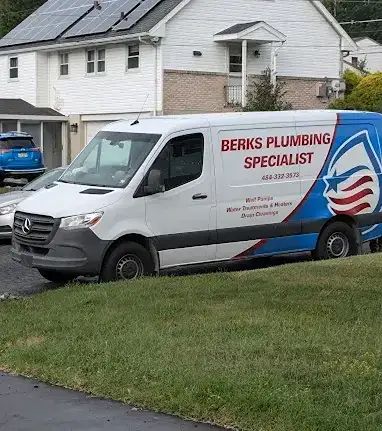
Berks Plumbing & HVAC Specialist in Reading takes calls around the clock and offers same-day appointments when a technician is available.
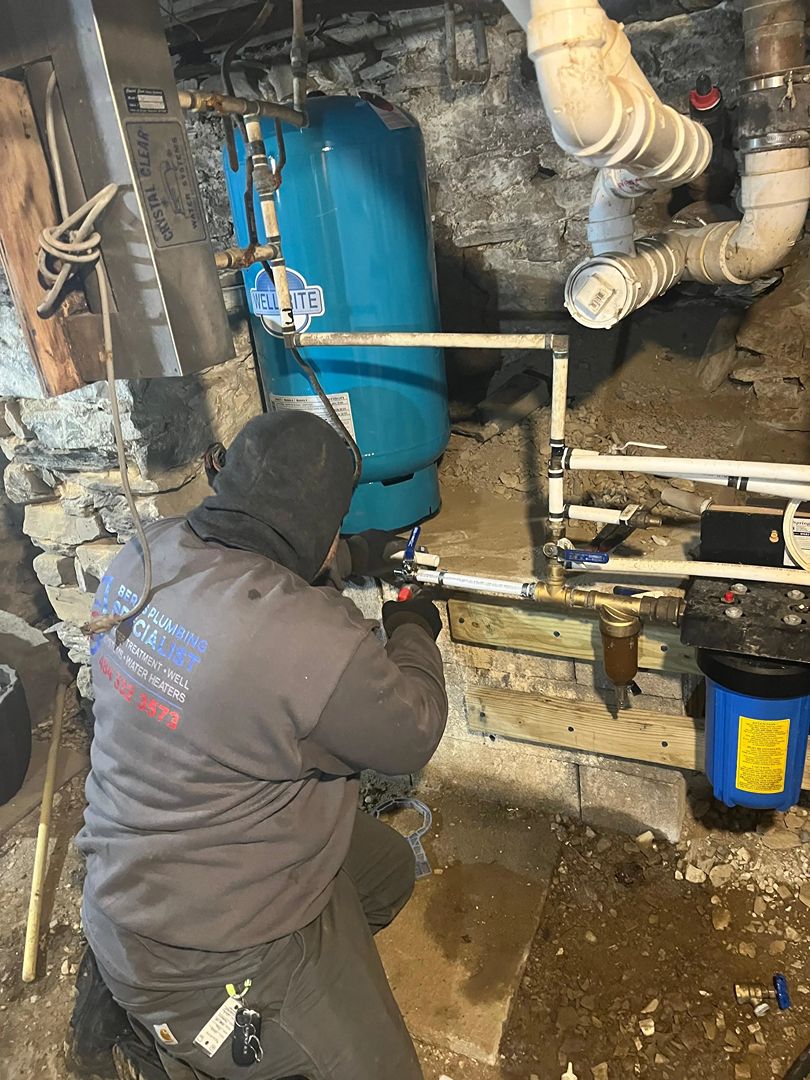
201 East Bellevue Avenue, Reading, PA
When the tank is done and it's time to replace it.
If the inner tank has rusted through, the answer is a new heater. Inside the warranty term the maker supplies a new tank to the person who bought the heater and still lives in the house; the labor, the permit and the haul-away are the owner's under the warranty either way, and the tank terms run six, eight or ten years depending on the model, so ask the plumber to read the plate before you buy one. A gas heater that's been under water in a flooded basement gets replaced whatever the plate says; an electric one gets inspected and its flooded controls replaced before it runs again.
A tank-style water heater lasts about six to fifteen years with maintenance, and once yours reaches ten, every repair gets weighed against a replacement. What a new one costs and which kind to buy is its own decision, and our post on what a replacement costs in Berks walks through it.
In Reading and the towns around it, replacing the heater takes a permit, and the plumber pulls it. In Reading it's $65 plus a $50 administrative fee and the $4.50 state fee; Cumru, Kutztown, Spring, Wyomissing and Exeter set their own, roughly $95 to $155 all in. Where a leak would damage the house, the new tank sits in a shallow pan with a pipe running from the pan to a drain; if the old heater never had that drain pipe, the replacement doesn't have to add it.
The standard homeowners policy covers sudden, accidental water damage from an appliance, including tearing out part of the house to get at the leak, but not the appliance itself.
Frequently asked questions about a leaking water heater.
Is a leaking water heater dangerous?
The water can be hot enough to scald in seconds, so keep people and pets away from it. A gas smell is the one true emergency; leave the house and call UGI or 911.
Why is my water heater leaking from the bottom?
Often the drain valve, the end of the relief valve's pipe, or condensation on the outside of the tank. If none of those is wet and the water is coming from the tank itself, it has rusted through.
How long does a water heater last?
About six to fifteen years with maintenance, with the tank's warranty term printed on the data plate.
Shut it off, find the spot, and make the call with those five answers ready.
Sources
- A. O. Smith, Instruction Manual, Residential Gas Water Heaters (315628-002): the leakage checkpoints, the cotton-swab check, the gas shutoff and draining sequence, the relief valve rules and test, thermal expansion.
- A. O. Smith, Installation Instructions and Use & Care Guide, Power Direct Vent Gas Models (100277330): a heater that has been under water must be replaced; turning off gas to the appliance.
- Bradford White, Installation and Operation Instruction Manual, Direct Vent Gas Water Heater (238-54724, rev. 08/26): condensation is normal and not a leak; the relief valve is never plugged; what to do if you smell gas.
- Bradford White, Installation and Operation Manual, Electric Water Heater (238-44422, rev. 08/26): breaker off before any work, the electric draining steps, scalding within five seconds at 140 degrees, a submerged heater.
- Rheem, Use & Care Manual, Electric Residential Water Heaters (AP21980 Rev 02): shut off power before draining; drained and relief-valve water can scald; the breaker location.
- UGI Utilities, "Smell Gas? Act Fast!": the 24-hour gas emergency line 800-276-2722, the steps to take, and that there is no charge to investigate a gas odor.
- A. O. Smith, Limited Warranty, Residential Type Water Heater (100293072, April 2018): a leaking inner tank inside the warranty period is replaced with a new heater; six, eight and ten-year tank terms.
- HomeAdvisor, "How Much Does a Water Heater Cost?" (updated June 17, 2026): a tank-style water heater lasts six to fifteen years; the ten-year evaluation point. National.
- HomeAdvisor, "How Much Does Water Heater Repair Cost?" (updated June 17, 2026): the $228 to $1,017 range and $615 average, the relief valve, anode rod and heating element rows. National.
- Fixr, "Water Heater Repair Cost" (updated August 29, 2025): the drain valve, shutoff valve, gas control valve and leak-repair rows; the $100 to $200 added for urgent repairs. National.
- Pennsylvania Residential Code 2021 (IRC 2021 as adopted), Chapter 28, Water Heaters: the required drain pan (P2801.6), no pan drain required for a replacement where none existed (P2801.6.1), and the relief valve discharge pipe rules (P2804.6.1).
- City of Reading Code of Ordinances, Chapter 212 Fees, § 212-106 (construction codes; § 212-110 applies it to plumbing): the $65 water heater permit, the $50 administrative fee and the $4.50 state fee.
- Cumru Township, Building/Zoning Permit Fee Structure, Kutztown Borough, Plumbing Permits, Spring Township, 2026 Fee Schedule, Wyomissing Borough, 2026 Fee Schedule and Exeter Township, 2026 Fee Schedule: the township water heater permit lines behind the roughly $95 to $155 range.
- Roto-Rooter Plumbing & Water Cleanup, Reading: no trip charge and no extra charge for after-hours help on nights or weekends.
- Freedom Plumbing and Drain, Reading, contact page: the $200 emergency callout charge acknowledged on the form.
- JB Plumbing HVAC, Reading, service area page: service calls quoted before dispatch; calls after 6 PM or on weekends cost more.
- Berks Plumbing & HVAC Specialist, Reading: calls taken around the clock; same-day appointments subject to technician availability.
- ISO Homeowners 3 Special Form, HO 00 03 05 11 (hosted by the Maine Bureau of Insurance): accidental discharge from a household appliance is covered, including tear-out to reach it, and the appliance itself is not.