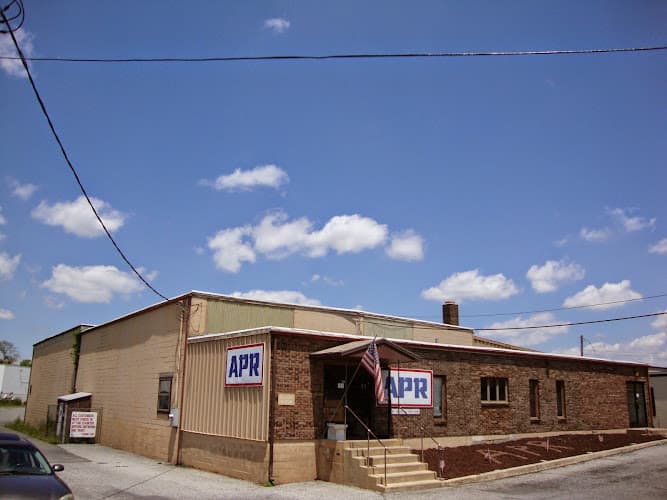
AMMEGA US Inc. operates from 500 Brentwood Drive in Reading, Pennsylvania, serving as part of the North American footprint of AMMEGA, a global manufacturer and supplier of belting products used in conveying and power transmission applications. The company works primarily in the business to business space, supplying conveyor belts, process belts, timing belts, modular plastic belting and related components to manufacturers, distributors, system integrators and maintenance operations across a wide range of industries. The Reading facility sits in Berks County, in southeastern Pennsylvania, a region with a long industrial history and strong highway access to the mid Atlantic manufacturing and distribution corridor.
Company Background
AMMEGA was formed in 2018 through the combination of two long established European belting companies: Ammeraal Beltech, founded in the Netherlands in 1950, and Megadyne, founded in Italy in 1957. Ammeraal Beltech built its reputation in conveyor and process belting, particularly lightweight synthetic belts used in food processing, logistics and general manufacturing. Megadyne developed its business around power transmission products, including polyurethane and rubber timing belts, flat belts and drive components. Bringing the two organizations together created a group with a combined portfolio spanning both the movement of goods on a conveyor line and the transmission of power within the machines that drive those lines.
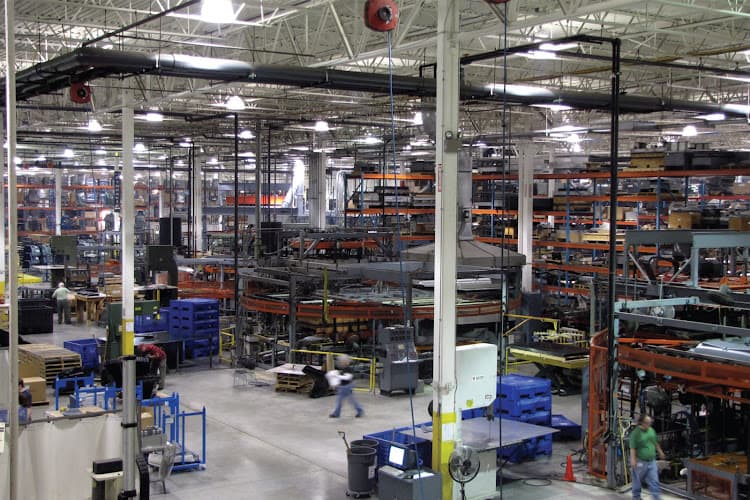
Since the merger, the group has operated production sites, fabrication centers and service locations across Europe, the Americas and Asia. The North American organization includes manufacturing and service operations in multiple states, with Reading among the locations that support customers in the eastern half of the United States. Local service centers of this type typically handle belt fabrication, endless splicing, inventory and technical support so that customers can obtain finished belts cut and joined to their exact machine specifications rather than ordering bulk material and finishing it themselves.
Products and Product Categories
The belting products associated with AMMEGA cover several broad families, each engineered for different loads, speeds, temperatures and hygiene requirements. Customers researching the company generally encounter the following categories:
- Lightweight conveyor and process belts built on fabric carcasses with PVC, polyurethane, silicone or other coatings, used for general product handling, inclines, accumulation and packaging lines.
- Homogeneous belts constructed from a single thermoplastic material, which are widely specified in food processing because they have no fabric plies to absorb moisture or harbor contamination and can be cleaned aggressively.
- Modular plastic belting made from interlocking injection molded links, suited to curves, sideflexing layouts, wet environments and applications requiring positive drive with sprockets.
- Timing belts and synchronous drive belts in polyurethane and rubber, available in standard pitches and in machined or welded profiles for linear motion, positioning and material handling.
- Flat power transmission belts, V belts and ribbed belts used in industrial drives, agricultural equipment, fitness machines and appliance applications.
- Engineered plastic components such as wear strips, guides, rollers and machined parts that work alongside belts within a conveyor structure.
- Specialty and high temperature belts, including PTFE coated fabrics and belts designed for shrink tunnels, ovens, drying lines and similar heat exposure.
Belts in these categories are commonly customized through the addition of cleats, sidewalls, V guides, perforations, profiles and surface textures. Fabrication of these features is a core part of what a regional service location provides, since each conveyor has its own length, width, drive geometry and product handling requirements.
Industries Served
Belting from AMMEGA and its predecessor brands appears in a broad cross section of industry. Food processing is among the most significant, covering bakery lines, meat and poultry, produce handling, dairy, confectionery and prepared foods, where sanitary design, cleanability and compliance with food contact regulations are central concerns. Logistics and parcel handling represent another major segment, with belts used in distribution centers, sortation systems, airport baggage handling and warehouse conveyors that run long hours under continuous load.
Additional sectors include packaging and printing, paper and corrugated production, textiles, tobacco, wood processing, automotive and tire manufacturing, agriculture, mining adjacent processing, electronics assembly and fitness equipment manufacturing. In power transmission specifically, timing belts and drive belts are supplied to original equipment manufacturers who design them into machinery, as well as to maintenance teams replacing worn components in the field.
Services and Technical Support
Beyond supplying belt material, operations of this kind generally provide a set of services that surround the product. These commonly include measurement and specification assistance, fabrication of belts to finished length, endless joining by welding or vulcanizing, on site installation and splicing, belt tracking and tensioning support, and troubleshooting of conveyor performance issues such as mistracking, premature wear or contamination.
Application engineering is a meaningful part of the relationship with industrial customers. Selecting a belt involves evaluating product weight and shape, conveyor length and incline, pulley diameters, drive configuration, ambient temperature, chemical exposure, washdown frequency and regulatory requirements. Working through those variables with a supplier who manufactures across multiple belt technologies allows a customer to compare options rather than being limited to a single construction type.
Preventive maintenance programs, belt surveys and inventory arrangements for critical spares are also typical offerings in this sector, since unplanned conveyor downtime can halt an entire production or distribution operation. Many facilities keep spare belts on hand for high risk lines, and suppliers often assist in identifying which belts warrant that investment.
Location and Service Area
The Brentwood Drive address places the operation in Reading, Pennsylvania, within reach of Interstate 76, Interstate 78, Route 222 and Route 422. That position supports service to Philadelphia, Allentown, Harrisburg, Lancaster, York and the broader Lehigh Valley, as well as connections into New Jersey, Delaware, Maryland and New York. Berks County itself hosts a dense concentration of food production, packaging, metals and distribution operations, which are natural users of conveyor and drive belting.
Practical Information
- Address: 500 Brentwood Drive, Reading, Pennsylvania 19611
- Phone: (267) 504-9273
- Business focus: conveyor belting, process belting, modular plastic belting and power transmission belts for industrial customers
- Typical customers: manufacturers, food processors, distribution centers, OEM machine builders, integrators and maintenance departments
Because the operation serves industrial accounts rather than walk in retail traffic, prospective customers are generally best served by calling ahead to confirm hours, discuss an application and determine whether a visit, a site measurement or a quotation by phone or email is the appropriate next step. Having conveyor dimensions, existing belt part numbers, product details and photographs of the current installation available at the time of contact tends to speed up the specification process considerably.