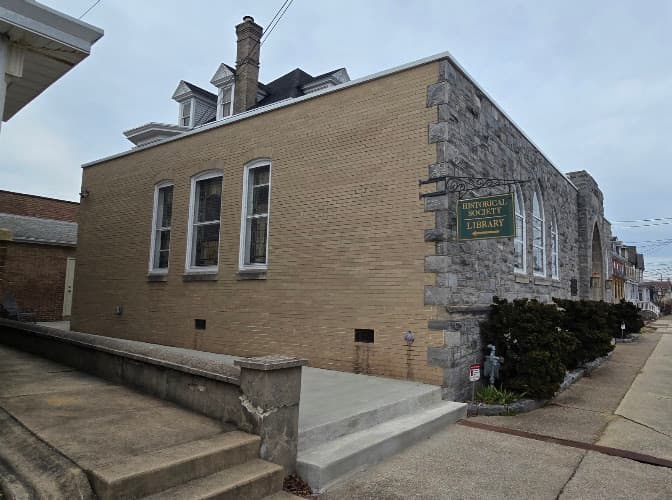
The Boyertown Area Historical Society is a non-profit organization based at 43 S Chestnut Street in Boyertown, Pennsylvania, in eastern Berks County. The society collects, preserves and interprets the documentary and material record of Boyertown Borough and the surrounding townships, and it makes that record available to the public through museum displays, archival research assistance, publications and public programming. It operates as a community institution rather than a commercial attraction, supported by members, volunteers and donors who share an interest in the region's past.
Like many county and borough historical societies in southeastern Pennsylvania, the organization functions on two levels at once. It is a museum, where objects, photographs and documents are arranged into displays that tell the story of a specific place, and it is a repository, where the raw material of local history is catalogued and kept accessible for researchers, genealogists, students, property owners and journalists. Those two roles reinforce each other: material donated by local families often becomes both an exhibit item and a research resource.
Collections and Subject Matter
The society's holdings reflect the industries, institutions and everyday life of the Boyertown area across roughly two centuries. Typical subject areas represented in collections of this kind, and reflected in the society's work, include:
- Photographs and postcards documenting Boyertown's streetscapes, storefronts, churches and schools over time
- Business and industrial records tied to the manufacturing concerns that shaped the borough's economy, including the carriage and auto body trades, foundries, casket manufacturing and cigar making
- Agricultural and rural life material from the surrounding townships, including Colebrookdale, Douglass, Earl, Pike and Washington
- Pennsylvania German cultural material, reflecting the settlement patterns and language traditions of the region
- Military service records, uniforms, equipment and personal effects connected to local residents who served in American conflicts
- School yearbooks, club records, fire company histories, church anniversary books and other institutional documents
- Maps, atlases, deeds and other property records useful for tracing the history of houses, farms and commercial buildings
- Geological and mining material relating to the iron ore deposits and quarrying operations that once supported the area
Displays are organized by theme rather than presented as a static warehouse of objects, and the arrangement changes over time so that different portions of the collection can be brought forward. This rotation gives repeat visitors something new to see and allows the society to build displays around anniversaries, current research or recent acquisitions.
Local History of National Significance
Boyertown's history includes episodes that reach well beyond Berks County, and the society is one of the principal places where that context is explained. The most consequential is the Rhoads Opera House fire of January 1908, a theater disaster in the borough that killed well over a hundred people. The scale of the loss, in a town of modest size, prompted investigation and reform in Pennsylvania and influenced building and fire safety practice more broadly, including standards for exits, door swing direction and occupancy in places of public assembly. Interpreting that event, its victims and its consequences is part of the society's ongoing work.
The area also produced General Carl A. Spaatz, the Boyertown native who commanded American strategic air forces in Europe during the Second World War and later became the first Chief of Staff of the United States Air Force. Boyertown's manufacturing history is another thread with wider reach, particularly the carriage works that evolved into a long-running vehicle body building operation, a lineage that connects the borough to the broader story of American transportation manufacturing.
Research Assistance
The society serves people who arrive with a specific question rather than a general interest. Common research requests include tracing family lines that pass through Berks County, dating and documenting an older house, identifying a photograph, confirming the history of a business or property before a renovation, and gathering background for school projects, articles or presentations. Volunteers and staff familiar with the collection can point researchers toward the appropriate files, indexes, maps and published sources. Anyone planning a research visit is encouraged to call ahead at +1 610-367-5255 so that relevant material can be located in advance and so that hours can be confirmed.
Programs, Presentations and Outreach
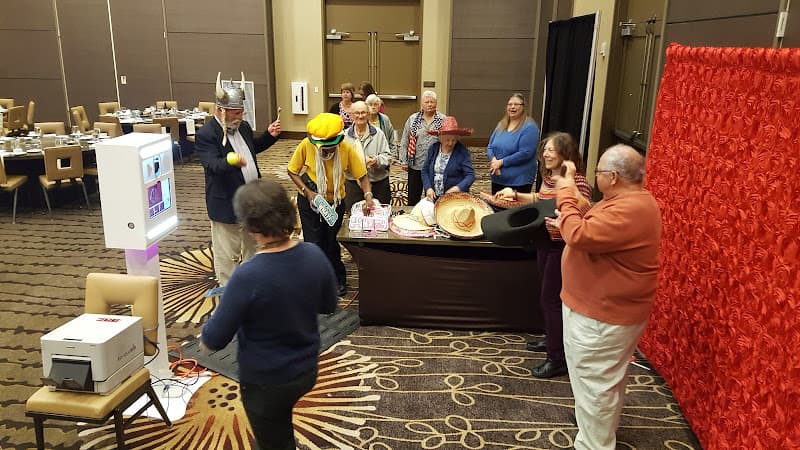
Public programming is a regular part of the society's calendar. Presentations typically focus on a single topic, person or event tied to the area, and they sometimes incorporate outside participants, loaned artifacts or period equipment to add dimension to the subject. The society also maintains an active online presence that extends its reach beyond the building itself, sharing historical photographs, documents and short accounts of past events with a following that includes both local residents and people who have moved away from the area. This digital work has become a meaningful part of how the organization fulfills its educational mission.
The society also works alongside other local institutions and community groups, contributing historical context to borough events, anniversaries and commemorations.
Visiting Information
- Address: 43 S Chestnut St, Boyertown, PA 19512
- Phone: +1 610-367-5255
- Website: boyertownhistory.org
- Organization type: non-profit historical society and museum
- Accessibility: wheelchair accessible entrance and wheelchair accessible parking lot
The location places the society within walking distance of Boyertown's downtown business district, which makes a visit easy to combine with other stops in the borough. Because the organization relies substantially on volunteers, open hours can be limited and may vary by season, so calling ahead or checking the website before traveling is advisable, particularly for groups, school visits or research appointments.
Supporting the Organization
As a non-profit, the society depends on memberships, donations, program attendance and volunteer labor to maintain its collections and keep its doors open. Donations of documents, photographs and artifacts with a clear connection to the Boyertown area are of particular interest, since such material is often the only surviving record of a family, business or building. Prospective donors should contact the society first to discuss whether an item fits the collecting scope and how it would be cared for.