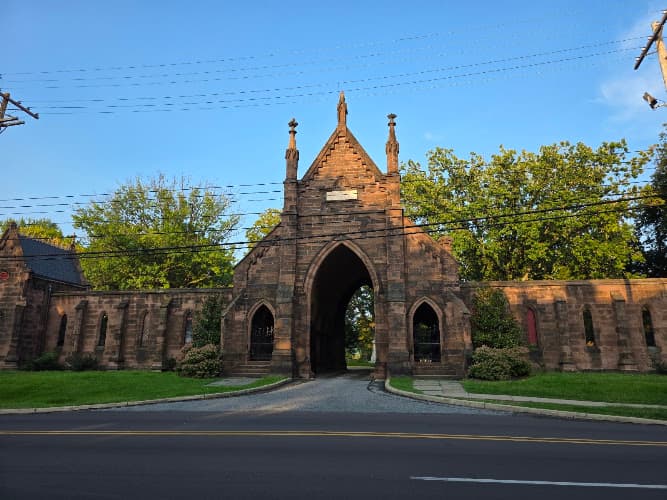
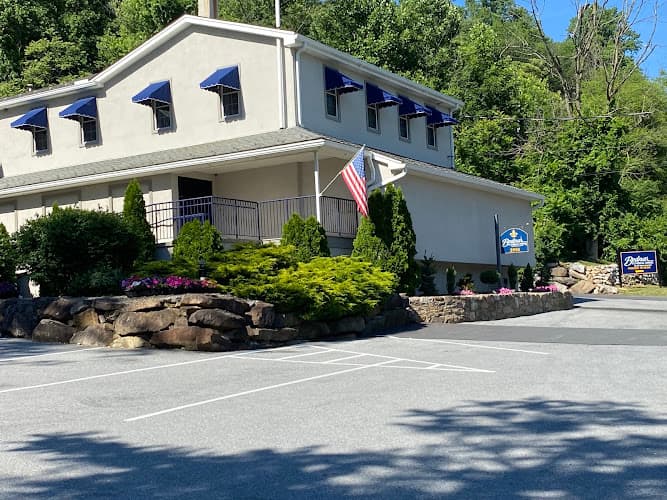
Charles Evans Cemetery is a historic burial ground located at 1119 Centre Avenue in Reading, Pennsylvania, in the northern section of the city near the Berks County line between urban neighborhoods and the surrounding countryside. The cemetery functions both as an active place of interment, offering traditional burial, cremation options and family plots, and as one of Reading's most recognizable historic landscapes. Its grounds cover a substantial acreage of rolling lawns, mature specimen trees, winding drives and monuments that span more than a century and a half of local history. The office can be reached at +1 610-372-1563.
History and Origins
The cemetery traces its beginnings to the mid 1840s, when Charles Evans, a prominent Reading attorney, provided land north of the growing city for use as a public burial ground. The gift reflected a broader movement in nineteenth century America known as the rural or garden cemetery movement, which shifted burial away from crowded urban churchyards and toward spacious, landscaped grounds designed to resemble parks. Cemeteries founded in this tradition, including Mount Auburn near Boston and Laurel Hill in Philadelphia, were intended to serve the living as well as the dead, functioning as arboretums, sculpture gardens and quiet retreats at a time when few cities had formal public parks.
Charles Evans Cemetery was developed along these same principles. Curving carriage roads follow the contours of the land rather than a rigid grid, plantings were selected for variety and shade, and burial sections were arranged to create views and sheltered corners throughout the property. Over the decades the cemetery expanded well beyond its original acreage, and it became the resting place for a broad cross section of Reading's population, including industrialists, railroad men, merchants, civic leaders, clergy, veterans and working families whose descendants still live in Berks County.
Architecture and Landscape
The cemetery is particularly noted for its nineteenth century architecture. The Gothic Revival gatehouse at the Centre Avenue entrance is among the most photographed structures of its kind in the region, with pointed arches, stonework and detailing characteristic of the style as it was applied to civic and funerary buildings in the Victorian era. Beyond the entrance, visitors encounter a dense collection of period funerary art: obelisks, draped urns, carved angels, columns, iron fencing, family mausoleums built into hillsides and freestanding tombs in a range of revival styles. Together these features make the grounds an open air record of changing tastes in memorial design from the 1840s onward.
The landscape itself is part of the appeal. Large deciduous trees shade much of the property, and the terrain rises and falls in ways that reveal new sections gradually as visitors move through. The combination of historic architecture, monument sculpture and mature plantings has made the cemetery a subject of interest to historians, preservationists, photographers and students of nineteenth century design, and the property has long been recognized for its historical significance.
Interment and Memorial Options
As a working cemetery, Charles Evans continues to serve families throughout Reading and Berks County. Options generally available at cemeteries of this type, and offered here, include the following:
- Traditional in-ground burial in single graves or multi-grave family lots
- Interment of cremated remains in graves, urn gardens or dedicated cremation sections
- Niche space for urns, an option the cemetery maintains for families choosing cremation
- Mausoleum and above ground entombment arrangements
- Monument, marker and memorial placement in accordance with section regulations
- Pre-need selection of lots and spaces, allowing families to make arrangements in advance
- Coordination with funeral homes on the scheduling and conduct of graveside services
- Ongoing care and maintenance of graves, roadways and landscaped areas
Families working with the cemetery typically coordinate through the office, which handles lot sales, transfers of deeds, opening and closing of graves, foundation work for monuments and the rules governing memorial size, materials and decoration in each section. Because sections were developed in different eras, regulations can vary from one part of the grounds to another, and staff can explain what is permitted in a specific area.
Veterans and Military Burials
The cemetery contains substantial military burials, including soldiers' plots dating to the Civil War as well as graves of veterans of later conflicts. These sections are marked with government issued and privately purchased stones, and flags are placed in connection with Memorial Day and other observances. Records associated with military interments are held by the cemetery and are frequently consulted by relatives and researchers tracing service histories.
Genealogy and Records
With generations of Berks County families buried on the property, the cemetery office is a recognized stop for genealogical research. Interment records, plot maps and deed information allow staff to identify the location of a specific grave, confirm who is buried in a family lot and provide dates that may not appear on a weathered stone. Researchers planning a visit are advised to call ahead with as much identifying information as possible, such as full names, approximate dates of death and any known family surnames connected to the lot, which makes locating a record considerably faster.
Visiting Information
The main entrance is on Centre Avenue, a north to south corridor that connects downtown Reading with the northern suburbs, making the cemetery straightforward to reach by car from U.S. Route 222, Route 61 and the Warren Street Bypass. Parking is available on site, and the cemetery provides a wheelchair accessible entrance and a wheelchair accessible parking area. Internal roads are paved, and visitors with mobility limitations can often drive close to a specific section, though some hillside areas and older lots are reached more easily on foot.
The grounds are open to visitors during posted daytime hours, and the cemetery is used regularly by neighborhood residents for quiet walks and by photographers and history enthusiasts interested in the monuments and gatehouse. As with any active cemetery, visitors are asked to remain on roads and paths where possible, avoid disturbing monuments or plantings, keep noise to a minimum out of respect for services and mourners, and observe posted rules regarding pets, vehicles and decorations. Those planning a first visit for burial arrangements or research are encouraged to contact the office in advance to confirm hours and staff availability.