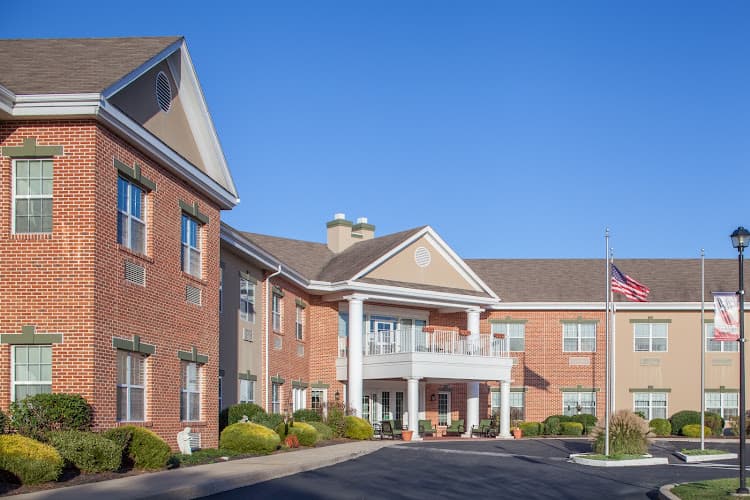
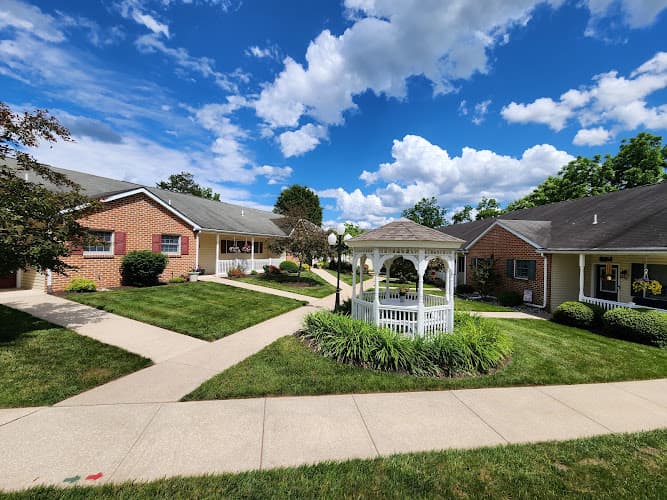
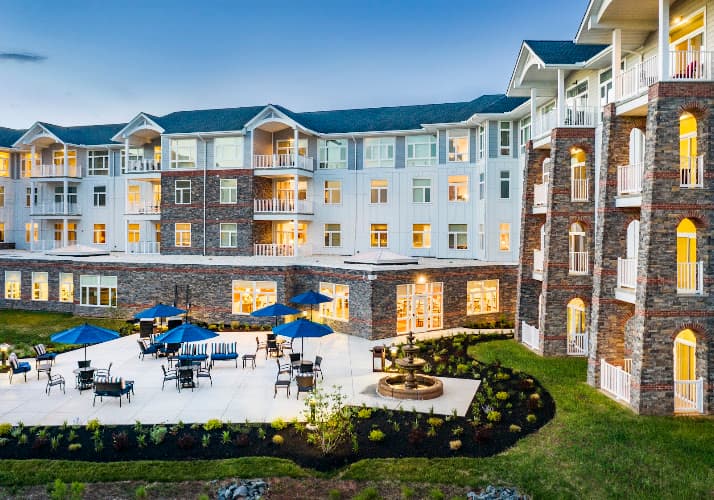
Sanatoga Court is an assisted living community located at 227 Evergreen Road in Pottstown, Pennsylvania, serving older adults from the Sanatoga, Limerick, Stowe, Royersford, Boyertown, and greater Pottstown areas. The community provides residential care for seniors who no longer wish to manage a household on their own but who do not require the clinical intensity of a skilled nursing center. Day to day support, housing, meals, and organized programming are bundled into a single residential setting, with staff available around the clock.
Personal care and assisted living communities in Pennsylvania operate under licensure from the state Department of Human Services, which sets standards for staffing levels, resident assessments, medication handling, care planning, and physical plant requirements. Within that framework, Sanatoga Court offers tiered levels of support so that the amount of hands on assistance a resident receives can be adjusted as needs change, rather than requiring a move to a new address each time circumstances shift.
Location and Setting
The Evergreen Road address places the community in the Sanatoga section of Lower Pottsgrove Township, just east of Pottstown Borough and a short drive from the Route 422 corridor. That position makes the community reachable from Montgomery, Chester, and Berks counties without a long trip on secondary roads. Pottstown Hospital, medical offices, pharmacies, and outpatient services are nearby, which simplifies scheduling appointments and coordinating follow up care for residents who see physicians locally.
The surrounding area is a mix of suburban neighborhoods, township parks, and farmland at the edge of the Schuylkill River valley. Families who visit often combine a stop at the community with errands in Pottstown or Limerick, and the proximity to Route 422 means relatives commuting from King of Prussia, Reading, or Phoenixville can reach the property in well under an hour in ordinary traffic.
Assisted Living Services
Assisted living at Sanatoga Court centers on help with the activities of daily living. Typical support in a community of this type includes the following:
- Assistance with bathing, dressing, grooming, and personal hygiene
- Medication management and administration by trained staff
- Mobility and transfer assistance, including escort to meals and activities
- Three meals daily plus snacks, served in a common dining room
- Housekeeping, laundry, and linen service
- Coordination with physicians, therapists, home health providers, and hospice when appropriate
- Emergency call systems in resident rooms and common areas
- Scheduled wellness checks and ongoing care plan reviews
Each incoming resident is assessed before move in so that the care plan reflects actual needs rather than assumptions. Those assessments are revisited periodically and after any significant change in health, such as a hospitalization or a fall. Families are generally included in care conferences so that decisions about medication changes, therapy, or additional support are made collaboratively.
Memory Care at Homestead
Sanatoga Court operates a dedicated memory care neighborhood known as Homestead for residents living with Alzheimer's disease and other forms of dementia. Secured memory care neighborhoods differ from general assisted living in several practical ways: entrances and exits are controlled to reduce the risk of wandering, the physical layout is simplified to limit confusion, and staff are trained specifically in dementia communication techniques and redirection rather than confrontation.
Programming in a memory care setting is typically structured around routine and sensory engagement. Activities are shorter, repeated at consistent times, and designed to draw on long term memory and familiar habits, such as music from a resident's early adulthood, folding and sorting tasks, gardening, art, and small group conversation. Staffing ratios in memory care neighborhoods are generally higher than in traditional assisted living because residents need more frequent cueing and supervision throughout the day.
Residences and Common Spaces
Residents live in private or shared rooms and are encouraged to bring furniture, artwork, photographs, quilts, and other personal belongings so that the space reflects a lifetime rather than a rental. Rooms include emergency call capability, and housekeeping and laundry are handled by the community so that residents are not responsible for upkeep.
Beyond private rooms, the building includes shared living areas used for dining, group programs, visits with family, and informal socializing. Common spaces in communities like this typically include lounges, a dining room, an activity or multipurpose room, a beauty and barber area, and outdoor seating. These areas matter more than they might appear on a tour checklist, because they are where most of the informal social life of a community actually happens.
Programming and Daily Life
A posted monthly calendar drives the rhythm of the week. Programming in assisted living communities generally spans several categories: physical activity such as chair exercise and walking groups, cognitive activities such as trivia and word games, creative programs including crafts and music, spiritual services, and social events like happy hours, holiday parties, and seasonal gatherings that welcome family members. Outings, entertainers, and intergenerational visits fill out the schedule. Residents choose how much they participate, and calendars are usually distributed in print as well as posted in common areas so that families can plan visits around events they would like to attend.
Accessibility and Visiting
The property offers a wheelchair accessible entrance and a wheelchair accessible parking lot, which is a practical consideration for visitors using walkers, canes, wheelchairs, or transport vans. Interior corridors and common areas in licensed personal care settings are designed to accommodate mobility devices, and handrails and accessible bathing facilities are standard features.
Touring, Admissions, and Contact
Families researching senior living are encouraged to tour in person, and virtual tours have also been offered for relatives who live at a distance or who are beginning their search remotely. Questions worth raising during a tour include current pricing and what is included in the base rate, how care levels are determined and repriced, staffing patterns on evenings and overnights, the process for handling hospitalizations and returns, medication management procedures, and what triggers a recommendation to move from assisted living to memory care.
The admissions process ordinarily involves a physician's assessment form, a health history, financial documentation, and a residency agreement. Prospective residents and families can reach the community by phone at +1 610-850-0187 to request pricing, schedule a visit, or discuss availability in either assisted living or the Homestead memory care neighborhood.