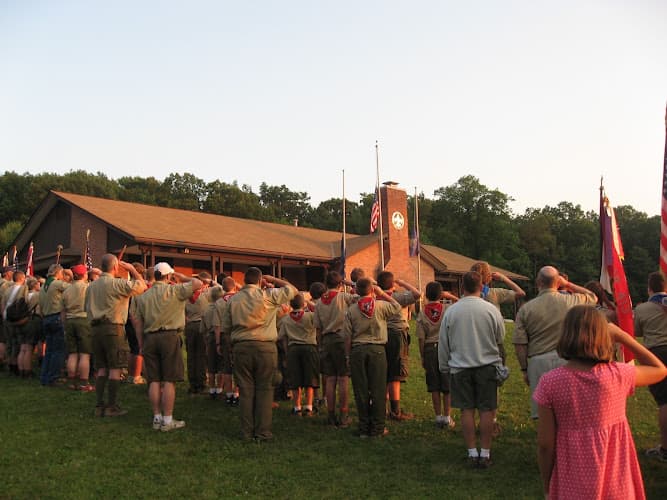
Scouting America, Hawk Mountain Council is the regional administrative and service center for Scouting programs across a portion of eastern Pennsylvania, with its headquarters located at 5027 Pottsville Pike in Reading. The council functions as the local arm of the national Scouting America organization (formerly known as the Boy Scouts of America), providing the structure, training, insurance, camping properties, and volunteer support that allow individual packs, troops, crews, and ships to operate in their own communities.
Local councils like Hawk Mountain are chartered nonprofit corporations. They do not run individual units directly. Instead, units are chartered to community organizations such as churches, schools, civic clubs, fire companies, and veterans groups, and the council supplies the connective tissue: registration processing, leader credentialing, program calendars, advancement records, camp operations, and a physical location where volunteers and families can get answers in person.
Programs Supported by the Council
The council supports the full range of age based Scouting programs, each with its own structure and advancement path:
- Cub Scouts, generally for youth in kindergarten through fifth grade, organized into dens and packs with rank advancement tied to grade level and an emphasis on family participation.
- Scouts BSA, for youth roughly ages 11 through 17, built around the patrol method, outdoor skills, merit badges, and the trail from Scout rank through Eagle Scout.
- Venturing, a coeducational program for older teens and young adults focused on high adventure, leadership, and youth led planning.
- Sea Scouts, which centers on maritime skills, boating, and seamanship.
- Exploring and career based programs, which connect young people with law enforcement, fire service, health care, engineering, and other professional fields.
Across all of these programs, the council coordinates advancement recognition, rank and merit badge records, Eagle Scout service project reviews, and the boards of review and paperwork that accompany major milestones. For unit leaders, this administrative backbone is one of the most frequently used services the office provides.
The Scout Shop and Retail Services
The Reading office houses a retail operation that carries official uniforms, insignia, handbooks, merit badge pamphlets, awards, camping gear, program literature, and unit supplies. This is where families come to outfit a new Cub Scout, where leaders pick up rank badges and advancement materials before a court of honor, and where collectors and longtime Scouters browse patches and commemorative items.
Typical items available on site include:
- Field uniforms, activity shirts, caps, neckerchiefs, and belts for every program level
- Rank patches, position of responsibility badges, merit badges, and unit numerals
- Handbooks, leader guides, merit badge pamphlets, and program planning materials
- Council shoulder patches, event patches, and commemorative items
- Basic camping and outdoor equipment, cooking gear, and personal items for summer camp
- Recognition awards, knots, pins, and service stars for adult volunteers
Because uniform requirements change as youth move from one program to the next, and because insignia placement follows specific standards, the shop functions as much as a reference point as a retail counter. Parents who are unsure what a particular rank requires or where a patch belongs on a uniform can generally sort it out during a single visit.
Camping, Outdoor Programs, and Training
Camping is central to what a Scouting council provides, and Hawk Mountain Council maintains camping property used for resident summer camp, weekend unit campouts, day camp, and specialized outdoor training. Summer camp programs typically offer merit badge instruction in areas such as aquatics, shooting sports, ecology, handicraft, and outdoor skills, along with first year camper programs designed to move new Scouts through foundational requirements. Council properties are also used for district camporees, Cub Scout family weekends, and older youth high adventure activities.
On the adult side, the council delivers the training required for registered volunteers. This includes Youth Protection Training, which is mandatory for all adult leaders and must be renewed on a set schedule, along with position specific training for den leaders, Scoutmasters, committee members, and chartered organization representatives. Outdoor training such as BALOO for Cub Scout leaders and Introduction to Outdoor Leader Skills for Scouts BSA leaders prepares adults to run safe overnight programs. Advanced offerings commonly include Wood Badge for adults and National Youth Leadership Training for older Scouts.
Location and Practical Information
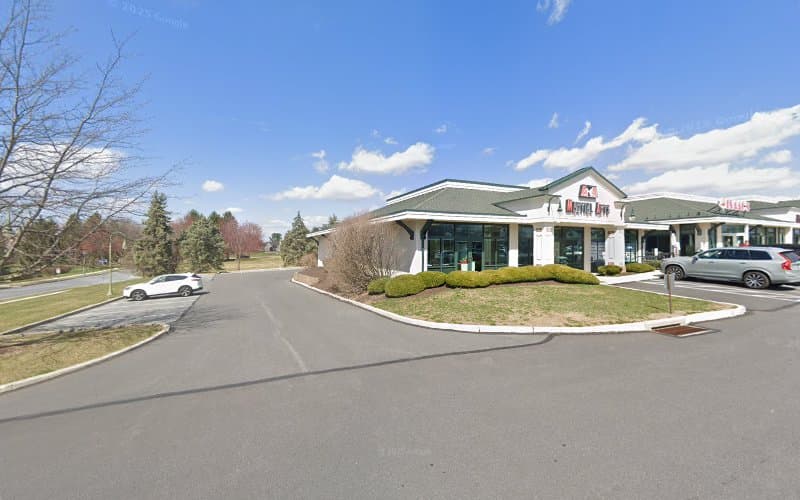
The council service center sits along Pottsville Pike in the Muhlenberg Township area north of Reading, on a well traveled corridor that makes the office reachable for families coming from Berks County and the surrounding region. The property includes on site parking, and the entrance and parking lot are wheelchair accessible. Services are provided on site, meaning registration questions, supply purchases, training records, and paperwork can generally be handled in person during business hours.
Families and unit leaders visiting for the first time may find it useful to know the following:
- Bringing the youth member along helps when fitting uniforms, since sizing varies by manufacturer and by program level.
- Advancement reports and unit rosters speed up purchases of rank and merit badge insignia.
- Registration, recharter, and camp reservation questions are often easier to resolve in person than by email, particularly during peak seasons such as fall recruitment and spring camp signups.
- Hours can vary seasonally and around holidays and major council events, so calling ahead at 610-926-3406 is advisable for time sensitive visits.
Fundraising and Community Role
As a nonprofit organization, the council depends on a mix of revenue sources, including the annual popcorn sale conducted by units, Friends of Scouting contributions from families and alumni, camp fees, special events, and support from local businesses and foundations. These funds underwrite camp maintenance, program materials, volunteer training, and financial assistance that helps youth participate regardless of family circumstances.
Beyond its administrative role, the council serves as a gathering point for a broad volunteer community. Scouting in this region has a long institutional history, with multigenerational family involvement, alumni who return as adult leaders, and community partners who have chartered the same units for decades. Service projects organized through local units contribute thousands of volunteer hours annually to parks, food banks, cemeteries, trails, and civic organizations throughout the service area, with Eagle Scout projects representing some of the most visible of that work.
For anyone considering joining, transferring a registration, starting a new unit, volunteering as an adult leader, or simply asking how the program works, the Reading office is the appropriate first point of contact.