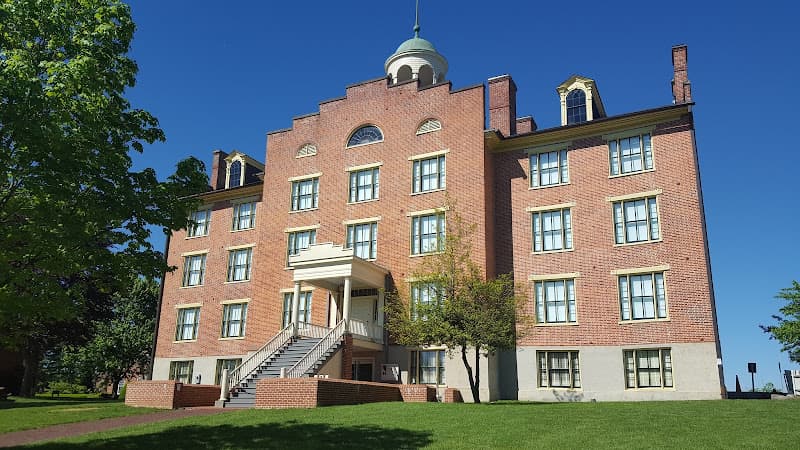
The Seminary Ridge Museum and Education Center occupies Valentine Hall on the campus of the Lutheran Theological Seminary at Gettysburg, Pennsylvania. This historical place museum focuses on the first day of the Battle of Gettysburg, fought on July 1, 1863, and the subsequent use of the seminary buildings as a field hospital during and after the three-day engagement. The museum opened in 2013, coinciding with the 150th anniversary of the battle, and operates as a nonprofit educational institution dedicated to interpreting the Civil War through the lens of faith, freedom, and the human cost of conflict.
Valentine Hall itself is a significant historical structure. During the battle, the building's cupola served as an observation post for Union commanders who used its elevated vantage point to survey Confederate troop movements approaching from the west and north. Following the fighting, the seminary complex transformed into a makeshift hospital where wounded soldiers from both armies received medical care. The museum's interpretive mission draws directly from this dual history, examining both military strategy and the humanitarian response to battlefield casualties.
Location and Historical Significance
The museum stands at 61 Seminary Ridge, positioned along the ridge that gave the first day's battle its geographic framework. Seminary Ridge runs roughly parallel to the more famous Cemetery Ridge to the east, and the ground between these two elevated positions became the contested terrain of the battle's opening engagement. The Lutheran Theological Seminary, established in 1826, found itself at the center of the fighting when Union cavalry and infantry attempted to slow the Confederate advance toward Gettysburg.
The seminary campus predates the battle by nearly four decades, making it one of the oldest Lutheran seminaries in the United States. When war came to Gettysburg, faculty and students evacuated, and the buildings were pressed into military service. The cupola atop Valentine Hall provided Union General John Buford with a commanding view of the surrounding countryside, allowing him to observe the initial Confederate approach and position his cavalry accordingly. This observation point played a tactical role in the early hours of the engagement, making the building itself a primary historical artifact.
Museum Structure and Exhibits
The museum spans four floors within Valentine Hall, with each level addressing a distinct thematic element of the Gettysburg story. The exhibits follow a numbered sequence designed to guide visitors through the content in chronological and thematic order, beginning with the causes and context of the Civil War and progressing through the battle itself and its aftermath.
The ground floor establishes the historical background necessary to understand why the armies met at Gettysburg in the summer of 1863. Subsequent floors address the military operations of the first day, the transformation of the seminary into a hospital, and the broader implications of the battle for the nation. The museum incorporates original artifacts, period medical instruments, personal accounts from soldiers and civilians, and interpretive displays that contextualize the events within the larger narrative of the Civil War.
One floor focuses specifically on the medical history of the battle, documenting the treatment of wounded soldiers in an era before modern antiseptic techniques and anesthesia were widely available. This section examines the work of surgeons, nurses, and civilian volunteers who cared for casualties in the seminary buildings. The exhibits include representations of field hospital conditions and explain the medical practices of the 1860s, providing visitors with an understanding of what wounded soldiers experienced in the days and weeks following the battle.
The Cupola Experience
The museum offers guided tours to the cupola, the same observation point used by Union commanders during the battle. This tour takes visitors through the upper levels of Valentine Hall, including the attic space where original construction methods and woodworking from the 1830s remain visible. From the cupola, visitors can see the terrain over which the first day's battle unfolded, including the approaches used by Confederate forces and the positions held by Union defenders.
The cupola tour operates as a separate ticketed experience from general museum admission. Guides stationed at the cupola provide interpretation of the battle's opening phase, explaining troop movements, command decisions, and the geographic factors that influenced the fighting. The elevated perspective allows visitors to visualize the tactical situation faced by commanders on July 1, 1863, in a way that ground-level observation cannot replicate.
Educational Programming
As an education center, the museum extends its mission beyond static exhibits. The institution offers guided tours throughout its facilities, with staff members providing interpretation of the exhibits and answering visitor questions. The museum's educational approach emphasizes primary sources, including letters, diaries, and official records from soldiers, medical personnel, and civilians who experienced the battle and its aftermath.
The museum addresses themes of faith and conscience alongside military history, reflecting its location on a theological seminary campus. Exhibits explore how religious belief influenced the actions of individuals during the war, from soldiers facing combat to civilians providing aid to the wounded. This interpretive framework distinguishes the Seminary Ridge Museum from purely military-focused battlefield sites.
Visitor Facilities and Accessibility
The museum maintains accessibility features including wheelchair-accessible entrances, restrooms, and parking facilities. Elevators provide access to exhibit floors for visitors with mobility limitations. The facility includes gender-neutral restroom options and standard restroom facilities throughout the building.
A gift shop operates within the museum, offering publications, souvenirs, and educational materials related to the Civil War and Gettysburg history. The museum does not include a restaurant, though the town of Gettysburg offers numerous dining options within a short distance of the seminary campus.
The museum welcomes families with children, though parents should note that exhibits dealing with battlefield medicine and combat casualties present historically accurate content that some younger visitors may find intense. The institution does not shield visitors from the realities of Civil War-era warfare and medical treatment, preferring historical accuracy to sanitized presentation.
Practical Information
The Seminary Ridge Museum and Education Center operates at Valentine Hall, 61 Seminary Ridge, Gettysburg, Pennsylvania 17325. Visitors can contact the museum by telephone at +1 717-339-1300 for current hours, admission prices, and tour availability. The cupola tour requires advance booking during busy periods, particularly during summer months and anniversary weekends when visitation increases.
The museum's position on Seminary Ridge places it at the western edge of the Gettysburg battlefield, separate from the main visitor facilities operated by Gettysburg National Military Park. Visitors exploring the broader battlefield will find the museum accessible via Seminary Ridge road, with dedicated parking available on the seminary campus grounds.