Collision Repair in Berks County: How to Choose a Body Shop
After a crash in Berks County, the body shop is yours to choose under Pennsylvania's appraiser law. How the appraisal and estimate work, what a supplement is, how long a collision repair takes, what the repair-shop and towing rules protect, and what to ask a body shop before you leave the car.
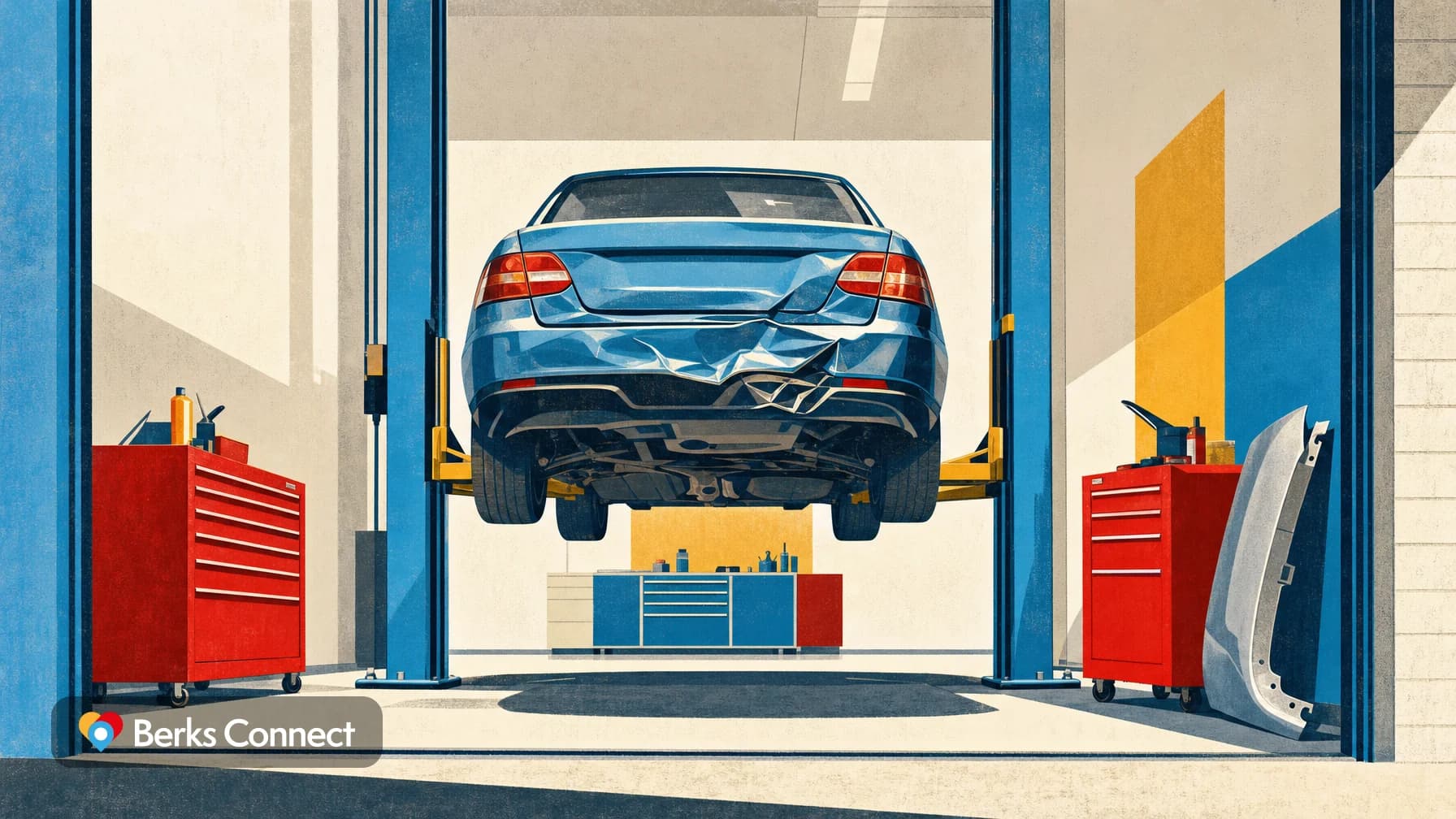
The body shop is yours to choose, and Pennsylvania law says the insurance company can't require you to use any particular one. The rule binds the licensed appraiser and the appraiser's employer, whichever insurer assigned the appraisal. A typical repair takes about two to three weeks of calendar time from drop-off to pickup, longer when the car's cameras and sensors need resetting, and the shop needs your authorization on the price before it can charge you for any work.
So a call from the insurance company naming a shop isn't an order, and the list of body shops in Berks County is where the choice gets made. If anyone was hurt, our post on the first 30 days after a car accident covers that side; this one is about the car.
Do you have to use the insurance company's body shop?
No. Pennsylvania's appraiser law says: "No appraiser or his employer shall require that repairs be made in any specified repair shop." The appraiser is the licensed person the insurance company sends to write up the damage, and the employer is the insurer when the insurer's own appraiser writes it up. The written appraisal has to say there's no requirement to use any specified repair shop, and so does any list of shops the insurer hands you. The Insurance Department's consumer guide says it plainly: "The choice of where your vehicle is repaired is up to you." For questions, its consumer line is 1-877-881-6388.
So what's the list the insurance company mentioned? A direct repair program shop is a shop on the insurer's list, with an arrangement to write the estimate and handle the paperwork with that insurer. Steve Moyer Collision Center in Leesport puts it this way: "Whether or not your insurer is a Direct Repair Partner, you can choose Moyer."
What happens with towing and storage after a crash?
If the car's in a tow yard, start there, because storage runs by the day. At the scene the choice of tower is yours, in consultation with the police. Before towing, a tow operator can't have you sign a repair authorization, and can't have you sign a storage authorization for more than 24 hours. After that first tow from the scene, an appraiser can't authorize moving the car anywhere else without your consent.
Who pays the yard? The insurer can, by check: the law lets the yard take cash, a major credit card or the insurer's check. The yard releases the car during its posted hours once the itemized bill is paid, unless the police asked for a hold.
Towing and storage charges known when the appraisal is written go into the appraisal, which has to state the date, if there is one, after which the insurer stops paying for them. After that the charges are yours, so move the car before it. The list of towing services in Berks County shows who'll move the car to the shop you've chosen. Douglassville Auto Body & Sales, in business since 1977, tows 24 hours a day and has its estimates written by licensed appraisers.
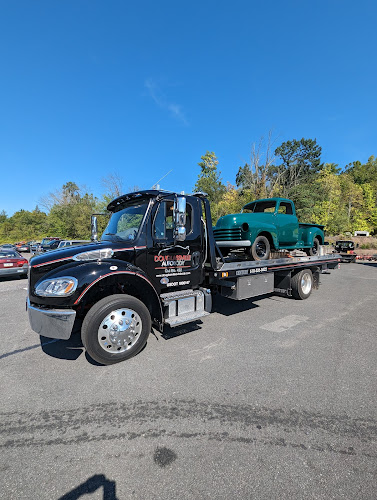
1501 Benjamin Franklin Hwy, Douglassville, PA
How does a collision repair work, from estimate to pickup?
Once an insurer assigns an appraiser, the appraiser has six working days to inspect the car, in person or by photos, video or phone. The written appraisal lists every part to be replaced or repaired, gives the dollar amount it takes to return the car to its pre-damage condition, and gets reviewed with your shop. If the shop you choose charges more than the appraised amount, the difference may be yours. For what collision coverage is, see our post on Pennsylvania's car insurance requirements.
The shop can't charge for repairs you didn't authorize, and it can't charge a price you didn't authorize unless that price was posted at the shop. So when the full cost isn't known at drop-off, it offers you one of three options: no work until you're told the exact repairs and total price and say yes, work up to a cap you set, or open-ended work with the hourly labor rate disclosed first. Crash Champions, on Lancaster Avenue in Reading, works directly with most major insurers on estimates and on the extra damage found once the broken parts come off.
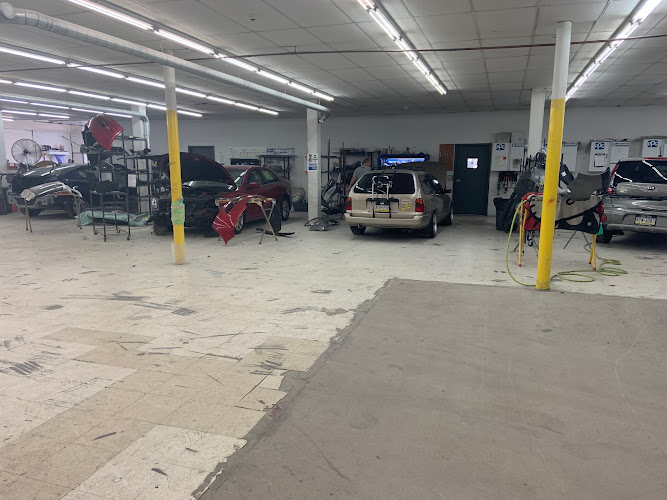
633 Lancaster Ave, Reading, PA
What is a supplement on a collision repair?
A supplement is a second estimate for damage the shop finds once the broken parts come off. The law calls it a supplemental repair estimate, for damage found "after the repair work has been initiated", and it's ordinary: in 2020, supplements appeared on 60.9 percent of claims. Steve Moyer Collision Center's FAQ describes the routine: "Some damage is not visible until the vehicle is disassembled. If we find additional damage, we document it and work with the insurance company when applicable before moving forward."
Do you have to do anything? The shop needs the same authorization on the supplement's price that it needed on the first estimate before it can charge you for the extra work, unless you chose the open-ended option at drop-off. On an insurance claim the shop clears the supplement with the insurer before going on; the supplement can be written from photos, video or a phone call, but if the repairs are disputed an in-person inspection is required. If the insurer denies part of the claim, the path is in our post on what to do when an insurance claim is denied.
How long does collision repair take?
Two to three weeks of calendar time is a fair planning figure, and what stretches it now is calibration (an estimate may call it ADAS calibration), meaning resetting the cameras and sensors behind the driver-assist features after a part near them is replaced. Calibrations showed up on more than a quarter of repairable claims in 2025, and in an industry report from September 2025 a repair with one calibration averaged about 15.5 days from drop-off to pickup, a few days more than one with none.
Three different timelines get mixed up, so keep them apart. There's the wait from the last estimate until the car enters the shop, which runs about 2.2 weeks on recent industry figures. There's the time in the shop, which Crash Champions' Reading page puts at "three to ten business days." And there's the rental, which overlaps both: as of 2026, a collision rental car in Pennsylvania ran a little over two weeks on average, and that's the rental's length, not the shop's. The figures line up like this.
| What's measured | Figure | Period |
|---|---|---|
| Collision rental car, average billed days, Pennsylvania | 15.0 days | April to June 2026 |
| Collision rental, drivable car, national | 14.1 days | April to June 2026 |
| Collision rental, car that couldn't be driven, national | 20.7 days | April to June 2026 |
| Drop-off to pickup, no sensor calibration, national | about 13 days | reported September 2025 |
| Drop-off to pickup, more than one calibration, national | more than 17 days | reported September 2025 |
| Repairable claims needing a calibration, national | 28.3 percent | calendar 2025 |
| Berks body shop listings on BerksConnect | 94, median rating 4.6 | October 25, 2026 |
Rental-day figures are an insurer-billed rental's length, not time in the shop; the directory row is our own count on the date shown.
Ask the shop on day one when it can take the car. Glass & Son's Collision Repair in Reading, family-owned since 2000, has a rental counter on site.
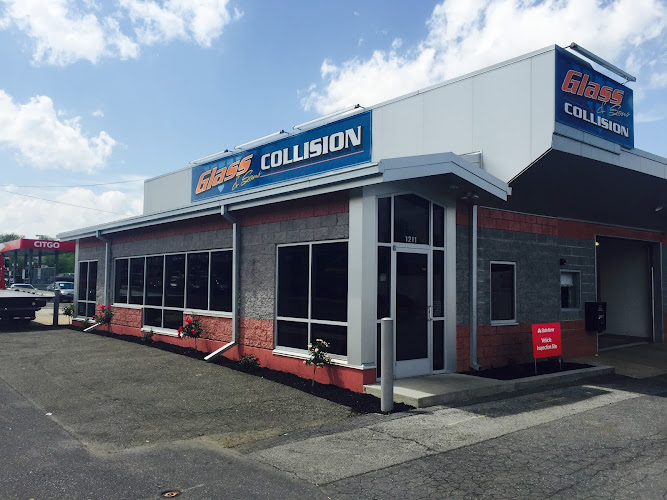
1211 Lancaster Ave, Reading, PA
What should you ask a body shop before you leave the car?
Pull up the list of body shops in Berks County, pick two or three, and ask each the Insurance Department's own questions: how long it's been in business, what its reputation is, whether it offers a lifetime warranty, and whether it has worked with your insurance company before. Then add three more.
- What does the warranty cover? Lifetime warranties vary. It can mean workmanship for as long as you own the car, at any of a chain's locations; it can mean structural work for life with panels for a year; it can be one year flat. Ask what's covered, for how long, and whether it transfers.
- Who handles the supplement and the rental? One name for both, so you don't make either call.
- Do you follow the manufacturer's repair procedures for my make? A shop that does can say so.
What about the plaques on the wall? I-CAR Gold Class is the collision industry's shop training standard, with training required every year. A manufacturer's certified network certifies the shop for that make, with the maker's own requirements. Pennsylvania licenses the appraiser, not the shop, so these are industry and manufacturer standards. Brandywine Coach Works in Leesport, in business since 1989, lists its manufacturer certifications, Ford, Honda, Subaru and Volkswagen among them.
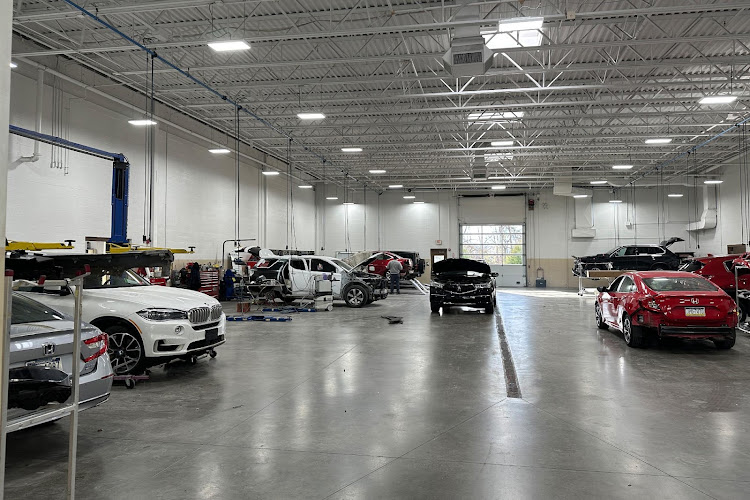
2746 Bernville Rd, Leesport, PA
For mechanical damage, our guide to finding a mechanic in Berks County has a collision section and the list of auto repair shops in Berks County is where that work gets found.
Frequently asked questions.
Can I get a second appraisal if I disagree with the first?
Yes. The Insurance Department's regulation says nothing in it or the appraiser law "shall be construed as intended in any way to prohibit or limit the subsequent appraisal or reappraisal of damage by different licensed appraisers, if desired by any of the involved parties." The appraiser also has to review the appraisal with your shop, or with whoever is needed to show the costs are covered.
Do I pay the body shop or does the insurer?
Both. On your own collision or comprehensive coverage you pay the deductible to the shop at pickup and the insurer is responsible for the rest of returning the car to its pre-damage condition. The deductible itself is covered in our post on what car insurance costs in Pennsylvania.
Will the shop use new parts or aftermarket parts?
Either, and you'll know which. The appraisal names any aftermarket crash parts, and if an aftermarket part voids a warranty still running on the car, that part has to carry a warranty at least as good as what was left. The shop tells you whether each part is new, used or rebuilt. And the appraiser's rule for choosing parts puts the operational safety of the vehicle first.
Pick the shop this week, tell the insurance company where the car's going, and find the towing and storage cut-off date on the appraisal.
Sources
- Motor Vehicle Physical Damage Appraiser Act, Act 367 of 1972, § 11 (63 P.S. § 861): no appraiser or employer may require a specified repair shop; the appraisal's contents; photo, video and phone appraisals; supplemental estimates; the six-working-day inspection.
- 31 Pa. Code § 62.3, "Applicable standards for appraisal" (read October 25, 2026): the written disclosures on every appraisal, the pre-damage standard, review with the shop you chose, the towing and storage cutoff date, aftermarket crash parts.
- Pennsylvania Insurance Department, "Automobile Insurance Guide" (Rev. 10/2016) and "You've just been in a car crash. Now what?" (read October 25, 2026): the choice of shop is yours, the questions to ask, the deductible at pickup, aftermarket parts, the 1-877-881-6388 consumer line.
- Pennsylvania Insurance Department, licensee lookup (read October 25, 2026): motor vehicle physical damage appraisers are licensed and searchable.
- 37 Pa. Code § 301.1 and § 301.5, repair shop rules (read October 25, 2026): body shops are repair shops; written authorization, the three options, disclosures on parts, estimates and storage, completion time, workmanship, the itemized invoice.
- Towing and Towing Storage Facility Standards Act, Act 110 of 2012: the owner's choice of tower, posted fees, no repair or long storage authorizations before towing, release on itemized payment, no storage fees while access is refused.
- Enterprise Rent-A-Car, "Length of Rental" report, Q2 2026 (via Repairer Driven News, August 12, 2026): 15.1 days nationally, 14.1 drivable, 20.7 non-drivable, Pennsylvania 15.0.
- CCC Intelligent Solutions, "Crash Course 2026" (the 2025 review, with early-2026 cycle-time figures): calibrations on 28.3 percent of repairable claims, up from 21.8; about 2.2 weeks from last estimate to vehicle in.
- Repairer Driven News, September 24, 2025, on CCC's Q3 2025 report and March 17, 2021, on CCC's 2021 Crash Course: 13, 15.5 and 17-plus days keys to keys by calibration count; supplements on 60.9 percent of claims in 2020.
- AftermarketNews, November 30, 2018, on I-CAR Gold Class requirements and I-CAR RTS, shop locator article (validated 2025): the role-based, annual training standard and the neutral locator.
- ASE, collision repair and refinish tests B2 to B5: the four tests, work experience, five-year retesting.
- Subaru, Certified Collision Centers and Ford Certified Collision Network (read October 25, 2026): what a manufacturer's certified network requires (Subaru) and lists (Ford).
- Glass & Son's Collision Repair; Crash Champions, Reading and Maxatawny; Brandywine Coach Works; Douglassville Auto Body & Sales; Steve Moyer Collision Center, home page and FAQ (all read October 25, 2026): each shop's certifications, warranty, insurer and rental handling, hours, and the three-to-ten-business-day range.
- Maaco, warranty policy and D & R Autobody (read October 25, 2026): the structural-lifetime, panel-one-year, non-transferable terms; the one-year warranty.