Hurt in a Car Accident in Berks County: The First 30 Days
What to do in the first 30 days after a car accident in Pennsylvania: the claim on your own policy, the police report or PennDOT's five-day form, the clocks on your insurer, what the hospital can bill, what full or limited tort means for the claim you have, and how a contingency fee works.

If you're asking what to do after a car accident in Pennsylvania, the first month comes down to three things. Start the claim on your own auto policy, because its medical coverage pays your bills no matter who caused the crash. If an officer came, get the police report from that department; if none came to a crash with an injury or a towed car, send PennDOT its Driver's Accident Report within five days. Keep every bill and record, because once your own insurer has proof of what a bill is, it has 30 days to pay it. Whether you can also claim pain and suffering from the driver at fault depends on the tort option printed on your policy, and what a lawyer charges to help is set by a written fee agreement.
This is general information about how the system works; a question about your own crash goes to a lawyer or the Berks County Bar Association's referral service at 610-375-4591. The firms are on the county lawyers page.
What to do after a car accident in Pennsylvania, at the scene and in the first five days.
If anyone was hurt, or a car someone was in or beside was damaged, the driver gives their name, address and registration number and gives any injured person reasonable assistance. Police must be notified immediately by the quickest means when someone's hurt or killed, or when a car can't be driven under its own power and requires towing.
If nobody's hurt and both cars drive away, no police call is required, but the driver still gives their name, address and registration. If police didn't investigate a crash with an injury or a towed vehicle, each driver sends PennDOT its Driver's Accident Report within five days: the form is on pa.gov, has no fee, and you sign it and mail it to the Bureau of Operations, P.O. Box 2047, Harrisburg, PA 17105-2047.
How do you get the police report in Berks County?
The department that came to the scene holds it and gives a certified copy to anyone involved, on request. If a trooper came, the State Police stations serving Berks are Troop L at 600 Kenhorst Boulevard in Reading (610-378-4011) and the Hamburg station at 90 Industrial Drive (610-562-6885). A State Police crash report costs $22 and is available 15 days after the date of the crash. Every other department in Berks handles its own copies; the county lists them on its emergency services page, and Wyomissing, for example, sells one for $15 by request form.
Which insurance pays your medical bills first?
Yours does. Every policy carries at least $5,000 of medical benefit; insurers must also offer medical coverage of at least $100,000. It pays regardless of fault, and the law calls this medical coverage on your own policy first-party benefits. Past your auto policy's medical limit, your health insurance pays, in excess of what the auto policy paid.
The person named on the policy claims on their own; a relative living in their household claims on the policy covering them; a passenger with no policy of their own or in their household claims on the policy of the car they were in; a pedestrian with neither claims on the policy of any vehicle involved; a motorcycle's operator or passenger can't collect these benefits. Their medical bills are part of the claim against the driver at fault, which covers the money losses a crash caused, and whether the hospital billing rules reach a motorcyclist's bills is a question for a lawyer. That's the first of two claims. The second is against the driver at fault, for what your own policy didn't cover.
What does your own insurer have to do, and by when?
Benefits are overdue if not paid within 30 days after the insurer receives reasonable proof of the amount (your bills and records), and overdue benefits carry 12 percent interest a year. An insurer dealing with someone who has no lawyer has to tell them in writing before a deadline on their claim runs out: 30 days ahead for your own insurer, 60 for the other driver's. The table carries the clocks and who each binds.
These are the clocks Pennsylvania's crash and insurance rules set, as of October 2026. The acknowledgment and investigation rows bind any insurer, including the other driver's; the accept-or-deny and overdue-benefits rows are for the claim on your own policy.
| Clock | What happens | Who |
|---|---|---|
| At the scene | Give your name, address and registration, and show your license and insurance on request; call the police for an injury or a car that needs towing | You |
| Within 5 days | Send PennDOT the Driver's Accident Report if the police didn't investigate an injury or towing crash | You |
| 10 working days after notice of the claim | Acknowledge the claim and send the forms | Any insurer |
| 15 days after the crash | The State Police crash report becomes available ($22) | State Police |
| 15 working days after proofs of loss | Accept or deny the claim (a denial in writing), or explain why more time is needed | Your insurer |
| 30 days after reasonable proof of the amount | Benefits are overdue; 12 percent interest runs | Your insurer |
| 30 days after notice of the claim | Investigation complete, or a written explanation every 45 days | Any insurer |
| 6 months | Written notice of a claim against a government unit | You |
| 2 years | Last day to file an injury or property damage lawsuit | You |
| 4 years | Last day to sue over unpaid benefits on your own policy | You |
The insurer rows start on three days: the day you report the claim, the day the insurer gets your proofs of loss, and the day it gets proof of the amount of a bill. The six-month row applies only to a claim against a government unit, meaning a state road or a township truck. A lawsuit to recover for injuries to the person must be commenced within two years, and the car and the tow bill are a property damage claim against the driver at fault, on the same two-year clock.
Can the hospital bill you directly?
Not for a bill covered by your auto policy's medical benefits. For those, a provider may not bill you directly but must bill the insurer, and can't collect from you the difference between its full charge and what the insurer paid.
The exceptions are on price: a Level I or Level II trauma center giving acute care for an immediately life-threatening or urgent injury, or a burn facility treating a major burn, may be paid up to its usual and customary charge, its normal full price. That changes what the insurer pays the trauma center, not what you pay; the no-billing rule still applies. Reading Hospital in West Reading is a Level I trauma center and says it is the only one in Berks County.
What does full tort or limited tort mean for the claim you have now?
It's the choice on your policy about whether you can claim pain and suffering from the driver at fault. Under either option you can seek your medical bills and other money losses from that driver, minus what your own policy paid or must pay. Full tort keeps the pain-and-suffering claim. Limited tort bars it unless the injury sustained is a serious injury, or one of the law's listed exceptions applies, such as a driver at fault convicted of driving under the influence in that crash. The law defines a serious injury as death, serious impairment of body function or permanent serious disfigurement.
What if you never signed a tort election on your policy? Then the default is full tort. Someone who doesn't own a registered car and isn't on any auto policy, their own or a household relative's, keeps full tort rights, whatever the policy of the car they were riding in says. The named person's choice covers a spouse, relatives living in the household and minors in their custody. Which option to buy belongs to full tort vs limited tort in Pennsylvania.
When does a lawyer get involved, and how does the fee work?
A claim against the other driver is usually taken on a contingency fee: a percentage of what's recovered, and nothing if nothing is. Pennsylvania requires that agreement in writing. The rest is in how lawyers charge in Berks County.
An insurer can't tell you your rights lapse unless you sign a release, a form giving up your claim, by a date. The one exception is the lawsuit deadline itself. Whether to talk to the other driver's insurer before you've talked to a lawyer is the kind of question the Bar's referral line is for.
Several firms with Berks offices that take injury cases say the same two things, a free first meeting and no fee unless there's a recovery; what the written agreement sets is the percentage and who carries case expenses. Cirba Law, 3227 Perkiomen Avenue, Suite 3, Reading, says on its site that it works on a contingency fee basis.

3227 Perkiomen Ave # 3, Reading, PA
Fanelli, Evans & Patel, 867 Berkshire Boulevard, Wyomissing, charges on a contingency fee basis, its site says.
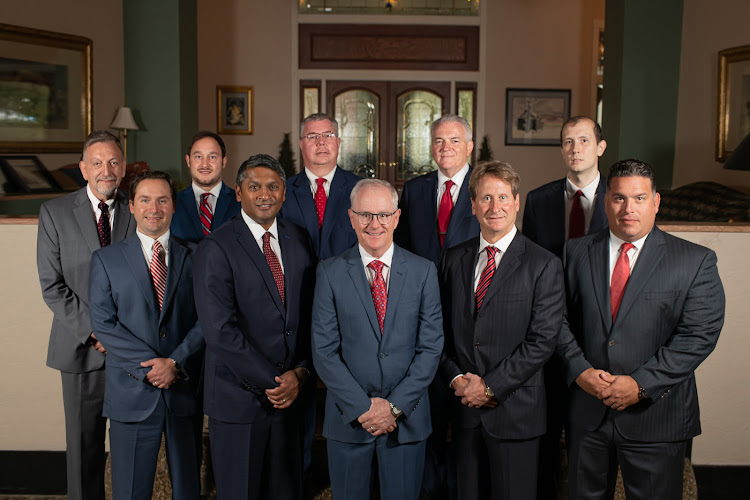
867 Berkshire Blvd # 103, Wyomissing, PA
The Bar's referral service charges no fee for a referral on an auto accident case, and the other free and low-cost options are in free and low-cost legal help in Berks County. The firms are on the county lawyers page.
Frequently asked questions about car accident claims in Berks County.
Does the police report decide who was at fault?
Wyomissing's department says on its own page that the police don't determine fault and that the determination is up to the insurance companies. The law adds that a certified copy of the report isn't admissible as evidence in a lawsuit for damages.
Can I still recover if the crash was partly my fault?
You can still recover as long as your share of the fault was not greater than the other driver's (the law's words: "not greater than the causal negligence of the defendant"), with damages diminished in proportion to your share.
Do I owe a lawyer a percentage if my own insurer denies the claim?
No. A fee for help with a first-party benefits claim can't be a percentage of what's recovered; the lawyer charges for the hours worked (the law's words: "a reasonable fee based upon actual time expended"), and an insurer that refused with no reasonable basis (the law's words: "no reasonable foundation") pays that fee.
Sources
- 75 Pa.C.S. § 3744, "Duty to give information and render aid": the duties at the scene; § 3746: when police must be called and the officer's signed statement; § 3747: the written report within five days when police did not investigate.
- 75 Pa.C.S. § 3751, "Reports by police": who may get a copy, the $15 cap outside Philadelphia, inadmissibility in a damages action, and withholding while charges are pending.
- PennDOT, "Driver's Accident Report" (AA-600, rev. 7-26): no fee, the mailing address, the signature, and the confidentiality line.
- Pennsylvania State Police, "Request a copy of a vehicle crash report": the $22 fee, availability 15 days after the crash; Troop L: the Reading and Hamburg stations.
- Wyomissing Police Department, "Accident Reports": the $15 copy, the 14 working days, the case number, and who determines fault; County of Berks, police departments: the county's list.
- 75 Pa.C.S. § 1711, "Required benefits": the $5,000 medical benefit and the motorcycle exclusion; § 1712: what the benefits are and the income loss rule; § 1713: whose policy pays first; § 1714: who cannot collect them; § 1715: the higher limits offered.
- 75 Pa.C.S. § 1716, "Payment of benefits": overdue after 30 days, 12 percent interest, and the attorney fee for an unreasonable refusal; § 1719: the auto policy pays before health insurance; § 1720 and § 1722: no take-back and no double recovery of those benefits; § 1721: four years to sue over unpaid benefits.
- 75 Pa.C.S. § 1797, "Customary charges for treatment": the 110 percent of Medicare cap, billing the insurer not the patient, no billing for the difference or during peer review, and the trauma-center exception.
- 75 Pa.C.S. § 1705, "Election of tort options": full and limited tort, the serious-injury line, the exceptions, who one choice binds, the person with no car, the uninsured owner, and the full-tort default; § 1702: the definition of serious injury.
- 75 Pa.C.S. § 1798, "Attorney fees and costs": no contingency fee on a claim for first party benefits, the hourly fee instead, and the insurer paying it after an unfounded refusal.
- 42 Pa.C.S. § 5524, "Two year limitation": injury and property damage lawsuits; § 5522: the six months' written notice to a government unit; § 7102: recovery when you were partly at fault.
- 31 Pa. Code § 146.7, "Standards for prompt, fair and equitable settlements": the 15 working days, the 45-day letters, the 30- and 60-day warnings, and the release rule; § 146.5: 10 working days to acknowledge and send forms; § 146.6: the 30-day investigation.
- Pennsylvania Insurance Department, "Automobile Insurance Guide": the scene checklist, medical benefits regardless of fault, filing a claim, the claim clocks in plain English, and the full-tort default.
- Tower Health, "Emergency Department, Reading Hospital": the address and the Level I trauma center; "Reading Hospital Receives Accreditation as Level I Trauma Center": the county's only Level I center.
- Pennsylvania Rules of Professional Conduct, Rule 1.5(c): the written contingent fee agreement, the percentages, the expenses and the closing statement.
- Cirba Law, "About" (read October 13, 2026): contingency on injury cases, costs advanced and not repaid without a recovery, and the free consultation; Fanelli, Evans & Patel, Reading personal injury: the contingency sentence, the free consultation and the Wyomissing office.
- Berks County Bar Association, "Guide to Legal Services" (PDF): the referral number and no referral fee for auto accident cases.