Snow Plowing Cost in Berks County: Per Push or Seasonal
What snow plowing costs per push and per season, how many plowable storms a Berks winter brings, and what a plowing contract should say about trigger depth, salt and damage.
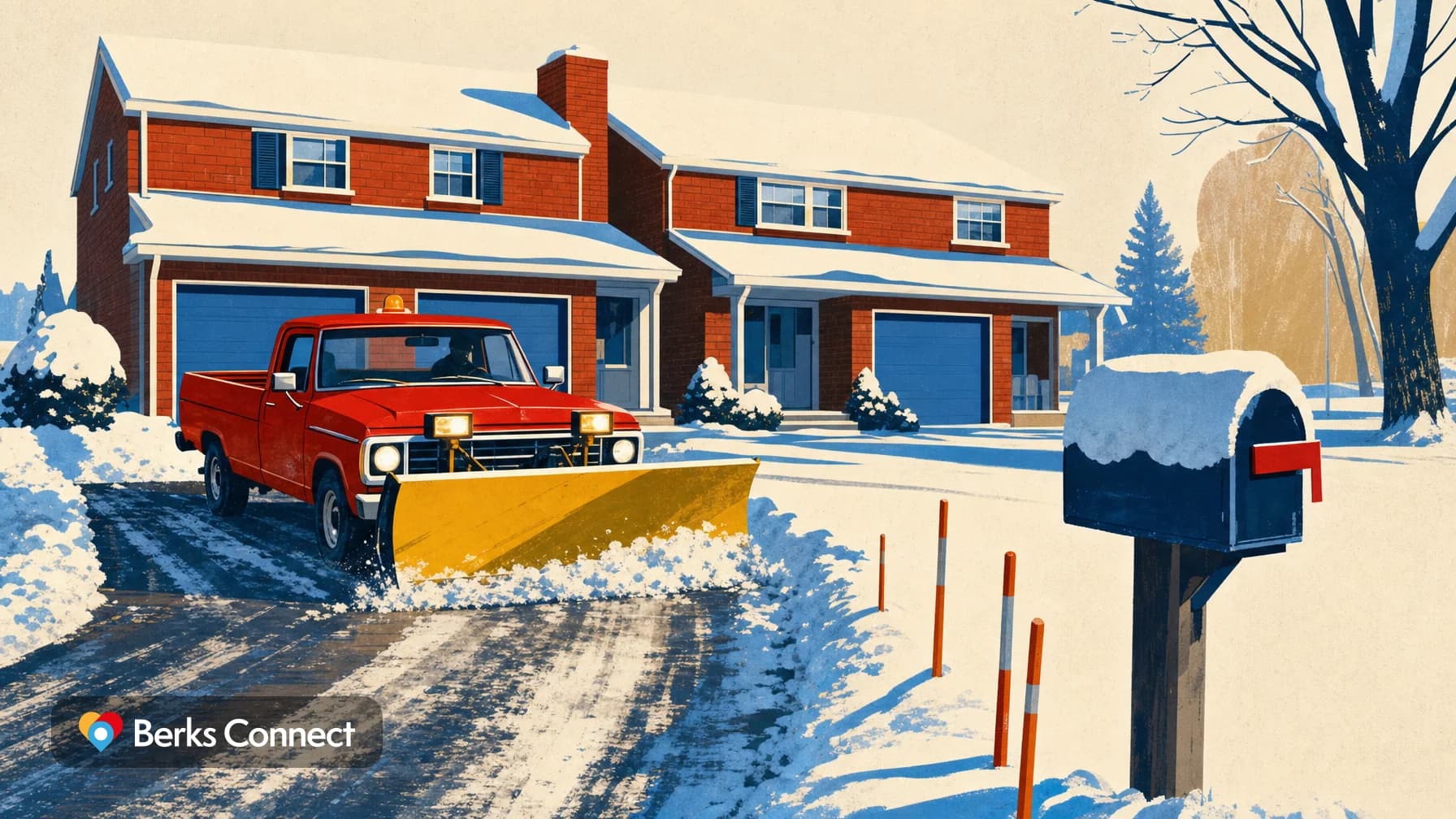
If you've got a two-car driveway, a plow truck will clear it for about $30 to $70 a visit at national rates, as of 2026. A seasonal contract runs about $200 to $700 for a home: for a two-car drive, a driveway-only deal can come in near $280, and the same drive gets quoted at $400 to $600. Reading's airport has averaged about four days a winter with two inches or more of snow over the last sixteen winters. At driveway-only rates, four storms at $75 a visit comes to $300, which beats a $400 to $600 contract in most recent Berks winters and is about even with a $280 one.
Seasonal wins in a heavy winter like 2013-14 or 2020-21, or once walks, salt and a low trigger push the visits and their price up.
A good share of the companies on the county landscaping page plow in winter, and the right deal depends on how many storms you expect and what else you want cleared.
How much does snow plowing cost per push?
Per push means you pay each time they clear the driveway, and for a two-car driveway that's the $30 to $70 a visit above. Add the front walk and you're looking at about $40 to $100 a visit. The $50 to $200 a visit you'll see in cost guides includes walks, sidewalks and larger lots, so a driveway-only quote should sit toward the low end of it. Whichever way you pay, the truck comes when the snow reaches the trigger depth written into the contract, the depth of snow that gets the truck sent out. The appeal of per push is simple: in a winter when the truck never comes, you owe nothing.
If you're pricing a small business lot instead, the same two structures apply, with a few more lines in the contract. Blades of Steel Landscaping writes its commercial snow contracts either way, seasonal or per push, and starts service once the snow or ice reaches the trigger written into the contract.

704 Hill Rd, Wernersville, PA
How much is a seasonal snow plowing contract?
A seasonal contract is one price for the whole winter, paid up front, however many storms come, and nationally that's about $200 to $700 for a home. A driveway-only deal can come in near $280 if the drive is two cars wide and deep, a two-car driveway also gets quoted at $400 to $600, and a two- to three-car driveway with short walks runs about $600 to $750.
What "the whole winter" means varies from one contract to the next. Some promise unlimited visits all season, others set an upper limit on visits, and some charge for a set number of clearings and bill past that. A big storm can mean a visit every four to six inches as it piles up, so one long storm can use up two or three visits of a capped allowance. Read that line before you sign.
Which is cheaper in a normal Berks winter?
In a normal Berks winter, per push is cheaper for a bare driveway than a $400 to $600 contract, and about even with a bare-bones $280 one. Over the sixteen winters from 2010-11 through 2025-26, Reading's airport logged about four days a winter with two inches or more of snow, and seven of those winters had three or fewer. The range runs from none in 2019-20 to nine in 2013-14. Days with an inch or more averaged about six, which is why the trigger you agree to matters so much: a one-inch trigger would have meant about six visits a winter instead of four.
The 2024-25 winter brought 14.9 inches of snow but only one day of two inches or more, the rest coming in falls under two inches; 2025-26 brought 24.3 inches and four such days. Here's what per push would have cost at a flat $50 or $75 a visit in six of those sixteen winters, from the lightest to the heaviest.
The storm counts are days with two inches or more of snow at Reading Regional Airport over the winters 2010-11 through 2025-26, and the per-push columns multiply that count by a national per-visit price, as of 2026. A storm that runs past midnight is counted twice and a contractor may plow twice in one long storm, so the count is close to the number of visits, not exact.
| Winter | Days with 2 inches or more | Per push at $50 a visit | Per push at $75 a visit |
|---|---|---|---|
| 2019-20 | 0 | $0 | $0 |
| 2022-23 | 1 | $50 | $75 |
| 2024-25 | 1 | $50 | $75 |
| 2025-26 | 4 | $200 | $300 |
| 2020-21 | 7 | $350 | $525 |
| 2013-14 | 9 | $450 | $675 |
| Average, sixteen winters | about 4 | about $200 | about $300 |
At $75 a visit, a light winter costs you nothing or a single visit, and a typical one costs about $300: under the $400 to $600 a two-car seasonal contract asks, and about even with a driveway-only deal near $280. A heavy winter like 2020-21 lands inside that band, and 2013-14 goes past it.
Once walks and salt ride along on every visit the price climbs toward $100 or more, where four to six storms is all it takes to match a $400 to $600 seasonal price. So do the multiplication with your own quotes: take the per-push price with the walks and the salt included, multiply it by four for a typical winter and by nine for a bad one, and set both against the seasonal quote. If the seasonal number sits between the two, it's a bet on a heavy winter. If it sits above the nine-storm number, pay per push. And if you'd rather not think about it at all, sign the seasonal deal and treat the difference as the price of not thinking about it.
What should a plowing contract say about trigger depth, salting and damage?
The contract should say, in inches, when the truck comes, what it clears, what salt costs, and what happens if something gets broken. Start with the trigger depth. Contractors set it as low as an inch and a half or two inches and as high as four to six, and there's no standard number, so ask. A lower trigger means more visits, which costs more on per push and can raise the price of a seasonal contract too.
Salting is often its own line, about $20 to $40 a visit, more for some de-icers than for rock salt, though some contractors fold it into the contract; shoveling walks runs about $25 to $75 an hour. Those are national figures. Ask whether salt goes down before the storm, after it, or both, since both means two applications. Solid Rock Landscaping lists commercial snow removal with de-icing before and after storms, the kind of line you want on your own contract.
1005 Old Airport Rd, Douglassville, PA
Golden Oaks Landscaping plows residential driveways, clears sidewalks and applies salt by the bag, the truck or the ton, which is the kind of detail to ask every bidder for. Either way, the contract should list the areas covered: the driveway, the walks, the steps, and the pile the street plow leaves at the end of your driveway.
Say whether the snow is plowed or removed, because plowing pushes the snow to the side of the drive and removal means hauling it away, which costs more; on a lot with nowhere to push it, ask for the removal price as its own line. It should say when the job will be done, a set number of hours after the storm ends or a time of day, and who sets the stakes along the edges; the markers themselves run about a dollar to three apiece. The boroughs and townships each set their own deadline for clearing the sidewalk after a snow, and your municipal office has it; there's more on the season in our winter services guide.
The snow industry's own written standard for commercial contracts calls for pictures or a walkthrough of the property before the season and a follow-up within thirty days after it, so a cracked curb or a gouged lawn has a before and an after. Ask for proof of liability insurance, and make sure the cancellation terms run both ways. Some companies ask for a small refundable deposit, around $50, that comes back at the end of the season, and whatever you pay, don't pay it in cash.
When should you line up a plow?
The best time is early fall, before the routes fill. That same written standard says contracts should be awarded by September 1, with service starting at least two weeks before winter typically sets in, and reliable contractors fill their routes early. After that, you take whoever still has room.
A good share of the county's landscapers plow, so start with landscaping companies in Berks County, and if you want a short list of who does it well, our list of snow removal companies in Berks County has it. Call two or three, give each the same facts (driveway size, walks, how fast you need it clear) and ask for both numbers, per push and seasonal, with the trigger stated in inches.
How many times a winter does it snow enough to plow in Berks County?
About four, going by days with two inches or more at Reading's airport over the last sixteen winters, and about six if your trigger is one inch. Seven of those sixteen winters had three or fewer plowable days and the heaviest had nine.
What is a trigger depth?
The trigger depth is the depth of snow that gets the truck sent out, written into the contract in inches. Contractors use anything from an inch and a half up to four to six inches. A lower trigger means more visits and a higher bill, so get the number on the paper.
Is snow plowing the same as snow removal?
No. Plowing, which the industry also calls clearing, pushes the snow to the side of the drive; removal means hauling it away, which costs more. A driveway job is plowing unless the contract says the snow goes away, so check which word yours uses.
Do I pay a plow contractor up front?
A seasonal contract is one price for the whole winter, paid up front rather than storm by storm. Per push, you pay for each visit. Either way, get the trigger and the areas covered in writing before the first flake.
Sources
- NOAA NCEI, GHCN-Daily for Reading Regional Airport (USW00014712), July 2010 to June 2026: the daily snowfall record; the storm counts in the table are days at or above 2.0 inches, counted from it.
- NOAA NCEI, U.S. Climate Normals 1991-2020, Reading Regional Airport: that no snowfall-inches normal exists for the station.
- National Weather Service Mount Holly, Reading monthly climate summaries (CLMRDG), December 2025 through June 2026: the 2024-25 and 2025-26 season totals and the biggest single-day falls; the version number in the URL shifts as new months post.
- HomeGuide, "Snow Removal Prices" (December 17, 2024): per-visit, per-season and per-application salt ranges, and that seasonal contracts may cap visits.
- HomeAdvisor, "How Much Does Snow Removal Cost?" (updated June 19, 2026): per-visit and seasonal ranges, the $280 driveway-only and $600 to $750 seasonal examples, the trigger-depth range, salt and sidewalk add-ons.
- Angi, "How Much Does Snow Removal Cost?" (updated October 19, 2025): per-visit versus seasonal prices by driveway size, de-icing materials, and its unlimited-visit description of seasonal contracts.
- Fixr, "Cost to Remove Snow" (updated January 31, 2025): per-visit and seasonal ranges, marker stakes, and the refundable deposit.
- Thumbtack, "How much does snow plowing cost?": the two-inch trigger examples and the advice on what to ask before signing.
- Snow and Ice Management Association, "Standard Practice for Procuring and Planning Snow and Ice Management Services" (SIMA-10-2020): the definitions of trigger depth and event, and what a contract states about timing, stakes, damage and cancellation.
- Blades of Steel Landscaping, commercial snow and ice management: its seasonal or per-push structure and the contract trigger.
- Solid Rock Landscaping, services: its snow removal and de-icing service.
- Golden Oaks Landscaping, lawn care and snow: its residential driveway plowing, sidewalk clearing and salt by the bag, truck or ton.