What Does a General Contractor Do? When Berks Homes Need One
What a general contractor does, when a bathroom or an addition needs one, when a single trade or a handyman will do, and what each costs, for Berks County homes.
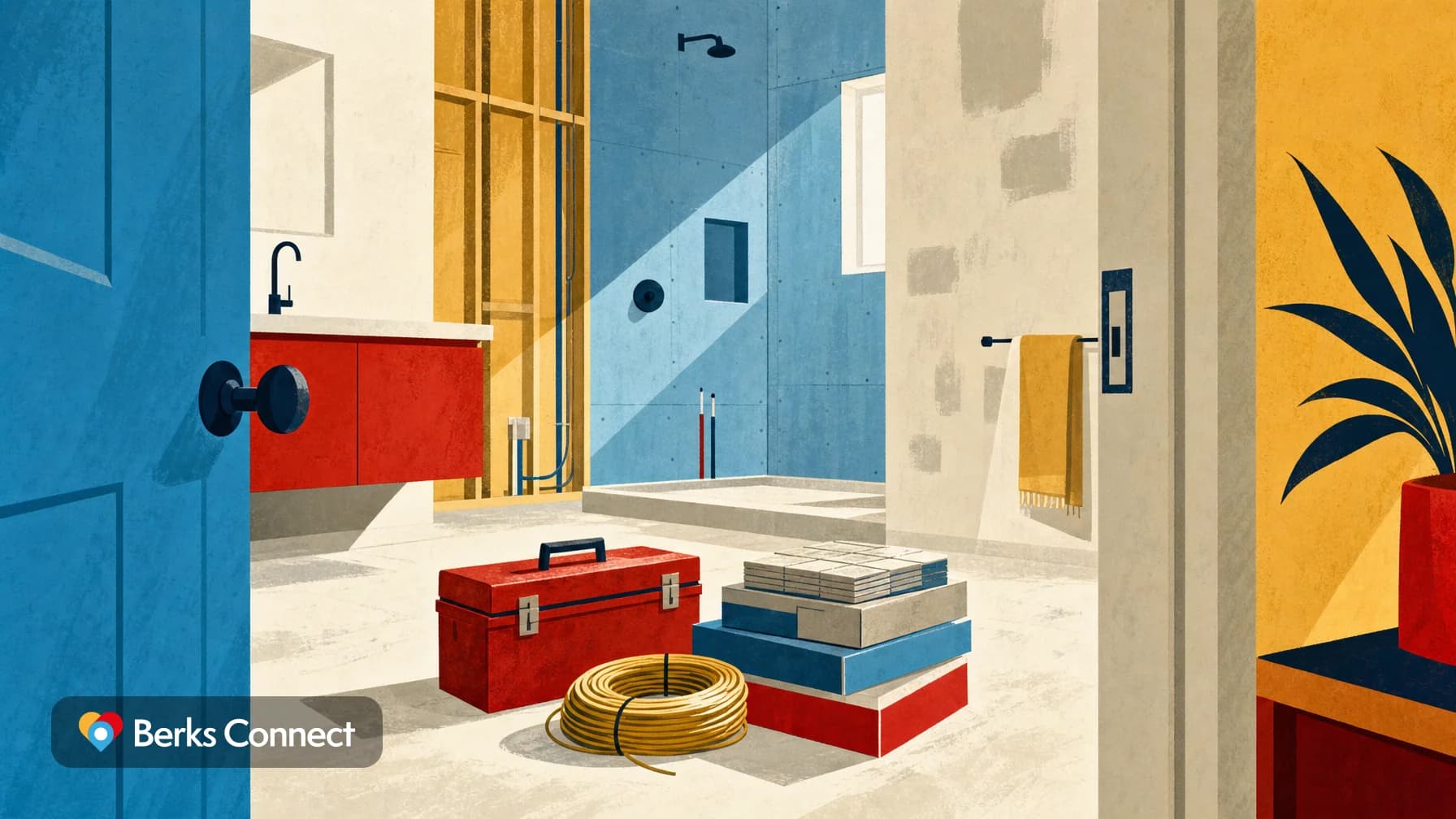
A general contractor is the one company that signs your contract and runs the whole job: the estimate, the schedule, the permit, and hiring the plumber, electrician and tile setter and getting them in the right order. It fits a job like a gutted bathroom, where several trades and a permit have to line up. A job that's all one kind of work goes straight to that trade (the specialist, like a plumber or an electrician), and a list of small fixes fits a handyman.
Say you live in Muhlenberg Township and you've got two lists going. One is the bathroom: a shower where the tub is, a new vanity, a fan, and maybe the toilet moves. The other is a dripping outside spigot, a sticking door and a loose stair rail. I'll sort both, and you'll find general contractors in Berks County when you're ready to call.
What does a general contractor do?
The general contractor writes the estimate, sets the schedule, pulls the permit (applies for it and gets it), and hires the trades (the specialists: plumber, electrician, heating and cooling, tile, drywall). Then they keep those people coming in the right order until the final walk-through. Most of the trades on the job are subcontractors, meaning trades the general contractor hires to do part of the job. Pennsylvania's home improvement law says your contract has to list the name, address and phone number of every subcontractor known when you sign.
Berks firms describe the job the same way on their own sites. Creek View Construction in Womelsdorf lays out its process as pulling the permits first, then getting the trades on a schedule. C. Brennan Construction says it coordinates the subcontractors for plumbing, electrical work and carpentry. D&S Elite Construction in Douglassville sums it up: it handles the planning, budgeting, scheduling, permitting and trade coordination "as a single point of contact."
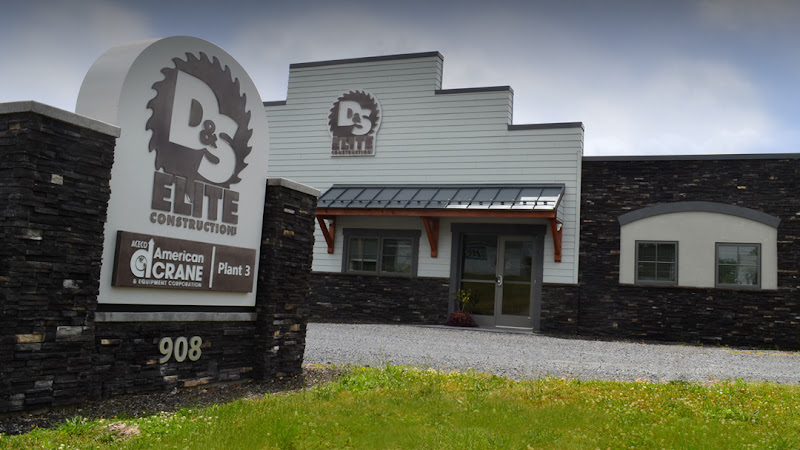
908 Benjamin Franklin Hwy, Douglassville, PA
Contractor vs handyman: who takes which job?
A handyman takes smaller repairs and maintenance, often working alone. Precision Handyman Services, which serves Berks, lists home repairs, minor electrical and plumbing repairs, drywall, painting, power washing and "honey-do lists." One national cost guide draws the line this way: contractors handle the tasks that need permits and specialized skills, and handypeople handle the basic repairs and maintenance that don't call for certification.
Between those two sits the single trade. When a job is all one kind of work, like a new water heater or a new outlet circuit, you call that trade directly. Here's how the three compare.
How each is usually paid comes from national cost guides, as of 2026; local prices vary.
| Who | What they take on | How they're usually paid |
|---|---|---|
| General contractor | A whole job with several trades and a permit, like a bathroom gut or an addition | A fee of 10% to 20% of the project cost, on top of the work |
| A single trade | One kind of work, like a water heater or a new circuit | That trade's own price for the job |
| Handyman | Smaller repairs and maintenance, like a sticking door | $50 to $150 an hour |
The sticking door and the loose stair rail are handyman jobs: basic repairs. The dripping spigot is a small plumbing repair, so it can go to a handyman who does minor plumbing or to a plumber; our post on when you need a plumber and when a handyman will do helps you tell which. The bathroom, with four trades and a permit, belongs to a general contractor.
Some Berks general contractors take small jobs too. Stoney Creek Contracting in Reading says it handles "assignments both large and small," from repairs to complete remodels, and Loder Construction says it'll take anything from a small repair to new home construction. If you hire one for the bathroom, it's fair to ask about the door and the rail too.
Is a handyman cheaper than a contractor?
For a small repair, often yes. The same national guide says a handyman can often do a small job for less than a specialized contractor, and it puts handyman rates at $50 to $150 an hour. These are national figures, as of 2026.
A general contractor's fee works differently. It's most often 10% to 20% of the total project cost, on top of what the work itself costs. You might be wondering why anyone pays it. For a job that's all one trade, you don't have to: call the plumber or electrician directly. The fee pays for the coordination, and that's worth something when a job needs four trades on a schedule and a permit to close out. That's the bathroom.
Do I need a general contractor for a bathroom remodel?
Nobody's going to make you hire one, but a gut-and-redo bathroom is where a general contractor earns the fee. Walk through the list. A shower where the tub was means plumbing and tile. The new vanity means carpentry and more plumbing. The fan means wiring. Moving the toilet means more plumbing. That's four trades at least, and getting them in on a schedule is what you'd be paying for.
Then there's the permit. Muhlenberg, for example, says you need a building permit to alter, repair or enlarge a home, and whenever someone intends to repair, convert, alter or remove any electrical, plumbing or mechanical system. Ask your own township's permit office before the work starts.
A lien is a legal claim against your house for an unpaid bill. In a house or duplex you live in, or a single townhouse, once you've paid the general contractor the full contract price, a subcontractor doesn't have the right to a lien against your home for that job. When you're ready, start with general contractors in Berks County and ask each one how they'd schedule the trades for your bathroom.
Can a general contractor do electrical work?
The general contractor runs that part of the job, but in some Berks towns the wiring itself goes to a licensed tradesperson. Pennsylvania has no statewide license for electricians or plumbers, and the state bars towns from licensing home improvement contractors. Trade licenses that towns already had when the home improvement law took effect, based on testing or training, stayed in force.
In Berks, the City of Reading licenses electrical, plumbing and mechanical work. Kutztown licenses electricians and plumbers, and says it doesn't license general contractors. Muhlenberg licenses plumbing and heating. In those towns, work in a licensed trade goes to a tradesperson licensed for it, often a subcontractor the general contractor brings in and names in your contract. For the bathroom fan, the general contractor runs the job and schedules the wiring with everything else. If you live in one of those towns, check which electrical jobs need an electrician before handing a handyman anything electrical, and for a one-off like a new outlet circuit, call an electrician directly.
How to check a contractor's registration in Pennsylvania.
Any contractor who did $5,000 or more of home improvement work in the previous tax year has to register with the state Attorney General's office, and that includes handymen. The state gives each registered contractor a number that starts with PA. A contractor under that $5,000 doesn't have to register, so a small handyman outfit may not have one. The number has to appear on every ad, estimate and contract. Precision Handyman Services, for one, prints its number on its site. Registration isn't a license, and it isn't the state vouching for anyone's skill. Before you sign, look the number up. Here's how to check a contractor's registration.
So for the two lists: the bathroom goes to a general contractor, the spigot to a handyman who does minor plumbing or to a plumber, and the door and the rail to a handyman, or to the general contractor if they'll take them. Check the number on each estimate, and our guide to hiring home services in Berks County covers the rest of the hiring questions.
Frequently asked questions.
What is a general contractor?
It's the one company that signs your contract and runs the whole job, from the estimate and permit through the trades to the final walk-through.
Will a general contractor take small repairs?
Some in Berks do, including Stoney Creek Contracting and Loder Construction, so it's worth asking.
Who pulls the permit, me or my contractor?
For the building permit, either of you can. Under Pennsylvania's building code rules, the owner or an authorized agent can apply for one, and general contractors commonly do it for you. Morrison Custom Construction in Mohnton says it handles township permits and zoning setbacks (how close to the property lines you can build), and In-Line Construction in Shillington says it pulls permits if they're required.
Is an addition a general contractor job?
It's the clearest case for one. An addition needs a building permit and a string of inspections from the foundation through a final, and it involves most of the trades. Bodden Construction Group in Wyomissing and D&S Elite both list additions among their core work.
Sources
- Pennsylvania Office of Attorney General, "Home Improvement Consumer Protection Act, 73 P.S. § 517.1 et seq." (as amended through October 22, 2014): subcontractors named in the contract (§ 517.7(a)(10)), who must register and the number on ads, estimates and contracts (§§ 517.2, 517.3, 517.6), and no local licensing of home improvement contractors, with existing trade licenses kept (§ 517.12).
- Pennsylvania Office of Attorney General, "Home Improvement Contractor Registration" (updated June 30, 2026): registration is not an endorsement of a contractor's skill.
- Pennsylvania General Assembly, "Mechanics' Lien Law of 1963," 49 P.S. § 1301 (as amended July 9, 2014): a subcontractor has no right to a lien on an owner-occupied house, duplex or single townhouse once the full contract price is paid.
- Pennsylvania Code, 34 Pa. Code § 403.62, 34 Pa. Code § 403.64: an owner or authorized agent applies for the permit; the inspections from foundation through final.
- Pennsylvania Department of Labor & Industry, "Contractor Licensing" (read September 30, 2026): no statewide license for most construction contractors.
- City of Reading, "Electrical Trade License Application" (June 2026), City of Reading, "Plumbing Trade License Application", City of Reading, "Mechanical Trade License Application" (read September 30, 2026): Reading's electrical, plumbing and mechanical licenses.
- Borough of Kutztown, "General Contractor Licensing", Borough of Kutztown, "Electrical Contractor Licensing" (read September 30, 2026), Borough of Kutztown, "Plumbing Contractor Licensing" (read September 30, 2026): Kutztown licenses electricians and plumbers, and not general contractors.
- Muhlenberg Township, "Building Permits" FAQ, Muhlenberg Township, "Permitting Overview and Guide", Muhlenberg Township, "Trade License Application" (Rev. 9/21/20) (read September 30, 2026): when Muhlenberg requires a permit, and its plumbing and heating licenses.
- HomeAdvisor, "How Much Does a Handyperson Cost?" (updated June 19, 2026), HomeAdvisor, "How Much Do General Contractors Charge?" (updated June 20, 2026): national handyman rates, where a contractor's work and a handyperson's divide, and the 10% to 20% general contractor fee.
- Bodden Construction Group (read September 30, 2026): additions among its core work.
- C. Brennan Construction, "Home Renovations" (read September 30, 2026): coordinating subcontractors for plumbing, electrical work and carpentry.
- Creek View Construction, "Our Process" (read September 30, 2026): pulling permits, then scheduling the trades.
- D&S Elite Construction, "Custom Home Builder", D&S Elite Construction, "Residential Construction" (read September 30, 2026): planning, budgeting, scheduling, permitting and trade coordination as a single point of contact; home additions.
- In-Line Construction, "Interiors" (read September 30, 2026): pulling permits if required.
- Loder Construction (read September 30, 2026): from a small repair to new home construction.
- Morrison Custom Construction, "Areas Served" (read September 30, 2026): handling township building permits and zoning setbacks.
- Precision Handyman Services (read September 30, 2026): the handyman services it lists and its printed registration number.
- Stoney Creek Contracting (read September 30, 2026): assignments both large and small.