Berks County Home Inspection Cost and What Inspectors Check
What a home inspection costs in Berks County as of 2026, what the inspector checks and what the law requires of the report, why nearly every Berks house gets a radon test, what wells, septic and termite reports add, and how the contract's inspection clock runs.
As of 2026, a home inspection on a typical Berks County house costs about $350 to $500, bigger and century-old houses run more, and the add-ons, radon above all, are priced on top. Your contract gives you a set number of days to inspect and answer in writing, so this week's calls are to an inspector and to your agent, because real estate agents in Berks County keep inspectors' names and track the dates.
How much does a home inspection cost in Berks County?
Inspectors who serve Berks price by square footage: one printed ladder steps up $25 for every 500 square feet, from $375 for a house up to 1,500 square feet to $525 at 4,500, and another runs in two wide bands, $350 to $500 up to 2,500 square feet and $500 to $650 above that, so a larger house lands between $450 and $650 depending on the inspector. A house that's 100 years or older can add $50. The add-ons are priced below.
| Inspection | What it covers | Printed prices, as of 2026 |
|---|---|---|
| Home inspection | The visible condition of the structure, roof, electrical, plumbing, heating and cooling on the day of the visit. | $350 to $500 for a house up to about 2,500 square feet and $450 to $650 for a larger one up to 4,500, from inspectors serving Berks; a house 100 years or older can add $50. The national average is $344. |
| Radon test | A short-term test of 2 to 7 days, set and read by a state-certified tester. | $140 to $200 when done with the home inspection, from inspectors serving Berks; $250 is the national figure. A do-it-yourself kit is $20 to $30. |
| Wood-destroying insect report (the termite report) | A look at the visible, accessible wood for termites and their damage; a VA loan requires it in Berks County. | $95 to $120 from inspectors serving Berks, booked with the home inspection; $75 to $325 nationally. |
| Septic inspection | A certified inspection of an on-lot system, with the tanks pumped as part of it; when needed, a load test, where water is run in to see whether the system handles a household's flow. | $625 to $1,200 in Pennsylvania with the pumping; a load test adds $500 to $1,000. |
| Well water test | Coliform bacteria, E. coli, pH and dissolved solids, with nitrates or lead added on. | $60 to $125 at the state university's lab; $175 for a basic test to $275 for the fuller panel priced for FHA, VA and USDA loans, at one inspector serving Berks. |
Printed prices from inspectors serving Berks County and from Pennsylvania sources, as of October 2026; septic figures are for south-central Pennsylvania; national figures are from a 2026 cost survey.
On public water and sewer, the lines that apply are the inspection and the radon test, plus the termite report if your lender asks for one. A house on a well and septic adds about $700 to $1,500 for the water test and the septic inspection, and closing costs in Berks County covers the rest of what you'll pay before the keys.
What does a home inspector check?
Pennsylvania law defines the job: a noninvasive, visual examination of the mechanical, electrical and plumbing systems and the structure, looking for material defects. A material defect is a problem that hurts the value of the house or puts people at risk, not just an old part. What a home inspector looks for is what a person can see and reach.
The law also says an examination limited to one thing, like termites, underground tanks and wells, septic systems, pools, alarm systems, air and water quality or environmental hazards, isn't a home inspection; several of those are the separate rows in the table above.
Who can be a home inspector in Pennsylvania?
Pennsylvania doesn't license home inspectors. What the law does instead is require the sales agreement to say who may do the inspection: it has to be done by a full member in good standing of a national home inspection association, or by a licensed engineer or architect, or by someone a full member supervises and signs the report for.
The inspector can't give you a repair price except as a sourced range in the report, and can't do paid repairs on your house for 12 months after the report; the only exceptions are radon mitigation and termite treatment.
Do you need a radon test in Berks County?
Yes, on nearly every house. Berks sits on the Reading Prong, a band of uranium-rich rock across eastern Pennsylvania. Of the basement tests reported in Berks since 2016 (tests, not houses; a house can be tested more than once), about 44 in 100 came back at or above 4 picocuries per liter, the federal fix-it line for radon. Statewide over the same years it was about 33 in 100, and the state's own figure is that over 40 percent of Pennsylvania homes test above the line. No law requires a test before a sale; the state recommends every home be tested anyway.
In December 1984 an engineer set off the radiation alarms at the Limerick nuclear plant arriving for work, and the radiation was traced to his house in Colebrookdale Township, outside Boyertown. The level inside was 2,700 picocuries per liter, the highest ever measured indoors at the time, and that house started the federal radon program.
A short-term test runs 2 to 7 days; book it with the inspection and ask when the number comes back. A paid tester has to be state-certified, and the state posts the list by county. At or above 4, the state suggests a second test to confirm it; the fix is a vent pipe and fan a certified mitigator installs, usually in less than a day, and one certified firm serving Berks prints $895 to $1,600 for a system.
What about wells, septic and termites?
Start with termites: the standard agreement lets you order a wood-destroying insect report, the one-page report written after a look for termites and their damage, from a pest-control applicator the state certifies for that work. A VA loan requires it in Berks County; an FHA appraisal calls for it when there's evidence or notice of infestation, a prior treatment included.
If the house is on a well, the agreement lets you test the water's quality and the well's quantity, meaning how much water it delivers; ask the inspector to quote the flow test separately. The basic lab panel covers coliform bacteria, E. coli, pH and dissolved solids, with nitrates or lead added on, and the state says to test a well every year through a certified lab.
On a septic system, order that inspection first. It's done by an inspector certified by the Pennsylvania Septage Management Association, the state's septic industry group, to its standard, and pumping the tanks is part of every inspection. When the system's normal use can't be confirmed, say the house sat empty for more than a week or the tank was pumped in the 30 days before the inspection, the inspector adds a hydraulic load test, where water is run into the system to see whether it handles a normal household's flow. A replacement system runs $10,000 to $60,000 or more.
A septic report that says the system needs to be expanded or replaced takes its own path: you give the seller the report inside your window, the seller has 25 days from receiving it (unless your contract says otherwise) to propose a fix, and within 5 days of the proposal, or of the 25 days running out with none, you tell the seller in writing that you accept the proposal, walk away with your deposit, or take the house with the system as it is. The rest of your inspections keep the regular clock below.
How many days do you have, and what happens with the report?
The contingency period is the window your contract gives you to inspect and decide, usually counted in calendar days. In the standard Pennsylvania agreement it's the number in the blank, 10 days if nobody wrote one, counted from the execution date, the day the agreement was signed, weekends and holidays included; your own contract's days govern. Inside the window you finish every inspection and do one of three things in writing: accept the house, terminate and get your deposit back, or send the reports with a written corrective proposal, the repairs or credits you want.
A proposal opens a negotiation period that starts when the contingency period ends, even if you sent the proposal early, and runs 5 days if not specified, for the seller to agree or the two of you to sign a different written agreement on the repairs or credits; if neither happens, you get 2 more days to accept or walk. Ongoing talks don't extend the negotiation period, and a buyer who lets a deadline pass is treated as having accepted the house.
The report is a written description of what was visible that day, not a pass or a fail: your list of what to fix, budget for and ask about. For a finding on the furnace, the water heater, the sewer line or the roof, get that trade's quote before your written answer is due; the inspector can't do the work.
We've written up what a furnace replacement costs in Berks and the sewer line replacement cost in Berks, plus Federal Pacific and Zinsco panels for an older panel. This is general information about how inspections work in Pennsylvania; a question about what your own agreement of sale lets you do, or about a repair credit, goes to a real estate lawyer in Berks County.
Questions buyers ask about home inspections.
Does the seller have to have the heat and utilities on?
Yes. The standard agreement requires the seller to have the heat and all utilities, including fuels, on and usable for the inspections.
Can I just buy a radon kit and test it myself?
You can: a kit runs about $20 to $30, sits in the basement for 2 to 7 days and goes to a lab. For the purchase, the standard agreement's radon test is one from a certified inspector, so the kit is for after you move in.
Book the inspection this week and add radon on nearly every Berks house, the well and septic work if the house is off the public lines, and the termite report if the loan calls for it. Keep your contract's dates in front of you and lean on real estate agents in Berks County for names and deadlines. After closing, the report becomes your new homeowner checklist.
Sources
- Berks Realty Services, "Home Inspection Pricing" (read October 27, 2026): the square-footage ladder from $375 to $525, the $50 surcharge for a house 100 years or older.
- Musselman Home Inspection, "Home Inspections Berks County, PA" (read October 27, 2026): the $350 to $500 and $500 to $650 size bands.
- Myers Home Inspections, "2026 Pricing" (read October 27, 2026): $350 up to 2,000 square feet, radon $200, termite report $120, basic water test $175, FHA/VA/USDA water test $275.
- Strong Foundations Home Inspections, radon and termite pricing (read October 27, 2026): radon $140 and termite $95 when scheduled with a home inspection, Berks County in its territory.
- Angi, "How Much Does a Home Inspection Cost?" (September 25, 2026) and Rocket Mortgage, "How Much Does A Home Inspection Cost?" (August 6, 2026): the $344 national average, the $250 radon figure and the $75 to $325 termite range.
- 68 Pa.C.S. Chapter 75, the Home Inspection Law and Chapter 71, § 7102 definitions (Pennsylvania General Assembly, read October 26, 2026): what a home inspection is and isn't, material defect, who may inspect, the insurance minimums, the report's required contents, the rules on repair estimates and repairs, the seller's copy and the one-year limit.
- Pennsylvania Association of Realtors, Standard Agreement for the Sale of Real Estate, Form ASR (rev. 9/22, rel. 1/23, brokerage-hosted copy) and PAR, "Agreement of Sale Guidelines for Preparation and Use" (July 2022): the inspection, radon, wood infestation, water and septic clauses, the 10, 5, 2 and 25 day defaults, weekends counted, utilities on, who may attend.
- PAR, "Inspection Contingency Review" (October 18, 2019): how the contingency and negotiation periods run.
- Pennsylvania DEP, "Radon Test Results September 1986 - Current" (data.pa.gov dataset vkjb-sx3k, tests through October 8, 2026): the Berks and statewide basement test counts, computed by BerksConnect on October 27, 2026 (Berks basement tests since 2016: 11,662 of 26,779 at or above 4 pCi/L; statewide: 323,399 of 979,785; counts of test records, not houses).
- Casey et al., "Predictors of Indoor Radon Concentrations in Pennsylvania, 1989–2013," Environmental Health Perspectives (2015): the Reading Prong, its uranium-bearing bedrock, Berks among its counties, Pennsylvania's radon levels.
- The Journal of Nuclear Medicine, vol. 28 no. 7, "Newsline" (1987), its companion article and the EPA Journal essay "A Nonregulatory Challenge" (reprint): the December 19, 1984 discovery at the Limerick plant, the engineer's Colebrookdale Township home outside Boyertown, its 2,700 pCi/L reading, and the program that followed.
- Pennsylvania DEP, "Radon in the Home" (read October 27, 2026): the $20 to $30 kit, the 2 to 7 day short-term test, the confirming test, mitigation in under a day, the hotline 800-237-2366.
- Pennsylvania DEP, "Radon Services Directory" (read October 26, 2026) and "List of Certified Testing Firms" by county (October 1, 2026): the monthly list of certified testers and how to verify a certification.
- 25 Pa. Code § 240.101: no one may test for radon for a fee in Pennsylvania without DEP certification.
- Pennsylvania DEP, "Radon Resource Guide" flyer (2022 edition): over 40 percent of Pennsylvania homes above 4 pCi/L; no state law requires a test and DEP recommends every home be tested.
- R&R Radon Reduction, Berks County radon mitigation (read October 27, 2026): a DEP-certified mitigator's printed $895 to $1,600 system range.
- Penn State Extension, "On-Lot Septic System Inspections During Real Estate Transactions" (updated March 11, 2026): the $350 to $700 base, $275 to $500 pumping, $625 to $1,200 all in, the $500 to $1,000 load test and when it's required, replacement at $10,000 to $60,000.
- Penn State Agricultural Analytical Services Laboratory, "Drinking Water Testing" (read October 27, 2026) and Pennsylvania DEP, private well "Water Testing": the $60 to $125 panels and the state's yearly testing advice.
- U.S. Department of Veterans Affairs, "Local Requirements" (updated July 11, 2025) and HUD Handbook 4000.1 (revised August 13, 2025): the VA termite report requirement by county, Berks included; FHA's termite inspection on evidence or notice of infestation.
- 7 Pa. Code § 128.42: the wood-destroying pests applicator category the termite report comes from.
Real Estate Agents/Brokers in Berks County
RE/MAX of Reading: Ed Spayd in Wyomissing offers expert real estate services, recognized for swift sales and exceptional market knowledge. Clients appreciate Ed's personalized care and outstanding negotiation skills that often lead to significant cost savings.

Berks Realty Services offers comprehensive home inspections with same-day report delivery, praised for their courtesy, expertise, and competitive pricing.
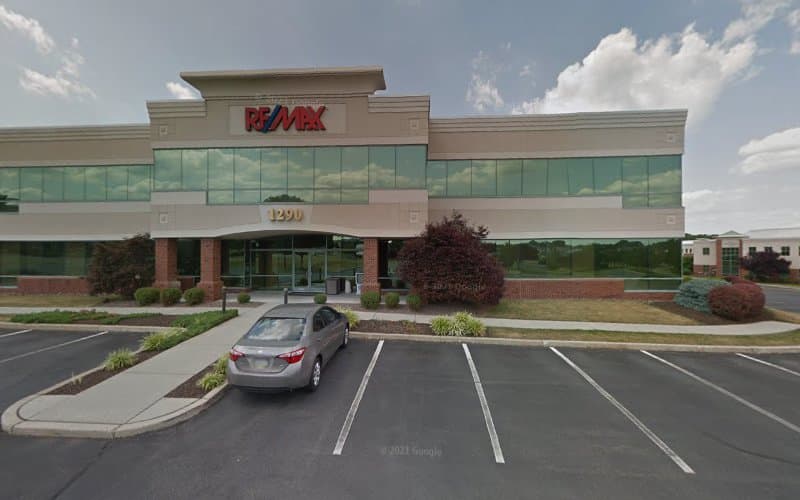
Josh Forry is a REALTOR with RE/MAX of Reading in Wyomissing, representing buyers and sellers in residential transactions across Berks County. Clients cite his fast responses, deep market knowledge, and clear explanations at every step, including follow-up after closing.