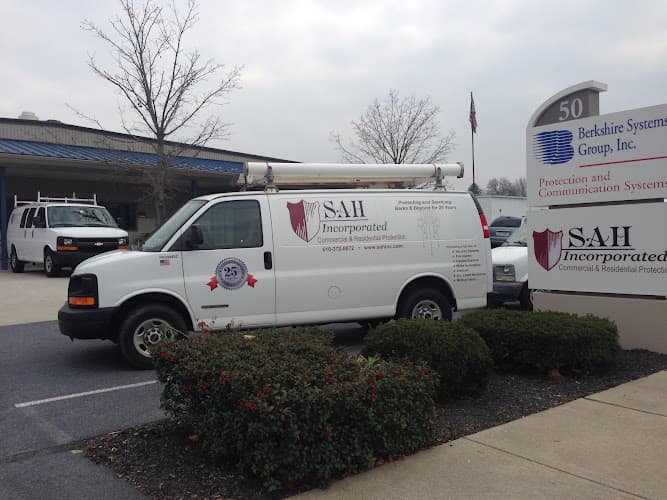
Berkshire Systems Group Inc., commonly referred to as BSGI, is a fire alarm supplier and life safety systems contractor based at 50 S Museum Road in Reading, Pennsylvania. The company operates from Berks County and works with commercial, industrial, institutional and municipal clients across the surrounding region, handling the design, installation, inspection, service and monitoring of fire detection and related building systems. It is identified on its Google Business Profile as a women-owned business, a designation that is comparatively uncommon in the electrical contracting and fire protection trades.
The business can be reached by phone at +1 610-775-1200, and additional information about its capabilities is published on its website at bsgi.com. The Museum Road address places the company on the south side of Reading, within easy reach of Route 222, Route 176 and the Interstate 78 corridor, which allows service technicians to cover a wide territory across southeastern and central Pennsylvania.
Fire Alarm and Life Safety Systems
The core of the company's work centers on fire alarm systems: the panels, initiating devices, notification appliances and wiring infrastructure that detect smoke, heat or manual activation and alert building occupants and emergency responders. Work in this category generally spans the full life cycle of a system, including:
- Assessment of existing equipment and code compliance in occupied buildings
- System design and engineering for new construction, additions and renovations
- Supply of control panels, smoke and heat detectors, duct detectors, pull stations, horns, strobes and voice evacuation components
- Installation, wiring and programming of addressable and conventional systems
- Acceptance testing and coordination with authorities having jurisdiction
- Scheduled inspection and testing on the intervals required by code
- Repair, troubleshooting and replacement of aging or obsolete equipment
- Central station monitoring and signal reporting
Fire alarm work in Pennsylvania is governed by a combination of the state Uniform Construction Code, adopted editions of the International Building Code and International Fire Code, and National Fire Protection Association standards such as NFPA 72, the National Fire Alarm and Signaling Code. Owners of commercial and multi-tenant residential properties are typically required to have systems inspected and tested on a defined schedule and to keep documentation available for fire officials and insurance carriers. A contractor in this field is therefore as much a compliance partner as an equipment supplier, and much of the routine work involves periodic testing, deficiency reporting and correcting issues found during inspections.
Related Building Systems
Companies that specialize in fire alarm infrastructure frequently extend into adjacent low-voltage disciplines, since the same technicians, cabling practices and monitoring infrastructure apply. Depending on the project, integrated systems work in this sector commonly includes security and intrusion detection, access control with card or credential readers, video surveillance, intercom and communication systems, mass notification, and emergency lighting. Integration matters in practice because modern building systems increasingly share networks and reporting pathways, and a single contractor coordinating those connections reduces the chance of gaps between separate vendors during commissioning or an actual alarm event. Prospective customers with multi-system needs are encouraged to confirm the current scope of services directly with the office, since capabilities in this industry evolve with manufacturer partnerships and certifications.
Who the Company Serves
Fire alarm suppliers of this type typically work across a broad mix of building categories. In the Reading and greater Berks County area, that generally means schools and higher education facilities, healthcare and senior living properties, warehouses and distribution centers, manufacturing plants, office buildings, houses of worship, retail centers, apartment and condominium buildings, and municipal properties. Each category carries different code requirements and operational constraints. A hospital or care facility, for example, may need testing scheduled around patient activity, while a distribution center may require coordination with sprinkler contractors and high-rack storage detection strategies. Buildings undergoing renovation often need temporary protection measures and phased cutovers so that portions of the structure remain protected while work proceeds.
Working With the Company
Most engagements begin with a phone call or a request submitted through the company website. Callers are generally asked about the type of building, its approximate size and occupancy, the age and manufacturer of any existing fire alarm panel, whether the request concerns a scheduled inspection, a repair, a new installation or monitoring service, and whether a fire official or insurance carrier has issued a notice requiring corrective action. Having that information available, along with any prior inspection reports, helps the office route the request to the appropriate technician or estimator and produce a more accurate quote.
Building owners preparing for an inspection can generally expect the process to involve notification of the monitoring center so that testing does not trigger a dispatch, functional testing of devices throughout the property, verification of battery and power supply condition, and a written report documenting results and any deficiencies. Access to mechanical rooms, riser closets, tenant spaces and locked areas is usually required, so coordinating with tenants and facility staff in advance tends to speed the visit considerably.
Location, Access and Practical Information
The company's Reading facility has a wheelchair accessible entrance and a wheelchair accessible parking lot, making the office approachable for visitors with mobility needs. The South Museum Road location sits near the Reading Public Museum area on the city's southwest side, a corridor that mixes residential neighborhoods with commercial and light industrial properties.
- Address: 50 S Museum Rd, Reading, PA 19607
- Phone: +1 610-775-1200
- Website: bsgi.com
- Business type: Fire alarm supplier and life safety systems contractor
- Ownership: Identified as a women-owned business
- Accessibility: Accessible entrance and accessible parking
Because fire alarm systems operate continuously and failures can take a building out of compliance, service availability outside normal business hours is an important consideration for facility managers. Customers should confirm current office hours, emergency service arrangements and monitoring center procedures when establishing an account.
Context Within the Industry
The fire alarm and life safety sector in Pennsylvania is served by a mix of national brands and regionally rooted independents. Independent firms based in the communities they serve often compete on response time, familiarity with local fire marshals and building code officials, and continuity of the technicians assigned to a property. Longstanding local presence also matters when a building contains legacy equipment, since a technician who has serviced a panel across multiple ownership changes carries institutional knowledge that is difficult to reconstruct from documentation alone. BSGI's position as an established Reading-based operation and a women-owned company gives it a distinct profile within that regional landscape, and its status may be relevant to organizations with supplier diversity requirements in their procurement policies.