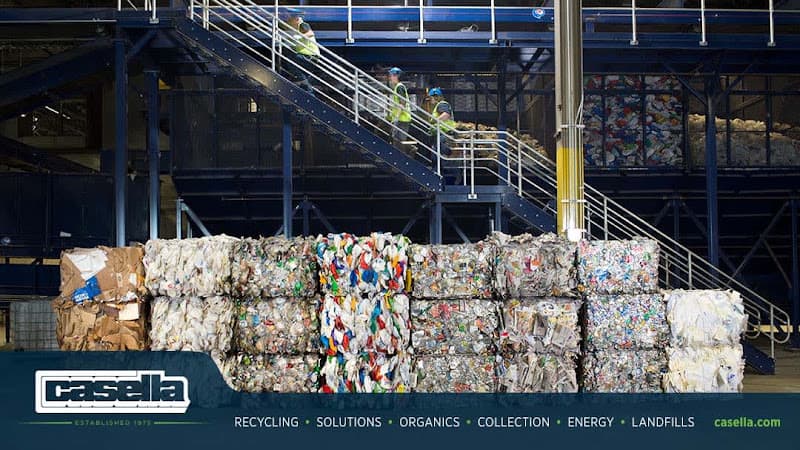
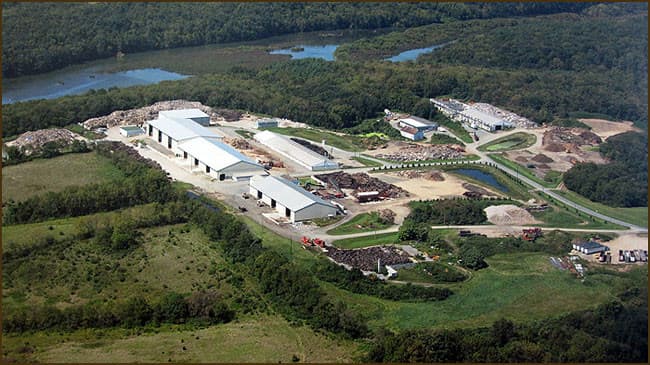
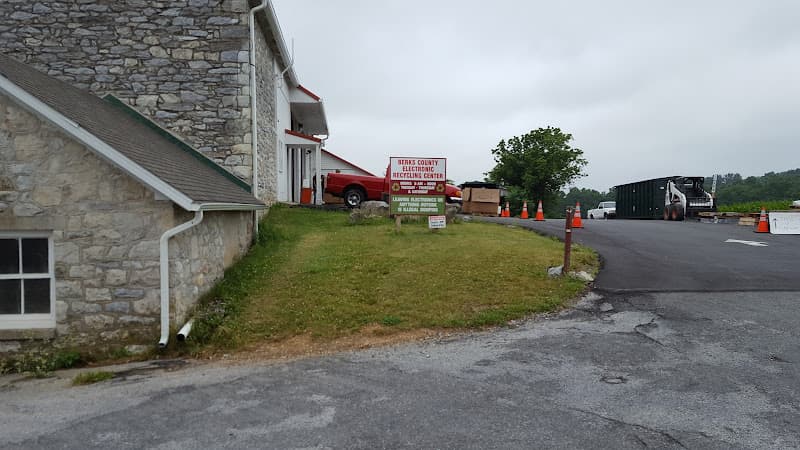
Casella Waste Systems operates a recycling facility at 1000 S Fourth Street in Hamburg, Pennsylvania, in northern Berks County. The site functions as both a processing and transfer point for recyclable commodities and a drop-off location where households, businesses and institutions can bring materials that do not belong in ordinary trash. Because the facility handles material in bulk, its daily rhythm is shaped as much by tractor trailers arriving to load finished bales as by residents dropping off a car trunk full of electronics, textiles or containers.
The Hamburg location can be reached at +1 610-562-8336. The property includes a wheelchair accessible parking area.
Company background
Casella Waste Systems is one of the larger regional solid waste and recycling companies in the northeastern United States. The business traces its origins to 1975, when John Casella began collecting waste in Rutland County, Vermont, with a single truck. Over the following decades the company expanded through a combination of new operations and acquisitions, adding collection routes, transfer stations, landfills, organics processing and material recovery facilities. Casella is publicly traded and remains headquartered in Rutland, Vermont, with operations spread across Vermont, New Hampshire, Maine, Massachusetts, Connecticut, New York, New Jersey, Pennsylvania, Maryland and Delaware.
Recycling has long been a distinct business line for the company rather than an afterthought to trash collection. Casella markets recovered commodities such as old corrugated cardboard, mixed paper, aluminum, steel, glass and various grades of plastic to domestic and international mills and manufacturers, and it operates resource solutions programs that help commercial clients measure and reduce what they send to disposal. The Hamburg site fits into that network as a Pennsylvania processing and shipping point.
The Hamburg site and its history
Longtime customers and truck drivers still associate the South Fourth Street property with Cougle's Recycling, the Berks County recycling company that operated at this address for many years before the operation became part of Casella's footprint. Cougle's built a regional reputation handling paper, cardboard, plastics and other recovered materials, and the yard's layout, scale house and loading docks reflect that history as a working commodity yard rather than a retail style collection center. The continuity matters for practical reasons: carriers who have hauled from the site for years often still refer to it by the older name, and the traffic pattern, check in procedure and dock assignments follow the conventions of an established material recovery operation.
Hamburg itself sits along the Schuylkill River at the base of Blue Mountain, immediately adjacent to Interstate 78 and near the junction with U.S. Route 61. That position places the facility within reach of the Reading, Allentown, Bethlehem and Lehigh Valley markets, with straightforward highway connections toward Harrisburg to the west and the New Jersey and New York markets to the east. For a business whose economics depend on moving heavy, low value material efficiently, proximity to a major east to west freight corridor is a meaningful advantage.
Materials accepted
The Hamburg location accepts a broader list of materials than a typical curbside program, including several categories that most municipal collection routes exclude. Materials noted for the site include:
- Plastic bottles and rigid plastic containers
- Glass bottles and jars
- Metal cans, including aluminum and steel food and beverage containers
- Plastic bags and plastic film
- Plastic foam, sometimes labeled as expanded polystyrene
- Electronics and e-waste
- Batteries
- Light bulbs, including fluorescent tubes and compact fluorescents
- Clothing and textiles
- Household hazardous materials
Plastic film, foam, bulbs, batteries and household hazardous materials are the categories most often refused by residential recycling programs, since they contaminate mixed streams or require separate handling. Having a single site that takes them reduces the number of stops a household or small business needs to make. Because acceptance rules, quantity limits and any applicable fees for specialty items such as electronics, hazardous materials or bulbs can change with commodity markets and regulations, calling ahead before loading a vehicle is worthwhile. Pennsylvania's Covered Device Recycling Act restricts landfill disposal of televisions, computers and related equipment, which is part of why dedicated drop-off points for electronics are important in the region.
How the site operates
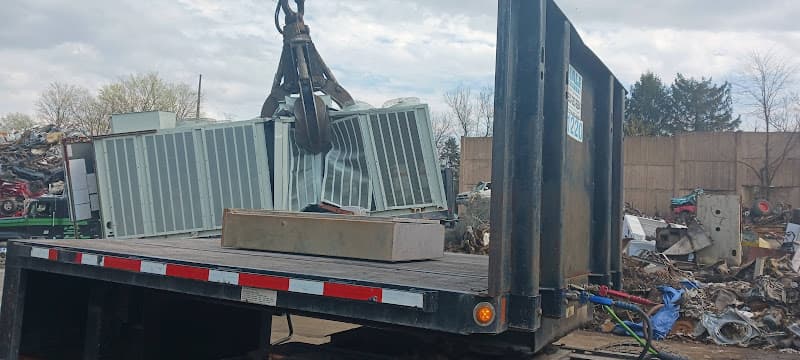
Inbound and outbound traffic is routed through a scale house, where vehicles check in before proceeding into the yard. Loads are weighed, paperwork is processed, and drivers receive instructions on where to go next, whether that means a dock, a designated unloading area or a specific pile. Commercial haulers picking up baled commodities are assigned a loading spot, and forklift operators load trailers from the dock or floor. The general sequence is worth knowing in advance for first time visitors: arrive at the scale, present bill of lading or purchase order details if hauling freight, follow the directions given, and return to the scale as instructed for the outbound weight and paperwork.
Standard industrial yard expectations apply. Safety gear such as closed toe footwear, a high visibility vest and, in some areas, a hard hat may be required outside the vehicle, and posted speed limits and traffic patterns should be followed closely, since forklifts, loaders and trailers share the same space. Residents bringing material for drop-off should plan to have items reasonably sorted and accessible so staff can direct them to the correct area quickly.
Practical information
- Address: 1000 S Fourth Street, Hamburg, Pennsylvania 19526
- Phone: +1 610-562-8336
- Business type: recycling center, processing and transfer facility
- Parking: wheelchair accessible parking lot on site
- Access: near Interstate 78 and U.S. Route 61 in northern Berks County
Hours for scale house operations, drop-off windows and freight pickup appointments are set locally and may differ for commercial and residential visitors, so confirming by phone is the most reliable approach. Businesses in the Reading, Berks County and Lehigh Valley area that generate recyclable volume, whether cardboard from a warehouse, film from a packaging line or periodic electronics cleanouts, can also inquire about collection service, container placement and commodity pricing through the same location.