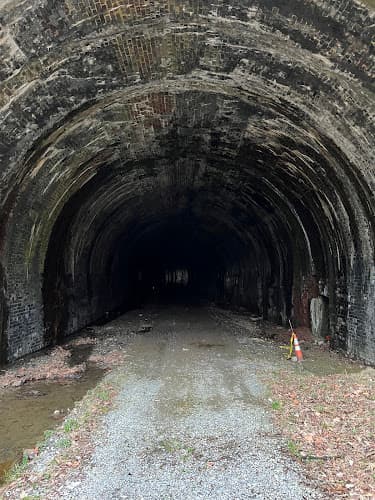
Claysville RR Tunnel
Claysville RR Tunnel in Donegal Township is a museum dedicated to preserving the rich history of railway tunnels, offering visitors a unique glimpse into transportation heritage.
What people love about Claysville RR Tunnel
Unique/Interesting Attraction
Despite the brevity, the reviewer's enthusiasm and explicit recommendation suggests this location offers something distinctive that leaves a positive impression on visitors.
Easy Accessibility from Parking
The specific mention of convenient parking-to-attraction proximity suggests this is a notable positive feature, especially for visitors who may have mobility considerations or limited time.
Key Themes from Reviews of Claysville RR Tunnel
Accessibility/Convenience of Location
PositiveCustomers appreciate the convenient proximity between parking and the main attraction, making access easy.
Trail Conditions/Ease of Navigation
PositiveVisitors find the flat trail easy to walk, though they note the need to bring your own light source (with improvements potentially underway).
Overall Experience/Value of Visit
PositiveCustomers find the location engaging and feel it's a worthwhile destination to explore.
About Claysville RR Tunnel
Overview
The Claysville RR Tunnel stands as a preserved remnant of Pennsylvania's extensive railroad heritage, located in Donegal Township within Washington County. This historic structure, now operating as a museum site, offers visitors the opportunity to walk through a piece of 19th-century transportation infrastructure that once served as a vital link in the region's rail network.
Historical Background
The tunnel represents one of many railroad tunnels constructed throughout southwestern Pennsylvania during the height of America's railroad expansion era. This region of the state saw intensive railroad development throughout the mid-to-late 1800s, as companies sought to connect the industrial centers of Pittsburgh with markets to the west and south. The topography of Washington County, characterized by rolling hills and valleys, necessitated the construction of numerous tunnels and bridges to maintain practical grades for steam locomotives of the era.
Railroad tunnels of this period were typically constructed using a combination of cut-and-cover techniques and traditional boring methods, depending on the geology encountered. Workers, often immigrants from Ireland, Wales, and other European nations, faced dangerous conditions during construction. These tunnels required significant engineering expertise and represented major capital investments by the railroad companies that built them.
Following the decline of rail traffic in the mid-20th century, many of these tunnels fell into disuse. Some were sealed, others demolished, and a fortunate few were preserved as historical sites. The Claysville RR Tunnel falls into this latter category, having been maintained as an accessible piece of local history.
Location and Setting
Donegal Township occupies a portion of Washington County in southwestern Pennsylvania, approximately 30 miles southwest of Pittsburgh. The township encompasses rural and semi-rural landscapes typical of this part of the state, with agricultural lands interspersed among wooded hillsides. The 15323 zip code covers the Claysville area, a small community that developed in part due to its position along transportation routes.
The tunnel site features a parking area positioned in close proximity to the main attraction, allowing visitors relatively easy access to the historic structure. This arrangement makes the site practical for visitors of varying physical abilities and time constraints. The approach to the tunnel follows a flat trail, which represents either the original railroad bed or a modified pathway created for pedestrian access.
Physical Characteristics
Railroad tunnels from this era typically share certain construction features, though specific details vary based on the geology, engineering standards of the time, and the resources of the constructing railroad. Most tunnels of this period were lined with brick or stone to prevent collapse and water infiltration. Portal entrances often featured decorative stonework, reflecting both practical engineering needs and the aesthetic sensibilities of Victorian-era railroad companies.
The interior of railroad tunnels presents a distinctive environment. Without natural light, these spaces require artificial illumination for safe passage. Visitors to the Claysville tunnel are advised to bring flashlights, though infrastructure improvements for permanent lighting have been in development. The tunnel's interior temperature remains relatively constant throughout the year, typically cooler than outside air in summer and warmer in winter, a characteristic of underground spaces.
The dimensions of railroad tunnels were determined by the clearance requirements for locomotives and rolling stock of the era. Single-track tunnels required less excavation than double-track versions, though both needed sufficient height and width to accommodate the largest equipment expected to pass through. These specifications were standardized to some degree by the late 19th century, though variations existed between different railroad companies.
The Trail Experience
The pathway leading to and through the tunnel follows level terrain, making it accessible to walkers of various fitness levels. This flat grade reflects the original railroad alignment, as trains required gentle gradients to operate efficiently. The conversion of former rail corridors to recreational trails has become increasingly common across the United States, with organizations and municipalities recognizing the value of these linear parks for recreation, transportation, and historic preservation.
Walking through a railroad tunnel provides a sensory experience distinct from other outdoor activities. The transition from daylight to darkness, the change in temperature and acoustics, and the awareness of the massive stone or brick structure overhead create an immersive encounter with industrial history. For many visitors, this direct physical engagement with historic infrastructure proves more memorable than viewing artifacts in a traditional museum setting.
Educational Value
Sites like the Claysville RR Tunnel serve important educational functions within their communities. They provide tangible connections to the transportation systems that shaped regional development, offering opportunities to understand how geography influenced infrastructure decisions and how those decisions in turn affected settlement patterns and economic activity.
The railroad era transformed southwestern Pennsylvania from a largely agricultural region into an industrial powerhouse. Coal, steel, glass, and other products moved along rail lines that connected local producers with national and international markets. Understanding this history helps contextualize the region's current economic landscape and the legacy infrastructure that remains.
For students and casual visitors alike, walking through a preserved railroad tunnel offers lessons in engineering, labor history, economic development, and historic preservation. These sites demonstrate the scale of 19th-century infrastructure projects and the human effort required to complete them.
Visiting Information
The site operates as a museum attraction, though specific hours of operation and any admission requirements should be confirmed before visiting. As with many outdoor historic sites, conditions may vary seasonally, and visitors should prepare accordingly. Appropriate footwear for walking on unpaved surfaces is recommended, as is bringing a flashlight or headlamp for navigating the tunnel interior.
The site does not include restaurant facilities, so visitors planning extended stays in the area should arrange meals elsewhere. The surrounding region of Washington County offers various dining options in nearby communities.
Photography is typically permitted at outdoor historic sites, and the tunnel's unique lighting conditions can present interesting opportunities for those interested in capturing images of industrial heritage. The contrast between the dark interior and bright portal openings creates dramatic visual effects.
Regional Context
Washington County contains numerous sites related to its transportation and industrial heritage. Visitors interested in railroad history may find other preserved structures, museums, and trail systems throughout the region. The conversion of former rail corridors to recreational trails has created networks of pathways that connect communities and provide access to historic sites that might otherwise be difficult to reach.
The preservation of sites like the Claysville RR Tunnel reflects broader efforts to maintain connections with the region's industrial past while adapting these spaces for contemporary recreational and educational use. These projects often involve collaboration between local governments, historical societies, and volunteer organizations committed to maintaining community heritage.
Unique Details About Claysville RR Tunnel
Amenities
Contact Information for Claysville RR Tunnel
United States of America
County: Washington County
Customer Reviews
5.0 out of 5 stars
Based on 1 reviews
Review data
5 star reviews
- 100%
4 star reviews
- 0%
3 star reviews
- 0%
2 star reviews
- 0%
1 star reviews
- 0%
Working Hours / Hours of Operation
Location Map
Similar Museums Near Donegal Township, PA
BerksConnect: everything local in Berks County, PA.
8,700+ local businesses with AI-summarized reviews, plus local guides, jobs, and what's happening around the county.