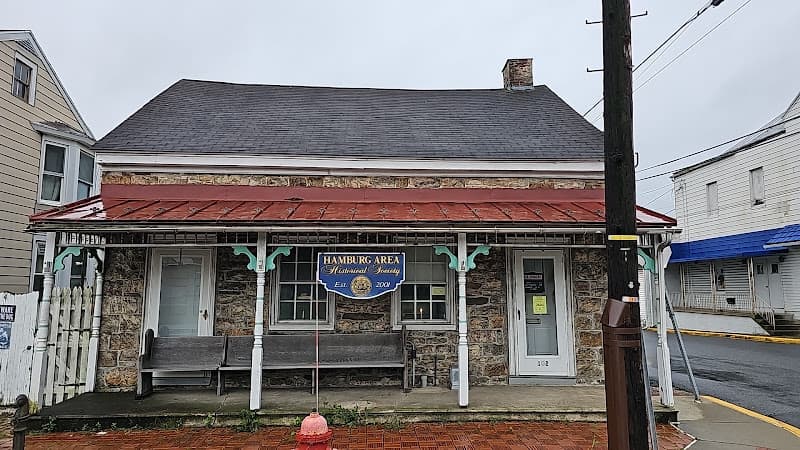
The Hamburg Area Historical Society is a local heritage organization and museum located at 102 State Street in Hamburg, Pennsylvania, in northern Berks County. The society collects, preserves and interprets the documents, photographs, artifacts and oral traditions of Hamburg borough and the surrounding townships and villages that make up the Hamburg area. Like many community historical societies in Pennsylvania, it operates on a modest scale and depends heavily on member support and volunteer labor, which gives the organization a distinctly local character: the people who staff the building are frequently the same people whose families have lived in the area for generations.
The society's work falls into a few broad categories. It maintains a collection of objects and records relating to the borough's civic, industrial, religious and domestic life. It presents that material to the public through exhibits and displays. It answers research questions from descendants, students, property owners and writers. And it serves as a gathering point for programs, talks and commemorations that keep local history in circulation rather than locked in a filing cabinet.
Historical Context of the Hamburg Area
Hamburg sits along the Schuylkill River at the foot of Blue Mountain, immediately south of the water gap at Port Clinton. That geography shaped nearly everything about the town's development. The area was settled largely by Pennsylvania German families in the eighteenth century, and the borough was laid out in the years following the American Revolution. German language, building traditions, foodways and surnames persisted in the region well into the twentieth century, and traces of that heritage remain visible in the local architecture, cemeteries and family records that the society preserves.
The nineteenth century brought canal and railroad transportation through the Schuylkill Valley, connecting the anthracite coal region to the north with Reading, Pottstown and Philadelphia to the south. Hamburg became a stop along that corridor, and the accompanying growth produced hotels, stores, foundries, mills and other small manufacturing concerns. Later, the town became known regionally for institutions including the state facility established on the outskirts of the borough in the early twentieth century, which for decades was one of the area's significant employers. Records, photographs and printed ephemera connected to these chapters are the sort of material a county-area historical society typically holds, and they help explain why so many visitors comment on the density of history packed into a relatively small town.
What Visitors Can Expect
A visit to the society generally centers on its displays of local artifacts and images. Collections at organizations of this type commonly include items such as:
- Photographs of streetscapes, storefronts, schools, churches and residents from the late nineteenth and twentieth centuries
- Documents including deeds, ledgers, letters, school records and borough paperwork
- Newspapers, programs, postcards and other printed ephemera
- Household goods, tools, textiles and everyday objects that illustrate domestic and working life
- Materials relating to local businesses, fire companies, fraternal organizations and veterans
- Genealogical files and family histories compiled by members and researchers
Because the society is volunteer operated, visitors interested in a specific topic often benefit from calling ahead at 610-562-3664. Staff and volunteers can advise on what is currently on display, whether particular records are available and how long a research visit might take. Those planning a genealogy trip should be prepared to describe the family names, dates and locations they are pursuing, since that information helps volunteers direct them to the most useful files.
Location and Surroundings
The State Street address places the society in central Hamburg, within easy reach of the borough's business district, restaurants, churches and older residential blocks. The setting makes it practical to pair a museum visit with time spent outdoors. Hamburg is a recognized access point along the Schuylkill River Trail corridor, and the wider area is well known among hikers and cyclists for its proximity to the Appalachian Trail, the Blue Mountain ridge, the Port Clinton gap, Hawk Mountain Sanctuary and the Kaercher Creek and Blue Marsh recreation areas of Berks County. Visitors driving from Reading, Allentown, Pottsville or the Lehigh Valley will find Hamburg close to Interstate 78 and Route 61, making it an easy stop on a day trip through the region.
Walking the borough itself is part of the appeal. Many of the buildings shown in the society's photographs still stand, so a short stroll after a visit allows guests to match historic images with present day streetscapes. Visitors who want to do this may find it useful to ask volunteers about the ages and former uses of nearby buildings.
Practical Information
- Address: 102 State Street, Hamburg, Pennsylvania 19526
- Telephone: 610-562-3664
- Category: historical place, museum and local heritage organization
- Accessibility: wheelchair accessible parking is available in the lot
- Families: the site is suitable for children
Opening times at volunteer run historical societies commonly follow limited scheduled hours, with additional access arranged by appointment. Phoning before traveling any distance is the most reliable way to confirm current hours, admission arrangements and any special events. Groups, school classes and clubs planning a visit should contact the society in advance so that volunteers can prepare and, where possible, tailor the visit to the group's interests.
Membership, Donations and Volunteering
Organizations of this kind typically welcome new members, and membership generally supports building maintenance, collection care, archival supplies and public programming. Residents and former residents sometimes contribute photographs, documents or objects connected to the Hamburg area. Anyone considering such a donation should speak with the society first, since collecting policies, storage capacity and conservation requirements determine what can be accepted. Volunteering is another avenue of involvement, with tasks ranging from staffing open hours and assisting researchers to cataloging materials, digitizing photographs and helping at community events.
For anyone interested in Berks County heritage, Pennsylvania German settlement patterns, Schuylkill Valley transportation history or simply the story of a small Pennsylvania borough, the Hamburg Area Historical Society offers a locally grounded starting point.