The Pennsylvania German Cultural Heritage Center is a museum, library and archive at 22 Luckenbill Rd in Kutztown, Berks County, Pennsylvania. Operated as part of Kutztown University, the center documents and interprets the culture of the Pennsylvania Germans, the German-speaking settlers from the Rhineland, the Palatinate, Switzerland and Alsace who arrived in southeastern Pennsylvania in the eighteenth century and whose descendants shaped the farms, dialect, foodways, architecture and folk art of Berks and the surrounding counties. The site sits on a working farmstead property on the edge of the borough, a short drive from the university's main campus and from Route 222.
The center functions in two ways at once. It is a public museum with exhibits, historic buildings and seasonal programming, and it is a research institution used by genealogists, students, scholars, writers and families tracing their own Pennsylvania Dutch roots. Staff members work directly with the collections and with visitors, which is why questions asked at the front desk tend to be answered in detail rather than with a pamphlet.
The Site and Its Buildings
The heritage center occupies a nineteenth century farmstead rather than a purpose-built museum hall, and the buildings themselves are part of the interpretation. The grounds include a stone and frame farmhouse, a large bank barn used for exhibits, programs and gatherings, outbuildings associated with daily farm work, and a one-room schoolhouse that illustrates rural education in the region before consolidation. Visitors who tour the interiors see how a Pennsylvania German household and farm were organized, from the arrangement of rooms and hearths to the placement of the barn against the slope of the land.
Because the property is a farm, the setting changes with the seasons. Garden plots, field crops and the surrounding Berks County farmland are visible from the grounds, and several programs are built around the agricultural calendar rather than around a fixed exhibit schedule.
Collections, Library and Archives
The center maintains a reference library and archival collections devoted to Pennsylvania German material culture and history. Holdings commonly consulted by researchers include:
- Books and periodicals on Pennsylvania German history, dialect, religion and folklife
- Genealogical resources, family records and church record transcriptions useful for tracing Berks County and Pennsylvania Dutch ancestry
- Manuscripts, documents and printed ephemera in German and in the Pennsylvania Dutch dialect
- Photographs and images documenting farms, families, trades and rural communities
- Folk art holdings and related research files, including fraktur, decorated household objects, textiles and barn decoration
Rotating exhibits draw on these collections and on loans, so the displays on view change over time. Subjects have ranged across traditional crafts, dialect and language, religious practice, agricultural tools and the decorated barn stars that remain one of the most recognizable features of the regional landscape. Research on barn decoration and on Pennsylvania German folk belief has been a particular strength of the center's published work.
Programs, Events and Education
Much of the center's public activity happens through events held across the year. These include seasonal farm days tied to holidays, traditional music gatherings, harvest and planting activities that put visitors to work in the fields, craft demonstrations, dialect programs, lectures and workshops. Many are designed so that children and adults can take part in the same activity, which is why multigenerational groups are a common sight on event days.
The center also supports Kutztown University's academic programs and serves school groups, historical societies, church groups and bus tours. Guided interpretation of the farmhouse and schoolhouse is a regular part of the visitor experience, and the narrative approach tends to be anecdotal and specific, drawing on local family histories and documented practice rather than generalities.
Because event dates, exhibit openings and public hours vary with the academic calendar and the seasons, calling ahead at +1 610-683-1589 is the most reliable way to confirm what is open on a given day, to arrange a group visit or to ask about research appointments in the library and archives.
Visiting Information
The center is located at 22 Luckenbill Rd, Kutztown, PA 19530. On-site parking is available, including accessible parking. Restrooms are available, and an accessible restroom is provided. Visitors with mobility needs should be aware that the property includes historic structures and farm terrain, so it is worth calling in advance to discuss the best route onto the site and which buildings can be reached comfortably on the day of a visit.
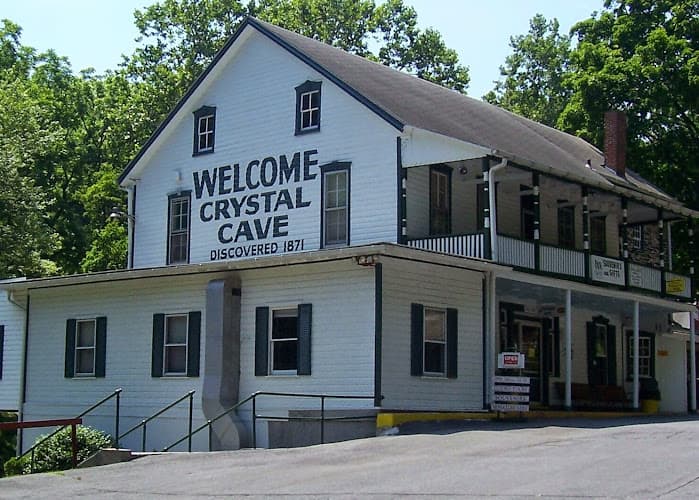
There is no restaurant or café on the grounds. Kutztown borough is minutes away and has restaurants, bakeries, coffee shops and shops within a compact downtown, so many visitors combine a trip to the heritage center with a meal in town. The location also fits easily into a wider day of touring in the region, near Crystal Cave, the Kutztown Folk Festival grounds, Rodale Institute, Hawk Mountain Sanctuary and the farm markets and covered bridges of northern Berks.
The site is suited to families. Children generally respond to the animals, tools, open space and hands-on activities, and the schoolhouse in particular gives younger visitors a point of comparison with their own classrooms. Photographers and writers often visit for the architecture and the surrounding farmland.
Why the Center Matters Locally
Pennsylvania Dutch speech, foodways and traditions were once ordinary across Berks County and are now carried by a smaller number of people, many of them older. The heritage center collects the record of that culture, keeps it accessible to the public and teaches it to new audiences, including university students who may have no family connection to it. For residents of Kutztown, Fleetwood, Topton, Lenhartsville, Hamburg, Maxatawny and the surrounding townships, it is a place to deposit family material, research an ancestor, hear the dialect spoken aloud or simply spend an afternoon on a historic farm a few miles from home.