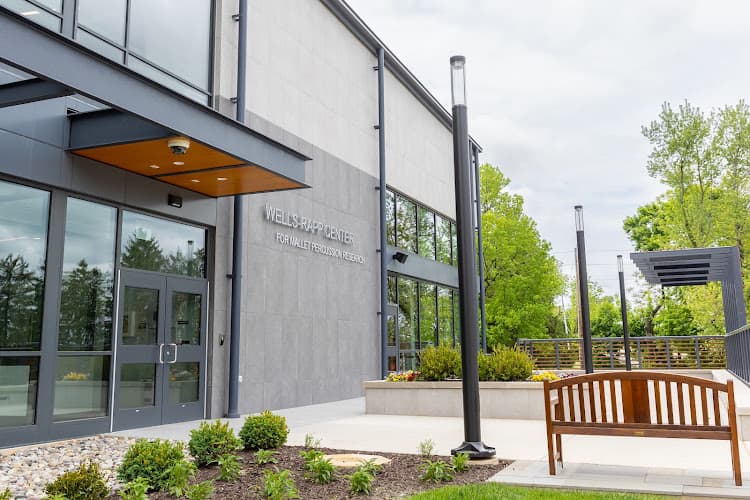
The Wells Rapp Center for Mallet Percussion Research operates as a specialized academic facility associated with Kutztown University of Pennsylvania. Located in Kutztown, a borough in Berks County approximately 20 miles southwest of Allentown, the center represents a focused institutional commitment to the study and advancement of mallet percussion instruments and their associated repertoire, techniques, and pedagogy.
Mallet percussion encompasses a family of instruments played by striking with mallets, including the marimba, vibraphone, xylophone, glockenspiel, chimes, and various auxiliary percussion instruments. The establishment of a dedicated research center for this instrumental category reflects the growing academic interest in percussion studies that has developed over the past several decades within American higher education.
Institutional Context
Kutztown University of Pennsylvania is a public university within the Pennsylvania State System of Higher Education. The university traces its origins to 1866 when it was founded as Keystone Normal School, a teacher training institution. Over the subsequent century and a half, the institution evolved through several name changes and expansions of its academic mission, eventually achieving university status in 1983.
The music department at Kutztown University offers undergraduate programs in music education and music performance, providing students with comprehensive training in their chosen instruments alongside theoretical and historical coursework. Within this broader music program, the Wells Rapp Center serves as a resource for students, faculty, and researchers interested in the specific domain of mallet percussion.
The center's name honors individuals who contributed significantly to its establishment or to the field of percussion studies, following the common academic tradition of naming facilities after benefactors, distinguished faculty, or notable figures in a particular discipline. Such named centers typically receive dedicated funding, specialized equipment, and institutional support that enables focused research and educational activities beyond what might be possible within a general departmental structure.
Mallet Percussion as an Academic Discipline
The study of mallet percussion has expanded considerably since the mid-twentieth century. Instruments like the marimba, which originated in Central America and Africa before being developed into its modern concert form in the early 1900s, have become standard components of percussion curricula at universities worldwide. The vibraphone, invented in the 1920s and popularized through jazz music, similarly transitioned into classical and contemporary concert settings.
Academic research in mallet percussion encompasses several areas of inquiry. Historical musicology examines the development and evolution of these instruments across different cultures and time periods. Performance practice research investigates technique, interpretation, and the physical mechanics of playing. Pedagogical studies focus on effective teaching methods for students at various skill levels. Composition and repertoire research explores the expanding body of music written specifically for mallet instruments, both as solo vehicles and within ensemble contexts.
Additionally, acoustic research investigates the physical properties of mallet instruments, including the materials used in their construction, the characteristics of different mallet types, and the acoustic properties of performance spaces. This interdisciplinary approach connects music departments with physics, engineering, and materials science.
Facilities and Resources
Research centers of this type typically maintain collections of instruments, including both modern concert instruments and historical examples that illustrate the evolution of mallet percussion. Such collections serve educational purposes, allowing students to experience instruments from different eras and traditions, and research purposes, enabling detailed study of construction methods, acoustic properties, and performance characteristics.
The center's physical facilities are accessible to individuals with mobility limitations, featuring wheelchair accessible entrances and parking areas. This accessibility ensures that students, researchers, and visitors with disabilities can fully participate in the center's activities and utilize its resources.
Academic research centers also commonly maintain specialized libraries containing scores, recordings, books, and archival materials related to their focus areas. For a mallet percussion center, this might include original manuscripts, rare published editions, historical recordings, photographs, correspondence from notable performers and composers, and scholarly publications.
Educational Programming
University-affiliated research centers typically support educational activities at multiple levels. Undergraduate students majoring in percussion or music education benefit from access to specialized instruments and resources that enhance their primary coursework. Graduate students pursuing advanced degrees may conduct thesis or dissertation research utilizing the center's collections and expertise. Faculty members engage in scholarly research that contributes to the broader academic literature in their field.
Many such centers also host visiting artists, scholars, and clinicians who present masterclasses, lectures, and performances. These events expose students to diverse perspectives and approaches while connecting the university community with the broader professional world of mallet percussion. Summer workshops, festivals, and intensive study programs may also fall under the center's programming umbrella.
Outreach to pre-college students and community members represents another common function of university research centers. Workshops for high school percussionists, presentations at regional music educator conferences, and public performances all serve to share the center's expertise with audiences beyond the immediate university community.
Geographic and Regional Significance
Kutztown's location in southeastern Pennsylvania places the center within reasonable distance of several major metropolitan areas. Philadelphia lies approximately 60 miles to the southeast, while New York City is roughly 90 miles to the northeast. This positioning provides access to the cultural resources of these cities, including major orchestras, concert venues, and other academic institutions, while maintaining the smaller-town environment characteristic of Pennsylvania Dutch Country.
The region surrounding Kutztown has historical connections to Pennsylvania German culture, reflected in local architecture, traditions, and the annual Kutztown Folk Festival. While not directly related to the center's musical mission, this cultural context contributes to the distinctive character of the area and the university's identity.
Contact and Visiting Information
The Wells Rapp Center for Mallet Percussion Research can be reached by telephone at +1 610-683-4177. Prospective visitors, researchers seeking to utilize the center's resources, and individuals interested in educational programming should contact the center directly to inquire about hours of operation, appointment requirements, and available services. As with most university facilities, access policies may vary depending on the nature of the visit and the resources being requested.
The center's integration within Kutztown University means that general university resources, including campus parking, dining facilities, and visitor services, are available to those visiting the center. The university campus is accessible via major roadways connecting to the broader regional transportation network.