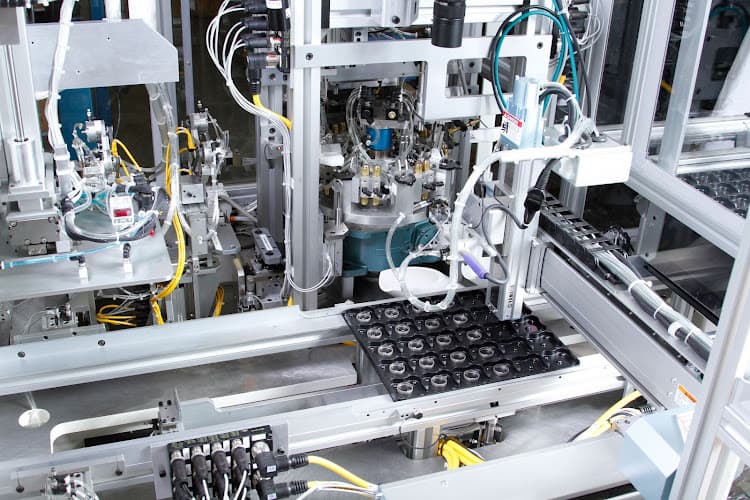
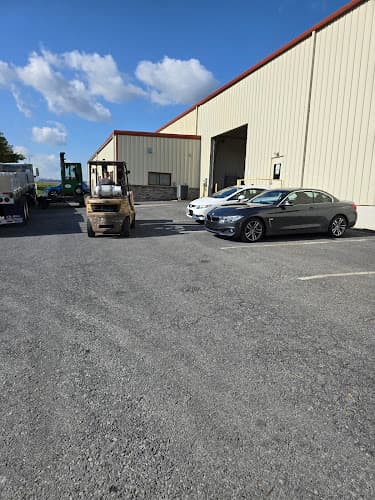
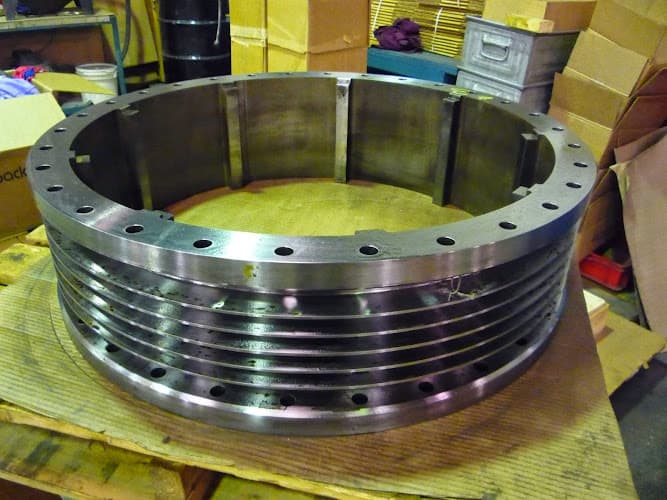
Omnitech Automation Inc is a manufacturing business located at 15040 Kutztown Road in Kutztown, Pennsylvania. The company operates in the industrial automation sector, an area of manufacturing concerned with the design and construction of equipment that performs production, assembly, handling, inspection and packaging tasks with limited human intervention. Companies in this category typically build machinery to order rather than producing a fixed catalog of goods, which means each project begins with a customer requirement and ends with a piece of equipment intended for a specific production environment.
The business can be reached by telephone at +1 610-965-3279, and additional information is published on its website at oai-automation.com. The facility sits along the Kutztown Road corridor in Berks County, placing it within convenient reach of the manufacturing centers of eastern Pennsylvania.
What an Automation Manufacturer Does
Industrial automation manufacturers occupy a space between engineering consultancy and traditional fabrication. Rather than supplying off the shelf products, firms of this type work through a defined sequence of stages that turns a production problem into a working machine. That sequence generally includes:
- Consultation and requirements gathering, during which the customer's existing process, cycle time goals, part tolerances and floor space constraints are documented.
- Concept development, where one or more approaches to the problem are proposed, often with rough layouts, budget estimates and projected throughput figures.
- Mechanical and electrical design, typically carried out in three dimensional CAD software alongside electrical schematics and pneumatic or hydraulic circuit drawings.
- Fabrication and machining of frames, tooling, fixtures, guarding and custom components.
- Assembly and integration, where mechanical hardware, drives, sensors, controllers and safety devices are brought together.
- Controls programming, covering programmable logic controllers, human machine interfaces, motion control and, where applicable, robot programming and vision systems.
- Debug and factory acceptance testing, in which the machine is run with real parts before it leaves the shop so that performance can be verified.
- Installation, commissioning and operator training at the customer's plant, followed by ongoing support.
Work of this kind requires a combination of trades under one roof: mechanical designers, controls engineers, machinists, welders, electrical assemblers and field service technicians. Because the finished product is usually unique, documentation matters as much as the hardware itself. Customers generally receive assembly drawings, electrical prints, bills of material, spare parts lists and controls source code so that the equipment can be maintained and modified over its service life.
Typical Products and Capabilities
Equipment produced by automation manufacturers varies widely, but common categories include custom assembly machines, part feeding and orientation systems, robotic work cells, leak and functional test stands, vision based inspection stations, conveyor and material handling systems, end of arm tooling, and retrofits that modernize the controls on older production machinery. Many firms also build fixtures and gauges, produce machine guarding packages to bring existing equipment into line with current safety practice, and take on smaller scale precision machining jobs.
Control platforms in this field commonly include programmable logic controllers from major suppliers, servo and stepper motion systems, pneumatic actuation, industrial networking, and safety rated components such as light curtains, interlocked doors and dual channel emergency stop circuits. Robotics work may involve traditional six axis industrial arms, SCARA units, delta style pickers or collaborative robots intended to operate near people.
Industries Served
Eastern Pennsylvania supports a broad manufacturing base, and automation builders in the region tend to serve customers across several sectors. These frequently include:
- Medical device and pharmaceutical production, where validation, traceability and cleanliness requirements shape machine design.
- Food and beverage processing and packaging.
- Automotive and heavy truck component suppliers.
- Electronics and electrical component assembly.
- Plastics processing, including injection molding automation and secondary operations.
- Consumer products, personal care and household goods packaging.
- Building products, metal fabrication and general industrial manufacturing.
Customers typically pursue automation for a handful of practical reasons: to increase output without expanding floor space, to hold tighter and more repeatable quality standards, to remove workers from ergonomically difficult or hazardous tasks, and to address persistent difficulty in filling repetitive production roles.
Location and Service Area
Kutztown is a borough in Berks County known for Kutztown University and for its position between Reading and Allentown along the Route 222 corridor. The surrounding townships contain a mix of agricultural land and industrial parks, and the area has long supported light manufacturing, metalworking and food production. A location in this part of the state places a supplier within a short drive of the Lehigh Valley, Reading, Lancaster and Pottstown, and within a few hours of Philadelphia, Harrisburg, northern Maryland, central New Jersey and the New York metropolitan area.
Custom machine builders often ship equipment well beyond their immediate region, since a machine can be crated and trucked anywhere once it has passed factory testing. Prospective customers outside the local area are generally encouraged to discuss travel for installation, commissioning and later service visits during the quoting stage.
Visiting the Facility
The Kutztown Road location offers a wheelchair accessible entrance and a wheelchair accessible parking lot, which makes the site approachable for visitors with mobility needs. Plant visits are a normal part of the custom equipment process, since buyers frequently attend design reviews and factory acceptance tests before a machine ships. Because the building is an active production facility rather than a retail storefront, calling ahead to arrange an appointment is advisable, and visitors should expect standard shop floor safety expectations such as closed toe footwear and eye protection in designated areas.
Practical Information for Prospective Customers
Those considering a custom automation project can make the early conversations more productive by preparing a few items in advance:
- Part drawings or sample parts, including tolerance information and any variation between production lots.
- Target cycle time or annual volume requirements.
- Available floor space, ceiling height and utility connections such as electrical service and compressed air.
- Any existing upstream or downstream equipment the new system must interface with.
- Internal standards for controls hardware, safety practice or documentation.
- A realistic timeline, since design, build and debug cycles for custom machinery are commonly measured in months rather than weeks.
Inquiries about capabilities, quoting, lead times, service on existing equipment and spare parts can be directed to the company by telephone at +1 610-965-3279 or through the contact details published on its website.