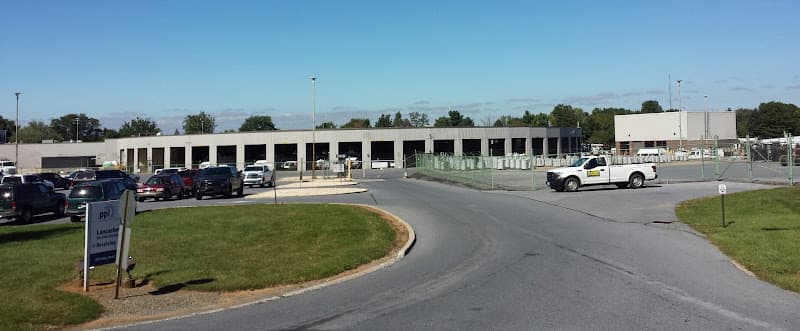
PPL Electric Utilities is a regulated electric delivery company serving customers across central and eastern Pennsylvania, and the facility at 651 Delp Rd in Lancaster is one of the company's regional operations sites supporting Lancaster County and the surrounding area. The utility traces its roots to 1920, when Pennsylvania Power & Light Company was formed through the consolidation of several smaller electric companies operating in the eastern part of the state. Today it operates as a subsidiary of PPL Corporation, an energy holding company headquartered in Allentown, and it delivers electricity to roughly 1.4 million homes and businesses across more than two dozen Pennsylvania counties.
As a regulated utility, PPL Electric Utilities is overseen by the Pennsylvania Public Utility Commission, which reviews and approves delivery rates, service standards and reliability benchmarks. The company does not generate electricity. Its role is the transmission and distribution side of the system: the substations, poles, wires, transformers and meters that carry power from the regional grid to individual service addresses.
The Lancaster Location and Service Area
The Delp Road site sits on the north side of Lancaster, near the Lititz Pike and Route 30 corridor, in an area of the city that mixes commercial development with residential neighborhoods. Sites like this one function as staging and dispatch points for the crews, trucks and equipment that maintain the local distribution network. Line trucks, bucket trucks, digger derricks and material inventories are based at operations centers so that crews can reach outages, planned construction work and emergency calls within their assigned territory quickly.
Lancaster County presents a varied operating environment for an electric utility. The territory includes dense urban blocks in the city, suburban subdivisions in Manheim Township and East Hempfield, small boroughs such as Lititz and Ephrata, and extensive farmland where long stretches of distribution line run through open country and tree lines. Each of these settings creates different maintenance demands, from underground residential circuits to rural overhead lines exposed to wind, ice and falling limbs.
What the Utility Does
The core services associated with PPL Electric Utilities include:
- Electric delivery service to residential, commercial, industrial and agricultural customers
- New service connections, service upgrades, temporary construction power and line extensions for new development
- Meter installation, replacement and reading, including advanced metering that reports usage data remotely
- Outage response, damage assessment and restoration after storms, equipment failures and vehicle strikes
- Substation and distribution line construction, inspection and replacement
- Vegetation management along rights of way to keep trees clear of energized conductors
- Streetlight maintenance in many of the municipalities it serves
- Meter and equipment relocation requests associated with home renovations or property changes
Reliability Work and Outage Response
Much of the utility's visible activity in Lancaster County involves reliability work: replacing aging poles and crossarms, installing automated devices that isolate faults, rebuilding circuits and upgrading substations. PPL has invested in an automated distribution network that can detect a fault and reroute power around the damaged section, which reduces the number of customers affected by a single failure and shortens the time some customers spend without power.
Customers can enroll in alerts that deliver outage and restoration updates by text, email or phone call. Outages can be reported by phone. During major storms, PPL supplements local crews with personnel from other regions and, when necessary, mutual assistance crews from utilities in other states.
The field workforce is central to how the public experiences the company. Line workers, troubleshooters, substation technicians, meter technicians and contracted tree crews are the people most often seen on neighborhood streets, and their work frequently takes place overnight, in severe weather and on holidays.
Billing, Rates and Supplier Choice
Pennsylvania has had a competitive retail electricity market since the late 1990s. That means a customer's monthly bill separates delivery charges, which go to PPL Electric Utilities and are set through regulatory proceedings, from generation or supply charges, which may come from PPL's default service or from a competitive supplier the customer selects independently. Customers who do not choose a supplier receive default service at the Price to Compare, a rate that adjusts periodically based on the cost of power PPL purchases on the wholesale market. Regardless of which supplier a customer uses, PPL maintains the lines and responds to outages.
Account services commonly handled through the company include starting and stopping service when moving, budget billing that levels payments across the year, paperless billing, payment arrangements, and usage tools that break down consumption by day or by hour for customers with advanced meters. PPL also administers assistance programs for income qualified customers, including OnTrack payment plans, hardship fund grants and weatherization services, and it participates in Pennsylvania's Low Income Home Energy Assistance Program process.
Safety and Public Information
Electric safety guidance is a significant part of the utility's public role. That includes reminding the public to treat every downed wire as energized and to call the utility or 911 rather than approaching it, to call 811 before digging so underground facilities can be marked, and to keep ladders, pruning equipment and construction machinery well clear of overhead conductors. Farmers, contractors and tree services in Lancaster County are frequent audiences for this guidance given the amount of equipment operated near lines in the region.
Practical Information
- Address: 651 Delp Rd, Lancaster, PA 17601
- Phone: 1 (800) 342-5775 for general customer service
- Accessibility: the site has a wheelchair accessible entrance and a wheelchair accessible parking lot
Because operations centers primarily support field crews rather than walk in traffic, customers are generally best served by calling the customer service line for billing questions, new service requests and outage reports. Anyone planning to visit in person should call ahead to confirm hours and whether the specific business they need can be handled at that location.