How Buying Half a Cow Works at Berks County Farms
Buying half a cow means buying a share of a live animal and paying a butcher to cut it to your order. What Berks farms charge by the hanging weight or flat, how much meat a quarter brings home and why it varies, the butcher's separate bill, freezer sizes, deposits, and when to order.
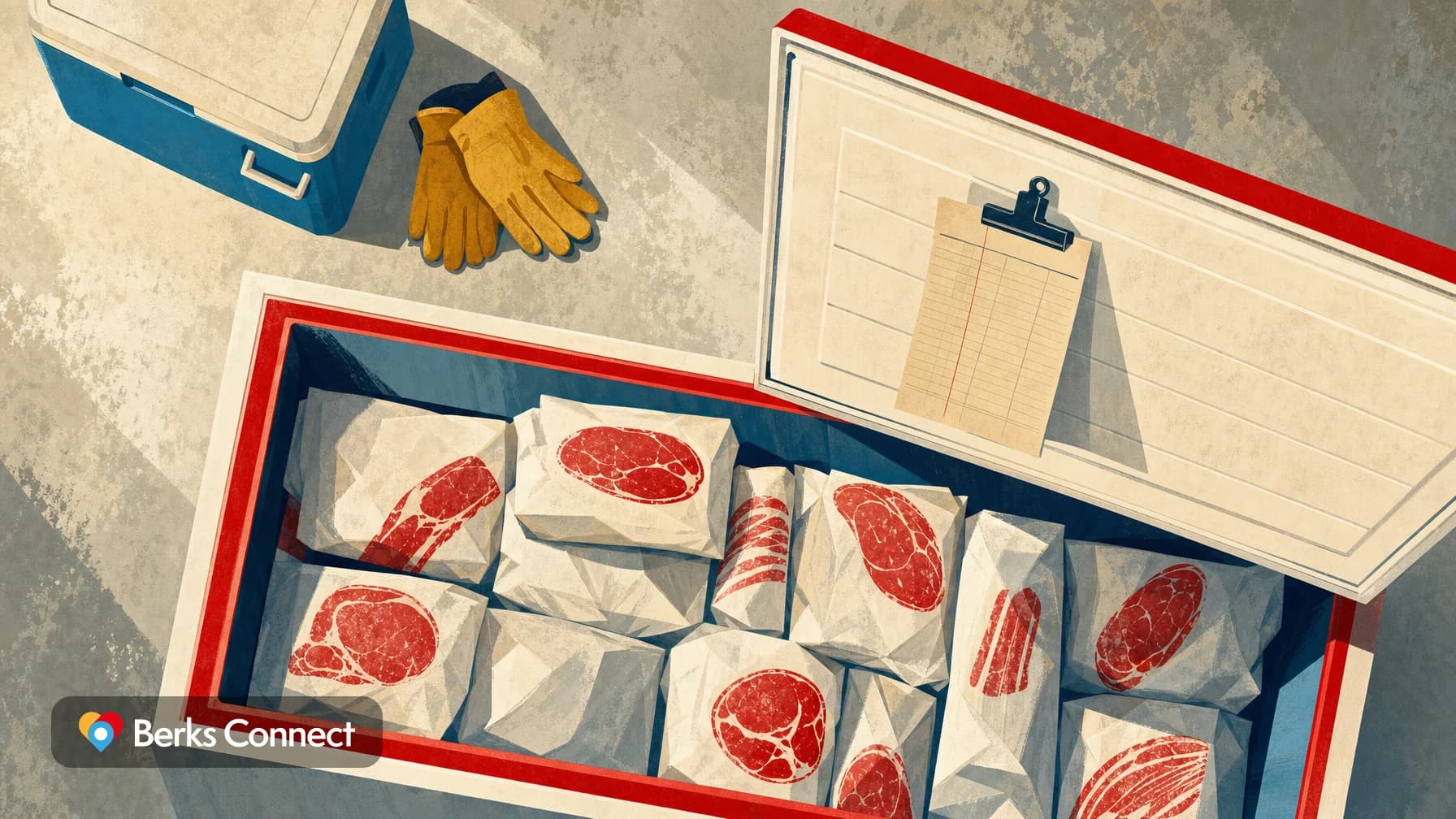
Buying half a cow means buying a share of a live animal from a farm, and the farm's butcher then cuts your share into steaks, roasts and ground beef the way you ask for them. At the two farms in the table below that print a beef rate, it's $7.25 to $7.75 a pound of hanging weight, which is what the carcass weighs at the butcher once the hide, head and organs are off; one farm charges a flat $1,099 for a quarter with the butchering included.
Either way a quarter brings home roughly 80 to 110 pounds of meat. While you wait on a share, the county farm stands and markets page lists the county's farm stands and markets, some with butchers among the vendors, for buying by the package.
How does buying half a cow work?
The farm sells you a quarter, a half or all of a steer while the animal is still alive. On a processing date the farm booked well ahead, the animal goes to a butcher, who cuts your share to your order. You pay the farm for the animal and, where the farm doesn't include it, the butcher separately for the cutting.
So why a share of a live animal instead of a box of beef? A butcher cutting for the animal's owners only is doing what the rules call custom-exempt work, and every package comes back marked "Not for Sale," and an inspected plant can do that job too. That's why the farm sells you the share of the live animal, with a bill of sale before slaughter; the butcher keeps the owners' names on file, and several households can own one animal.
Gauker Farms in Fleetwood sells beef by the whole, half or quarter, or by the cut, from a herd it describes as pastured and grain-fed.
846 Fleetwood Lyons Rd, Fleetwood, PA
How much meat do you get, and why does it vary?
There are three weights, live, hanging and take-home, and many farms price by the hanging weight. Live weight is the animal on the hoof; hanging weight is what it weighs at the butcher with the hide, head, hooves and organs off, about 60 to 63 percent of live weight, so a 900-pound animal hangs at about 570 pounds.
Take-home weight is what goes in your freezer once the meat has dried a little while hanging and the bones and trim come off: from that 570 pounds, about 280 pounds boneless or 410 with the bones in. A quarter of that animal is roughly 70 to 100 pounds.
Where you land in that range depends on the cut sheet, the order form you fill out for the butcher. One Berks butcher's sheet asks for steak thickness and steaks per pack, roast size, ground beef pack size and whether you want patties, chip steak, soup bones, organs.
Your answers change how many pounds you carry home, not how much meat is in them. Boneless cuts and more ground beef mean fewer pounds because the bones are gone: a bigger animal can come home at nearly 500 pounds one year and 350 the next if the second order went boneless. And where the farm prices by hanging weight, the farm's bill is set before the cutting, so going boneless doesn't lower what you pay the farm; it lowers what you carry.
At one farm a quarter is a mix of the front and back of the animal, so some requests can't be filled exactly, and one farm cuts every quarter to one standard list of cuts. Bendy Brook Farm in Oley cuts quarters and halves to your own order and dry-ages the beef three weeks.
310 Covered Bridge Rd, Oley Township, PA
What does a quarter or a half of a cow cost at a Berks farm?
Expect two bills. The farm's bill is the share price, per pound of hanging weight or a flat figure. The butcher's bill, where it's separate, is a kill fee for the slaughter plus a cut-and-wrap charge per pound of hanging weight, with extras for curing, vacuum packing, patties and sausage. The farms in the table split on this: one folds all the butchering into its flat price, two put the butcher's fees on top, and the rest leave it to the phone call. Before you pay a deposit, ask which butcher the farm uses, then call that butcher for the kill fee, how it's shared among the owners, and the per-pound rate.
Here are five Berks farms and one just over the Lehigh line that sell by the share, with what each one's site prints, as of 2026; a farm that isn't here may sell shares and just not print it.
| Farm | Sold by the share | Price as the farm prints it | Butchering | Deposit and timing |
|---|---|---|---|---|
| Willow Run Farmstead, Fleetwood | Quarter of beef; half of pork | $7.25 a pound hanging weight for beef, "on average, our quarters cost $1000"; $7.00 a pound hanging for pork, "approximately $650" a half | Ask when you call | $100 non-refundable deposit; balance at pickup on set dates; orders taken all year for the next pickup date |
| Deep Roots Valley Farm, Mohrsville | Quarter of beef | $1,099 flat, "at least 90lbs take home weight" | Included, in a standard cut configuration | Priced and sold online; early-October quarters sold out, late-October ones listed |
| Bendy Brook Farm, Oley | Quarter or half of beef; a 46-to-48-pound eighth; pork bundles; whole pigs by phone | Ask when you call | Custom cut to your order, dry-aged three weeks | $100 deposit reserves a quarter or half; order between July and December |
| Gauker Farms, Fleetwood | Whole, half or quarter of beef | Ask when you call (its site prints a retail per-pound list only) | At a USDA-inspected shop in Lancaster County | Ask when you call |
| Rodale Institute, Kutztown | Whole hog | $5.00 a pound hanging weight, "200-220 pound average" | On top, at Lehigh Valley Meats' prices | Deposit by email; pickup at the Kutztown headquarters |
| Wholesome Food Farm, Alburtis (a Lehigh County address; the farm describes itself as in Berks and serving both) | Quarter, half or whole of beef | $7.75, $7.50 or $7.25 a pound hanging weight | Separate; you pay the butcher at pickup | $100, $200 or $300 non-refundable; October processing; the quarter and the whole were sold out for the year as of early October |
One farm prints an average of $1,000 for a quarter (ask whether the butcher is extra). That's roughly $9 to $12.50 a pound of meat in the freezer, and about $12 a pound at the flat-price farm with the butchering included. At the one farm that prints half and whole rates, they're $7.50 and $7.25 a pound hanging. Deep Roots Valley Farm in Mohrsville sells its quarter at one flat price with the butchering included and delivers to much of Berks.
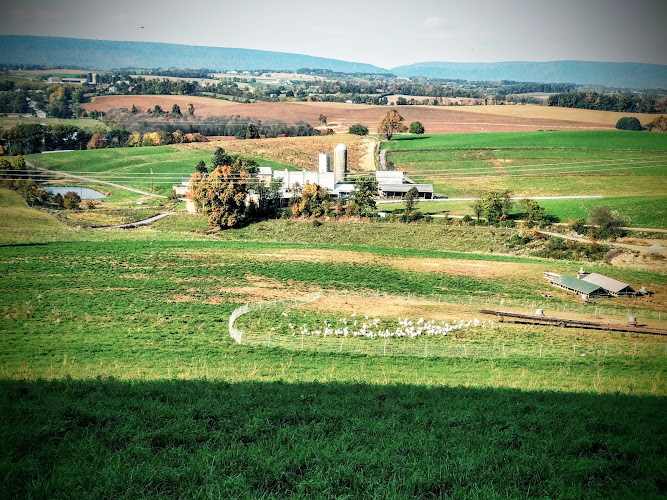
1047 Irish Creek Rd, Mohrsville, PA
Pork works the same way: a half hog at one Berks farm is $7 a pound hanging, about 70 pounds take-home and approximately $650, and a whole hog at another is $5 a pound hanging with the butcher's fees on top.
How much freezer do I need for a quarter, a half or a whole?
Figure 35 to 40 pounds of cut and wrapped meat per cubic foot, which makes a quarter about 3 cubic feet of packages. Plan on more, because odd-shaped packages don't stack like bricks: a quarter fits a small chest freezer of about 4 to 6 cubic feet, and one farm says it also fits the freezer of a standard fridge-freezer with nothing else in it. A half needs 8 to 10 cubic feet and a whole 12 to 20. Have the freezer at zero degrees before pickup day.
Roasts and steaks hold their quality 4 to 12 months at zero, ground beef 3 to 4, and bacon and sausage 1 to 2. Frozen meat stays safe indefinitely; the months are about taste.
How do I order, and when?
You reserve a share with a deposit. A $100 deposit holds a quarter at three farms, and one of them asks $200 or $300 for a half or a whole. Two farms say the deposit is non-refundable; at one the balance is due at pickup. One farm takes orders all year for set pickup dates, another takes orders between July and December, and one sells an eighth-size bundle for a small freezer. The farm's processing date is the deadline, because butchers book months ahead. Order early: fall processing dates sell out, so order in summer for a fall date.
Pickup is at the farm or at the butcher, depending on the farm, and some farms deliver. Willow Run Farmstead in Fleetwood sells quarters of grass-fed beef and halves of pastured pork for pickup on set dates.
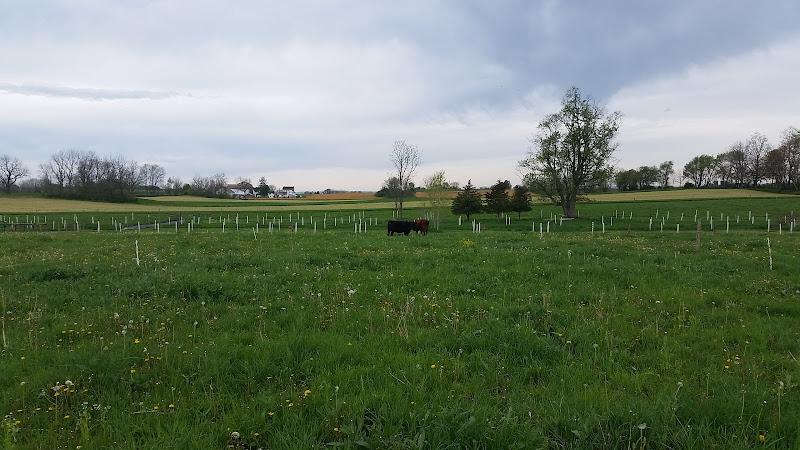
270 Hoch Rd, Fleetwood, PA
Before you pay the deposit, ask the farm six things.
- How is it priced, by hanging weight or flat?
- Is the deposit refundable?
- Is the butchering included, and if not, which butcher do you use and what does it charge?
- Do I fill out a cut sheet, or is it a standard cut?
- When is the processing date, and when is pickup?
- How many pounds did last year's quarters come home at?
Some farms selling meat at the gate are named in the farm markets post, and more are on the county farms page. Most stands' and markets' address and phone are on the county farm stands and markets page; shares aren't listed there, so call and ask.
Pick a farm, ask your six questions, pay the deposit, and buy the freezer if you need one, this week.
Frequently asked questions about buying half a cow.
Why do the packages say "Not for Sale"?
Because the butcher cut the meat for the animal's owners, not for a store, and the rules keep it that way: it can't be sold by the pound, so every package is stamped "Not for Sale."
Can two families split a quarter?
The rules allow it: several households can own one animal, and the butcher keeps the owners' names on file. Whether a farm will put two households on one quarter is the farm's call, so ask.
What if the fall processing dates are already gone?
Look for the farm that takes orders all year for set pickup dates or one still listing a late-fall date. For next year, order in summer for a fall processing date.
Sources
- Penn State Extension, "Understanding Beef Carcass Yields and Losses During Processing" (updated November 25, 2025): the 63 percent dressing average, the 900-pound animal at 567 pounds hanging, the 283 boneless and 408 bone-in pounds at yield grade 3, the 500-then-350-pound example.
- Penn State Extension, "Starting a Freezer Beef Business" (updated June 30, 2025), "Exploring Two Ways to Direct Market in Pennsylvania" (updated October 14, 2024) and "Why Aren't All Meat Processors the Same in Pennsylvania?": the live-animal share with a bill of sale, the butcher paid directly, custom versus inspected, the "Not for Sale" mark.
- 9 CFR § 303.1, Exemptions and 9 CFR § 316.16 (eCFR, current to October 8, 2026), with the USDA FSIS exemption guideline (May 24, 2018): custom slaughter for the owner's household, the "Not for Sale" mark, more than one owner of a live animal, the owners' names on file.
- Washington State University Extension, "Consumers: Want to Buy an Animal and Have it Butchered for Home Use?" (2020): the harvest fee plus cut-and-wrap on hanging weight, 35 to 40 pounds per cubic foot.
- University of Missouri Extension, "Buying Meat Direct From the Farm" (revised August 2026) and Oklahoma State University Extension, "Buying Beef for Home Freezers": the three kinds of butcher charges, what a cut sheet records, scheduling months to a year ahead, the freezer rule of thumb.
- USDA FSIS, "Freezing and Food Safety": roasts and steaks 4 to 12 months, ground 3 to 4, bacon and sausage 1 to 2, safe indefinitely.
- Willow Run Farmstead, "Deposit for Quarter of Grass Fed Beef", "Deposit for Half of Pasture Raised Pork" and its FAQ: the per-pound hanging-weight prices, the average totals, take-home weights, the deposit, freezer sizes.
- Deep Roots Valley Farm, "Quarter cow share": the flat price, the 90-pound minimum, butchering included, the standard cut list, delivery.
- Bendy Brook Farm, "What We Have" and "Bulk Beef Deposit": quarters and halves cut to order, three weeks of dry-aging, the July-to-December order window, the eighth and the pork bundle, the $100 deposit.
- Gauker Farms, FAQ: beef by the whole, half, quarter or cut; the Lancaster County shop; pastured and grain-fed.
- Rodale Institute, "Custom Pork Orders": the whole hog at $5.00 a pound hanging weight, the 200-to-220-pound average, Lehigh Valley Meats' fees separate.
- Wholesome Food Farm, "Shop" and "Bulk Beef Ordering FAQ": the quarter, half and whole hanging-weight prices, the deposits, the October processing date, the butcher's fees paid at pickup, the three weights explained.
- Hi-Way Meat Market, beef cutting sheet (PDF): the choices a Berks butcher's cut sheet asks for.