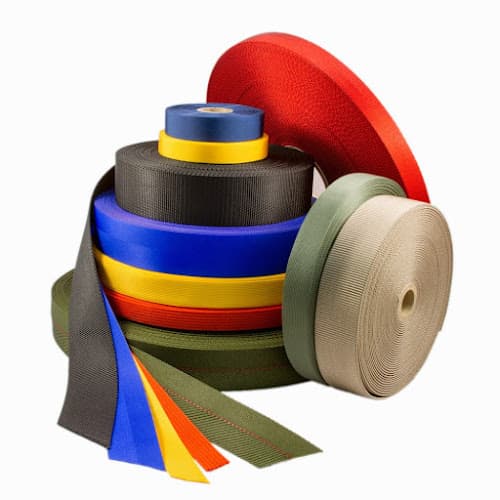
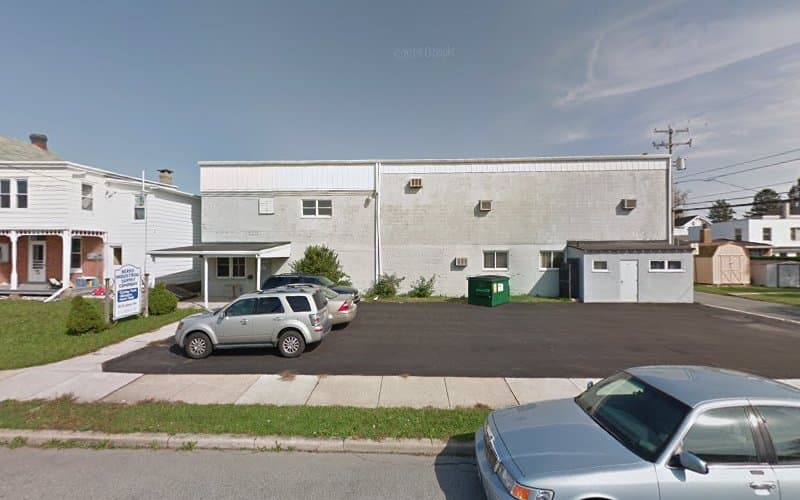
Bally Ribbon Mills is a narrow fabrics manufacturer based at 23 N 7th Street in Bally, Pennsylvania, a small borough in the northern part of Berks County. The company designs and weaves engineered textiles — webbings, tapes, tubular structures, and three-dimensional woven preforms — that are used as components in aerospace, defense, medical, automotive, and industrial products. Rather than producing finished consumer goods, the company works primarily on a business-to-business basis, developing fabric constructions to meet specific mechanical, thermal, and dimensional requirements supplied by its customers.
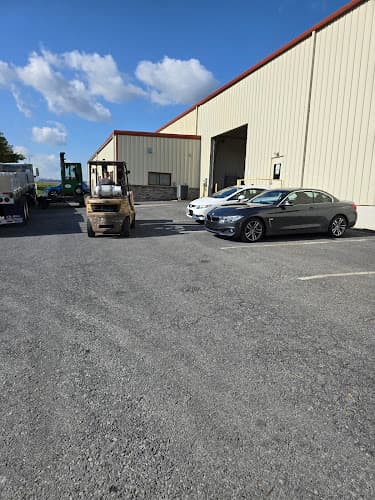
The firm operates from a manufacturing campus in the center of the borough and maintains additional production and finishing operations in the surrounding region. It can be reached by phone at +1 610-845-2211, and product and capability information is available through its website at ballyribbon.com.
History
Bally Ribbon Mills traces its origins to the 1920s, when eastern Pennsylvania was a center of American textile production and narrow-fabric weaving mills were common throughout the Lehigh Valley and Berks County. The company has remained family-owned and independently operated across multiple generations, an unusual continuity in an industry where a large share of domestic production moved offshore during the second half of the twentieth century.
The business survived that contraction by moving away from commodity ribbon and toward technical textiles, where performance requirements, material certifications, and close engineering collaboration make low-cost overseas sourcing less practical. Over the decades, that shift positioned the company as a supplier to aerospace and defense programs, medical device manufacturers, and automotive safety system producers — sectors where woven components must meet documented specifications and traceability standards.
Manufacturing Capabilities
The company's core competency is weaving narrow fabrics, but its equipment and processes extend well beyond conventional flat webbing. Capabilities include:
- Narrow fabric weaving on needle, shuttle, and jacquard looms, producing tapes, webbings, and ribbons in a wide range of widths and thicknesses
- Tubular and multi-layer weaving, including seamless tubes and shaped structures woven in a single operation
- Three-dimensional and near-net-shape weaving, in which fibers are interlaced through the thickness of the fabric to produce preforms for composite structures
- Broad woven fabrics and wide goods for applications requiring larger panels
- Braiding and knitting for sleeves, cords, and elastic constructions
- Coating, laminating, and impregnation to add abrasion resistance, sealing, stiffness, or adhesion characteristics
- Dyeing, heat setting, and thermal treatment
- Slitting, cutting, edge sealing, and value-added sewing or assembly of woven components
Three-dimensional weaving is among the company's more distinctive specialties. Conventional composite laminates are built from stacked plies that can delaminate under stress; 3D woven preforms carry fiber in the through-thickness direction, improving resistance to separation and allowing complex shapes such as tapered sections, stiffeners, and joints to be woven directly rather than machined or bonded together.
Materials
Bally Ribbon Mills works with both conventional and high-performance fibers, selecting materials according to the thermal, chemical, and strength demands of each application. Commonly processed yarns include nylon, polyester, polypropylene, cotton, and rayon for general industrial and commercial use, along with technical fibers such as aramids, high-modulus polyethylene, liquid crystal polymer, carbon, fiberglass, quartz, ceramic fibers, PTFE, and various metallic and metal-clad yarns. Fiber selection is typically dictated by the end-use environment — flame resistance, radiation or chemical exposure, electrical conductivity or insulation, cut resistance, dimensional stability at temperature, or a specific strength-to-weight target.
Industries Served
The company's output reaches a broad set of markets:
- Aerospace and space exploration — structural preforms, thermal protection materials, restraint and tie-down webbing, cargo systems, and components associated with atmospheric entry and deceleration hardware. The company has contributed woven materials to NASA-related thermal protection and entry system development work.
- Defense — parachute webbing and tapes, body armor and load-bearing equipment components, ballistic materials, and cargo restraint systems
- Automotive and transportation — seat belt webbing, airbag-related textiles, seating components, and interior trim fabrics
- Medical — implantable and device-related textile structures, surgical tapes, and precision narrow fabrics produced under controlled conditions
- Industrial and commercial — conveyor and filtration fabrics, insulation materials, electrical harnessing and sleeving, safety harnesses, and lifting slings
Engineering and Product Development
Much of the company's work is custom. Projects typically begin with a customer requirement — a load rating, temperature limit, geometry, or weight target — and move through fiber selection, weave design, prototype sampling, and testing before reaching production quantities. In-house design and loom-setup capability allows the firm to build fixtures and weave patterns for parts that do not exist as catalog items, and on-site testing supports verification of tensile strength, elongation, and other properties.
Because narrow fabric weaving involves substantial setup time, the company handles both development-scale runs for research programs and ongoing production for established parts. This combination makes it a common partner for engineering organizations moving a textile-based component from concept through qualification and into serial manufacture.
Quality Systems
Work for aerospace, defense, and medical customers requires formal quality management, and the company maintains certifications appropriate to those sectors, including aerospace quality system registration and compliance with applicable export control regulations governing defense-related articles and technical data. Material traceability, documented inspection, and conformance reporting are standard parts of the production process for qualified parts.
Location and Practical Information
The Bally facility sits in Berks County, roughly midway between Reading and Allentown and within reach of the Route 100 and Route 73 corridors. The site includes a wheelchair accessible entrance and wheelchair accessible parking. The business accepts credit and debit cards in addition to standard commercial payment arrangements.
The company is one of the larger employers in the immediate area, and its continued presence in a borough of a few thousand residents reflects a long-standing relationship between the mill and the surrounding communities. Inquiries about custom weaving projects, material specifications, quoting, or plant visits are generally handled through the sales and engineering staff by phone or through the contact channels listed on the company website. Prospective customers should expect an initial discussion of application requirements — loads, temperatures, dimensions, regulatory constraints, and expected volumes — as the starting point for any development work.