Reading Mural is a public art installation located along Pennsylvania Route 10 in Reading, Pennsylvania. As a tourist attraction in Berks County, this large-scale mural serves as both a visual landmark and a point of cultural interest for visitors traveling through the region. The artwork is situated in a location accessible to families, making it a suitable stop for those exploring the Reading area with children.
Public Art in Reading
Reading, Pennsylvania has a rich industrial heritage dating back to the 18th and 19th centuries, when the city served as a major center for iron production, railroad operations, and manufacturing. Like many American cities with similar histories, Reading has embraced public art as a means of urban revitalization and community expression. Murals have become an increasingly popular form of public art across Pennsylvania, with cities throughout the state commissioning large-scale works that reflect local history, culture, and identity.
The tradition of mural painting in Pennsylvania has deep roots, influenced in part by the Works Progress Administration programs of the 1930s that commissioned artists to create public works during the Great Depression. This legacy has continued into the modern era, with contemporary mural projects often involving community input and professional artists working together to create meaningful visual statements that resonate with local residents and attract visitors to the area.
Location and Accessibility
The Reading Mural is positioned along Pennsylvania Route 10, a state highway that runs through Berks County and connects various communities in the southeastern portion of the state. The specific address range of 684-640 PA-10 places this attraction in the western portion of Reading, in an area accessible by vehicle. Route 10, also known locally as Morgantown Road in certain sections, provides a direct corridor for travelers moving between Reading and communities to the south and west.
The location along a state route means the mural is visible to motorists passing through the area, serving as an unexpected point of interest for those who may not have specifically planned to view public art during their travels. For intentional visitors, the roadside location offers relatively straightforward access, though travelers should exercise appropriate caution when stopping along any state highway to view attractions.
Reading itself is situated approximately 60 miles northwest of Philadelphia and about 50 miles east of Harrisburg, the state capital. This positioning places the city within reasonable driving distance of major population centers in the Mid-Atlantic region, making day trips to attractions like the Reading Mural feasible for residents of the greater Philadelphia metropolitan area and beyond.
Family-Friendly Destination
The Reading Mural has been identified as an appropriate destination for families with children. Public art installations like murals offer educational opportunities for young visitors, providing a chance to discuss artistic techniques, historical themes, and the role of art in public spaces. Unlike museum settings where children may need to maintain strict behavioral standards, outdoor murals allow for a more relaxed viewing experience where families can engage with art on their own terms.
For parents and caregivers planning outings with children, public murals represent a low-commitment activity that can be combined with other stops throughout the day. There is no admission fee associated with viewing public art installations, making them accessible to families regardless of budget constraints. The visual nature of murals also makes them engaging for children of various ages, including those too young to appreciate more text-heavy historical sites or museums.
The Role of Murals in Community Identity
Large-scale murals serve multiple functions within their communities. They transform otherwise ordinary walls and structures into canvases that can communicate local values, commemorate historical events, celebrate cultural heritage, or simply add visual interest to the built environment. In cities like Reading that have experienced economic transitions over the decades, public art can play a role in reshaping perceptions and creating points of pride for residents.
Murals also function as landmarks and wayfinding tools within urban and suburban landscapes. A distinctive mural becomes a reference point that residents and visitors use when giving directions or describing locations. Over time, well-executed murals become integrated into the identity of their neighborhoods, appearing in photographs, postcards, and social media posts that spread awareness of the community to wider audiences.
The creation of public murals often involves collaboration between artists, community organizations, local government, and private property owners. This collaborative process can itself be a community-building exercise, bringing together stakeholders who might not otherwise interact and creating shared investment in the final product. Many mural projects include public input sessions where community members can share ideas about themes, imagery, and messages they would like to see represented.
Visiting Reading and Berks County
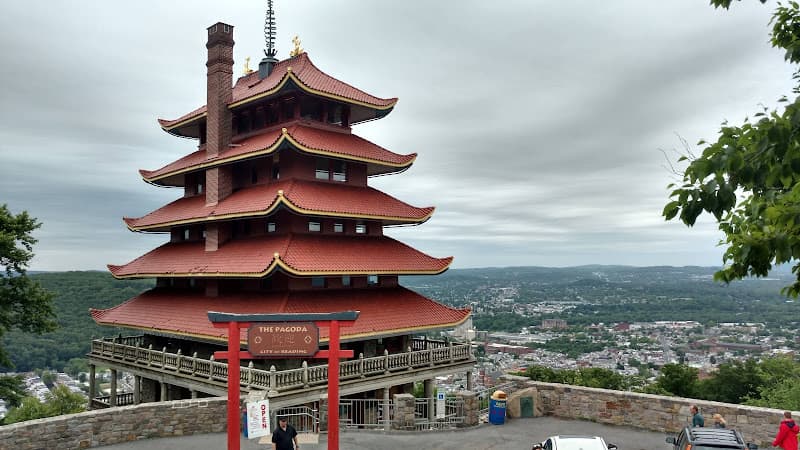
Travelers who stop to view the Reading Mural may wish to explore other attractions in the surrounding area. Reading and Berks County offer various points of interest, including the Pagoda, an iconic Japanese-style structure overlooking the city from Mount Penn that has served as a symbol of Reading since its construction in 1908. The region also features the Reading Public Museum, which combines art galleries with natural history exhibits and a planetarium.
The area surrounding Reading includes agricultural lands and rural communities characteristic of southeastern Pennsylvania. The region has historical connections to Pennsylvania Dutch culture, with influences visible in local architecture, cuisine, and traditions. Visitors interested in this heritage can explore nearby communities and attractions that highlight the area's cultural history.
For those interested in outdoor recreation, Berks County offers parks, trails, and natural areas suitable for hiking, picnicking, and nature observation. The Schuylkill River, which flows through Reading, provides opportunities for water-based activities and scenic views. The combination of cultural attractions, historical sites, and natural amenities makes the Reading area a destination with diverse appeal.
Practical Considerations for Visitors
When planning a visit to view the Reading Mural, travelers should consider typical factors associated with roadside attractions. Weather conditions can affect the viewing experience, with clear days providing optimal conditions for appreciating outdoor artwork. The quality of light at different times of day may also influence how the mural appears, with some visitors preferring morning or afternoon light for photography.
As with any stop along a state highway, visitors should prioritize safety when parking and exiting vehicles. Looking for designated parking areas or safe pull-off locations is advisable. Visitors should also be mindful of private property boundaries and view the mural from appropriate public spaces.
The Reading Mural represents one example of the public art that can be found throughout Pennsylvania communities. For travelers interested in mural art, the state offers numerous examples in cities and towns of various sizes, each reflecting the unique character and concerns of its location. Documenting visits to multiple murals can become an engaging activity for families or individuals who appreciate this accessible form of artistic expression.