How Discount Grocery Stores Work in Berks County
How salvage, closeout, hard-discount and bulk-food grocery stores in Berks County buy and price their stock, and what federal and Pennsylvania rules actually say about the dates printed on food.
A discount grocery store sells food the conventional supply chain could not move at full price, and the saving comes from how the store buys. Berks County has several different kinds of store working that model, and they are not interchangeable: a salvage grocer, a closeout grocer, a hard-discount chain, a bulk-food country store and a closeout general retailer are five different businesses. More grocery listings across the county live on our Berks County grocery stores page.
The other half of the question is the dates. Per the U.S. Department of Agriculture, in guidance last updated April 23, 2025, "Except for infant formula, product dating is not required by federal regulations."
Pennsylvania bans past-date sale of milk, pasteurized and raw, and the rest of the shelf is governed by whether the food is wholesome.
The kinds of discount grocery store in Berks County.
Here is what each one is, because the differences decide what ends up on the shelf.
| Kind of store | What it is | What that means for a trip |
|---|---|---|
| Salvage and surplus grocer | Buys salvage and surplus merchandise for resale, in its own words | A full grocery run with an assortment that moves between visits |
| Opportunistic closeout grocer | Buys order cancellations, manufacturer overruns and packaging changes, per its own filing | Brand names at closeout prices, plus non-food aisles |
| Hard-discount supermarket chain | A supermarket competing on price | Reviewers here describe low prices on everyday staples |
| Bulk-food country store | A country store selling pantry staples in large sizes | Flour, sugar, spices and other staples by the bag |
| Closeout general retailer | A general retailer selling closeout merchandise | A food aisle inside a store selling household goods |
Salvage and surplus grocers.
BB's Grocery Outlet describes itself on its own site as a discount grocery chain "started in 1986 on an Amish Farm in Lancaster County, PA" that specializes in "quality salvage and surplus merchandise." Its stores serve south central Pennsylvania, and the Morgantown one sits in Caernarvon Township.
Assortment is the trait to plan around. As one reviewer puts it: "Great variety, great prices, if you see something you like get it, it might not be there next time."
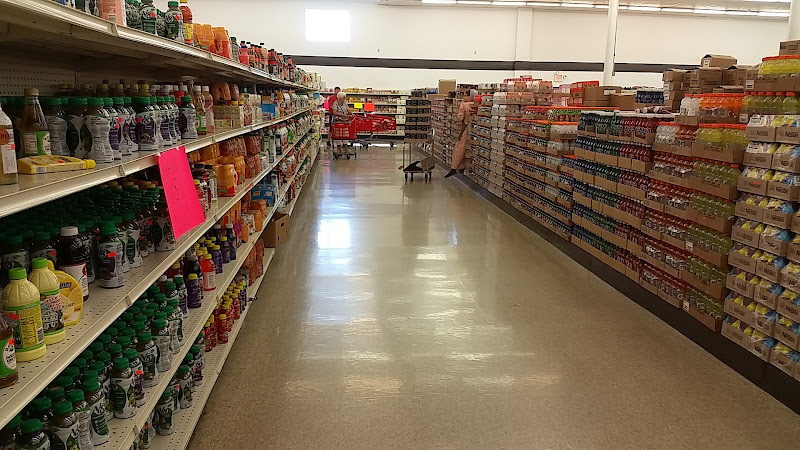
150 Morview Blvd, Morgantown, PA
Opportunistic closeout grocers.
A closeout grocer buys what a manufacturer could not sell through its usual channel and puts it out under the brand name. Grocery Outlet has a Shillington address and a store off North Fifth Street in Muhlenberg Township. One reviewer at the Shillington store calls it a discount grocery store with lots of other items at good prices, and another credits the owner with donating to a veterans' food bank.
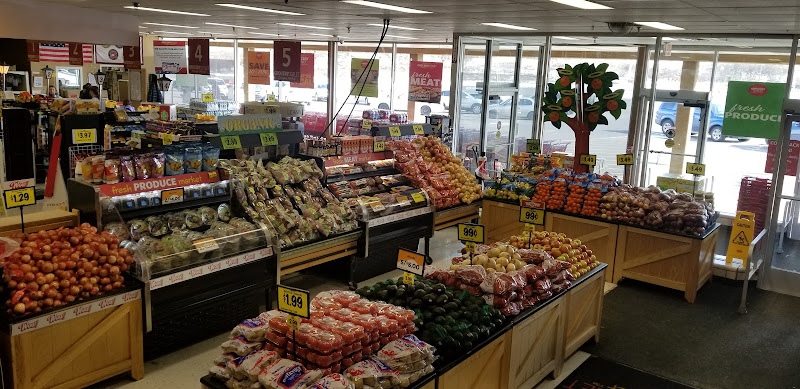
4200 Shillington Plaza, Shillington, PA
That second store is here too. Grocery Outlet
Hard-discount supermarkets.
Chain supermarkets that compete on price sit in the same conversation, and reviewers here describe low prices on everyday staples. ALDI operates Berks stores in Cumru Township, Muhlenberg Township and Exeter Township. ALDI ALDI ALDI
Lidl sits on Penn Avenue in Sinking Spring borough, and Price Rite Marketplace holds a North Sixth Street address, where one reviewer points to prices on pork shoulders, chuck roasts and seafood. Lidl Price Rite Marketplace of Reading
Bulk-food country stores.
This tier turns on quantity rather than closeouts.
Echo Hill Country Store, on Dryville Road in Richmond Township, sells bulk pantry goods and will assemble an order to size. One reviewer says the staff put together a 25-pound bag for them, and another calls the large bags of flour extremely competitive on price.
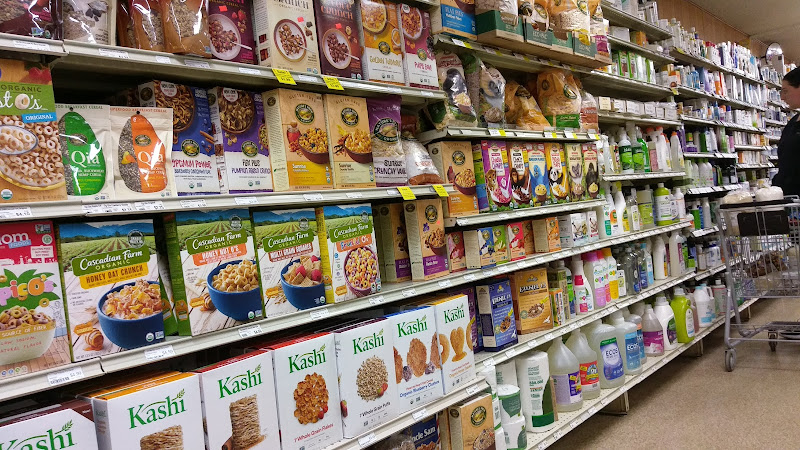
244 Dryville Rd, Fleetwood, PA
Meme's Chocolates & Bulk Foods holds a Woodland Road address, where one reviewer describes different types of flour, bulk packed spices and novelty candy. Meme's Chocolates & Bulk Foods
Closeout general retailers with a food aisle.
Ollie's Bargain Outlet, on Lancaster Pike in Cumru Township, sells closeout general merchandise, and one reviewer lists "everything from hair care to food to garden products to paint and rugs and toys and books." Ocean State Job Lot holds a Shillington Plaza address, and one reviewer describes a section of food where a $2 item earns a $2 credit toward the next purchase. Ollie's Bargain Outlet Ocean State Job Lot
Why discount grocery prices are lower.
The prices are lower because the buyer takes merchandise a manufacturer needs to move, in volume and on short notice. A publicly traded discount grocery chain lists the sources in its annual report to the Securities and Exchange Commission for the fiscal year that ended January 3, 2026: "order cancellations, manufacturer overruns, packaging changes and approaching 'sell-by' dates."
A Pennsylvania closeout grocery operator gives the same list in plainer words on its own site. Closeouts turn up, it says, because of "overproduction, packaging changes, seasonal items, warehouse damage, or short date codes." The same page states that the company operates under the same state and federal Department of Agriculture regulations as any typical grocery store.
Berks County is not among the seven Pennsylvania counties that have a county health department, so retail food licensing and inspection here runs through the state Department of Agriculture. The department's own guidance adds that some municipalities, boroughs, townships and cities handle that licensing and inspection themselves.
Some of that merchandise passes through a reconditioning step on the way. The same public company's supplier page lists services including strip and relabel and repack bulk product into consumer sizes, and it tells suppliers no product will reach another distribution channel without prior approval.
The size of the discount depends on the individual buy. That filing calls the chain's best opportunistic purchases "WOW!" deals and says they "generally represent deep discounts of 40% to 70% relative to conventional retailers."
That figure describes those particular deals, not a whole basket at the register.
What the dates on a package mean.
Per the USDA's Food Safety and Inspection Service, manufacturers apply dates "to help consumers and retailers decide when food is of best quality," and "Except for infant formula, dates are not an indicator of the product's safety and are not required by Federal law." The same guidance notes there are "no uniform or universally accepted descriptions used on food labels for open dating in the United States."
| Phrase on the package | What the USDA says it means |
|---|---|
| Best if Used By/Before | "indicates when a product will be of best flavor or quality. It is not a purchase or safety date." |
| Sell-By | "tells the store how long to display the product for sale for inventory management. It is not a safety date." |
| Use-By | "is the last date recommended for the use of the product while at peak quality. It is not a safety date except when used on infant formula as described below." |
| Freeze-By | "indicates when a product should be frozen to maintain peak quality. It is not a purchase or safety date." |
Two federal requirements sit outside that. The FDA requires a use-by date on infant formula, and the USDA says not to buy or use baby formula after that date. The USDA also requires a pack date on poultry and on thermally processed, commercially sterile products.
Penn State Extension, in material updated December 8, 2025, states it in one line: these dates "describe the quality of the food, not the safety."
Is it legal in Pennsylvania to sell food past the date on the package?
Yes, apart from milk. The USDA is direct about the general case: "Foods not exhibiting signs of spoilage should be wholesome and may be sold, purchased, donated and consumed beyond the labeled 'Best if Used By' date."
The Pennsylvania exception is milk, and it covers both kinds. Under 7 Pa. Code § 59a.15, "Pasteurized milk may not be sold or offered for sale after the sell by or best by date designated on the cap or nonglass container," and that date is capped at 17 days from the day the milk was pasteurized unless the Department approves a longer interval.
Raw milk is sold under permit in Pennsylvania, and it carries a rule of its own. Under 7 Pa. Code § 59a.411, "Raw milk may not be sold or offered for sale for human consumption after the sell by or best by date designated on the container."
Section 59a.15 carries its own exemptions, for ultrapasteurized, cultured and aseptically processed milk, for milk that has undergone HTST pasteurization and for milk sold where it was processed, each on the condition that the container carries a lot number or manufacturing date code the Department accepts.
The federal exception is infant formula. For everything else, the date stamp is not what the rules turn on.
What date confusion costs.
The USDA estimates that 30 percent of the food supply is lost or wasted at the retail and consumer levels, and it names date confusion as one source: people throwing away wholesome food because of confusion about what the label means.
In a joint USDA and FDA announcement dated December 3, 2024, the FDA's Deputy Commissioner for Human Foods said it has been estimated that confusion over date labeling terms accounts for about 20 percent of food waste in the home. The same release cites a USDA estimate that the average family of four spends at least $1,500 a year on food that goes uneaten.
That announcement was a request for information, not a rule.
Where to start in Berks County.
Match the tier to the trip. A salvage or closeout grocer suits a stock-up run where the list can flex, a bulk-food country store suits flour, sugar and spices in quantity, and the chain supermarkets suit a standard weekly list.
Two practical notes before a drive. BB's Grocery Outlet lists cash, check with a valid driver's license, debit and credit cards, and EBT among its payment options on its own site, and its stores are closed on Sunday. Hours and payment differ store to store, so check before you go.
More grocery listings across the county live on our Berks County grocery stores page, and the farm stands and roadside markets sit on their own Berks County farm stands and markets page.
Frequently asked questions about discount grocery stores in Berks County.
What is a salvage grocery store? A salvage or surplus grocer buys merchandise the conventional supply chain could not sell at full price and resells it. BB's Grocery Outlet, which has a store in Caernarvon Township, describes its own specialty on its website as "quality salvage and surplus merchandise."
Are the dates printed on packaged food safety dates? Per the USDA, no, with one exception: "Except for infant formula, dates are not an indicator of the product's safety and are not required by Federal law." Penn State Extension puts it the same way, that the dates describe quality rather than safety.
Can a Pennsylvania store sell food after the date on the package? Yes, apart from milk. 7 Pa. Code § 59a.15 prohibits selling pasteurized milk after the sell by or best by date on the cap or container, and 7 Pa. Code § 59a.411 prohibits selling raw milk for human consumption after the sell by or best by date on its container. The USDA says food not showing signs of spoilage "may be sold, purchased, donated and consumed" past a best-if-used-by date.
Which parts of Berks County have discount grocery stores? The stores in this post sit in Caernarvon, Cumru, Muhlenberg, Exeter and Richmond townships, in Sinking Spring borough, and at Shillington, Wyomissing and Reading addresses.
Do discount grocery stores in Berks County take EBT? It differs by store. BB's Grocery Outlet lists EBT among its payment options on its own site. Check with any other store before you shop.
Sources
- U.S. Department of Agriculture, Food Safety and Inspection Service, "Food Product Dating" (last updated April 23, 2025): the four date phrases, the infant-formula exception, the pack-date requirements, the statement that wholesome food may be sold past a best-if-used-by date, and the 30 percent food-loss estimate.
- 7 Pa. Code § 59a.15, "Labeling: milk dating": the prohibition on selling pasteurized milk past its sell by or best by date, the 17-day limit and the exemptions.
- 7 Pa. Code § 59a.411, "Label content review by the Department": the prohibition on selling raw milk for human consumption past the sell by or best by date on its container.
- Penn State Extension, "Are 'Best if Used-By' and 'Use-By dates' for Food Quality or Food Safety?" (updated December 8, 2025): that these dates describe quality rather than safety.
- U.S. Food and Drug Administration, "USDA-FDA Seek Information About Food Date Labeling" (December 3, 2024): the 20 percent home food-waste estimate, the $1,500 per family figure, and that this was a request for information.
- Grocery Outlet Holding Corp., Form 10-K for the fiscal year ended January 3, 2026: the sourcing list of order cancellations, overruns, packaging changes and approaching sell-by dates, and the 40 to 70 percent figure on the company's best opportunistic purchases.
- Grocery Outlet, "Distribution and Reconditioning": the reconditioning services and the prior-approval statement to suppliers.
- Sharp Shopper, "About Us": the plain-language list of why closeouts become available, and the statement about operating under the same state and federal Department of Agriculture regulations as any typical grocery store.
- BB's Grocery Outlet, company website: the 1986 founding on a Lancaster County farm, the salvage and surplus specialty, the Sunday closure and the payment options.
- Pennsylvania Department of Agriculture, "Retail Food": the list of Pennsylvania counties that have their own county health departments, Berks not among them, and the note that some municipalities, boroughs, townships and cities do their own licensing and inspection.