Pennie Open Enrollment for Berks County Residents
What Pennie is, who can use it, the open-enrollment dates and deadlines for 2027 coverage, how the savings are figured, what the metal tiers mean, and where Berks County residents get free help applying.

Pennie health insurance means the private plans you buy through Pennie, Pennsylvania's official marketplace, built mainly for people who live here and don't get coverage through a job, Medicare or Medicaid. It's also the only place to get the federal tax credit that lowers your monthly premium. Open enrollment for 2027 coverage runs November 1, 2026 through January 15, 2027, and if you enroll by December 15 your coverage starts January 1. Pennie says four out of five of its enrollees qualify for savings, free health insurance help in Berks County is a phone call away, and the doctors in Berks County page is where you'll find a practice once you're covered.
Who can use Pennie health insurance.
The premium tax credit is the federal credit that lowers your monthly premium; the government pays it to the insurer in advance, and you pay the rest. You have to be a U.S. citizen, national or lawfully present, live in Pennsylvania, and not be incarcerated.
If you're 65 or over, or on Medicare for a disability, you're on a different system with its own dates; the guide to Medicare plans in Berks County covers it. Pennie also checks first whether anyone in your household qualifies for Medical Assistance, which is Pennsylvania's name for Medicaid, or for CHIP, the children's program, and sends those applications to the Department of Human Services. That can mean the kids go to CHIP while the adults buy a Pennie plan. A Medicaid application in person goes to the Berks County Assistance Office, 625 Cherry Street, Reading, weekdays 8 a.m. to 5 p.m., 610-736-4211.
When you can enroll: open enrollment and life events.
Enroll by December 15, 2026 and coverage starts January 1, 2027; enroll December 16 through January 15 and it starts February 1. The dates have moved before, so check pennie.com first.
Outside open enrollment you can generally enroll within 60 days of a qualifying life event, which is Pennie's term for a change like these: losing coverage (a job plan, Medicaid, or a parent's plan at 26), marriage or divorce, a new baby, a move to a new ZIP code or into Pennsylvania, an income change that affects what you qualify for, leaving incarceration, or a new qualifying immigration status.
If you've lost a job, or know the date your plan ends, that's the life event: Pennie says to apply at least a week before the coverage ends. Your former employer may offer COBRA, which lets you keep the plan you had for a while, paying for it yourself; Pennie is the other option, and Pennie says it may cost less.
Open enrollment is open to anyone eligible, including people on COBRA, so a plan starting January 1 is yours to pick either way. If you've lost Medicaid, Pennie mails you an access code; pick a plan within 60 days. If you missed open enrollment with no life event, there's a route Pennie calls Path to Pennie: file form REV-1882 with your Pennsylvania tax return, and Pennie mails you a letter with an access code, a savings estimate and a 60-day window to enroll.
How Pennie figures your savings.
There are two kinds of savings, and both depend on your estimated household income. The advance premium tax credit lowers the monthly payment on the spot. Pennie figures it from the income you expect for the coming year and your household size, counting everyone whether or not they need coverage. It starts from the adjusted gross income line on your most recent federal return and asks you to adjust it for the year ahead; what to count when the year is uncertain, severance or self-employment included, is a question for an assister.
Cost-sharing reductions are extra savings that lower deductibles and copays. You have to pick a silver plan to get them, and the application says which savings you qualify for. If you take the credit in advance, you must file a federal return and settle up on Form 8962: if your income came in higher than you estimated, you pay the difference back.
So who qualifies? The credit goes to households inside an income band: from 100% up to 400% of the federal poverty line, the income figure the federal government publishes by household size. The 2027 credits use the 2026 guidelines, the ones in effect when enrollment opens. On those figures the band runs from $15,960 to $63,840 for one person, $21,640 to $86,560 for two, and $33,000 to $132,000 for a family of four.
Inside the band, the credit is set so that the second-lowest-cost silver plan where you live costs you a set share of your income, and the credit pays the rest of that plan's premium. The share rises with income on the 2027 scale: about 2.2% at the bottom of the band, around 6.8% at twice the poverty line, and a little over 10% from three times it up.
I can't tell you what your own household will get, and I won't guess. That question goes to a Pennie-certified assister or Pennie's customer service at 1-844-844-8040.
What changed in the credits and why you report income changes.
From 2021 through 2025 an enhanced version of the credit removed the 400% ceiling and, Pennie says, made coverage cheaper for its enrollees generally. It expired on December 31, 2025, and the regular credit remains. What people paid to keep the same plan doubled on average in 2026, by Pennie's count, because the credit shrank; the regular credit still cuts the bill for households inside the band, just by less. A separate step comes in 2027: the plans' own prices rise, by an average of about 16% across the individual market, as the state approved them. Your own premium is your plan's rate minus your credit.
The second change is about repayment. For 2026 and later there's no cap on repaying advance credits at tax time: if your income ends the year higher than you told Pennie, you owe the difference, and above 400% of the poverty line you repay all of it. So report income changes to Pennie when they happen.
What bronze, silver, gold and platinum mean.
The metal names describe how costs split between you and the plan, not the quality of care. Every tier covers the same ten categories of essential benefits, from doctor visits to prescriptions and preventive care.
| Plan category | The plan pays, about | You pay, about | Monthly premium |
|---|---|---|---|
| Bronze | 60% | 40% | Lowest |
| Silver | 70% | 30% | Moderate |
| Silver with cost-sharing reductions | 73% to 96% | 6% to 27% | Moderate |
| Gold | 80% | 20% | Higher |
| Platinum | 90% | 10% | Highest |
| Catastrophic | Preventive care and at least three primary care visits before the deductible; most services after it | Most costs until the deductible | Low |
The percentages are the federal marketplace's estimates of how covered costs split; your actual costs vary by plan.
Platinum is offered only in some parts of Pennsylvania, and a catastrophic plan, for people under 30 or those granted a federal hardship or affordability exemption, can't take a tax credit.
How to apply, and where free help is in Berks.
Start at pennie.com, where the savings calculator gives an estimate before you apply. Gather a photo ID, Social Security numbers, the last four weeks of pay stubs if you get a paycheck, immigration documents if any, and your most recent tax return. Once you pick a plan, pay the first month's premium, called the binder payment, to the insurance company, or the coverage doesn't start. Customer service is 1-844-844-8040, with chat in English and Spanish, and Pennie posts its hours at pennie.com.
Pennie-certified assisters give free, unbiased help with the application and the savings, in person, by phone or by video; schedule one at pennie.com/find-local-help in English, Spanish or Chinese. Assisters can't tell you which plan to pick; Pennie-certified brokers can. Here's the free help in Berks.
| Where | What they do | How to reach them |
|---|---|---|
| Pennie-certified assisters | Free, unbiased help understanding options, completing the application and connecting to savings, in person, by phone or by video | Schedule at pennie.com/find-local-help, or call 1-844-844-8040 |
| Berks Community Health Center insurance assisters | Free Pennie help during open enrollment and after a life change; Medical Assistance and CHIP applications through the state's online application | Outreach Department, 610-988-4838 ext. 1211 |
| Pennsylvania Health Access Network | Free statewide help understanding and applying for coverage | Call or text 877-570-3642 |
| Pennsylvania Health Law Project | Help if you lost Medicaid or think a coverage decision was wrong | 1-800-274-3258 |
| Berks County Assistance Office | Medical Assistance applications in person, 625 Cherry Street, Reading, weekdays 8 a.m. to 5 p.m. | 610-736-4211 or 1-866-215-3912 |
For a sit-down appointment in Berks, Berks Community Health Center's insurance assisters are where you go, for Pennie and for Medical Assistance and CHIP applications.
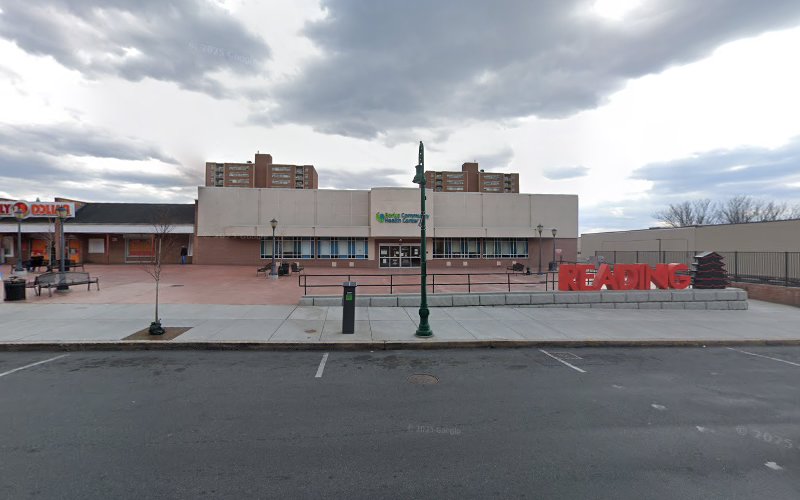
838 Penn St, Reading, PA
Once you're covered, the doctors in Berks County page lists practices with reviews, hours and contact info, and the guide to healthcare providers in Berks County walks through finding a primary care doctor. If you can't get coverage or afford it, the county's free and sliding-fee clinics in Berks County are still there. Pick a day before December 15, gather the papers, and apply; if your coverage ends before then, apply now under the 60-day window instead of waiting.
Frequently asked questions.
What if I miss the January 15 deadline?
You can still enroll within 60 days of a qualifying life event such as losing coverage, marriage, a baby or a move. With no event, Path to Pennie (form REV-1882 with your Pennsylvania tax return) gets you a 60-day window.
Can I use Pennie if my job offers insurance?
You can buy a plan either way, but the credit depends on the job's offer. In Pennie's words, if the job's coverage is too expensive or doesn't meet minimum value standards, you may still get the credit; if the job's coverage is affordable, you may not.
What if I'm denied Medicaid under the new work requirements?
From January 1, 2027, Medicaid work and community engagement requirements apply to adults 19 to 64 who have no dependent child under 14 and no exemption. Pennie says someone denied Medicaid for not meeting them will not be eligible for financial savings through Pennie, only full-price plans.
Sources
- Pennie, "About Pennie" and "Frequently Asked Questions" (read October 2026): what Pennie is, who can enroll, the open-enrollment dates and cutoffs, the two kinds of savings, four out of five enrollees, metal levels, catastrophic plans, the Medicaid check.
- Pennsylvania Health Law Project, "Pennie Open Enrollment: What's Changing for 2027 Coverage" (August 28, 2026): the 2027 dates with their years, the helpline, why dates can move.
- Pennie, "Pennie's Final Enrollment Deadline Is Approaching" (January 22, 2026): last season's extension to January 31.
- Pennie Help Center, "Qualifying Life Event (QLE)", "COBRA and Pennie", "Loss of Medical Assistance Coverage" and "Path to Pennie" (read October 2026): special enrollment, the 60-day windows, the access code, form REV-1882.
- Pennie, "How to Enroll" and Pennie Help Center, "Binder Payment": financial savings basics, what to gather, the first premium.
- Pennie, "What's New" (costs) (read October 2026): the enhanced credits' expiration, premiums doubling on average in 2026, reporting income changes.
- IRS, "Questions and Answers on the Premium Tax Credit" (updated February 19, 2026), "Eligibility for the Premium Tax Credit" and Revenue Procedure 2026-26 (PDF): the 100% to 400% band, the end of the repayment cap after 2025, the 2027 applicable percentages, which year's guidelines apply.
- U.S. Department of Health and Human Services, 2026 poverty guidelines: the dollar figures by household size.
- Pennsylvania Insurance Department, "Pennsylvania Releases ACA 2027 Health Insurance Rates": the 15.97% average individual-market increase for 2027.
- HealthCare.gov, "Health plan categories" and "Catastrophic health plans": the metal-tier percentages and catastrophic eligibility.
- Pennie, "Find Local Help" and "Connect": assisters and brokers, scheduling, customer service phone, chat and hours.
- Berks Community Health Center, "Insurance Assisters" (read October 2026): free Pennie help, the open-enrollment window, Medical Assistance and CHIP through COMPASS, the appointment line.
- Pennsylvania Health Access Network, "Get Help": the free helpline.
- Pennsylvania Department of Human Services, "Medicaid General Eligibility", "Changes Coming to Medicaid in Pennsylvania" and the county assistance offices page (read October 2026): the 133% line, the January 2027 work requirements, the Berks office's address, hours and phones.