Frozen Pipes in Berks County: Prevention and When One Bursts
How to keep Berks County pipes from freezing tonight, how to thaw one safely, where the main shutoff is in an old rowhome, and what a plumber charges.
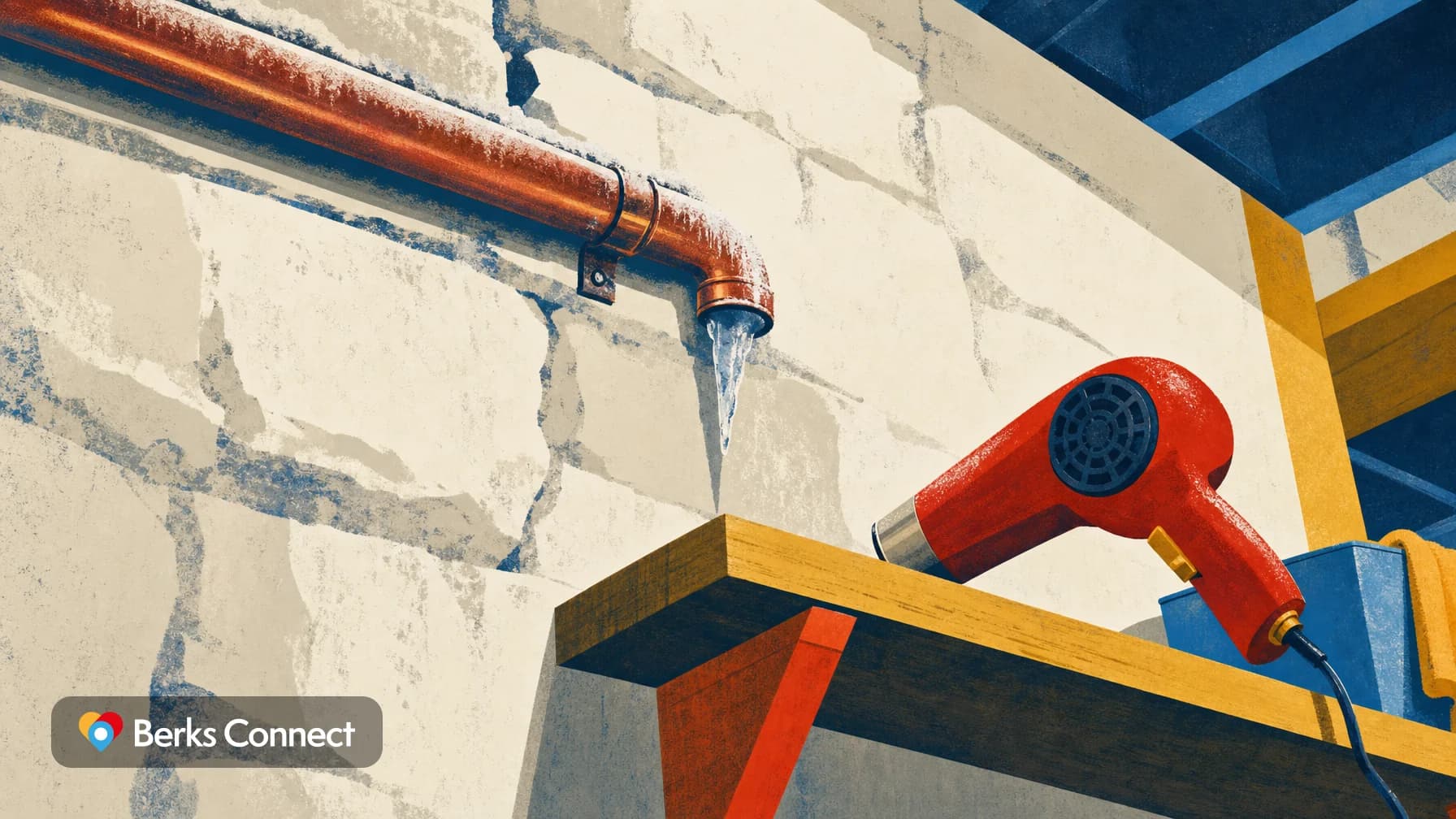
What to do about frozen pipes depends on when you're reading this. If the cold hasn't hit yet, tonight's job is short: disconnect the garden hoses, open the cabinet doors under sinks on outside walls, keep the heat steady, and let cold water trickle from the faucets fed by exposed pipes, the ones on outside walls or in unheated spaces. If a faucet gives you nothing, or only a dribble, leave it open, close the main shutoff, and warm the pipe with a hair dryer, never a flame. If water is coming through the ceiling, shut the main first and everything else after, then call a plumber from the county plumbers page.
How cold a Berks County winter gets, and why pipes freeze here.
Reading averages 108 days a year at or below freezing and about 33 at or below 20. Heating systems here are built to handle an 8-degree night, and the last two winters both went colder than that: 7 below in January 2025 and 1 below in January 2026. Reading's winter, in numbers, looks like this.
| Reading's winter | Figure |
|---|---|
| Days a year at or below 32 degrees | 108 |
| Days a year at or below 20 degrees | 33 |
| Nights below zero | about one every other winter |
| Average January low | 23 degrees |
| Temperature heating systems are sized for | 8 degrees |
| Coldest on record | 14 below, January 21, 1994 |
| Coldest of the last two winters | 7 below (January 2025), 1 below (January 2026) |
| Longest recent stretch with highs at or under 26 | nine days, January 24 to February 1, 2026 |
The day counts are thirty-year averages for the Reading area; the 8-degree figure is the design temperature for Berks County.
The number to watch on that table is 20. Tests on bare pipes in an unheated attic found ice forming once it fell to 20 outside, and a pipe with cold air blowing on it through a crack in a wall can freeze at warmer temperatures than that, so the number matters less than whether cold air is reaching the pipe. A forecast low in the teens is the night to act.
Where pipes freeze in a Berks house.
The pipes that freeze are the ones the heat doesn't reach: outdoor hose bibs and irrigation lines, supply pipes in unheated basements, crawl spaces, attics and garages, the pipes under a sink on an outside wall, and where the service line comes through the foundation. In Reading and West Reading, where more than half the homes date from before 1940, the sink on an outside wall is on that list.
If you own apartments, watch the sprinkler pipes. The standard only requires 40 degrees around a sprinkler system with water standing in its pipes, eight degrees above freezing, and that's easy to slip under. In February 2026, after a week below freezing, Reading's fire department answered alarm after alarm from sprinkler pipes that had frozen, then thawed and broke, one of them shutting the sprinklers off for a whole apartment building. Pipe material matters less than heat and insulation: even the flexible plastic supply pipe is freeze-resistant, not freeze-proof.
How to prevent frozen pipes before the cold snap.
Most of this is a walk around the house on the afternoon the forecast turns. The drip at the end of the list works because of how a pipe bursts. An ice plug forms, the water caught between the plug and a closed faucet gets squeezed, and the pipe splits there, often nowhere near the ice. An open faucet lets that pressure out, and a pipe open at one end can't burst.
- Disconnect and drain every garden hose, close the inside valve to each outside faucet if there is one, and open the outside faucet so it drains.
- Wrap exposed pipes in foam sleeves or heat cable (the same product is sold as heat tape).
- Open the cabinet doors under sinks on outside walls, and keep garage doors closed.
- Keep the thermostat at one setting day and night.
- When it's very cold, let cold water trickle from the faucets fed by exposed pipes.
- Away in winter, set the heat no lower than 55; away more than a week in subfreezing weather, shut the main and open every faucet, hot and cold, until the lines run dry.
Heat tape, an electric cable that warms the pipe it lies on, causes fires when it's faulty. Use tape certified by a testing lab, plug it into a GFCI outlet, the ground-fault kind, lay it flat on the pipe and never inside a wall, then cover it only with the insulation the maker's instructions allow.
The winter services guide for Berks County carries the rest of the seasonal list, and if the heat itself quits on the coldest night, open the post on a furnace that won't turn on first.
Frozen pipes: what to do first, and how to thaw one safely.
No water pressure in the morning and under 20 outside? Assume a frozen pipe. The first move is closing the main shutoff, because a pipe that cracked while frozen leaks the moment it thaws. Master Plumbing Services in Fleetwood says the same: a frozen line often bursts after the thaw, so the water gets shut off before it warms up.
51 Lyons Rd, Fleetwood, PA
Then work through this list.
- Open the faucet and leave it open.
- Find the frozen stretch: exterior walls, where the water comes in, under sinks.
- Warm it with a hair dryer on low, a heating pad, towels soaked in hot water, or a space heater kept away from anything flammable, working from the faucet end back toward the wall. Never a torch, a propane or kerosene heater, or any open flame.
- Keep the dryer on low, since a hair dryer thawing a pipe in a Douglassville apartment set the pipe's insulation on fire in January 2018. Stand out of any water and use a GFCI outlet.
- Warm it for a while, then open the main slowly with the faucet still open. Water flowing means it's thawed; a drip at a joint means a crack, so shut the main again and call.
- Check every other faucet; one frozen pipe may have company.
If you can't find it or reach it, call a plumber; thawing is a job plumbers do. One reviewer had the Fleetwood plumber there within the hour on one of the coldest days of the year.
When a frozen pipe bursts: shut the main first, everything else after.
The main valve is near the meter or where the pipe comes through the foundation. In a pre-1960 rowhome or twin around Reading, Shillington, Kenhorst and Wyomissing, that means the basement, on the front wall nearest the street, within a few feet of where the line comes in.
A round wheel handle is a gate valve: turn it clockwise several full turns. A lever is a ball valve: a quarter turn. JB Plumbing HVAC in Reading gives its emergency callers the same directions, and one more rule: don't take a wrench to a gate valve that won't move, because it can crack. Shut the valve nearest the leak instead if there is one (every toilet, sink and appliance has its own), and call your water authority, whose number is on your bill, to close the curb stop, the valve at the street that only the authority may touch.
Once the water is off, do the rest in this order.
- Open the faucets to drain the lines.
- Switch off the water heater so it can't overheat with the water off: an electric one at the breaker, a gas one by turning its dial to pilot or off.
- Stay out of water that's near the panel, outlets or appliances.
- Take photos before you clean anything up, then call the plumber.
A frozen meter is the owner's bill, not the utility's: Reading Area Water Authority holds the property owner responsible for it, Muhlenberg Township Authority lists a $65 frozen meter charge, and Pennsylvania American Water's tariff says the customer protects the meter from frost. So the meter gets the same treatment as the pipes: keep the cold off it.
What a plumber charges to thaw or repair a pipe in Berks County.
As of 2026, thawing a frozen pipe is often a flat fee of about $100 nationally; repairing a burst pipe averages $500 and runs $200 to $3,000, mostly labor, and an emergency call-out adds $100 to $300. Berks companies price the emergency part differently: some charge nothing extra for nights and weekends, others add an after-hours or callout charge and say so before they dispatch. Ask when you call; our post on what plumbers charge per hour in Berks County covers after-hours pricing, and the guide to hiring a plumber in Berks County covers what an emergency plumber costs.
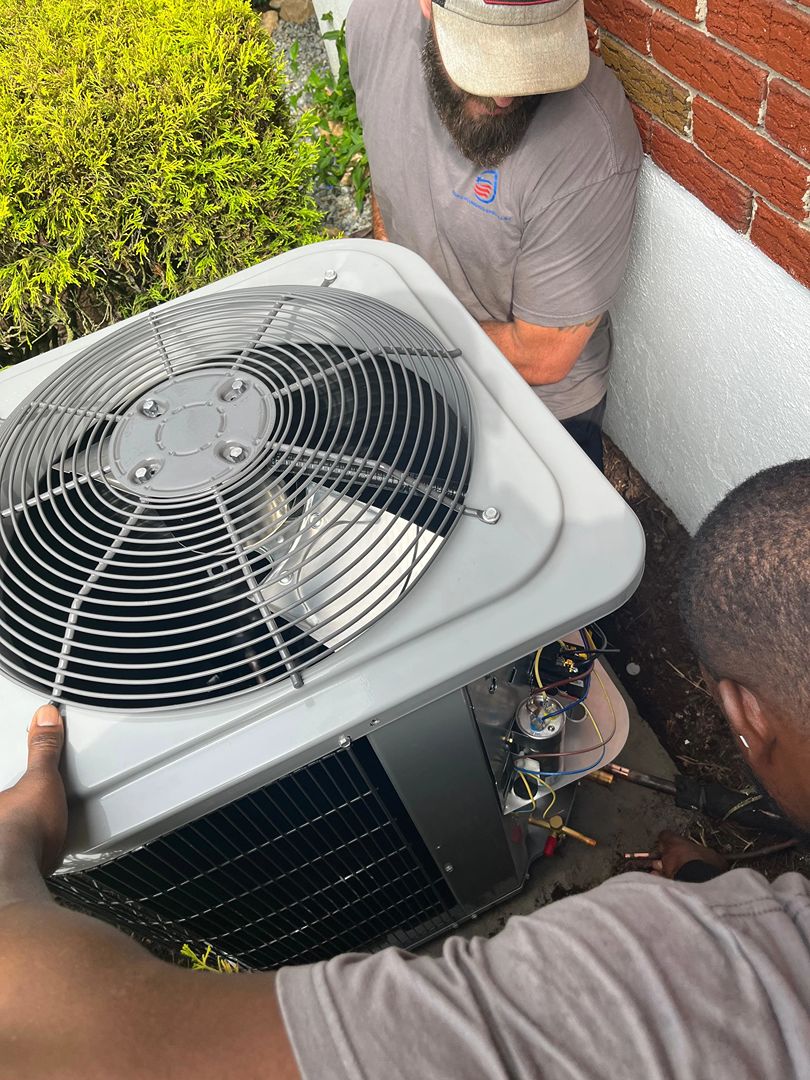
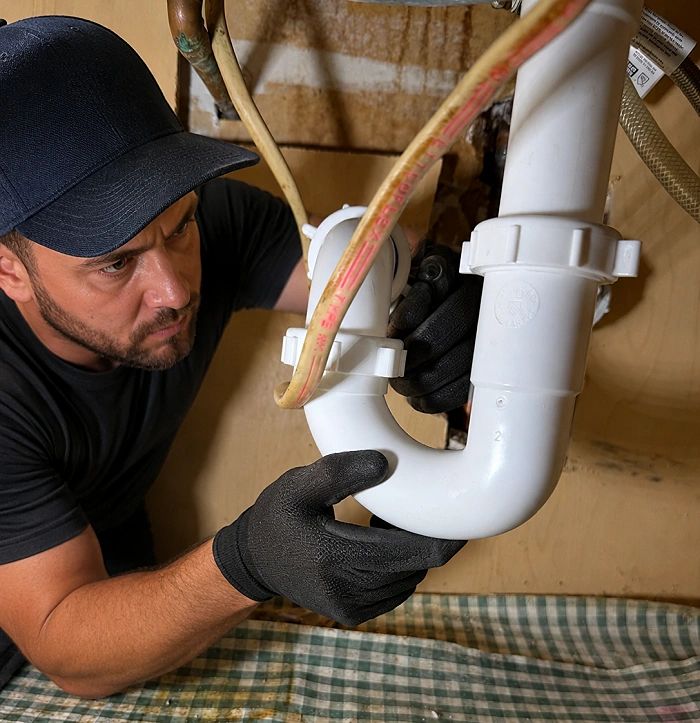
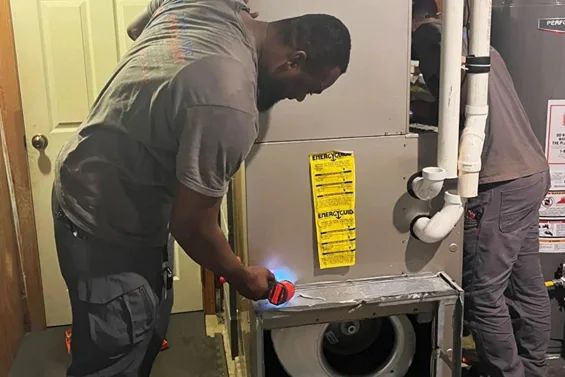
Berks Plumbing & HVAC Specialist in Reading, sixty years in the county, thaws frozen pipes, repairs burst ones, and quotes in writing on site. Its first instruction to a caller matches this post's: shut off the water, and never use an open flame.
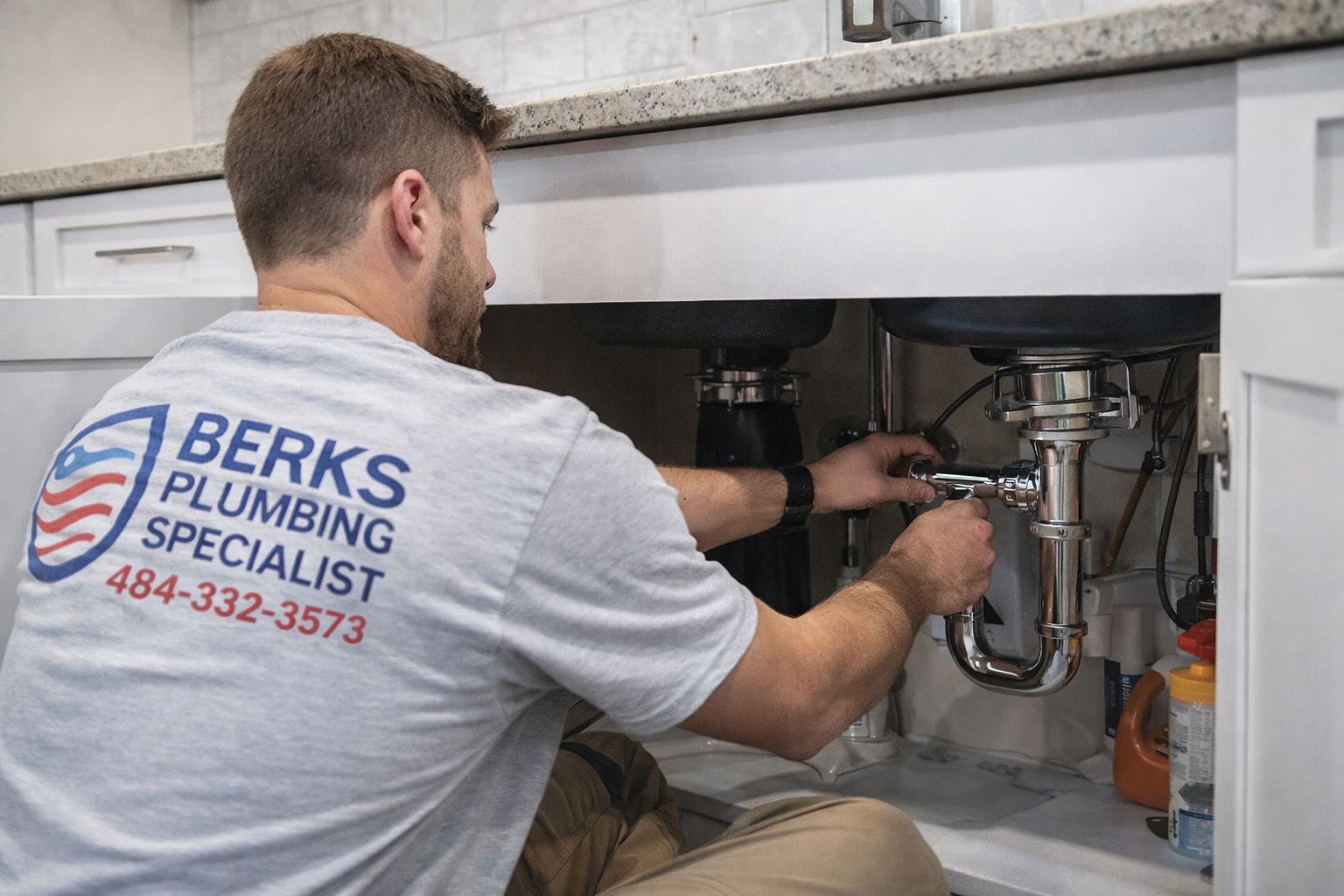
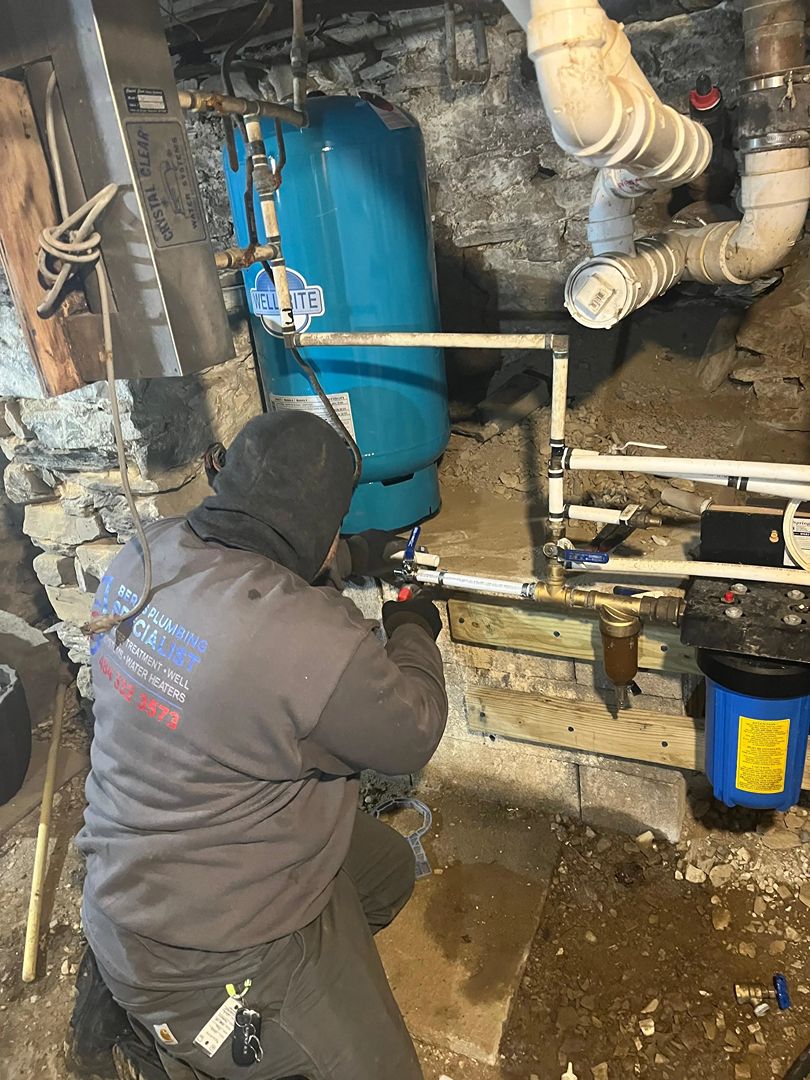
201 East Bellevue Avenue, Reading, PA
The county plumbers page is where I'd start, tonight if a pipe is frozen and you can't reach it, and this afternoon if the forecast is in the teens. Then go disconnect the hose.
Frequently asked questions about frozen pipes in Berks County.
At what temperature do pipes freeze?
Any time it's below 32, if cold air is reaching the pipe; an exposed pipe can freeze within hours. The tested threshold for bare pipes in an unheated space is 20 degrees outside, and plumbers see the burst calls come in the teens, which is why a forecast in the teens is the night to act.
Does homeowners insurance cover frozen pipes?
A standard Pennsylvania homeowners policy covers freezing of plumbing and the water it releases, with one condition: if you hadn't used reasonable care to keep the heat on, or to shut off the water and drain the system, the freezing loss isn't covered.
Should I let my faucets drip?
Yes, when it's very cold, from the cold tap at any faucet fed by an exposed pipe. It gives the pressure a way out, and that's also why the faucet stays open while you thaw.
Sources
- NOAA Regional Climate Centers, Applied Climate Information System, Reading Area threaded record (RDGthr), 1991-2020 normals and daily data: the freeze-day averages, the January low, the record low of January 21, 1994, the January 2025 and 2026 lows and the nine-day stretch; with ENERGY STAR, Design Temperature Limit Reference Guide (2019), Berks County row: the 8-degree heating design temperature.
- Institute for Business and Home Safety, "Freezing and Bursting Pipes": the 20-degree threshold from the University of Illinois Building Research Council tests and the plumber survey, why a pipe bursts away from the ice, the pressure-relief reason for the drip, the drain-down procedure; with IBHS release (Nov. 14, 2024): 55 degrees when away, and shutting the main and draining when away more than a week.
- American Red Cross, "Preventing & Thawing Frozen Pipes": where pipes freeze, the prevention list, and the thawing steps (faucet open, hair dryer, heating pad, hot towels, space heater, no open flame, call a licensed plumber, check the other faucets).
- Borough of Kutztown, "Preventing Frozen Water Pipes and Meters": pipes and meters can freeze within hours of sub-freezing weather, the shutoff-valve advice, and the pipes most likely to freeze.
- JB Plumbing HVAC, "Plumbing Emergency in Reading PA: What to Do Right Now" (Sept. 12, 2026): the main valve on the front basement wall of pre-1960 rowhomes and twins, gate versus ball valves, never forcing a stuck valve, the valve nearest the leak, the curb stop belonging to the authority, the 20-degree rule of thumb, the low-heat hair dryer and GFCI outlet.
- Pennsylvania American Water, "Urges Customers to Be Prepared during Sub-Freezing Weather" (Jan. 28, 2026): the main shutoff near the meter or where the pipe enters, quarter-turn ball valves and clockwise gate valves, shutting the main before thawing, and turning the water back on slowly; with Pennsylvania American Water tariff, Supplement No. 63, § 5.1: the customer protects the meter from frost.
- Master Plumbing Services, "The Most Common Emergency Plumbing Calls We Get Each Winter in Kutztown" and "What to Do Before Calling an Emergency Plumber": a frozen line often bursts after the thaw, shut the water before it warms, switch off the water heater (breaker, or pilot or off), take photos before cleanup; with the company's directory reviews for the within-the-hour frozen pipe call.
- Muhlenberg Township Authority, Schedule of Rates and Charges (Nov. 2023) and Rules, Standards and Specifications (Nov. 2023): the $65 frozen meter charge, and curb stops for the Authority's exclusive use.
- Reading Area Water Authority, FAQ: the property owner is responsible for the meter; only Authority personnel may operate the curb stop.
- WFMZ, "Thawing out: Firefighters combat burst water pipes" (Feb. 4, 2026): the Reading fire marshal on frozen sprinkler pipes, the 40-degree standard, and the North 11th Street apartment building.
- U.S. Census Bureau, ACS 2020-2024 five-year estimates, table B25034, Berks County subdivisions: more than half of Reading's and West Reading's housing built in 1939 or earlier.
- U.S. Consumer Product Safety Commission, heat tape guidelines (Jan. 22, 1996) and CPSC, "Have Heat Tapes, Cables Checked for Fire Hazards": fires from faulty heat tapes, certified tape, the GFCI outlet, tape on the pipe and never over itself; with Frost King, heat cable support page: never inside walls, floors or ceilings; insulation over the cable only as the instructions allow.
- Plastics Pipe Institute, TR-52, "Resistance of Crosslinked Polyethylene (PEX) Pipe and Tubing to Breakage when Frozen" (2026 edition): PEX usually expands rather than breaks, and should never be intentionally subjected to freezing; with Uponor FAQ: "freeze resistant", not freeze-proof.
- Reading Eagle, "Effort to thaw pipes with a hair dryer causes fire in Douglassville" (Jan. 2, 2018): heat from the dryer ignited the insulation on the pipe.
- HomeAdvisor, "Burst Pipe Repair Cost" (updated June 20, 2026): the $100 thawing flat fee, the $500 average and $200 to $3,000 range, labor as most of the bill, and the $100 to $300 emergency call-out; the figures are current as of 2026.
- Roto-Rooter, Reading, PA, Freedom Plumbing and Drain, contact page and JB Plumbing HVAC, Reading service page: the Berks after-hours pricing practices described without names.
- Berks Plumbing & HVAC Specialist, "Frozen Pipes Plumber in Reading, PA": thawing and burst repair, the written on-site quote, and its first instruction to shut off the water and never use an open flame.
- Pennsylvania Insurance Department, "Your Guide to Homeowners Insurance": freezing losses covered subject to the reasonable-care limitation; with ISO Homeowners 3 Special Form, HO 00 03 05 11, Peril 14: the reasonable-care condition (maintain heat, or shut off and drain) on every freezing loss in the standard form.