Low Water Pressure in a Berks County House: City or Well
Why the water went weak in a Berks County house, on city water or a well: screens, pipes, the regulator, the pump and tank, and what a well pump costs.
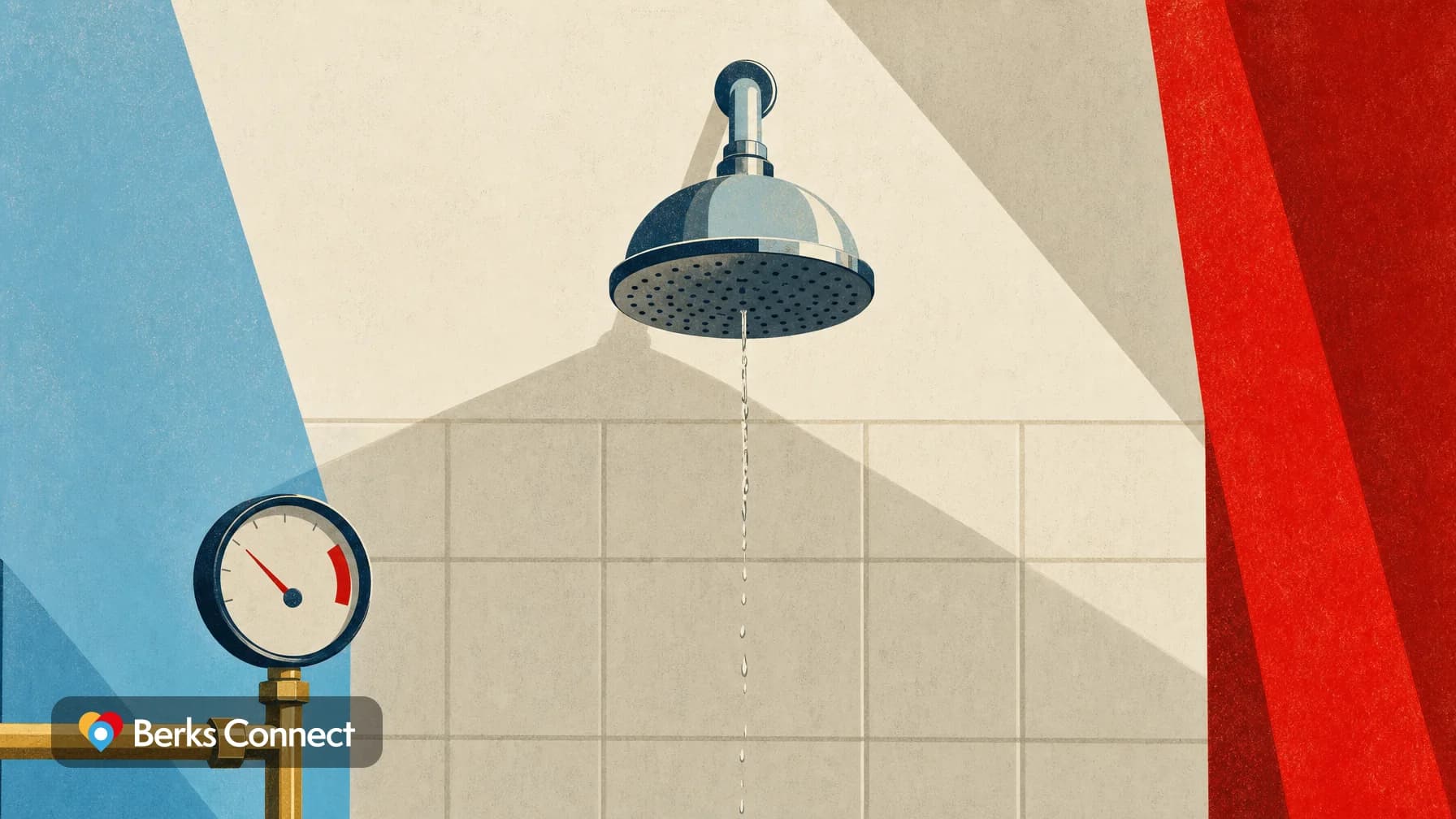
Low water pressure in a house comes from one of three places: the fixture you're standing at, the pipes and valves between the street and that fixture, or, if you're on a well, the pump and tank that make the pressure. Where the water is weak tells you which one. So notice whether it's one shower, hot only, or the whole house, try the cheap fixes below, and leave the rest to a plumber from our county plumbers page.
If one faucet or shower is weak and the others are fine, the problem is right there: a clogged screen at the tip of the faucet (the aerator), a showerhead packed with scale, or a worn-out faucet. If hot is weak and cold is fine, the trouble is on the hot side: scale in the water heater or the hot lines, which builds faster in hot water. That one is a plumber's job, and our post on water heater replacement cost in Berks County covers when the tank itself is the problem.
If everything is weak, hot and cold, the trouble is the supply into the house or the pipes before the first fixtures: the street pressure itself, undersized piping at the meter, a kink, pipes clogged from the inside, or a valve that's only partly open.
Low water pressure in the shower, and the screens and valves to check first.
The Great Valley, which runs through Berks, is floored with limestone and shale, and limestone makes hard water: wells in that rock average about 280 milligrams per liter of hardness, which counts as very hard, and one public system east of Reading measures 15.9 grains per gallon, very hard on the standard scale. Hardness leaves scale in pipes, aerators and showerheads, and the flakes break loose after a water main break or hydrant flushing, so a shower that went weak right after crews were on your street probably has a screen full of grit.
The fix costs nothing. Unscrew the aerator and rinse it; take the showerhead off and soak it in white vinegar. In Mount Penn, the water authority tells customers to check the faucet screens for particles after hydrant flushing. Then, if your meter is inside the house, find the two shutoffs at it, one on the street side and one on the house side, and make sure both are fully open; a valve half-closed during a repair will starve the whole house; on a well, skip this step.
A leak, old galvanized pipe or a softener can starve the whole house.
If the screens are clean and the house is still weak everywhere, think leak first. Read your meter, use no water for two hours, and read it again; if it moved, water is leaving somewhere. On a well there's no meter, so the pump is your meter: shut every tap and listen. The pump shouldn't run at all with the house quiet; if it does, the tank has lost its air charge or a check valve or foot valve down in the well isn't holding, and that's a well contractor's call. A leak on your side of the meter is a licensed plumber's job, not the water company's.
Then the pipe itself. Old galvanized steel supply pipe rusts and collects minerals on the inside, lasts about 20 to 50 years, and when it's clogged you get low flow through the whole house and rust-colored water. More than a quarter of Berks homes, and more than half of Reading's, were built before 1940, old enough that the original steel supply pipe may still be doing the work.
Then the softener. If the pressure dropped after a softener went in or was serviced, put it in bypass, the valve setting that routes the water around the softener; if the pressure comes back, the restriction is inside the softener.
What a pressure regulator does, and how a failing one shows up.
A pressure regulator (a plumber may say pressure-reducing valve) knocks the street's pressure down before it reaches your pipes. Pennsylvania's residential code caps pressure inside a house at 80 psi and requires one wherever the main delivers more. Pennsylvania American Water, for one, puts the regulator on the customer's side and recommends one if pressure consistently reaches 100 psi or more.
So is the regulator why your shower is weak? It's built so that when it fails it stays open and lets full street pressure through, and it comes with a strainer that can clog; a plumber checks it with a gauge.
Low water pressure in a house with a well: how the pump, tank and switch make pressure.
More than a third of Berks County's people, about 153,000 in the 2015 federal count, get their water from their own wells and springs, and Pennsylvania has no statewide construction standard for private wells, which puts the well and everything on it in the owner's hands. The guide to hiring a plumber in Berks County has a section on well water in the rural townships.
The pump fills a pressure tank that holds a cushion of air, and the air pushes water out to the faucets. A pressure switch turns the pump on when the tank drops to a low setting, usually 30, 40 or 50 psi, and off again 20 psi higher.
Only about a fifth of the tank is water you can draw before the pump has to start again, which is why the pump runs so often during a long shower. The switch settings are for a licensed well contractor to adjust. The driller's completion report, which the state requires, shows where the well is, how it was built, and how many gallons a minute it gave. If you don't have it, the state keeps drillers' reports in its groundwater records, and a well contractor can look yours up.
What the well symptoms mean, from a pressure switch that clicks to a shower that fades.
A pump that clicks on and off every few seconds is a tank that has lost its air (a waterlogged tank), and that short cycling wears out the pump. No water at all is most often a worn-out submersible pump or a failed switch.
Water that runs fine and then fades during a long shower or a load of laundry is a different symptom. That's the water level in the well dropping below the pump. Most well problems show up in late summer or early fall, when groundwater is at its lowest, and a bigger tank won't fix this one.
Most homes need about 6 gallons a minute, but a well that gives only 1 gallon a minute still makes 1,440 gallons a day. The well makes enough in a day, just not fast enough in a minute, so the fix is storage: a second holding tank with its own pump, sized at about 100 gallons per person, typically under $1,500 installed. Lowering the pump is a short-term fix, deepening the well is never a guarantee, and some Berks well companies install constant-pressure systems, which hold the pressure steady instead of letting it swing between pump cycles.
What well pump replacement costs, and who to call.
Nationally, as of 2026, replacing a well pump runs $976 to $2,825 and averages about $1,898; the table breaks that into parts.
| The job | National range | Typical |
|---|---|---|
| Replace a well pump (whole job) | $976 to $2,825 | $1,898 |
| Submersible pump, unit only | $275 to $1,550 | |
| Shallow jet pump, unit only | $230 to $1,000 | |
| Deep-well jet pump, unit only | $440 to $1,200 | |
| Labor to replace a pump | $250 to $1,000 | |
| Repair a well pump (whole job) | $373 to $1,624 | $974 |
| Pressure switch, installed | $120 to $175 | |
| Control box, installed | $200 to $500 | |
| Pressure tank replacement | $800 to $3,800 | |
| Permit | $50 to $200 |
The rows come from one national cost guide; labor and the pump are separate rows, and a full job adds them together.
A full job here runs higher: one Fleetwood company publishes $3,600 to $4,200 to install a new well pump, priced after an inspection. A house call is $100 to $150, and after-hours labor rates run about double; our post on what plumbers charge per hour in Berks County covers that fee.
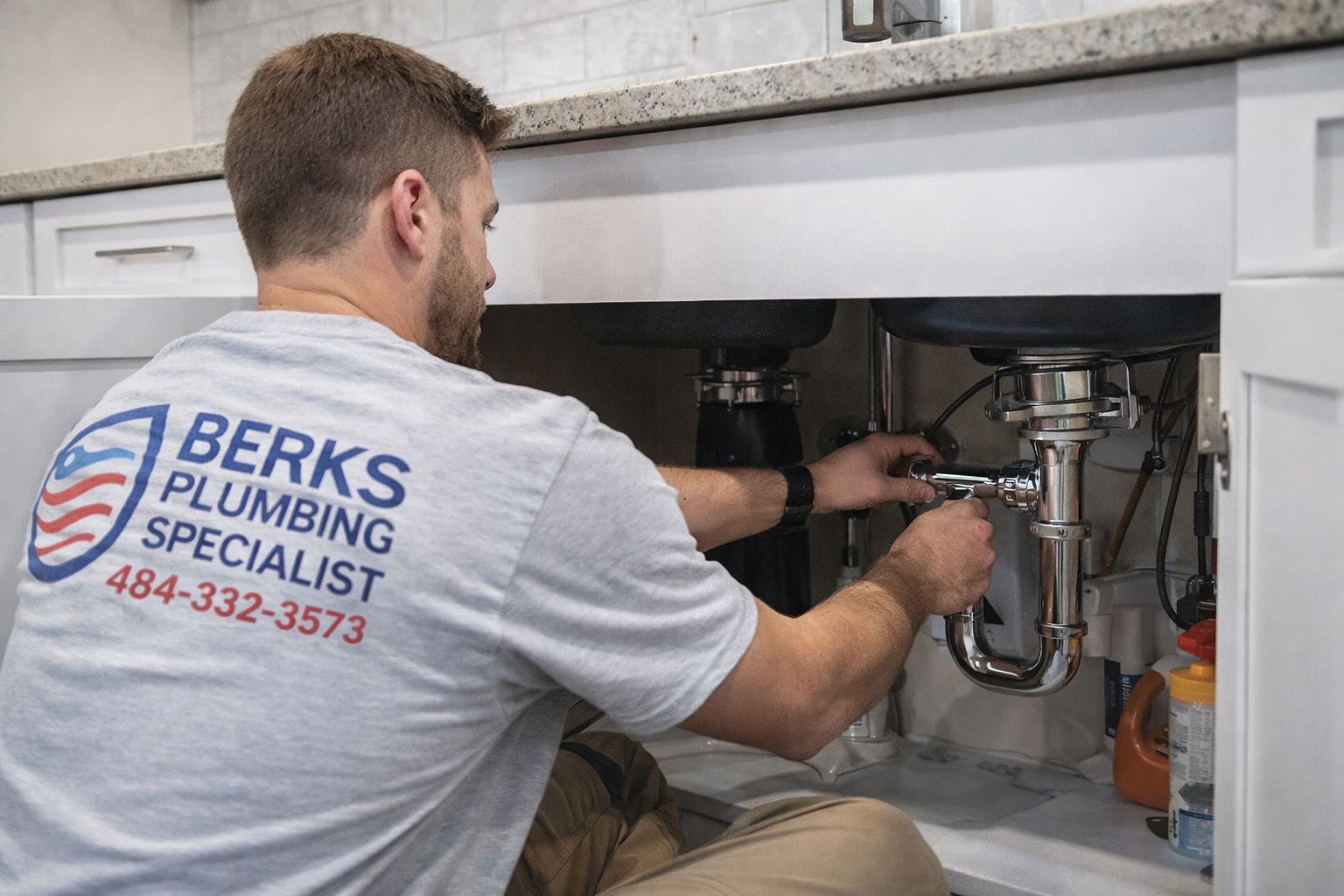
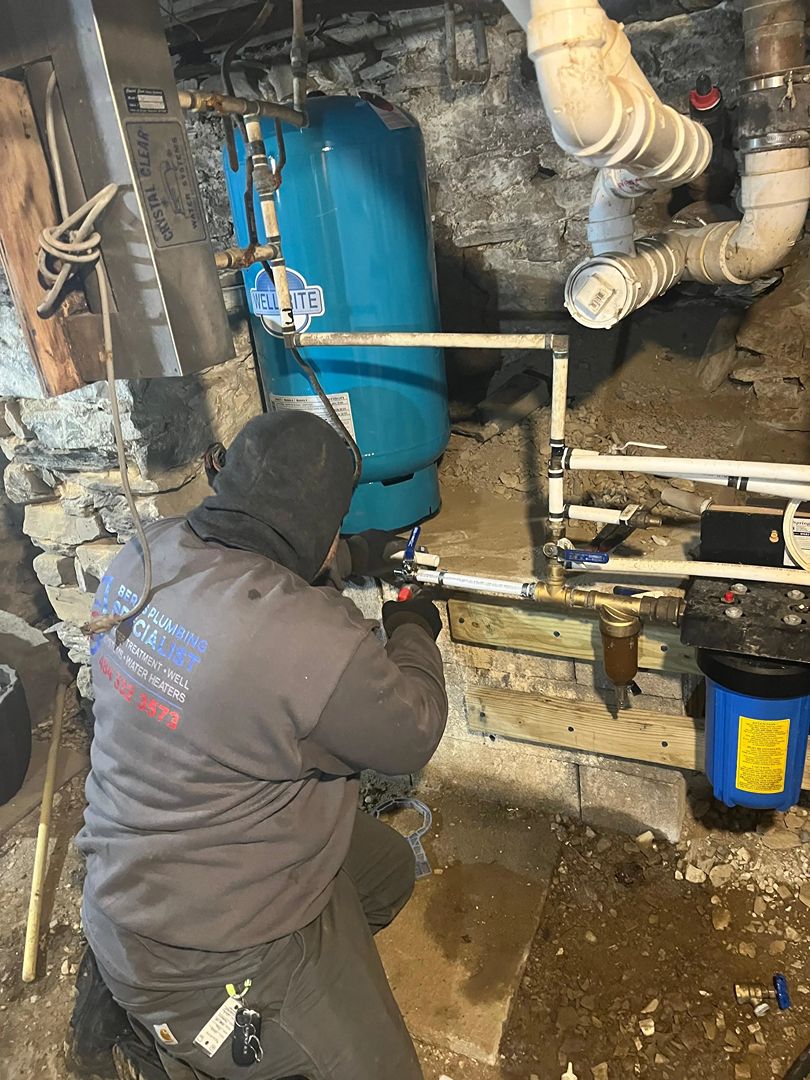
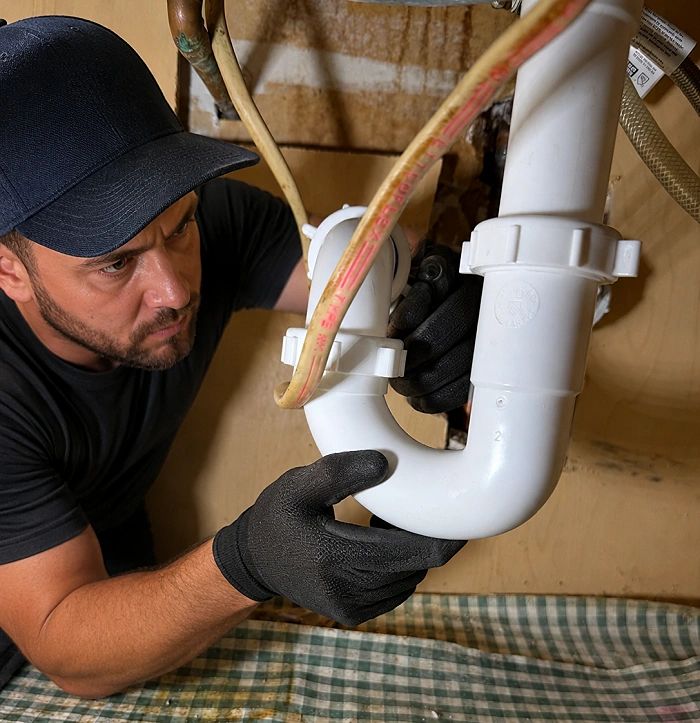
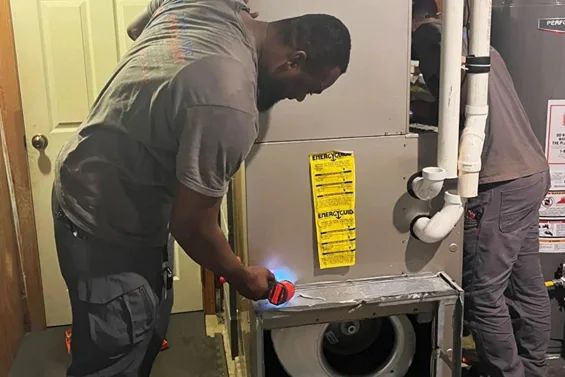
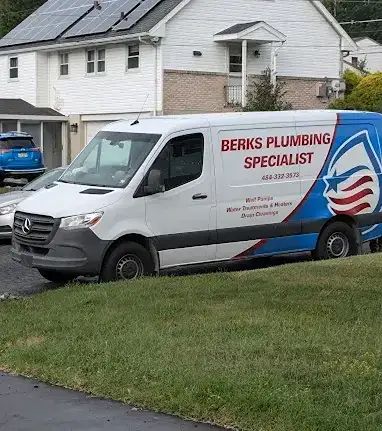
On public water, a plumber. On a well, a plumber who works on wells, or a licensed well driller who also services pumps and tanks. Berks Plumbing & HVAC Specialist in Reading repairs and replaces well pumps and pressure tanks across the county and describes a waterlogged tank as one that's heavy or knocks when it fills.
201 East Bellevue Avenue, Reading, PA
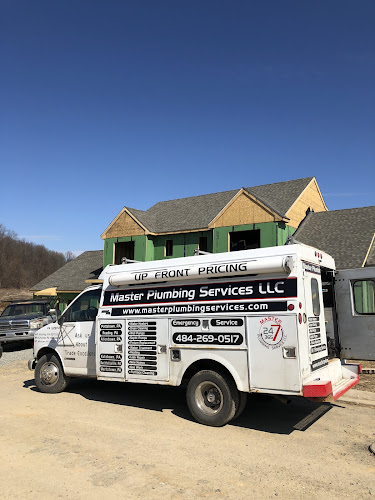
JB Plumbing HVAC in Reading carries the common pressure tanks on its trucks for same-day swaps and says it won't replace a pump when a switch fix solves it. Master Plumbing Services in Fleetwood repairs and replaces submersible and jet pumps and pressure tanks, and one reviewer says the plumber took the time to explain how the well pump and softener work.
51 Lyons Rd, Fleetwood, PA
So tonight: rinse the aerator, soak the showerhead, and on public water open both valves at the meter and read the meter twice; on a well, shut every tap and listen for the pump. If the house is still weak everywhere, or the pump runs with the house quiet, pick a plumber from our county plumbers page and tell them which of the three it looks like.
Frequently asked questions about low water pressure in a Berks County house.
Why is my water pressure low all of a sudden?
Scale flakes break loose after a main break or hydrant flushing and lodge in your faucet screens and showerhead, which is a five-minute rinse. A new leak steals water before it reaches you, and the two-hour meter test shows it.
Why is my shower pressure low but the sink is fine?
A showerhead packed with scale or a bad faucet will starve one shower while every other fixture runs fine. Soak the head in white vinegar first; if it doesn't come back strong, the faucet is a plumber's job.
How much does a well pump replacement cost?
Nationally, $976 to $2,825, averaging about $1,898, with the pump itself $275 to $1,550 for a submersible and labor $250 to $1,000. A pressure switch is $120 to $175 installed, so ask the plumber to rule out the switch first.
Sources
- U.S. Department of Housing and Urban Development, "Residential Rehabilitation Inspection Guide" (February 2000), section 6, water supply: the one-fixture, hot-only and whole-house diagnosis, the two shutoffs at an indoor meter, partly closed valves and undersized meter piping, galvanized pipe's 20-to-50-year life and its rust and mineral clogging.
- Penn State Extension, "A Quick Guide to Groundwater in Pennsylvania" (updated July 28, 2026): limestone and dolomite aquifers giving very hard water.
- U.S. Geological Survey, Ground Water Atlas, HA 730-L, "Valley and Ridge aquifers": "The Great Valley in Pennsylvania is floored with lower Paleozoic carbonate rocks and shale", and hardness in the carbonate aquifers averaging about 280 milligrams per liter, "considered to be very hard"; with Pennsylvania Geological Survey and USGS, "Geology and groundwater resources of northern Berks County" (1978): the county's place within the Great Valley section.
- Pennsylvania American Water, 2025 Annual Water Quality Report, Glen Alsace: total hardness 272 ppm, 15.9 grains per gallon; with Pennsylvania American Water, water quality FAQs and "Particles in Water" (Aug. 2026): scale in pipes, aerators and showerheads, flakes loosened by main breaks and flushing, cleaning aerators, and the vinegar soak.
- Mount Penn Borough Municipal Authority, "Fire Hydrant Flushing": the temporary pressure drop during flushing and checking faucet screens for particles afterward.
- Pennsylvania American Water, "Detecting Leaks" and Reading Area Water Authority, FAQ: the two-hour meter test, and a leak check in Reading being a licensed plumber's job.
- U.S. Census Bureau, ACS 2020-2024 five-year estimates, table B25034, Berks County and subdivisions: more than a quarter of Berks homes and more than half of Reading's built in 1939 or earlier.
- Pennsylvania Residential Code 2021 (IRC 2021 as adopted), P2903.3 and P2903.3.2 and Pennsylvania Plumbing Code 2021 (IPC 2021 as adopted), 604.8 and 604.8.1: the 80 psi cap, the pressure-reducing valve, the valve designed to remain open on failure, and the strainer it is installed with.
- Pennsylvania American Water, "Rights & Responsibilities": the customer-owned pressure reducing valve and the company's recommendation at 100 psi or above.
- U.S. Geological Survey, "Estimated Use of Water in the United States, County-Level Data for 2015", Berks County row: 152,926 self-supplied of 415,271 people, all groundwater.
- Penn State Extension, "Sanitary Water Well Construction" (updated June 15, 2026) and "Private Water Systems": no statewide private well construction standards; the homeowner's responsibility for the system.
- Pennsylvania DCNR, water well driller license and rig permit, 17 Pa. Code Chapter 47, § 47.7 and DCNR licensed water well drillers registry: state licensing of drillers, the completion report the driller must give the owner, showing the well's location, construction and yield, and which licensed drillers list pump installation and pressure tanks by county.
- Penn State Extension, "Using Low-Yielding Wells" (updated Sept. 8, 2025): how the pressure tank and switch work, about 20 percent of the tank being usable water, a 1-gallon-a-minute well making 1,440 gallons a day, the intermediate storage tank at 100 gallons per person and its typical cost under $1,500; with Water Systems Council, "Well Components: Pressure Switches" and "Your Well Tank": the 30, 40 or 50 psi cut-in, the 20 psi factory differential, and adjustments left to a licensed well contractor.
- Penn State Extension, "Managing Your Well During Drought" (updated June 2, 2025) and "Water System Planning: Estimating Water Needs" (updated May 29, 2025): a worn-out submersible pump as the most frequent cause of no water, the water level dropping below the pump during heavy use, groundwater lowest in late summer and fall, lowering the pump as a short-term fix, and about 6 gallons a minute for most homes; with Water Systems Council, "Coping with Low Water Levels": deepening a well is never a guarantee.
- JB Plumbing HVAC, well water tanks page: a pump cycling on and off every few seconds means the tank needs replacement, short cycling wearing out the pump, common tanks carried for same-day swaps, and not replacing a pump when a switch fix solves it.
- Petersheim Brothers H2O, Morgantown, pumps and tanks: constant-pressure pump systems installed by a Berks well company, holding pressure steady instead of cycling.
- HomeAdvisor, "Well Pump Replacement Cost" (updated June 17, 2026) and "Well Pump Repair Cost" (updated June 19, 2026): every national row in the table, the labor range, the permit, the house call, the after-hours labor rate, and the foot valve that keeps water from running back into the well; with Bob Vila, "How Much Does a Well Pump Cost?" (Apr. 28, 2023): new drop pipe on a deep submersible adding $250 to $2,500. The figures are current as of 2026.
- Master Plumbing Services, well pump and tank service: the published $3,600 to $4,200 installation range after inspection, and the repairs and replacements it lists; with the company's directory reviews for the well pump and softener explanation.
- Berks Plumbing & HVAC Specialist, well pump repair, well tank repair and water well services: the pumps and tanks it services, the waterlogged tank "heavy, or making a knocking sound when it fills", and its Berks service towns.
- Culligan, "Water softener troubleshooting" (June 10, 2026): low pressure from a fouled resin bed, a bypass valve not fully in service, or an undersized unit, and the bypass test; with Penn State Extension, "Water Softening" (updated Sept. 8, 2025): the hardness scale (very hard above 10.5 grains per gallon).