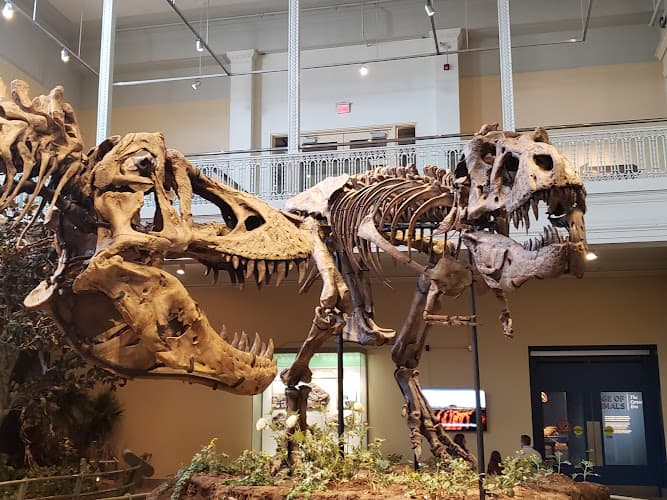
Carnegie Museum of Art
The Carnegie Museum of Art in Pittsburgh offers a diverse collection of artworks, providing an enriching cultural experience for visitors.
What people love about Carnegie Museum of Art
Hall of Architecture & Hall of Sculpture
These halls are mentioned repeatedly as must-see highlights, with visitors describing them as transcendent experiences featuring the largest collection of plaster casts in the Western Hemisphere.
Impressionist Collection (Van Gogh, Monet, etc.)
Multiple visitors specifically highlight the Impressionist and Post-Impressionist works, with Monet's Water Lilies mentioned as a particular treasure in the permanent collection.
Christmas Trees & Holiday Displays in Hall of Architecture
The seasonal Christmas tree display in the Hall of Architecture is described as a magical, enchanting experience that draws visitors specifically during the holiday season.
Docent-Led Tours (Paula specifically mentioned)
Guided tours receive enthusiastic praise, with one docent named Paula specifically called out for providing an exceptional, educational experience that enhanced the visit.
Key Themes from Reviews of Carnegie Museum of Art
Collection Diversity & Range
PositiveVisitors consistently praise the museum's diverse collection spanning multiple time periods, styles, and cultures, from classical European paintings to contemporary works.
Contemporary/Modern Art Integration
MixedVisitors are divided on the museum's approach to integrating contemporary art with classical pieces—some appreciate the dialogue between styles while others find it jarring and prefer traditional curation.
Staff Friendliness & Helpfulness
PositiveVisitors consistently praise museum staff and docents for being friendly, knowledgeable, and helpful in enhancing the visitor experience.
Combined Ticket Value (Art + Natural History)
PositiveVisitors appreciate that one admission ticket provides access to both the Art Museum and Natural History Museum, viewing this as excellent value.
Museum Size & Time Investment
PositiveVisitors find the museum size well-balanced—substantial enough to spend several hours exploring but not so large as to be exhausting or overwhelming.
Building & Facility Condition
MixedWhile many visitors praise the beautiful historic architecture and grand halls, some note concerns about maintenance issues including construction, leaks, and run-down areas.
About Carnegie Museum of Art
Overview
The Carnegie Museum of Art occupies a prominent position within Pittsburgh's Oakland neighborhood at 4400 Forbes Avenue, serving as one of the largest art museums in the United States. Founded by industrialist and philanthropist Andrew Carnegie in 1895, the museum opened its doors in 1896 as part of the Carnegie Institute complex, which also houses the Carnegie Museum of Natural History. The two museums share the same building and a single admission ticket grants access to both institutions, making a visit to this address a substantial cultural undertaking.
The museum's permanent collection contains more than 35,000 objects spanning five thousand years of human creativity. Holdings range from ancient Egyptian artifacts and European Old Master paintings to contemporary installations and decorative arts. The collection reflects Andrew Carnegie's original vision of bringing art education to the working people of Pittsburgh, a mission that continues to shape the institution's programming and accessibility efforts today.
The Hall of Architecture and Hall of Sculpture
Among the museum's most distinctive features are two grand halls that date to the original 1907 building expansion. The Hall of Architecture houses one of the largest collections of plaster architectural casts in the Western Hemisphere. These full-scale reproductions include elements from significant buildings across Europe and the Middle East, including portions of abbey facades, cathedral portals, and Renaissance architectural details. The casts were created during the late nineteenth and early twentieth centuries when such reproductions served as primary educational tools for studying architectural history.
The adjacent Hall of Sculpture contains plaster reproductions of significant sculptural works from ancient Greece through the Renaissance. The soaring ceilings and classical proportions of these spaces create an environment quite different from typical gallery settings. During the winter holiday season, the Hall of Architecture becomes the setting for a Christmas tree display that has been an annual tradition since 1957, with decorated trees positioned among the architectural casts.
Permanent Collection Highlights
The museum's European painting collection includes works from the Impressionist and Post-Impressionist periods that draw particular visitor attention. Paintings by Claude Monet, including examples from his Water Lilies series, and works by Vincent van Gogh form part of this collection. American art holdings span colonial portraiture through Abstract Expressionism, with pieces by artists such as Jackson Pollock, Joan Mitchell, and Helen Frankenthaler representing mid-twentieth century movements.
The decorative arts collection encompasses furniture, ceramics, glass, and metalwork from various periods and cultures. Asian art holdings include works from Japan, China, Korea, and South Asia. The museum also maintains collections of prints and drawings, photographs, and film and video works that reflect the institution's engagement with newer artistic media.
The Carnegie International
Since 1896, the museum has organized the Carnegie International, one of the oldest and most prestigious survey exhibitions of contemporary art in North America. Held approximately every three to five years, the International brings together works by artists from around the world, many of whom receive their first major American museum presentation through this exhibition. The Carnegie International has historically served as a significant acquisition opportunity, with works purchased from the exhibition forming an important component of the permanent collection.
Contemporary Art Programming
The museum maintains an active contemporary art program that extends beyond the periodic International exhibitions. Rotating exhibitions feature living artists working across media including painting, sculpture, installation, video, and performance. The institution's curatorial approach often places contemporary works in dialogue with historical pieces, creating juxtapositions that some visitors find intellectually stimulating while others prefer more traditional chronological or stylistic organization.
Live performances and events occur periodically within the museum spaces, reflecting a programming philosophy that extends beyond static display of objects. These events may include musical performances, artist talks, and other public programs that activate the galleries in different ways.
Visitor Facilities and Services
The museum complex includes multiple dining options. A cafe provides casual refreshments while a full-service restaurant offers more substantial meals. A gift shop stocks art books, exhibition catalogs, and merchandise related to the collections. Restroom facilities are available throughout the building, and wireless internet access is provided for visitors.
Guided tours led by trained docents offer deeper engagement with specific collections or themes. These tours provide context and interpretation that can enhance understanding of the works on view. The museum's education department also develops programming for school groups and families.
Accessibility
The museum provides wheelchair accessible entrances, restrooms, and parking facilities. These accommodations reflect the institution's location within a building that combines original early twentieth century construction with later additions and modifications. Visitors with mobility considerations should note that the museum occupies multiple levels and wings, though accessible routes connect the various sections.
Parking and Transportation
On-site parking is available in both surface lots and a parking garage. Street parking in the Oakland neighborhood operates on a paid basis. The museum's location on Forbes Avenue places it along several public transit routes serving the Oakland area, which also contains the University of Pittsburgh and Carnegie Mellon University campuses.
Admission and Hours
The combined admission ticket for the Carnegie Museum of Art and Carnegie Museum of Natural History represents a significant amount of content for a single visit. Many visitors find that thoroughly exploring both institutions requires multiple trips. Active military personnel receive discounted admission, and the museum offers various membership levels for those who wish to visit repeatedly.
The scale of the art museum alone provides several hours of viewing, though the layout and collection size avoid the exhaustion that can accompany visits to larger metropolitan museums. The physical connection between the art and natural history museums allows visitors to move between institutions without exiting the building, though each museum functions as a complete experience on its own.
Historical Context
Andrew Carnegie established the museum as part of his broader philanthropic vision for Pittsburgh, which included the Carnegie Library system, Carnegie Mellon University, and Carnegie Hall in New York City. The Oakland location was developed as a cultural campus during Pittsburgh's industrial peak, when Carnegie steel money funded civic improvements throughout the region. The museum building itself, designed by Longfellow, Alden and Harlow with later additions by other architects, reflects Beaux-Arts design principles popular during the early twentieth century.
The institution has evolved considerably since its founding, expanding both its physical plant and its collecting scope. What began as a collection focused primarily on contemporary art of the 1890s has grown to encompass historical works and diverse cultural traditions. The museum's identity continues to balance its historical legacy with engagement in current artistic discourse, a tension that shapes both its exhibitions and its acquisitions.
Unique Details About Carnegie Museum of Art
Crowd
- Family-friendly
Parking
- On-site parking
- Paid parking lot
- Paid parking garage
- Paid street parking
Children
- Good for kids
Amenities
- Cafe
- Wi-Fi
- Restroom
- Restaurant
- Offers tours
Offerings
- Gift shop
Highlights
- Live performances
- Active military discounts
Accessibility
- Wheelchair accessible entrance
- Wheelchair accessible restroom
- Wheelchair accessible parking lot
Service options
- Onsite services
Contact Information for Carnegie Museum of Art
Pittsburgh, PA 15213
United States of America
County: Allegheny County
Phone: +1 412-622-3131
Website: Visit Website
Customer Reviews
4.7 out of 5 stars
Based on 1788 reviews
Review data
5 star reviews
- 82%
4 star reviews
- 13%
3 star reviews
- 3%
2 star reviews
- 1%
1 star reviews
- 2%
Working Hours / Hours of Operation
- Monday:
- 10AM-5PM
- Tuesday:
- Closed
- Wednesday:
- 10AM-5PM
- Thursday:
- 10AM-8PM
- Friday:
- 10AM-5PM
- Saturday:
- 10AM-5PM
- Sunday:
- 10AM-5PM
Location Map
Similar Museums Near Pittsburgh, PA
BerksConnect: everything local in Berks County, PA.
8,700+ local businesses with AI-summarized reviews, plus local guides, jobs, and what's happening around the county.