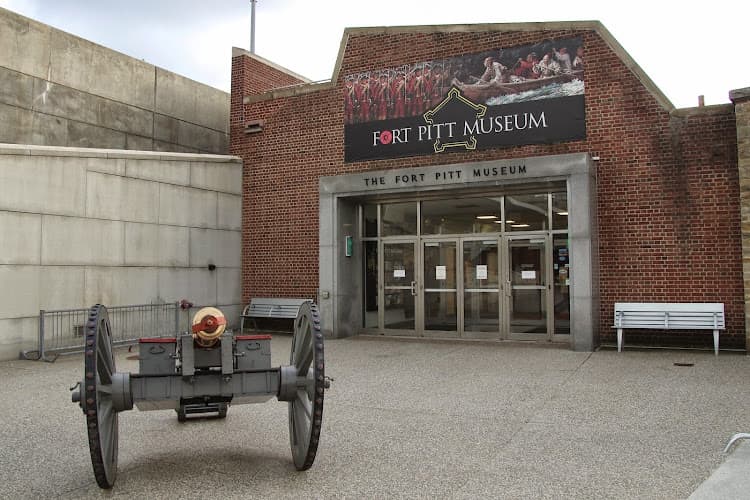
Fort Pitt Museum
Fort Pitt Museum in Pittsburgh is a history museum dedicated to the region's pivotal role during the French and Indian War and the American Revolution. Visitors can explore its engaging exhibits to learn about the rich history and culture of the area.
What people love about Fort Pitt Museum
Mrs. Hutchinson (Docent)
Mrs. Hutchinson is mentioned by name in multiple reviews with exceptional enthusiasm, with visitors specifically crediting her for transforming their museum experience through her knowledge and engaging personality.
Fort Pitt Scale Model/Diorama
The interactive scale model of Fort Pitt with telephone audio descriptions is repeatedly highlighted as a memorable centerpiece exhibit that helps visitors visualize historical life at the fort.
Live Presenters & Reenactments
Visitors who encountered live demonstrations and reenactments express particular enthusiasm, noting these experiences significantly enhanced their understanding and enjoyment of the history.
Scenic Location & Views
Multiple reviewers highlight the museum's unique location at the confluence of three rivers, with beautiful views and the surrounding Point State Park adding significant value to the overall visit experience.
Key Themes from Reviews of Fort Pitt Museum
Educational Value & Historical Information
PositiveCustomers consistently praise the museum for its thorough, detailed, and informative exhibits covering Fort Pitt history, the French and Indian War, and early Pittsburgh, with many noting they learned more than expected.
Staff Friendliness & Knowledgeability
MixedWhile most visitors praise staff as friendly, knowledgeable, and helpful, a few reviews mention unhelpful or rude interactions, particularly at the front desk.
Museum Size vs. Content Value
PositiveVisitors frequently note that despite the museum's small appearance, it contains a surprising amount of content, exhibits, and historical information that exceeds expectations.
Interactive Exhibits & Displays
PositiveCustomers appreciate the hands-on, interactive elements throughout the museum that make the historical content more engaging, especially for children.
Pricing & Value
PositiveMost visitors find the admission price ($8-10) reasonable and good value for the amount of historical content and exhibits provided, with some noting free admission with Heinz History Center tickets.
Historical Perspective & Representation
MixedOpinions are divided on the museum's historical narrative—some praise its honest portrayal of Native American experiences, while others criticize it as whitewashed or lacking representation of certain groups.
About Fort Pitt Museum
Overview
The Fort Pitt Museum is a history museum operated by the Senator John Heinz History Center, located within Point State Park at the confluence of the Allegheny, Monongahela, and Ohio Rivers in downtown Pittsburgh, Pennsylvania. The museum occupies a reconstructed bastion of the original Fort Pitt, one of the largest and most strategically significant British fortifications constructed in North America during the 18th century. Through its exhibits and programming, the museum documents the complex military, political, and cultural history of the region during the French and Indian War era and the subsequent development of what would become the city of Pittsburgh.
Historical Context and Location
The museum's physical location carries substantial historical weight. The site where Point State Park now stands was recognized for its strategic importance by European colonial powers, Native American nations, and eventually the emerging United States. The confluence of three major rivers created a natural transportation hub that made control of this point essential for any power seeking dominance in the Ohio River Valley during the mid-18th century.
Fort Pitt itself was constructed by British forces beginning in 1759, following the destruction of the earlier French fortification known as Fort Duquesne. The British fort represented one of the most ambitious military construction projects in colonial America, designed to project British power into the contested interior of the continent. The original fort's massive scale and sophisticated design reflected the importance British military planners placed on controlling this geographic chokepoint.
The museum building incorporates elements of the fort's original Monongahela Bastion, providing visitors with a tangible connection to the 18th-century structure. This architectural integration means that visitors are not simply viewing artifacts about Fort Pitt—they are standing within a portion of its reconstructed defensive works while learning about its history.
Exhibits and Collections
The museum's permanent exhibitions trace the history of the Pittsburgh region from the period of initial European contact through the early years of American settlement. Coverage focuses primarily on the French and Indian War (known in Europe as the Seven Years' War), the various Native American nations who inhabited and controlled the region, the competing claims of French and British colonial powers, and the transformation of the area following British victory.
A central feature of the museum is a large-scale diorama depicting Fort Pitt as it appeared during its operational period. This detailed model includes an audio interpretation system that allows visitors to explore different sections of the fort through telephone-style handsets. As visitors listen to descriptions of various areas, corresponding sections of the model illuminate, helping to convey the layout and function of the original fortification.
The exhibit halls contain a substantial collection of artifacts, documents, and interpretive materials. Wall-mounted text panels provide detailed historical context, covering topics including military tactics of the period, daily life within the fort, relationships between European powers and Native American nations, and the economic and political factors that drove conflict in the region. The museum presents information about the experiences of multiple groups who intersected at this location, including British and French soldiers, colonial settlers, and members of various Indigenous nations.
Interactive elements are incorporated throughout the exhibition spaces. These hands-on components allow visitors to engage with historical content through activities rather than passive observation alone. Such interactive features prove particularly effective for younger visitors, making complex historical material more accessible and memorable.
Educational Programming
The museum offers guided tours led by docents who provide interpretation beyond what is available through static exhibits. These guided experiences allow for questions and discussion, and the depth of knowledge among the museum's interpreters enhances the educational value of visits. The museum's tour program represents a significant component of its educational mission.
Living history demonstrations occur periodically at the museum, featuring presenters in period attire who demonstrate historical skills and practices. These programs have included demonstrations of weapon-making techniques used by Native American peoples, as well as military reenactments featuring period-appropriate equipment including muskets and cannon. Such programming provides sensory and experiential dimensions to historical education that static exhibits cannot replicate.
The museum's affiliation with the Senator John Heinz History Center connects it to a broader network of historical resources in the Pittsburgh region. This relationship provides institutional support and allows for coordination of programming and resources across multiple sites dedicated to regional history.
Visitor Information and Facilities
The museum maintains standard visitor amenities including restroom facilities and a gift shop offering history-related merchandise. The facility is designed to accommodate visitors with mobility limitations, featuring wheelchair-accessible entrances, restrooms, and parking areas within the surrounding Point State Park.
The museum's setting within Point State Park provides additional context for visits. The park itself commemorates the historical significance of the location, and the surrounding landscape offers views of the three-river confluence that made this site so strategically valuable. Visitors often combine museum visits with exploration of the park grounds, including the iconic fountain at the point where the rivers meet.
Reaching the museum requires navigating downtown Pittsburgh's street layout, and parking within Point State Park involves fees typical of urban parking facilities. Visitors should plan accordingly, particularly during peak visitation periods or when major events are occurring in the downtown area.
Scope and Focus
Despite occupying a relatively compact physical footprint, the museum contains a density of historical information that frequently exceeds visitor expectations. The exhibition design maximizes the available space, presenting substantial content across multiple subject areas within the confines of the bastion structure. Visitors who take time to read exhibit text thoroughly and engage with interactive elements typically find the experience more extensive than the building's exterior might suggest.
The museum's chronological scope centers on the mid-18th century, with particular emphasis on the 1750s and 1760s when the struggle for control of the Ohio Valley reached its peak. This focused approach allows for detailed treatment of a pivotal but often overlooked period in American history—the conflicts and negotiations that preceded the American Revolution and shaped the subsequent development of the trans-Appalachian frontier.
The Fort Pitt Museum serves as a specialized resource for understanding a specific place and time period that proved consequential for the development of both Pittsburgh and the broader United States. Its location at the actual site of the historical events it documents, combined with its detailed exhibitions and interpretive programming, provides educational opportunities distinct from those available at more generalized history museums.
Unique Details About Fort Pitt Museum
Children
- Good for kids
Amenities
- Restroom
- Offers tours
Offerings
- Gift shop
Accessibility
- Wheelchair accessible entrance
- Wheelchair accessible restroom
- Wheelchair accessible parking lot
Service options
- Onsite services
Contact Information for Fort Pitt Museum
Pittsburgh, PA 15222
United States of America
County: Allegheny County
Phone: +1 412-281-9284
Website: Visit Website
Customer Reviews
4.6 out of 5 stars
Based on 907 reviews
Review data
5 star reviews
- 71%
4 star reviews
- 21%
3 star reviews
- 6%
2 star reviews
- 1%
1 star reviews
- 1%
Working Hours / Hours of Operation
- Monday:
- 10AM-5PM
- Tuesday:
- 10AM-5PM
- Wednesday:
- 10AM-5PM
- Thursday:
- 10AM-5PM
- Friday:
- 10AM-5PM
- Saturday:
- 10AM-5PM
- Sunday:
- 10AM-5PM
Location Map
Similar Museums Near Pittsburgh, PA


BerksConnect: everything local in Berks County, PA.
8,700+ local businesses with AI-summarized reviews, plus local guides, jobs, and what's happening around the county.