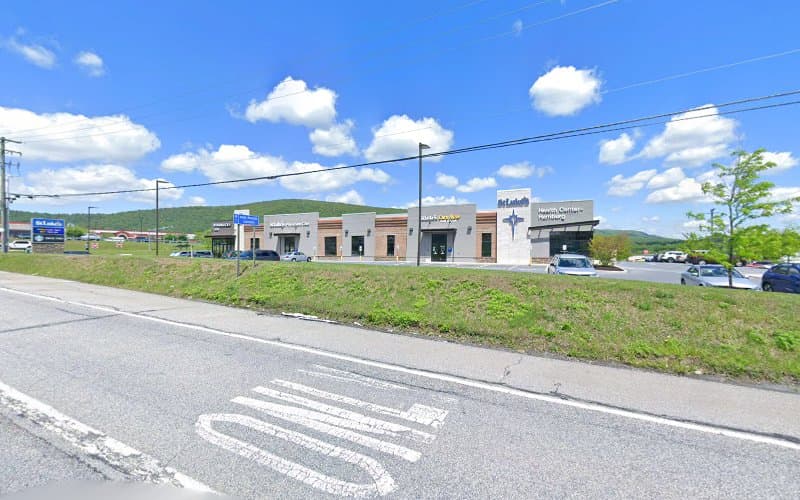
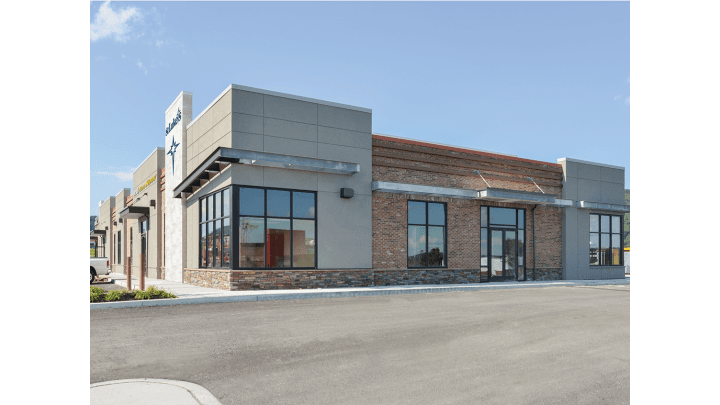
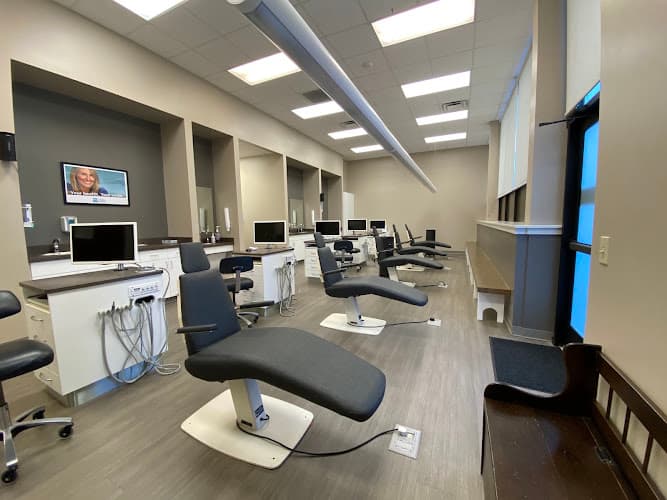
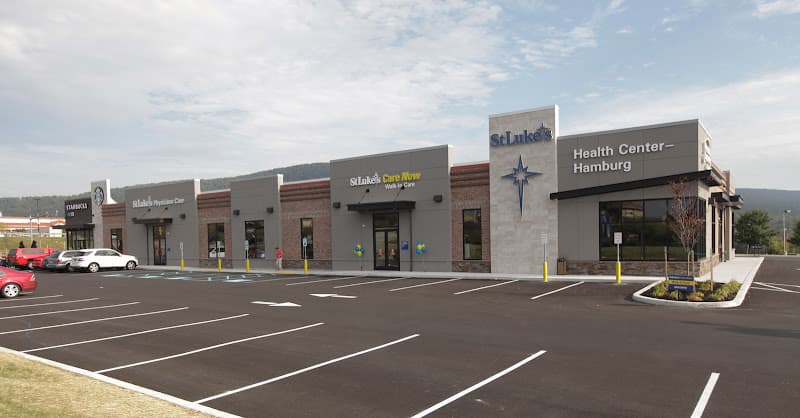
Imaging at St. Luke's Care Now - Hamburg is a diagnostic imaging facility located at 9 Dave's Way in Hamburg, Pennsylvania. The site operates as part of St. Luke's University Health Network, a regional health system that maintains hospitals, physician practices, urgent care centers and outpatient service locations across eastern Pennsylvania and western New Jersey. The Hamburg location pairs imaging services with a Care Now walk-in clinic, allowing patients who arrive for an urgent care visit to receive imaging on site rather than travel to a separate facility.
Diagnostic imaging centers of this type serve a specific role in the healthcare system. They perform the tests that physicians order to see inside the body, then route the resulting images to radiologists for interpretation. The written report goes back to the ordering provider, who uses it to confirm a diagnosis, rule out a suspected condition or monitor an existing one. Patients typically arrive with an order in hand from a primary care doctor, a specialist or, in the case of a co-located urgent care, from the clinician they just saw down the hall.
Location and Service Area
Hamburg sits in northern Berks County along the Schuylkill River, near the point where Interstate 78 meets Route 61. The borough is small, with a population in the low four thousands, but it functions as a service hub for a wider rural area that includes Shoemakersville, Tilden Township, Windsor Township, Perry Township and the communities stretching toward the Schuylkill County line. Residents of this part of Berks County have historically driven south toward Reading or east toward the Lehigh Valley for hospital-based services, which makes a local imaging option practically useful for routine tests that do not require a hospital setting.
The Dave's Way address places the facility in a commercial corridor near the interstate interchange, a location chosen for highway access rather than for a downtown storefront presence. Parking is on site, and the property includes accessible parking spaces. For patients traveling from Kutztown, Bernville, Auburn or Orwigsburg, the I-78 and Route 61 junction is generally a more direct approach than navigating into a city center.
Services
Imaging locations within the St. Luke's network typically offer a combination of the following, with the exact menu varying by site and equipment installed:
- Digital X-ray for bone, chest and joint imaging, commonly used to evaluate fractures, pneumonia and other acute conditions
- Ultrasound, a radiation-free technique using sound waves, applied to abdominal organs, the thyroid, soft tissue masses, blood vessels and obstetric evaluation
- Computed tomography (CT), which produces cross-sectional images useful for evaluating the head, chest, abdomen and pelvis
- Magnetic resonance imaging (MRI) at equipped sites, used heavily for neurological, spinal and musculoskeletal assessment
- Mammography and breast imaging services at designated locations within the network
- Bone density scanning (DEXA) to assess osteoporosis risk
Because service availability differs between network locations, patients are advised to confirm by phone at 610-628-7200 that the specific study their physician ordered is performed at the Hamburg site before scheduling. The same call can clarify preparation requirements, which vary considerably by exam. Abdominal ultrasound often requires fasting, some CT studies involve oral or intravenous contrast, and MRI requires a screening review for implanted metal, pacemakers and other devices. Mammography guidelines typically ask patients to avoid deodorant, powder and lotion on the day of the exam.
The Care Now Connection
St. Luke's Care Now is the network's walk-in and urgent care brand, treating conditions that need same-day attention but fall short of emergency department severity: sprains and strains, minor fractures, cuts requiring stitches, respiratory infections, sore throats, rashes, urinary tract infections and similar complaints. Co-locating imaging with urgent care shortens the path between examination and diagnosis. A patient who arrives with a swollen ankle can be evaluated, sent for an X-ray and receive results within a single visit, which is a meaningful difference from the more common sequence of a clinic visit followed by a separate appointment at another building.
This model also expands the range of complaints the clinic can handle confidently. Chest pain, abdominal pain and head injuries all benefit from imaging, and having it available on site helps clinicians decide whether a patient can go home with instructions or needs referral to a hospital.
Health Network Background
St. Luke's University Health Network traces its origins to 1872, when St. Luke's Hospital opened in Fountain Hill near Bethlehem to serve workers injured in the region's iron and steel industry. It is among the oldest hospitals in Pennsylvania. Over the following century and a half the organization expanded into a multi-campus network with hospitals in Bethlehem, Allentown, Easton, Quakertown, Coaldale, Stroudsburg, Orwigsburg and elsewhere, along with a teaching affiliation that includes a regional medical school campus and multiple residency programs.
The network's expansion into Berks and Schuylkill counties has included both hospital campuses and smaller outpatient sites like the Hamburg location. For patients, the practical benefit of belonging to an integrated network is record continuity: imaging performed at one location is generally accessible to providers throughout the system, and prior studies can be compared against new ones by radiologists working from the same archive.
Practical Information
The facility accepts debit cards, credit cards and NFC mobile payments such as contactless phone and watch transactions. Restrooms are available on site. The building offers a wheelchair accessible entrance, a wheelchair accessible restroom and accessible parking.
Patients should bring a photo ID, insurance card and the physician's order for the study. Insurance coverage for imaging frequently depends on prior authorization, particularly for CT and MRI, and verifying that authorization has been obtained before arrival prevents rescheduling. Patients without insurance or with high-deductible plans can ask about self-pay pricing when calling to schedule.
Results are not typically provided to patients at the time of the visit. A radiologist reviews the images and issues a report to the ordering physician, generally within a short turnaround, and the physician discusses the findings with the patient. Patients enrolled in the network's electronic patient portal can usually view reports there once released.
Additional details on services, hours and scheduling are available through the St. Luke's University Health Network website or by calling the location directly.