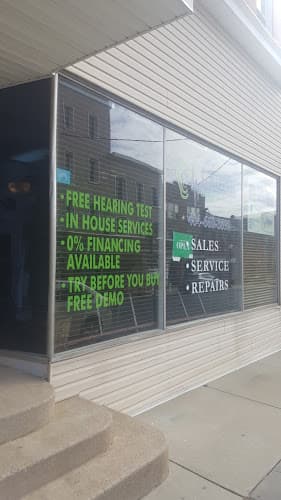
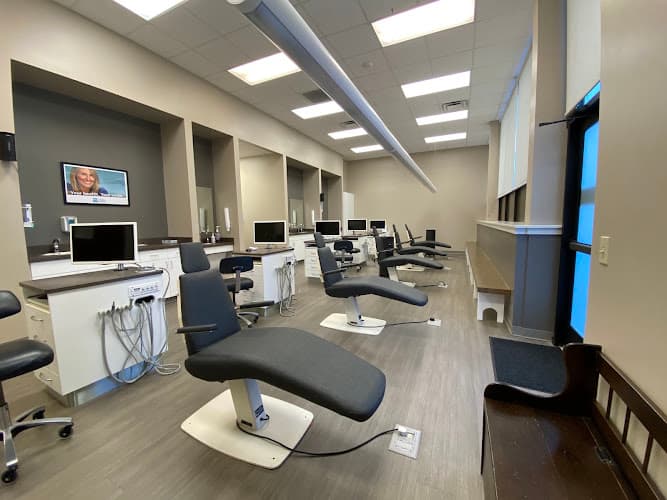
Riggins Hearing Aid Centers operates a hearing aid store at 81 S Fourth Street in Hamburg, Pennsylvania, serving residents of northern Berks County and the surrounding communities. The location is part of the Beltone network, a hearing care brand that has been active in the United States since 1940 and distributes its products through locally operated offices rather than through general retail channels. The Hamburg office identifies itself as a small business, meaning day to day operations, scheduling and follow up care are handled by a local team rather than a regional call center.
The practice focuses on the assessment of hearing loss and the selection, fitting and long term maintenance of hearing instruments. Unlike a pharmacy aisle or an online retailer, a hearing aid center of this type combines a diagnostic component with ongoing technical service, which means most customers develop a continuing relationship with the office over a period of years rather than making a single purchase.
Location and Service Area
Hamburg sits along the Schuylkill River at the foot of Blue Mountain, at the junction of Route 61 and Interstate 78. The South Fourth Street address places the office within the borough itself, close to the town's central business district and a short drive from the I-78 interchange. That position makes it reachable not only for Hamburg residents but also for people traveling from Shoemakersville, Leesport, Kutztown, Bernville, Strausstown, Auburn, Port Clinton, Orwigsburg and the northern reaches of the Reading metropolitan area. For households in rural Berks and southern Schuylkill counties, a Hamburg appointment is often considerably more convenient than driving into Reading or Allentown.
The office reports a wheelchair accessible entrance and a wheelchair accessible parking lot. This is a practical consideration for a hearing care practice, since a substantial share of hearing aid users are older adults who may also use a cane, walker or wheelchair, or who rely on a family member to drive them to appointments. On-site parking also matters for anyone bringing a spouse or adult child along, which hearing professionals generally encourage, because a familiar voice helps during listening tests and because a second set of ears is useful when new device instructions are being explained.
Services Offered
Hearing aid centers within the Beltone network typically provide a consistent core set of services. At the Hamburg office, customers can generally expect the following:
- Hearing screenings and evaluations that measure how well a person detects tones at different pitches and how clearly they understand speech
- Review of results with an explanation of the degree and pattern of any hearing loss, and referral for medical evaluation when a condition appears to require a physician's attention
- Hearing aid consultations, including discussion of styles, technology levels and budget
- Professional fitting and programming of hearing instruments, with adjustments based on the wearer's feedback
- Custom ear impressions for earmolds, in-the-ear devices and custom hearing protection
- Cleaning, repair and servicing of hearing aids, including replacement of wax guards, domes, tubing and receivers
- Batteries, chargers, cleaning kits, drying units and wireless accessories
- Guidance on tinnitus management for people who experience ringing or buzzing in the ears
- Follow up appointments and periodic rechecks to keep devices calibrated as hearing changes over time
Many hearing offices also help customers navigate insurance benefits, employer hearing plans and manufacturer financing. Because coverage for hearing aids varies widely between plans and because Pennsylvania residents on Medicare Advantage plans may have partial hearing benefits, it is worth asking about this during the first phone call.
Hearing Aid Technology
Beltone's current product lines include receiver-in-canal, behind-the-ear, in-the-ear and completely-in-canal styles, in both rechargeable and disposable battery versions. Recent generations of the company's devices emphasize direct Bluetooth streaming, allowing phone calls, music, podcasts and television audio to be sent from a smartphone or a set-top streaming accessory straight into the hearing aids. A companion smartphone application lets wearers change programs, adjust volume and, in many cases, request remote adjustments from their hearing care provider without coming into the office.
Modern instruments also use directional microphone systems and noise management processing that attempt to separate speech from background sound. These features are particularly relevant for people who struggle in restaurants, houses of worship, community meetings and family gatherings, which are among the most commonly cited difficult listening situations. The practical value of any of these features depends heavily on how well the device is fitted and programmed, which is the main reason hearing aids are still dispensed through offices that provide in-person verification and adjustment.
Aftercare and the Customer Experience
Beltone offices follow an aftercare program that includes scheduled cleanings and checkups for the life of the instruments. In practice, this means a new wearer may return several times in the first few months while the devices are fine tuned, then settle into a routine of periodic maintenance visits. Hearing aids sit in a warm, humid environment and are exposed to earwax, so regular professional cleaning meaningfully extends their working life and reduces the number of repairs sent back to the manufacturer.
New users are usually given instruction on inserting and removing the devices, changing or charging batteries, daily cleaning, pairing with a phone and storing the aids overnight. Offices commonly provide a short adaptation period during which the wearer tries the devices in real world settings and reports back on what sounds too loud, too sharp or not clear enough.
Practical Information
The Hamburg office can be reached at +1 484-660-3592, and location details are maintained on the Beltone locations website. Appointments are the standard way of being seen, since hearing evaluations require a quiet testing environment and dedicated provider time, though quick service needs such as a supply pickup or a device cleaning may sometimes be accommodated with less notice. Delivery is not offered, so products and services are handled at the office. Anyone attending a first appointment may find it helpful to bring a list of current medications, information about their insurance coverage, any previous hearing test results and, if applicable, their existing hearing aids.