Ice Dams and Winter Roof Leaks in Berks County
An ice dam is a heat problem, not a roof problem. What to do from the ground today, what professional removal costs, how to stop ice dams for good with attic air sealing and insulation, who does that work in Berks County, and what heat cables and ice and water shield can and can't do.
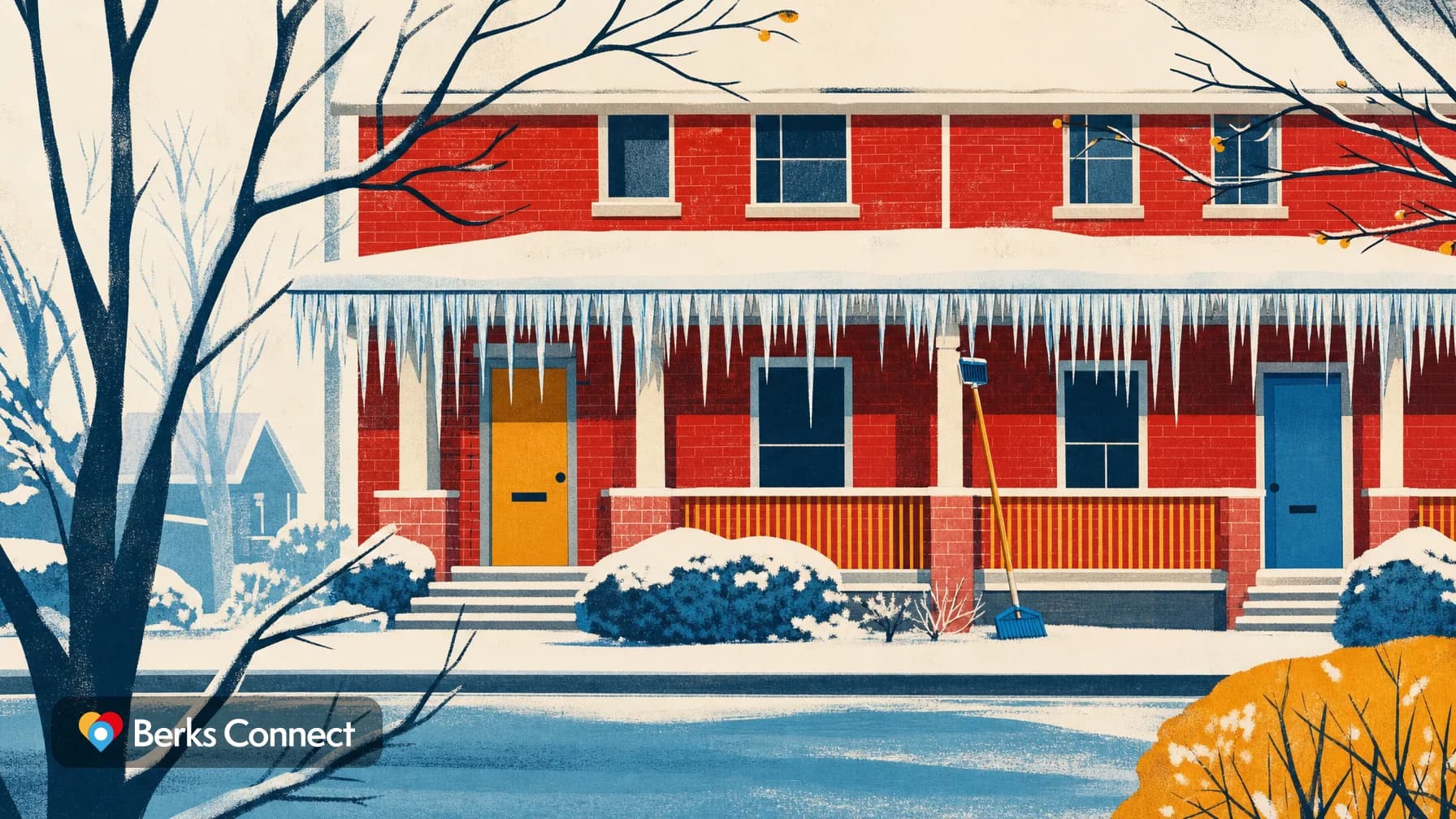
The icicles on your gutter and the stain on your ceiling are one problem, and the roof isn't the cause: heat leaking out of your house melts the snow from underneath, and the water refreezes at the cold edge until it backs up under the shingles. Tonight, pull the snow off the roof's lower edge from the ground, melt a channel through the ice at the roof edge if a hose reaches it, and if you can't, call one of the roofers in Berks County for emergency service; a crew visit to clear the snow and ice runs about $600 to $1,800 nationally as of 2026. Before next winter, have the attic sealed and insulated, because that's the fix, and ask about an ice barrier, a waterproof sheet under the shingles at the eaves, when the roof is next replaced.
What is an ice dam, and why does my roof have one?
An ice dam is a ridge of ice along the edge of the roof that stops melting snow from draining. It takes snow on the roof, a warm roof surface up high and a cold edge, and your house supplies the warm part.
Most of that heat is warm air from the rooms below leaking into the attic around recessed lights, the attic hatch, and every pipe or wire through the ceiling. That air warms the roof from below, the snow melts, and the water runs down to the eave, which hangs past the heated walls and stays cold, so it freezes there and the ridge grows.
Reading sees about 108 nights a year at or below freezing. The winter of 2025-26 showed the setup: 9.4 inches fell on January 25, 2026, 9 inches were still on the ground two days later, and a big fall followed by weeks of thawing by day and freezing by night is how a dam builds.
What to do about an ice dam right now, and what not to do.
Start with a roof rake, a wide blade on a long pole you pull from the ground, and take the snow off the lower few feet of the roof; one Berks roofer suggests clearing three to four feet above the eaves. Go gently so the blade doesn't scrape the shingles, and keep it away from power lines.
If water is coming in, the dam needs a channel so the water behind it can drain. On a warm day, if a garden hose reaches the roof edge from the ground, it can cut a channel through the dam: aim at the lower edge and work upward. It refreezes within days, so it buys time, not a cure.
Anything you can't reach from the ground is a call, not a climb: several Berks roofers list emergency service, one of them same-day, and a roofer can clear the snow and ice safely and inspect for damage. Catch the drips in buckets and towels. Leave the wet ceiling alone until it's dry, and don't repair it until the attic work is done, or you'll do it twice.
The rule, and I'd take it seriously, is never on the roof when it's snowy or icy, and never working at the ice from underneath it, because people die every winter from falls and from dams that let go. Don't chip at the ice yourself with a hammer, axe or pick. No heat gun, open flame, pressure washer or rock salt. Between them, two Berks roofers print the don't-climb, don't-chip and no-heat-gun warnings on their own sites, and the winter services guide carries the list for the season.
What does ice dam removal cost?
Nationally, crews charge $200 to $600 an hour, and a two-story house of about 1,500 square feet takes about three hours, around $1,200. Steam is the fastest and least messy method, and the priciest, $400 to $600 an hour. Pros who chip charge less per hour, and chipping is one of the riskiest methods for the roof, so ask for steam. Clearing the snow first is $250 to $500 worth of the work and is usually included in the price. Here's what the three jobs cost nationally.
| What the work costs, nationally | Typical range, as of 2026 |
|---|---|
| A crew clears an ice dam (a two-story house of about 1,500 square feet, roughly three hours) | $600 to $1,800 |
| Roof heating cable, installed | $900 to $1,800 |
| Attic insulation, installed | $1,500 to $6,000 |
These are national cost guides' figures, updated between January 2025 and June 2026; none is a Berks price, and no Berks roofer, gutter company or electrician prints one for this work.
You pay the removal row every bad winter; the insulation row makes the problem stop. Once the ice is off, the roofer finds what the water opened up, and what roof leak repairs cost in Berks County covers those prices.
How to prevent ice dams: seal, insulate, ventilate.
The fix happens in the attic, in this order. First comes air sealing, closing the gaps where warm house air leaks up into the attic: recessed lights, the attic hatch, every pipe, duct or wire that comes through the ceiling. A tight ceiling matters more than a thick one, though you want both. Second, add insulation on top of the sealed ceiling. Third, ventilate the underside of the roof with intake vents under the eaves (soffit vents) and an exhaust vent along the peak (a ridge vent). Baffles, chutes that hold the insulation back from the eave vents, keep the new insulation from blocking them. A powered attic fan isn't the fix; it can cause moisture problems and pull heated air out of the house.
A good contractor starts with a blower door test, a fan set in the front doorway that measures how leaky the house is.
Who fixes the cause in Berks, and what it costs.
This is weatherization work, not roofing. Harron's Insulation & Ceilings in Temple lists insulation, air sealing, blower door testing and a certified home energy audit.
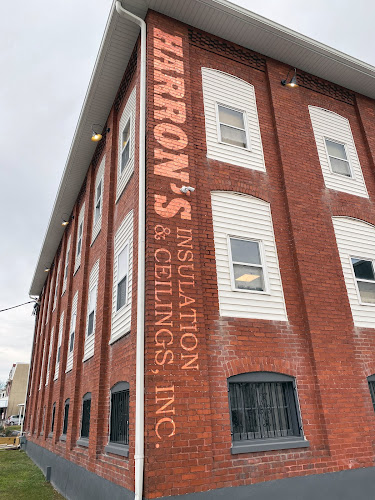
801 Euclid Ave, Temple, PA
Berks Spray Foam Insulation in Reading is on this site's insulation contractors page too. More than a quarter of the county's homes and more than half of Reading's were built before 1940. In a house that old, have an electrician check the attic wiring before anyone blows insulation over it, because old wiring sheds its heat into open air and insulation traps it. The post on knob and tube wiring explains.
The work can be free. Pennsylvania's weatherization program does blower-door-guided air sealing, insulation and ventilation at no charge for households at or below about twice the federal poverty line; call the weatherization line and ask whether yours qualifies, since the table changes each year. The Berks office is Berks Community Action Program, and its weatherization line is 610-375-9770; bring twelve months of income proof and proof you own the house.
For everyone else, the utilities pay part: PPL prints two rebate tiers for attic insulation, up to $200 and up to $500, and up to $150 for air sealing; UGI gas customers get 25 percent of the cost, up to $2,500, after a $50 home energy evaluation. Help paying for heating in Berks County covers the free program and the utilities' programs, and the heating help page lists them.
Do heat cables or ice and water shield stop ice dams?
The ice barrier, which roofers call ice and water shield, is the self-sticking waterproof sheet laid under the shingles along the eaves. Neither one fixes the cause.
A heat cable zigzags along the eaves and through the gutters, melting channels so the water behind the ice can drain. The heat is still leaving your house, so a cable treats the symptom, and running one adds $40 to $200 or more a month. So a cable does what it claims and keeps a channel open through the ice; it doesn't fix the cause, and it costs that much a month to run, so it's a stopgap, not the repair. A hard-wired 120- or 240-volt system is installed with a licensed electrician; Waldman Electrical Contractors in West Reading lists roof and gutter heat cables, and the electricians in Berks County page lists the rest.
The ice barrier keeps the water behind the dam out of the house. The code calls for it where your township's building code table records a history of ice at the eaves; your roofer or the code office can tell you whether yours does. Where it's required, it runs from the roof edge to at least 24 inches inside the exterior wall line, more on steep roofs. It goes on when the roof comes off, so ask for it by name and width in the reroof quote; what a roof replacement costs in Berks County has the checklist.
Frequently asked questions.
Do clogged gutters cause ice dams?
They don't cause them, but they concentrate ice and water at the most vulnerable part of the roof, and a gutter packed with ice can tear away from the house. The ice forms because the eave is cold and the roof above it isn't, whether or not there are gutters. Clean them before winter so meltwater can drain; gutter guards don't stop a dam. If one has pulled loose, gutter replacement cost in Berks County has the numbers.
Will homeowners insurance pay for ice dam damage?
The wet ceiling can be a claim even when the roof itself isn't; start with does homeowners insurance cover water damage. A shingle maker's warranty covers defects in the shingles, so a winter leak is a question for your roofer's workmanship warranty or your policy.
Can I put salt on my roof to melt an ice dam?
Rock salt and other sodium chloride products damage the roof. Calcium chloride is the safest kind, and crews use it; getting it onto a dam you can't reach from the ground means a ladder under the ice, which this post leaves to a crew.
This week, get the ice off safely, from the ground if you can reach it and with a roofer from the county roofers page if you can't, and leave the ceiling repair until the attic work is done, or you'll do it twice. Then book the sealing and insulation for spring, and you'll never stand under this stain again.
Sources
- University of Minnesota Extension, "Dealing with and preventing ice dams" (reviewed 2022): what an ice dam is, house heat and ceiling air leaks as the cause, the fix order (air seal, insulate, ventilate), raking and warm-water channels, the warnings against going on the roof, no powered attic fans, and waiting until ceilings are dry.
- Building Science Corporation, "BSI-046: Dam Ice Dam" (February 8, 2011): airtightness over insulation depth, heat cables and full-roof membranes as damage limiters, and the deaths from falling ice and falls.
- U.S. Department of Energy, Building America Solution Center, "Attic Air Sealing, Insulating, and Ventilating for Ice Dam Prevention" (updated September 30, 2021): the three steps and "The most important step is to seal all of the air leaks."
- University of Massachusetts Amherst, Paul Fisette, "Preventing Ice Dams" (2011): gutters do not cause ice dams but concentrate ice at the eave; roof rakes can scrape the mineral surface off shingles.
- North Dakota State University Extension, "Reduce ice dam and icicle damage" (January 4, 2023): keep roof rakes away from power lines; baffles keep insulation off the eave vents.
- Fixr, "Ice Dam Removal Costs" (updated January 31, 2025): the national removal range and average, hourly rates by method, snow raking, and calcium chloride against rock salt.
- HomeAdvisor, "How Much Does Roof Heating Cable Installation Cost?" (read October 11, 2026; figures identical in the April 6, 2026 archive copy): installed heating cable range and running cost per month.
- HomeAdvisor, "Cost to Install Insulation" (updated June 17, 2026; archive copy of October 5, 2026): attic insulation per square foot and total.
- National Weather Service Mount Holly, Reading climate summaries, annual (January 7, 2026) and monthly (February 1 and July 1, 2026): the normal number of days a year with a low at or below freezing, and the January 25, 2026 snowfall and snow depth.
- Pennsylvania Residential Code 2021 (International Residential Code 2021 as adopted), Chapter 9, sections R905.1.2 and R905.2.7: the ice barrier where the municipality's code table designates a history of ice at the eaves, and its 24-inch extent inside the wall line.
- Mast Roofing & Construction, Oley, "How to Prevent Ice Dams on Your Eastern PA Roof" (July 27, 2026) and Economy Roofing and Siding, Wyomissing, "How to Prevent Ice Dams and Winter Roof Damage in Pennsylvania" (August 24, 2026): two Berks roofers' published do-and-don't lists and the three-to-four-feet raking figure.
- Amatucci Roofing, Wernersville, gutter guard FAQ (read October 31, 2026): gutter guards do not stop ice dams.
- Harron's Insulation & Ceilings, Temple, services and energy consultation pages (read October 31, 2026): insulation and air sealing, blower door testing and the certified energy audit.
- Pennsylvania Department of Community and Economic Development, Weatherization Assistance Program (modified June 9, 2026) and its county agency list and Berks Community Action Program, weatherization page and brochure (read October 31, 2026): the free program's measures, the 200 percent income limit, the Berks agency's phone, and the paperwork.
- PPL Electric Utilities rebate catalog, attic insulation and air sealing (read October 31, 2026), UGI Save Smart, Home Energy Upgrades (modified August 26, 2026): the PPL and UGI rebate amounts and conditions.
- Waldman Electrical Contractors, West Reading, residential services (read October 31, 2026): roof and gutter heat cables among its services.
- GAF, Shingle & Accessory Limited Warranty (effective for products installed after January 1, 2025; archive copy of August 4, 2025): a shingle warranty covers manufacturing defects.
- Mast Roofing & Construction, residential emergency roofing services, Economy Roofing and Siding, emergency roof repair and Amatucci Roofing, home page (read October 31, 2026): three Berks roofers listing emergency service, one of them same-day.
- Keystone Gutter Helmet, Reading, "Helmet Heat" (read October 31, 2026): a 120/240-volt roof heating cable system fitted with a licensed electrician.
- U.S. Census Bureau, American Community Survey 2020-2024 five-year estimates, table B25034 (Year Structure Built), via Census Reporter: the share of homes built before 1940 in Berks County and in Reading.